
Australia Warehousing & Storage Market 2026: E-Commerce Acceleration, Smart Logistics and Infrastructure-Driven Expansion
How digital retail growth, cold chain demand and automation are transforming Australia’s warehousing and storage ecosystem

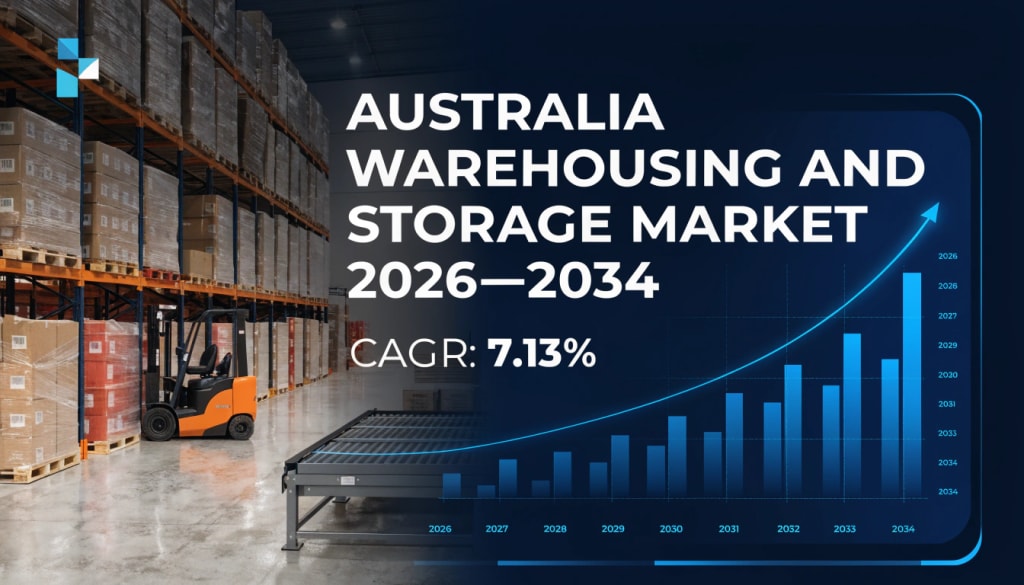
Australia Warehousing & Storage Market Overview
Australia’s warehousing and storage market is expanding rapidly as digital commerce growth, supply chain modernisation and infrastructure investment reshape logistics requirements across the country. Warehousing facilities have evolved from traditional storage sites into technologically advanced logistics hubs supporting inventory management, order fulfillment and last-mile distribution. As consumer expectations around delivery speed and reliability continue to rise, businesses are increasingly investing in strategically located and automated warehousing infrastructure.
According to IMARC Group, the Australia warehousing and storage market size reached USD 19.8 billion in 2025 and is projected to grow to USD 36.7 billion by 2034, exhibiting a compound annual growth rate (CAGR) of 7.13% during 2026–2034. Growth is supported by expanding e-commerce activity, rising cold storage requirements and continued development of logistics infrastructure nationwide.
Key Market Drivers
E-Commerce Expansion and Fulfillment Demand
Rapid growth in online retail is increasing the need for fulfillment centres and distribution hubs across metropolitan and regional areas. Businesses are investing in automated warehouses and real-time inventory systems to support faster delivery cycles and omnichannel retail strategies.
Infrastructure Investment and Transport Connectivity
Government initiatives targeting road, rail and port infrastructure upgrades are improving freight connectivity and supporting warehouse development along major transport corridors. Enhanced logistics networks are reducing transit times and improving supply chain efficiency.
Cold Storage and Temperature-Controlled Logistics Growth
Demand for cold storage facilities is rising due to expanding pharmaceutical supply chains and increased consumption of perishable goods. Temperature-controlled warehousing is becoming a critical component of Australia’s logistics ecosystem.
Automation and Smart Warehousing Adoption
Warehousing operators are integrating robotics, AI-driven inventory systems and IoT-enabled tracking technologies to enhance operational accuracy and productivity while addressing labour constraints.
Request a Sample Report with the Latest 2026 Data & Forecasts
What the Opportunities Are
Australia’s warehousing and storage market offers strong opportunities as logistics innovation, retail transformation and industrial development continue to converge.
Growth of Third-Party Logistics (3PL) and Shared Warehousing
Companies increasingly rely on third-party logistics providers and shared warehousing models to optimise costs and improve flexibility. Operators offering scalable storage solutions and integrated logistics services can capture growing outsourcing demand.
Expansion of Urban and Last-Mile Warehousing
The rise of same-day and next-day delivery expectations is driving development of smaller, strategically located urban warehouses. Investment in last-mile distribution facilities can strengthen delivery efficiency and enhance customer experience.
Automation, Robotics and AI-Driven Logistics Solutions
Technology integration across picking, sorting and inventory tracking processes presents significant growth potential. Providers delivering automation solutions can support warehouse operators seeking productivity improvements and error reduction.
Sustainable and Energy-Efficient Warehouse Development
Environmental considerations are encouraging adoption of green building designs, renewable energy integration and energy-efficient equipment within warehouse facilities. Sustainability initiatives can reduce operating costs and align with corporate ESG goals.
Sector-Specific Warehousing Solutions
Specialised warehousing tailored to pharmaceuticals, food processing, manufacturing and retail sectors offers differentiation opportunities. Industry-specific storage requirements support development of customised facilities and service models.
Together, these opportunities highlight the transition toward flexible, technology-enabled and sustainability-oriented logistics infrastructure.
Recent News and Developments
March 2025: Australia’s infrastructure investment pipeline exceeded AUD 240 billion, supporting large-scale logistics and industrial development projects and strengthening demand for warehousing facilities near transport corridors.
June 2025: E-commerce logistics analysis indicated that urban fulfillment centre capacity continued to expand across major cities, reflecting sustained growth in online retail volumes and last-mile delivery requirements.
October 2025: Cold chain logistics capacity growth trends showed continued investment in temperature-controlled warehouse infrastructure, aligned with increasing pharmaceutical distribution and perishable food storage demand.
January 2026: Industrial real estate activity highlighted rising occupancy levels and continued development of large distribution centres, driven by retailer expansion and supply chain optimisation initiatives across Australia.
Why You Should Know About the Australia Warehousing & Storage Market?
The Australia warehousing and storage market reflects broader economic transformation driven by digital commerce, infrastructure investment and supply chain modernisation. Warehouses are increasingly strategic assets enabling operational efficiency, inventory visibility and customer service improvements across industries.
With projected growth to USD 36.7 billion by 2034, supported by automation adoption, cold chain expansion and logistics infrastructure development, the sector offers substantial opportunities for logistics providers, real estate investors and technology vendors.
As Australia continues strengthening its position within regional supply chains and responding to evolving consumer expectations, the warehousing and storage market is poised for sustained expansion while transitioning toward smarter, more resilient and technologically advanced logistics ecosystems.
About the Creator
Amyra Singh
Market research analyst who loves spotting patterns, digging into data, and turning insights into strategies that help brands grow and stay ahead of the curve.
Keep reading
More stories from Amyra Singh and writers in Trader and other communities.
Australia’s Alcoholic Beverages Market 2026: Premiumisation, Craft Innovation and Moderation Trends
Australia Alcoholic Beverages Market Overview Australia’s alcoholic beverages market continues to evolve as premiumisation, craft production growth and changing consumption habits redefine category dynamics. Alcohol remains deeply integrated into Australia’s social culture, spanning casual gatherings, celebrations and hospitality experiences. However, the industry is undergoing structural shifts driven by health awareness, moderation trends and demand for differentiated product experiences across beer, wine, spirits and ready-to-drink (RTD) segments.
By Amyra Singh3 days ago in Trader


Comments
There are no comments for this story
Be the first to respond and start the conversation.