
Chicory Market Size and Forecast 2025–2033: From Coffee Substitute to Functional Food Powerhouse
Global Chicory Market to Reach US$ 591.49 Million by 2033 as Health, Prebiotics, and Plant-Based Trends Redefine Consumer Choices

Chicory Market Overview: A Root with Global Potential
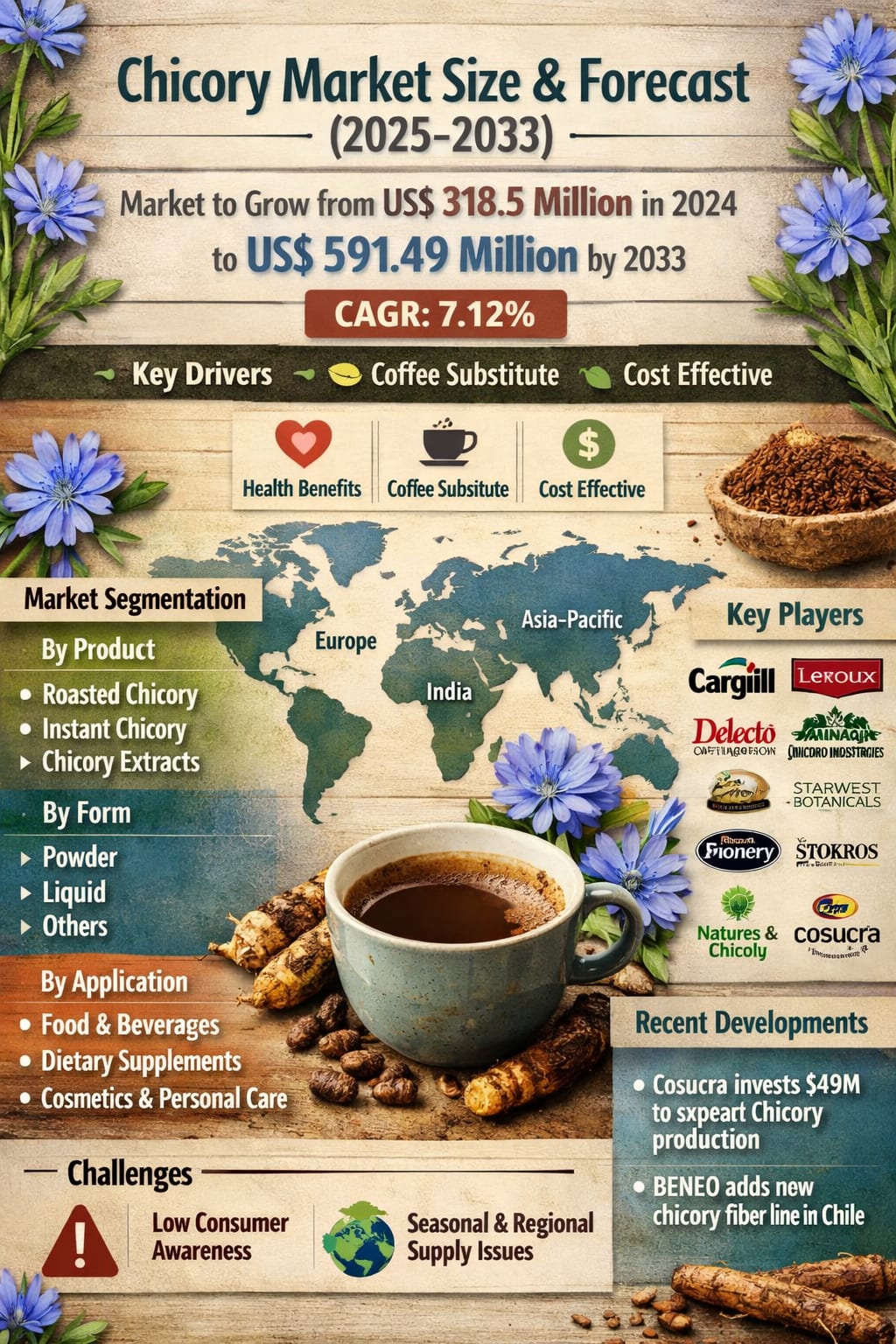
The global chicory market is undergoing a quiet but meaningful transformation. Once best known as a humble coffee substitute, chicory has now emerged as a versatile functional ingredient with applications across food and beverages, dietary supplements, cosmetics, and even animal nutrition. According to Renub Research, the chicory market is expected to grow from US$ 318.5 million in 2024 to US$ 591.49 million by 2033, registering a compound annual growth rate (CAGR) of 7.12% from 2025 to 2033.
This growth is being fueled by a powerful mix of health awareness, changing dietary habits, and innovation in food processing. Chicory’s rich content of inulin—a natural prebiotic fiber—has placed it firmly in the spotlight of the global wellness movement. Consumers today are not just eating to feel full; they are eating to feel better, think clearer, and live healthier. In this context, chicory has found a new identity as both a functional food ingredient and a natural health booster.
Traditionally used to treat ailments such as digestive disorders, liver and gallbladder problems, inflammation, and appetite loss, chicory has a long history in herbal medicine. Its roots and leaves are consumed in various forms, while roasted chicory root has been widely used as a caffeine-free coffee alternative. Now, with modern science validating many of its benefits, chicory is stepping into mainstream markets across regions.
Why Chicory Is Gaining Momentum
One of the strongest drivers behind the chicory market’s expansion is the global shift toward plant-based and functional foods. Consumers are increasingly drawn to ingredients that offer more than just basic nutrition. Chicory fits perfectly into this trend because of its high inulin content, which supports gut health, improves digestion, and helps maintain a balanced microbiome.
In addition, chicory is rich in beta-carotene and other beneficial compounds that contribute to its antioxidant and anti-inflammatory properties. These features have made it a popular ingredient in health drinks, functional snacks, dietary supplements, and clean-label food products. As awareness of digestive health and immunity continues to grow, chicory’s role as a natural prebiotic is becoming more important than ever.
Another factor boosting demand is the rising interest in gluten-free and low-caffeine lifestyles. Chicory is increasingly used in salads, appetizers, and innovative recipes as an alternative to gluten-based ingredients. At the same time, roasted chicory root is gaining popularity as a coffee substitute for people who want to reduce caffeine intake without giving up the familiar taste and ritual of a warm, bitter beverage.
Chicory as a Coffee Substitute: A Caffeine-Free Revolution
One of chicory’s most well-known applications is as a caffeine-free alternative to coffee. When roasted and brewed, chicory root produces a rich, earthy flavor that closely resembles coffee, making it an attractive option for caffeine-sensitive individuals, pregnant women, and people dealing with anxiety or sleep issues.
Unlike coffee, chicory contains inulin fiber, which adds a digestive health benefit to every cup. This combination of familiar taste and functional advantage has helped chicory carve out a strong position in the wellness and alternative beverage segments. Today, chicory is widely used in caffeine-free blends, instant drinks, and health-focused beverages, especially in markets where consumers are actively seeking natural and plant-based options.
Cost Advantage: An Economic Edge Over Coffee
Beyond health and lifestyle trends, chicory also offers a significant economic advantage. In many markets, chicory is up to 10 times cheaper than traditional coffee. This price difference makes it an appealing ingredient for both manufacturers and consumers, particularly at a time when coffee prices are under pressure due to climate change, supply chain disruptions, and geopolitical uncertainties.
For producers, chicory can be used to extend coffee blends or even replace coffee entirely in certain products, helping reduce costs without sacrificing flavor. For consumers, especially in price-sensitive regions, chicory offers an affordable and satisfying alternative. This cost-effectiveness, combined with its health benefits and similar taste profile, strengthens chicory’s position as a sustainable and economical coffee substitute.
Innovation and Investment in the Chicory Industry
The chicory market is also benefiting from advancements in extraction and processing technologies, which have improved product quality, shelf life, and application diversity. These innovations are making chicory more attractive to food and beverage manufacturers looking to develop new functional products.
A notable example is Cosucra, which raised USD 49 million in June 2023 to continue its energy transformation and expand the production capacity of its chicory facility. Such investments highlight the growing confidence in chicory’s long-term market potential.
Similarly, in November 2023, BENEO announced the development of a new production line at its Pemuco factory in Chile, enhancing its ability to produce liquid chicory root fiber (Orafti Oligofructose LL) with a longer shelf life. In August 2024, DKSH extended its exclusive distribution agreement with Cosucra across Australia and New Zealand, focusing on plant-based proteins and dietary fibers derived from chicory roots. These developments reflect a broader industry trend toward scaling up production and expanding global reach.
Key Challenges Facing the Chicory Market
Despite its strong growth prospects, the chicory market is not without challenges. One of the biggest hurdles is insufficient consumer awareness, particularly outside traditional markets like Europe. In regions such as North America and parts of Asia-Pacific, many consumers are still unfamiliar with chicory’s prebiotic properties, digestive benefits, and versatility as a coffee substitute.
Another challenge is regional and seasonal limitations in production. Chicory cultivation is often restricted to specific climates and soil conditions, and it typically yields only one crop per year. This can lead to supply inconsistencies and make the market vulnerable to environmental factors such as droughts, floods, or poor soil management. Geopolitical issues and logistical disruptions in key growing regions can also affect supply chains and pricing.
To overcome these challenges, industry players are increasingly investing in consumer education, diversified sourcing strategies, and agricultural innovation to ensure stable supply and sustained demand.
Regional Outlook: How the Chicory Market Is Shaping Up Globally
Europe remains the leading market for chicory, thanks to its long history of use and strong presence of established producers. However, Asia-Pacific is emerging as one of the fastest-growing regions, driven by rising health awareness, expanding middle-class populations, and growing interest in functional foods.
North America is also showing steady growth, supported by increasing demand for clean-label ingredients, plant-based products, and natural coffee alternatives.
United States Chicory Market
In the United States, the chicory market is gradually gaining traction as consumers become more interested in natural, functional ingredients. Chicory’s high inulin content makes it appealing for digestive health products, dietary supplements, and functional beverages. The growing demand for plant-based and caffeine-free options is also helping chicory find a place in the American market.
However, limited consumer familiarity and competition from other well-known functional ingredients remain challenges. Continued marketing, product innovation, and education will be crucial to unlocking chicory’s full potential in the U.S. food and wellness sectors.
Germany Chicory Market
Germany represents a unique blend of tradition and modern health trends. Chicory has long been used as a coffee alternative, particularly in products like “Muckefuck,” and this cultural familiarity continues to support demand. Today, renewed interest in digestive health, plant-based diets, and caffeine-free beverages is driving a resurgence in chicory consumption.
Germany’s advanced food processing industry further supports the development and availability of chicory-based products. Still, competition from other functional ingredients means that continued innovation and consumer education will be key to sustaining growth.
India Chicory Market
India is one of the most promising markets for chicory, supported by its strong agricultural base and growing awareness of health and wellness. Chicory’s high inulin content has made it increasingly popular in nutritional supplements and functional foods, especially as demand for gut health products rises.
The popularity of caffeine-free beverages is also boosting interest in chicory-based coffee alternatives. Chicory is now being used in multiple forms, including powders, extracts, and leaves, expanding its applications across food, beverages, and cosmetics. However, challenges such as limited awareness and competition from other functional ingredients remain, making education and product development essential for long-term growth.
United Arab Emirates Chicory Market
In the UAE, the chicory market is growing steadily, driven by rising health consciousness and demand for natural, caffeine-free alternatives. The country’s diverse population and openness to new food trends have created opportunities for chicory-based functional foods, supplements, and beverages.
Still, the market faces hurdles such as low consumer familiarity and strong competition from established coffee alternatives. Strategic partnerships, product innovation, and targeted marketing will play a key role in expanding chicory’s footprint in the region.
Market Segmentation Snapshot
By Product:
Roasted Chicory
Instant Chicory
Chicory Extracts
Others
By Form:
Powder
Liquid
Others
By Application:
Food and Beverages
Dietary Supplements
Cosmetics & Personal Care
Others
By Region:
North America (United States, Canada)
Europe (France, Germany, Italy, Spain, UK, Belgium, Netherlands, Turkey)
Asia Pacific (China, Japan, India, Australia, South Korea, Thailand, Malaysia, Indonesia, New Zealand)
Latin America (Brazil, Mexico, Argentina)
Middle East & Africa (South Africa, Saudi Arabia, UAE)
Competitive Landscape: Key Players
The global chicory market features a mix of established and emerging players, including:
Jamnagar Chicory Industries
Cargill, Incorporated
Leroux Flavored Brandies
Delecto Foods Pvt Ltd.
Starwest Botanicals
Organic Herb Trading
Pioneer Chicory
STOKROS Company Ltd
Natures Gold
Royal Cosun
These companies are focusing on capacity expansion, product innovation, strategic partnerships, and geographic expansion to strengthen their market positions.
Final Thoughts
The chicory market is no longer just about a coffee substitute—it is about health, functionality, sustainability, and smart nutrition. With the market projected to grow from US$ 318.5 million in 2024 to US$ 591.49 million by 2033 at a CAGR of 7.12%, chicory is clearly carving out a strong and lasting role in the global food and wellness ecosystem.
As consumers continue to prioritize digestive health, plant-based ingredients, and clean-label products, chicory’s relevance will only increase. While challenges such as limited awareness and production constraints remain, ongoing investments, innovation, and education are likely to push the market into a new phase of growth. In the years ahead, chicory is set to move from a niche ingredient to a mainstream functional food powerhouse.
About the Creator
Mexico Beauty and Personal Care Market Size, Share, Industry Trends and Forecast 2026-2034
How the Mexico Beauty and Personal Care Market Reflects Changing Identity and Self-Expression Beauty and personal care in Mexico are evolving beyond routine grooming. They are increasingly tied to identity, self-expression, and cultural pride. The Mexico beauty and personal care market mirrors shifts in social attitudes, consumer awareness, and lifestyle priorities. From skincare and cosmetics to grooming and wellness products, personal care has become a daily ritual that blends tradition with modern influence.
By Jackson Watson7 days ago in Trader




Comments
There are no comments for this story
Be the first to respond and start the conversation.