
Digital Health Market Size and Forecast 2025–2033: How Technology Is Rewriting the Future of Global Healthcare
From AI-driven diagnostics to telemedicine and wearable devices, the digital health revolution is reshaping how the world delivers, accesses, and experiences healthcare.

Introduction: Healthcare Enters Its Digital-First Era
Healthcare is undergoing one of the most profound transformations in its history. Once dominated by in-person consultations, paper records, and reactive treatments, the industry is now shifting toward a digital-first, data-driven, and patient-centric model. At the heart of this change lies the rapidly expanding digital health ecosystem—a broad umbrella that includes telemedicine, mobile health applications, wearable devices, electronic health records, healthcare analytics, and artificial intelligence-powered diagnostic and treatment tools.
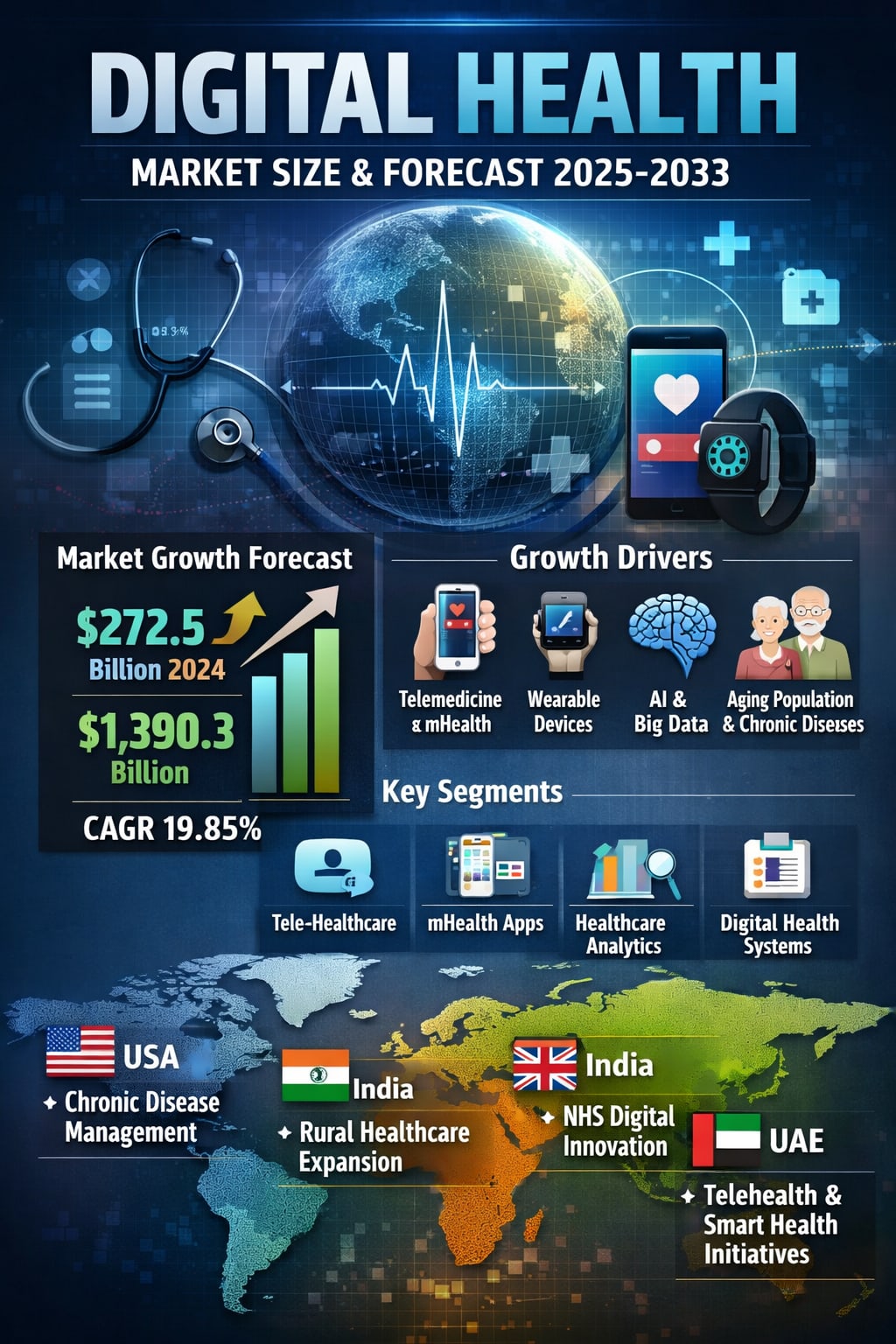
According to Renub Research, the Digital Health Market was valued at US$ 272.5 billion in 2024 and is expected to surge to US$ 1,390.30 billion by 2033, growing at a robust CAGR of 19.85% from 2025 to 2033. This explosive growth reflects more than just technological enthusiasm; it signals a structural shift in how societies manage health, prevent disease, and deliver care at scale.
Rising smartphone usage, the global burden of chronic diseases, accelerating telemedicine adoption, expanding wearable healthcare technology, supportive government initiatives, AI integration, and the growing need for remote patient monitoring are collectively reshaping healthcare systems worldwide. Add to this an aging global population, pressure to reduce healthcare costs, and widening internet access, and the case for digital health becomes not just compelling—but unavoidable.
What Is Digital Health? A New Definition of Care
Digital health refers to the use of digital technologies to improve health outcomes, enhance healthcare delivery, and promote overall wellness. It spans a wide range of solutions, including telemedicine platforms, wearable devices, mobile health (mHealth) applications, electronic health records (EHRs), healthcare analytics tools, and AI-powered clinical decision systems.
These technologies enable remote monitoring, personalized treatment, faster diagnosis, and broader access to care, especially in underserved and rural regions. They also empower patients to take greater control of their own health while helping clinicians make more informed, data-backed decisions. In essence, digital health is transforming healthcare from a reactive, facility-centered system into a proactive, connected, and continuous care model.
Why the Digital Health Market Is Booming
1. The Global Rise of Chronic Diseases
Chronic conditions such as diabetes, cardiovascular diseases, respiratory disorders, and obesity are increasing worldwide. These illnesses require continuous monitoring, long-term management, and frequent interaction with healthcare providers—needs that traditional healthcare systems often struggle to meet efficiently.
Digital health solutions, particularly remote patient monitoring, mobile health apps, and wearable devices, make it possible to track patients in real time, detect early warning signs, and intervene before complications escalate. This not only improves patient outcomes but also significantly reduces hospital admissions and overall healthcare costs.
2. The Smartphone and Wearable Revolution
Smartphones have become nearly universal, and wearable devices such as smartwatches and fitness trackers are now mainstream. These devices are no longer just lifestyle accessories; they are powerful health tools capable of tracking heart rate, physical activity, sleep patterns, blood oxygen levels, and even irregular heart rhythms.
This constant flow of health data supports a more proactive approach to wellness and disease management, encouraging individuals to engage with their health daily rather than only during doctor visits.
3. AI, Big Data, and Smarter Medicine
Artificial intelligence and advanced analytics are redefining what is possible in healthcare. By analyzing massive datasets, AI systems can assist in early disease detection, personalized treatment planning, predictive analytics, and operational efficiency. Machine learning algorithms are already being used to improve medical imaging interpretation, optimize hospital workflows, and identify high-risk patients before conditions worsen.
Strategic collaborations are accelerating this trend. For example, partnerships like the 2023 collaboration between Veradigm and HealthVerify aim to create actionable real-world evidence to improve care for patients with diabetes and cardiovascular diseases, demonstrating how data-driven ecosystems are becoming central to modern healthcare.
4. Telemedicine and the Normalization of Remote Care
The COVID-19 pandemic acted as a catalyst for telemedicine adoption, turning virtual consultations from a niche service into a mainstream healthcare delivery channel. Patients and providers alike have since recognized the benefits: reduced travel time, faster access to specialists, continuous follow-up, and improved convenience.
Remote care is particularly transformative for rural and underserved communities, where access to healthcare facilities and specialists is often limited. As connectivity improves and digital platforms become more user-friendly, telemedicine is expected to remain a core component of healthcare systems even in the post-pandemic era.
Key Growth Driver: Rising Focus on Mental Health and Women’s Health
One of the most important and socially significant drivers of digital health growth is the increasing attention to mental health and women’s health. Historically underserved and often stigmatized, these areas are now seeing a surge in digital solutions designed to provide accessible, confidential, and affordable care.
Mental health apps, online therapy platforms, and maternal care tracking tools are gaining rapid traction. For instance, a 2023 NHS report indicated that nearly 47% of British citizens used health apps in 2022, up from 38% in 2021, highlighting growing public trust in digital health platforms. Similarly, South Africa’s MomConnect program has supported over 5 million pregnant women since its launch, demonstrating how digital tools can deliver scalable, targeted care in sensitive and critical health areas.
Challenges Facing the Digital Health Market
1. Data Privacy and Security Concerns
As digital health platforms collect and store vast amounts of sensitive patient data, concerns around cybersecurity, data breaches, and unauthorized access have become more pronounced. Ensuring compliance with regulations such as HIPAA and GDPR requires continuous investment in robust security infrastructure.
Any failure in data protection can erode patient trust, trigger legal consequences, and slow the adoption of digital health solutions. Therefore, cybersecurity is not just a technical requirement—it is a foundational pillar of sustainable digital health growth.
2. Regulatory and Compliance Complexity
Healthcare is one of the most heavily regulated industries in the world. Digital health companies must navigate a complex and often fragmented regulatory landscape, with different rules across countries and regions. Approval processes, data protection laws, and medical device regulations can delay product launches and increase development costs, particularly for startups and smaller players.
While regulation is essential for patient safety and data protection, balancing innovation with compliance remains a critical challenge for the industry.
Regional Spotlight: How Digital Health Is Expanding Worldwide
United States: Scaling Innovation to Tackle Chronic Disease
The United States represents one of the largest and most dynamic digital health markets. The country faces a massive burden from chronic diseases such as heart disease, cancer, and diabetes—conditions that collectively cost hundreds of billions of dollars each year in treatment and lost productivity.
Digital health solutions, including telemedicine, wearables, and remote monitoring tools, are increasingly being used to improve patient engagement, enhance outcomes, and reduce long-term healthcare costs. With strong investment activity, a mature tech ecosystem, and high consumer adoption, the U.S. continues to be a global leader in digital health innovation.
India: Bridging the Healthcare Access Gap
India’s digital health market is growing rapidly, driven by the need to improve healthcare access, especially in rural areas where over 65% of the population resides. Telemedicine, mobile health apps, and digital health platforms are helping overcome infrastructure limitations and workforce shortages.
The success of large-scale digital initiatives, such as the CoWIN platform that managed over 220 crore COVID-19 vaccinations, highlights India’s capacity to deploy technology at scale. With rising internet penetration and strong government support, digital health is poised to play a central role in India’s healthcare transformation.
United Kingdom: A Real-World Testbed for Innovation
The UK stands out in Europe for its structured and evidence-based approach to digital health adoption. Through the National Health Service (NHS), the country systematically evaluates, pilots, and scales promising digital solutions. This creates a unique environment where innovations can be tested in real-world settings and validated before broader deployment.
Investments in workforce development, such as training practitioner analysts, further strengthen the UK’s position as a hub for sustainable digital health innovation.
United Arab Emirates: A Tech-Forward Healthcare Vision
The UAE’s digital health market is expanding quickly, supported by high smartphone penetration, strong government initiatives, and a growing demand for convenient healthcare services. Strategies like the Dubai Health Strategy 2021 emphasize digital transformation, while the country’s tech-savvy population and rising chronic disease burden continue to fuel adoption of telemedicine, remote monitoring, and mobile health apps.
Market Segmentation: How the Digital Health Industry Is Structured
By Technology:
Tele-Healthcare
mHealth
Healthcare Analytics
Digital Health Systems
By Component:
Services
Software
Hardware
By Application:
Diabetes
Obesity
Cardiovascular Diseases
Respiratory Diseases
Others
By End Use:
Patients
Providers
Payers
Other Buyers
By Geography (25 Viewpoints):
North America (United States, Canada), Europe (France, Germany, Italy, Spain, United Kingdom, Belgium, Netherlands, Turkey), Asia Pacific (China, Japan, India, Australia, South Korea, Thailand, Malaysia, Indonesia, New Zealand), Latin America (Brazil, Mexico, Argentina), Middle East & Africa (South Africa, Saudi Arabia, United Arab Emirates).
Competitive Landscape: Major Players Shaping the Market
Leading companies in the digital health space are driving innovation across software, hardware, platforms, and services. Key players include:
Telefónica S.A.
Epic Systems Corporation
QSI Management, LLC
AirStrip Technologies
Google, Inc.
Hims & Hers Health, Inc.
Softserve
Computer Programs and Systems, Inc.
CISCO Systems, Inc.
Apple Inc.
These companies are analyzed across four dimensions: Company Overview, Key Persons, Recent Developments & Strategies, and Sales Analysis, reflecting a highly competitive and fast-evolving marketplace.
Final Thoughts: The Future of Healthcare Is Digital
The numbers tell a powerful story. Growing from US$ 272.5 billion in 2024 to US$ 1,390.30 billion by 2033, the digital health market is not just expanding—it is redefining the very foundations of global healthcare.
As technology continues to advance, digital health will move beyond convenience and efficiency to become a core driver of better outcomes, lower costs, and more equitable access to care. While challenges around data security and regulation remain, the long-term trajectory is clear: healthcare is becoming more connected, more personalized, and more digital.
About the Creator
Sakshi Sharma
Content Writer with 7+ years of experience crafting SEO-driven blogs, web copy & research reports. Skilled in creating engaging, audience-focused content across diverse industries.
Keep reading
More stories from Sakshi Sharma and writers in Trader and other communities.
Cerumen Removal Market Size and Forecast 2025–2033
Global Cerumen Removal Market: An Industry Gaining Attention The global cerumen removal market is steadily transforming from a niche healthcare segment into a widely discussed and commercially significant industry. According to Renub Research, the cerumen removal market was valued at US$ 2.31 billion in 2024 and is expected to reach US$ 4.23 billion by 2033, growing at a CAGR of 6.95% from 2025 to 2033. This consistent growth reflects a broader shift in how consumers and healthcare systems approach ear health, preventive care, and non-invasive treatment solutions.
By Sakshi Sharmaabout 8 hours ago in Trader
Amazon Stock Analysis: Can Amazon Sustain Growth Beyond E-Commerce Dominance?
Introduction Amazon stock has long been associated with innovation, scale, and disruption. From redefining online shopping to building one of the world’s most powerful cloud computing platforms, Amazon.com Inc. has expanded far beyond its original identity as an online retailer. For investors, Amazon stock represents exposure to multiple high-growth industries under one corporate umbrella.
By Hammad Nawaz2 days ago in Trader



Comments
There are no comments for this story
Be the first to respond and start the conversation.