
Dog Food Market Size, Growth & Forecast 2025–2033 | Renub Research
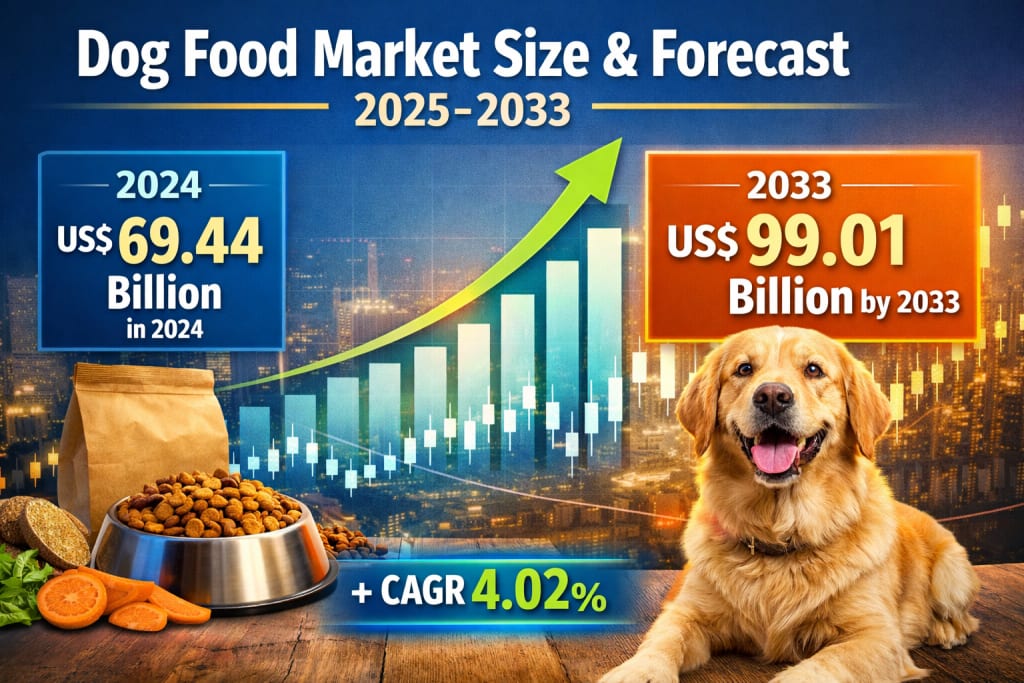
Dog Food Market is expected to reach US$ 99.01 billion by 2033, rising from US$ 69.44 billion in 2024, and expanding at a CAGR of 4.02% from 2025 to 2033.

The Global Dog Food Market Enters a New Era of Premiumization and Personalization
The global dog food market is undergoing a notable transformation, driven by shifting consumer attitudes toward pets, rapid urbanization, and a growing focus on health and nutrition. According to Renub Research, the Dog Food Market is expected to reach US$ 99.01 billion by 2033, rising from US$ 69.44 billion in 2024, and expanding at a CAGR of 4.02% from 2025 to 2033.
This steady growth reflects more than just rising pet ownership. It signals a deeper cultural shift in how people perceive dogs—not merely as animals, but as family members whose health, comfort, and longevity matter just as much as any other household member. As a result, spending on premium, functional, and specialized dog food products is accelerating across both developed and emerging economies.
The market today spans a wide range of offerings, from traditional dry kibble and wet food to snacks, treats, and specialized diets. Distribution channels have also evolved, with e-commerce platforms, specialty pet stores, and subscription-based services reshaping how consumers discover and purchase dog food.
Understanding the Dog Food Market: More Than Just Pet Nutrition
Dog food is no longer viewed as a basic commodity. It has become a carefully selected product category where ingredients, sourcing, processing methods, and nutritional benefits play a decisive role in purchasing decisions. Modern dog owners increasingly look for food that supports digestion, joint health, skin and coat quality, immunity, and overall vitality.
The global dog food market is typically segmented by type—including wet food, dry food, and snacks or treats—and by distribution channel, such as supermarkets and hypermarkets, specialty stores, online platforms, and other retail formats. Each segment reflects different consumer priorities, price sensitivities, and lifestyle preferences.
Urbanization and changing lifestyles have also contributed to the growth of commercial dog food. As more people live in cities and manage busy schedules, the convenience, consistency, and nutritional assurance of packaged dog food have become more appealing than home-prepared meals for pets.
Key Factors Driving the Dog Food Market Growth
Growing Interest in Nutritious and Functional Dog Food
One of the strongest drivers shaping the dog food industry is the increasing health consciousness of pet owners. Today’s consumers are far more informed about pet nutrition and are willing to pay extra for products that promise tangible health benefits. Concerns around obesity, allergies, digestive issues, and age-related conditions in dogs have pushed demand for functional and fortified foods.
Manufacturers are responding by expanding their portfolios to include products that support specific health outcomes, such as improved coat condition, stronger joints, better digestion, and enhanced immunity. For instance, Nestlé announced in October 2023 that it would expand its Purina pet food facility in Hungary by adding two new manufacturing units, increasing production capacity from around 150,000 metric tons to 250,000 metric tons. This move highlights how major players are investing heavily to meet growing global demand for premium and specialized pet food.
Treats also play an increasingly important role in the dog food ecosystem. Beyond being simple rewards, treats are now designed for dental care, training, and nutritional supplementation. The rising popularity of healthy and functional treats is expected to further strengthen the overall dog food market in the coming years.
Technological Developments in Production and Packaging
Technology is playing a crucial role in reshaping the dog food industry. Modern manufacturing processes allow producers to create foods with better nutritional profiles, improved safety standards, and longer shelf lives. Advanced processing techniques also help preserve nutrients while enhancing taste and texture, making products more appealing to both dogs and their owners.
At the Global Pet Expo 2024 in Orlando, BrightPet Nutrition Group introduced a refreshed brand presence for its Blackwood pet nutrition line. Along with new packaging designs, the company announced plans to launch several new products, including meal toppers, freeze-dried treats, single-ingredient treats, and granola treats. The updated packaging aims to communicate freshness, quality, and health benefits more clearly to consumers.
Sustainability is another area where innovation is making an impact. Many companies are shifting toward recyclable and biodegradable packaging materials to reduce their environmental footprint. This not only aligns with growing consumer demand for eco-friendly products but also strengthens brand reputation in an increasingly competitive market.
Rising Numbers of Dog Owners Worldwide
The global rise in dog ownership is a fundamental driver of the dog food market. Dogs remain the most commonly adopted pets worldwide, and their growing population directly translates into higher demand for commercial pet food products.
In 2022, pet food manufacturers reached a market value of around USD 80.03 billion, representing a significant share of the overall pet industry. Projections suggest this figure could rise substantially in the coming years, reflecting both population growth and increased spending per pet. Estimates indicate that in 2022 there were approximately 604.5 million dogs and 408.2 million cats worldwide, underlining the massive scale of the potential consumer base.
As more owners become aware of canine health and nutrition, many are shifting away from home-cooked meals toward scientifically formulated commercial dog food. This transition is particularly visible in urban areas and emerging markets, where rising incomes and changing lifestyles are reshaping consumption patterns.
Challenges Facing the Dog Food Market
Changing Consumer Preferences
Consumer preferences in the dog food market are evolving rapidly. Trends such as grain-free, organic, natural, and raw diets are gaining traction, driven by the broader human food movement toward clean labels and minimally processed products. Many dog owners now expect pet food to mirror their own dietary values, treating pets as true family members.
This shift poses challenges for manufacturers that rely on traditional formulations. Reformulating products with alternative proteins, fewer additives, and clearer labeling can be costly and operationally complex. Companies must also ensure that new recipes continue to meet nutritional standards and regulatory requirements. While brands that adapt quickly can capture new opportunities, those that fail to evolve risk losing relevance in a highly competitive marketplace.
Market Saturation and Intense Competition
The dog food industry is becoming increasingly crowded, with a growing number of brands offering products tailored to specific life stages, health conditions, and dietary preferences. This saturation intensifies competition and makes it harder for new or smaller players to gain visibility.
Large multinational companies dominate shelf space and marketing channels, forcing smaller brands to rely on innovation, niche positioning, and digital marketing to stand out. Even established players must continuously invest in branding, product development, and customer engagement to protect their market share. As a result, profit margins can be under pressure, and marketing costs continue to rise across the industry.
Dog Food Market Overview by Regions
United States Dog Food Market
The United States represents one of the most mature and dynamic dog food markets in the world. High pet ownership rates and the strong humanization trend have fueled demand for premium, natural, and functional products. Consumers increasingly seek grain-free, organic, and breed-specific formulas that support long-term health and well-being.
E-commerce and subscription-based models are gaining popularity, particularly among busy households that value convenience and consistent supply. At the same time, heightened awareness of food safety and transparency—driven in part by past product recalls and regulatory scrutiny—has made trust and quality key differentiators. Brands that emphasize clean labeling, ethical sourcing, and customization continue to perform well in this highly competitive market.
United Kingdom Dog Food Market
The UK dog food market is undergoing a noticeable transformation shaped by sustainability concerns and a growing focus on pet health. Pet owners are increasingly drawn to premium and specialty products designed to address issues such as digestion, weight management, and joint health.
This shift is accompanied by rising demand for eco-friendly packaging and responsibly sourced ingredients. Online platforms are becoming more influential, offering convenience and personalized services, while traditional retailers are expanding their premium pet food ranges to keep pace with changing consumer expectations.
Pet ownership surged during recent years, with around two million people in the UK adopting pets during lockdown periods, according to industry sources. This influx of new pet owners has further accelerated demand for high-quality, functional dog food and strengthened the overall market outlook.
India Dog Food Market
India’s dog food market is expanding rapidly, supported by rising disposable incomes, urbanization, and changing social attitudes toward pets. Dogs are increasingly seen as family members, particularly in urban households, leading to higher spending on quality nutrition.
There is a clear shift away from traditional home-cooked meals toward commercial dog food, driven by greater awareness of balanced nutrition and convenience. Demand is growing for specialty products such as high-protein, grain-free, and organic options. E-commerce platforms are also playing a crucial role by improving access to a wide variety of dog food products across both major cities and smaller towns.
United Arab Emirates Dog Food Market
In the United Arab Emirates, the dog food market is benefiting from rising pet ownership, especially among expatriate communities, and a strong trend toward pet humanization. Consumers are increasingly seeking premium, natural, and specialty products, including grain-free, organic, and raw diets.
High internet penetration and a well-developed digital infrastructure are supporting the rapid growth of online pet food sales. E-commerce platforms offer convenience, variety, and access to international brands, making them particularly attractive to health-conscious and quality-focused pet owners in the region.
Recent Developments in the Dog Food Industry
In June 2024, investment firms 500 Global and First Move provided USD 500,000 in startup funding to Notti Pet Food. The company plans to use the funds to expand its product lines and enter the markets of Singapore and the Philippines, highlighting growing investor interest in innovative pet nutrition brands.
In April 2024, Bowlers from Allana launched Nutrimax, a new line of dog food under its pet health brand. The product range is designed to deliver complete, nutrient-dense meals while maintaining high food quality standards, reflecting the industry’s ongoing focus on premium and functional nutrition.
Market Segmentation Snapshot
By Type:
Wet Food
Dry Food
Snacks/Treats
By Distribution Channel:
Supermarkets & Hypermarkets
Specialty Stores
Online
Other Distribution Channels
By Region:
North America (United States, Canada)
Europe (France, Germany, Italy, Spain, United Kingdom, Belgium, Netherlands, Turkey)
Asia Pacific (China, Japan, India, Australia, South Korea, Thailand, Malaysia, Indonesia, New Zealand)
Latin America (Brazil, Mexico, Argentina)
Middle East & Africa (South Africa, Saudi Arabia, United Arab Emirates)
Competitive Landscape: Key Players in Focus
The global dog food market is highly competitive, with both multinational corporations and regional players striving to strengthen their positions. Major companies covered in the market include ADM, General Mills Inc., Heristo Aktiengesellschaft, Mars Incorporated, Nestlé, PLB International, Schell & Kampeter Inc., and The J. M. Smucker Company.
These players compete through product innovation, strategic expansions, branding, and investments in sustainable practices, while also focusing on meeting the evolving expectations of modern pet owners.
Final Thoughts: A Market Driven by Care, Quality, and Connection
The global dog food market is no longer just about feeding pets—it is about nurturing them. With the market projected to grow from US$ 69.44 billion in 2024 to US$ 99.01 billion by 2033 at a CAGR of 4.02%, the industry’s future is firmly anchored in premiumization, personalization, and trust.
As pet owners continue to prioritize health, transparency, and sustainability, companies that innovate responsibly and communicate value clearly will be best positioned to succeed. From advanced nutrition and functional treats to eco-friendly packaging and digital sales channels, the dog food industry is evolving in step with changing lifestyles and values. In the years ahead, this blend of emotional connection and scientific progress will continue to shape one of the most dynamic segments of the global pet care market.
About the Creator
Sakshi Sharma
Content Writer with 7+ years of experience crafting SEO-driven blogs, web copy & research reports. Skilled in creating engaging, audience-focused content across diverse industries.
Keep reading
More stories from Sakshi Sharma and writers in Trader and other communities.
Kombucha Market Size, Share & Forecast 2025–2033 | Renub Research
Introduction: A Fermented Drink Goes Mainstream Once a niche health-store staple, kombucha has rapidly evolved into one of the most talked-about functional beverages in the global drinks industry. With its fizzy taste, fermented profile, and reputation for supporting gut health, kombucha has found fans among wellness enthusiasts, fitness-conscious consumers, and younger demographics looking for healthier alternatives to sugary sodas and artificial energy drinks.
By Sakshi Sharmaabout 17 hours ago in Trader


Comments
There are no comments for this story
Be the first to respond and start the conversation.