
Global Jewelry Market – Forecast & Growth Trends 2025–2033
Rising incomes, digital retail, and personalization trends are reshaping a US$ 546.85 billion global industry

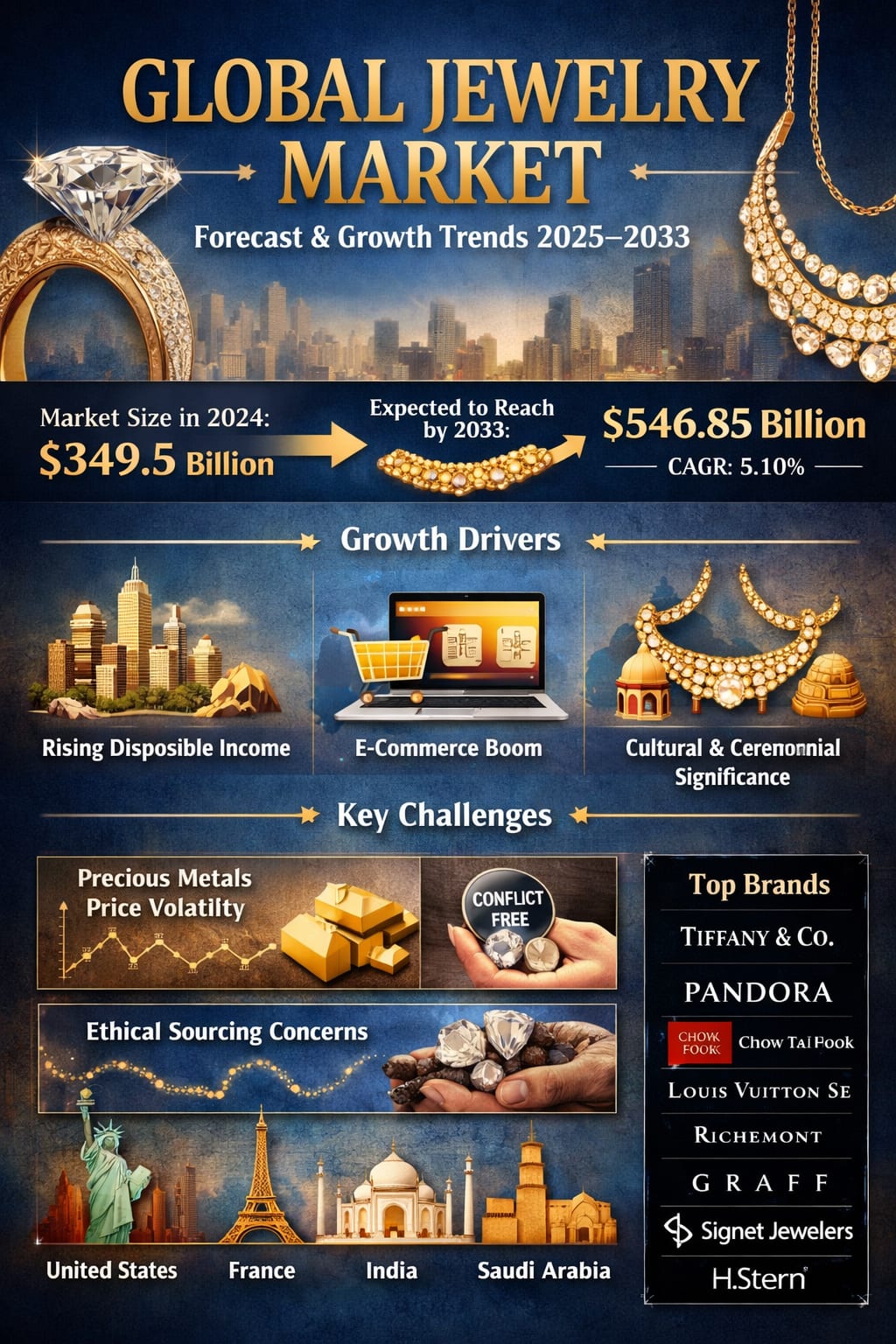
Global Jewelry Market Outlook
The global jewelry market continues to shine as one of the most emotionally driven and culturally rooted segments of the consumer goods industry. According to Renub Research, the Global Jewelry Market was valued at US$ 349.5 billion in 2024 and is expected to grow to US$ 546.85 billion by 2033, expanding at a CAGR of 5.10% during the forecast period from 2025 to 2033. This steady growth reflects not only rising disposable incomes worldwide but also changing fashion preferences, increasing demand for customized designs, and the enduring appeal of luxury and fine jewelry across cultures.
Jewelry, at its core, is ornamental material used for personal decoration—ranging from necklaces, rings, earrings, bracelets, and brooches to more contemporary statement pieces. Crafted from precious metals such as gold, silver, and platinum, along with diamonds, gemstones, beads, and even modern synthetic materials, jewelry serves multiple purposes. It is aesthetic, symbolic, cultural, religious, and often deeply emotional. Across civilizations, jewelry has represented wealth, social status, love, commitment, and identity.
In the modern global marketplace, jewelry remains one of the most popular gift categories, commonly exchanged during weddings, anniversaries, festivals, and milestone celebrations. Social media, celebrity endorsements, and fast-moving fashion trends have further amplified its appeal—particularly among younger consumers who view jewelry not just as an accessory, but as a form of self-expression.
Technological innovation has also reshaped the industry. From 3D design tools and advanced manufacturing techniques to digital storefronts and virtual try-ons, technology is making jewelry more accessible, customizable, and convenient to purchase. At the same time, changing lifestyles, urbanization, and the rapid growth of e-commerce platforms are fueling global demand. The combination of traditional craftsmanship and modern innovation continues to drive the long-term popularity and commercial strength of the jewelry market.
Key Growth Drivers in the Global Jewelry Market
Increasing Disposable Income and Urbanization
One of the strongest drivers of jewelry demand worldwide is the steady rise in disposable incomes, especially in emerging economies such as China and India. As more consumers enter the middle class, spending on lifestyle and luxury products increases. Jewelry is increasingly seen not only as a fashion statement but also as a store of value and a long-term investment, particularly in categories like gold and diamonds.
Urbanization plays an equally important role. As populations move toward cities, exposure to global fashion trends, branded retail, and modern shopping experiences increases. Urban consumers are more likely to experiment with new designs, follow international styles, and purchase jewelry more frequently for both everyday wear and special occasions. Over the coming decades, urban populations are expected to continue rising worldwide, further strengthening demand for contemporary and branded jewelry products.
E-commerce and Digital Transformation
The digital revolution has fundamentally changed how consumers discover, evaluate, and buy jewelry. Online platforms now allow customers to browse vast collections, compare prices, verify certifications, and even customize designs from the comfort of their homes. Technologies such as augmented reality (AR) virtual try-ons, video consultations, and online authenticity verification have helped build trust in online jewelry purchases—once considered a high-risk category for e-commerce.
Social media and influencer marketing have also become powerful tools in shaping consumer preferences. Platforms like Instagram, YouTube, and TikTok drive trends, introduce new brands, and create demand for both luxury and fashion jewelry. Millennials and Gen Z, in particular, are highly comfortable with digital-first shopping experiences, making e-commerce one of the fastest-growing distribution channels in the global jewelry market.
Cultural and Ceremonial Significance
In many parts of the world—especially in Asia and the Middle East—jewelry carries deep cultural, religious, and emotional meaning. In countries like India, jewelry is inseparable from weddings, festivals, and important life events. Gold, in particular, is seen as a symbol of prosperity, security, and good fortune, ensuring consistent demand even during periods of economic uncertainty.
As global migration increases, these cultural traditions travel with communities, expanding demand for traditional and ethnic jewelry styles in international markets. This cultural continuity provides the jewelry industry with a uniquely stable and resilient demand base compared to many other luxury categories.
Challenges Facing the Global Jewelry Industry
Volatility in Precious Metal and Gemstone Prices
The jewelry market is highly sensitive to fluctuations in the prices of gold, silver, platinum, and diamonds. Sudden increases in raw material prices directly affect production costs and retail pricing, often leading consumers to postpone purchases or shift toward lighter or alternative products. This volatility creates challenges in inventory planning, pricing strategies, and profit margins for both manufacturers and retailers.
For example, sharp rises in gold prices typically push consumers toward lower-weight designs, fashion jewelry, or alternative materials. While this helps maintain overall sales volumes, it can impact revenue growth and profitability in the fine jewelry segment.
Ethical Sourcing and Sustainability Concerns
Modern consumers are increasingly conscious of where and how products are made. Issues such as conflict diamonds, unsafe mining practices, and environmental damage have brought the jewelry supply chain under intense scrutiny. Brands that fail to demonstrate transparency and ethical sourcing risk reputational damage and loss of consumer trust.
As a result, there is growing demand for lab-grown diamonds, recycled metals, and certified responsibly sourced materials. Many leading companies are now investing heavily in sustainability initiatives and strengthening their Environmental, Social, and Governance (ESG) standards to align with evolving consumer expectations.
Major Trends Shaping the Future of the Jewelry Market
Rapid Expansion of Personalized Jewelry
Personalized jewelry—such as name necklaces, engraved rings, and birthstone pieces—has emerged as one of the fastest-growing segments of the market. Consumers increasingly seek products that reflect their individuality or commemorate meaningful moments. This emotional connection makes personalized jewelry especially popular for gifting.
Advances in digital design tools and 3D printing technologies have made customization faster, more affordable, and more scalable for brands. Millennials and Gen Z consumers, in particular, prefer unique, story-driven products over mass-produced luxury items, reinforcing this trend’s long-term growth potential.
Growth of Branded Jewelry
Branded jewelry continues to gain market share as consumers prioritize quality assurance, design innovation, and reliable after-sales service. Global brands such as Tiffany & Co., Cartier, and Pandora are expanding aggressively in regions like Asia-Pacific, the Middle East, and Latin America.
Strong branding allows companies to command premium pricing and build long-term customer loyalty—even in price-sensitive markets. Celebrity endorsements, influencer collaborations, and omnichannel retail strategies are further strengthening the position of branded players in the global jewelry ecosystem.
Rising Popularity of Men’s Jewelry
Once considered a niche category, men’s jewelry is now one of the most dynamic growth segments in the industry. Watches, bracelets, chains, and rings for men are becoming mainstream fashion items, driven by changing style norms and broader acceptance of jewelry as a form of self-expression for men.
Both luxury brands and streetwear labels are launching gender-neutral or male-focused collections, tapping into a younger, fashion-conscious consumer base. This shift is expanding the overall addressable market for jewelry and creating new growth opportunities across price segments.
Regional Market Insights
United States Jewelry Market
The United States remains one of the largest and most mature jewelry markets globally. High disposable incomes, a strong culture of gifting, and a well-developed retail infrastructure support steady demand for both fine and fashion jewelry. E-commerce penetration is high, with established brands and digital-native players offering innovative shopping experiences.
Sustainability and lab-grown diamonds are gaining significant traction among U.S. consumers. Seasonal shopping occasions such as Valentine’s Day, Mother’s Day, and Christmas continue to drive substantial sales volumes. In October 2024, India’s omnichannel jewelry brand CaratLane opened its first international store in New Jersey, marking a notable step in the globalization of Indian jewelry brands.
France Jewelry Market
France holds a prestigious position in the global jewelry landscape, supported by its rich luxury heritage and iconic brands such as Cartier and Van Cleef & Arpels. The French market emphasizes craftsmanship, exclusivity, and high design value. Tourism plays a major role in driving retail sales, particularly in luxury boutiques and department stores.
While traditionally conservative, the market is gradually embracing e-commerce and sustainable luxury trends, reflecting changing consumer expectations even in the high-end segment.
India Jewelry Market
India is one of the world’s largest consumers of gold jewelry, with demand deeply rooted in cultural and religious traditions. Weddings and festivals account for a significant share of annual sales, and gold is widely viewed as both adornment and financial security.
The market is steadily shifting from unorganized local retailers toward organized, branded players offering certified products and modern designs. Government initiatives such as mandatory hallmarking and increasing digital adoption are improving transparency and consumer confidence. In April 2025, U.S.-based fine jewelry brand Angara officially launched in India with a digital-first strategy, highlighting the market’s growing global appeal.
Saudi Arabia Jewelry Market
Saudi Arabia’s jewelry market is evolving rapidly, supported by rising fashion awareness, increased female workforce participation, and broader social reforms. While traditional gold and diamond jewelry remains central—especially for weddings and religious festivals—there is growing interest in lighter, everyday wear and international brands.
The country’s Vision 2030 initiative, aimed at economic diversification and retail sector development, is further boosting demand and expanding consumer choices through modern malls, tourism growth, and e-commerce platforms.
Jewelry Market Segmentation
By Product:
Ring
Earring
Bracelet
Necklace
Others
By Material:
Gold
Diamond
Platinum
Others
By Distribution Channel:
Offline
Online
By End User:
Men
Women
Children
By Geography:
North America: United States, Canada
Europe: France, Germany, Italy, Spain, United Kingdom, Belgium, Netherlands, Turkey
Asia Pacific: China, Japan, India, South Korea, Thailand, Malaysia, Indonesia, Australia, New Zealand
Latin America: Brazil, Mexico, Argentina
Middle East & Africa: Saudi Arabia, UAE, South Africa
Competitive Landscape and Key Players
The global jewelry market is highly competitive, featuring a mix of heritage luxury houses, large retail chains, and fast-growing regional brands. Companies are increasingly focusing on digital transformation, sustainability, and personalization to strengthen their market positions.
All major companies are typically analyzed across four key viewpoints: Overview, Key Persons, Recent Developments & Strategies, and Revenue Analysis.
Key Players Include:
Tiffany & Co.
Pandora
Chow Tai Fook
Louis Vuitton SE
Richemont
GRAFF
Signet Jewelers Limited
H. Stern
These players continue to invest in brand building, global expansion, omnichannel retail strategies, and product innovation to capture growing demand across both mature and emerging markets.
Final Thoughts
The global jewelry market is entering a new phase of growth—one defined by digital transformation, shifting consumer values, and a stronger focus on personalization and sustainability. With the market expected to grow from US$ 349.5 billion in 2024 to US$ 546.85 billion by 2033 at a CAGR of 5.10%, the industry’s long-term outlook remains highly positive.
While challenges such as raw material price volatility and ethical sourcing concerns persist, they are also driving innovation and greater transparency across the value chain. As fashion, culture, and technology continue to intersect, jewelry will remain not just a symbol of beauty and status—but also a dynamic, evolving global business with deep emotional and economic significance.
About the Creator
Australia Veterinary Market — Growth, Forecast & Strategic Outlook 2026–2034
The Australia veterinary market is experiencing strong growth as animal healthcare and services expand across both companion and production animals. According to IMARC Group, the market reached USD 2.1 billion in 2025 and is projected to grow to USD 4.9 billion by 2034, exhibiting a compound annual growth rate (CAGR) of 9.60% during 2026–2034.
By Amélie Belle7 days ago in Trader

Comments
There are no comments for this story
Be the first to respond and start the conversation.