
How AI and Directed Energy Could Trigger Miscalculations
When algorithms, laser weapons, and human trust collide on tomorrow’s battlefield

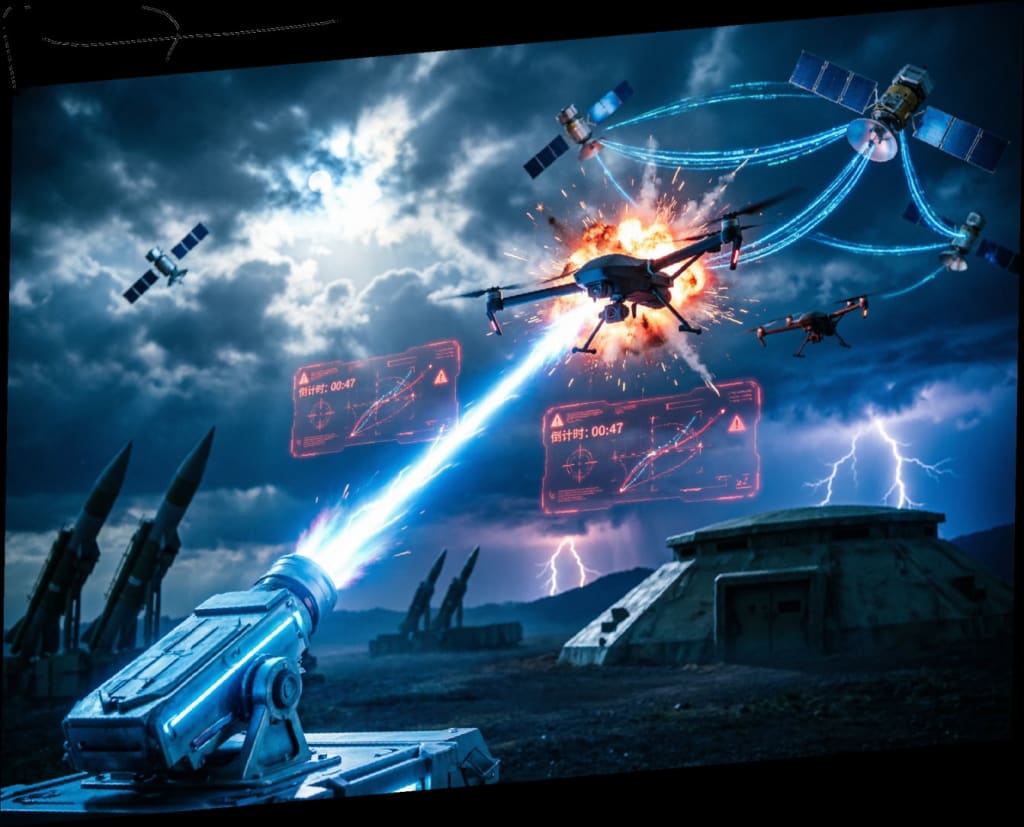
How AI and Directed Energy Could Trigger Miscalculations
Modern warfare is entering a phase where speed, automation, and precision are becoming more important than sheer firepower. Artificial Intelligence (AI) and directed-energy weapons—such as laser defense systems—are often presented as tools that will reduce human error and make war more controllable. Paradoxically, these same technologies may increase the risk of miscalculation, escalation, and even unintended large-scale conflict.
The danger does not lie in the weapons alone, but in how AI systems interpret data, make decisions, and interact with human commanders under extreme pressure.
1. The Speed Problem: War Faster Than Humans
AI systems are designed to react in milliseconds. Directed-energy weapons, operating at the speed of light, remove traditional delays that once allowed human judgment to intervene.
In earlier conflicts:
- Radar detected a threat
- Humans verified the data
- Commanders decided whether to respond
Now, AI-driven systems can detect, classify, and engage targets automatically. While this reduces reaction time, it also compresses decision-making windows to near zero.
If an AI system:
- Misidentifies a drone as a missile
- Confuses a radar glitch with an attack
- Interprets routine military exercises as hostile action
- …the response could be immediate and irreversible.
In a high-tension environment involving states like United States, China, or Pakistan, even a few seconds of error could trigger escalation.
2. Directed Energy and Invisible Escalation
Laser and microwave weapons create a new kind of ambiguity. Unlike missiles or bombs, directed-energy attacks can be:
- Silent
- Invisible to civilians
- Difficult to attribute
- If a satellite, drone, or radar system suddenly fails, was it:
- A technical malfunction?
- Cyber interference?
- A laser attack?
This uncertainty is dangerous. A state might assume the worst-case scenario and retaliate, even if the original incident was accidental or misinterpreted.
AI systems trained to prioritize threat avoidance may recommend escalation, not restraint, especially if they are optimized for survival rather than diplomacy.
3. Algorithmic Bias and Training Data Risks
- AI is not neutral. It reflects the data it was trained on.
- If an AI defense system is trained mostly on:
- Enemy attack patterns
- Historical conflicts
- Simulated worst-case scenarios
- …it may develop a bias toward aggressive interpretation.
For example:
An AI might assume that a fast-moving object near a border is hostile
It may not fully understand political context, back-channel diplomacy, or de-escalation signals
Human commanders consider nuance. Algorithms consider probabilities.
In nuclear-armed regions, this gap between probability-based logic and human political judgment is extremely dangerous.
4. Human Trust in Machines: The Automation Trap
One of the biggest risks is not AI itself—but over-trust in AI.
As systems prove accurate over time, militaries may:
Reduce human oversight
Delegate more authority to algorithms
Accept AI recommendations without challenge
This phenomenon, known as automation bias, means humans may ignore their instincts when machines say, “Threat confirmed.”
In crisis scenarios, commanders might believe:
“The system is more reliable than us.”
That belief can turn a false alert into a real war.
5. Nuclear Command and AI: A Dangerous Intersection
When AI and directed-energy systems intersect with nuclear command structures, the stakes become existential.
Even if AI does not directly control nuclear weapons, it may:
- Feed early-warning data
- Analyze enemy intent
- Recommend readiness levels
- A misinterpreted laser strike on a radar system could look like:
- A blinding attempt before a nuclear first strike
History already shows how close the world has come to disaster due to false alarms—without AI. Adding autonomous systems increases both speed and complexity, reducing opportunities to pause and verify.
6. Strategic Stability vs Technological Superiority
States racing to deploy AI and directed-energy weapons often believe they are increasing deterrence. In reality, they may be reducing strategic stability.
Why?
- Faster systems favor first reactions
- Defensive lasers may encourage risk-taking
- AI predictions can amplify paranoia
If one side believes its AI-laser shield makes it “safe,” it may act more aggressively—provoking the very conflict it hoped to prevent.
7. The Real Risk: Accidental War, Not Intentional War
The most likely future conflict involving AI will not begin with a deliberate decision to fight. It will begin with:
- A misread signal
- An automated response
- A delayed human correction
By the time leaders realize what happened, escalation may already be unstoppable.
Conclusion
AI and directed-energy weapons are not evil technologies. They can save lives and improve defense. But without strict human control, transparency, international norms, and fail-safe mechanisms, they could become catalysts for catastrophic miscalculation.
The future battlefield will not only test military strength—it will test humanity’s ability to slow down, question machines, and choose restraint over speed.
In an age where war can begin at the speed of light, wisdom must move even faster.
About the Creator
Wings of Time
I'm Wings of Time—a storyteller from Swat, Pakistan. I write immersive, researched tales of war, aviation, and history that bring the past roaring back to life
Keep reading
More stories from Wings of Time and writers in Trader and other communities.
The Silent Beam: Pakistan’s Strategic Pivot to Chinese Laser Defense
The Silent Beam: Pakistan’s Strategic Pivot to Chinese Laser Defense The landscape of South Asian warfare is undergoing a quiet but blindingly fast transformation. In early 2026, the Pakistan Navy issued a formal tender for the procurement of two 10 kW Laser Weapon Systems (LWS), marking the country’s first concrete step toward integrating directed-energy weapons (DEWs) into its frontline arsenal. This move, driven by the vulnerabilities exposed during the regional "Operation Sindoor" conflict in May 2025, signals a decisive shift away from traditional kinetic defenses and toward a future where "shots" cost as little as $10 each.
By Wings of Time a day ago in Trader
Europe Ultrasound Devices Market Forecast 2025–2033: Technology, Demand, and the Future of Diagnostic Imaging
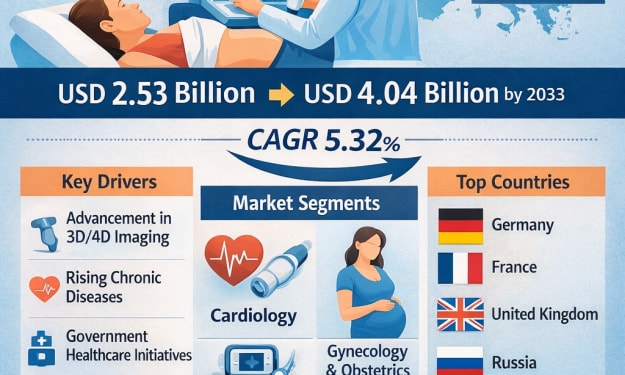
Introduction Ultrasound technology has long been a cornerstone of modern medical diagnostics, valued for its safety, versatility, and real-time imaging capabilities. Unlike X-rays or CT scans, ultrasound uses high-frequency sound waves rather than ionizing radiation, making it a preferred option for repeated examinations, prenatal care, and point-of-care diagnostics. Over the past decade, Europe has witnessed a steady expansion in the use of ultrasound devices across hospitals, diagnostic centers, and specialty clinics, driven by technological progress and changing healthcare needs.
By shibansh kumar5 days ago in Trader
US Jobs Report Preview: Can Today’s Employment Data Move Financial Markets?
Global financial markets are bracing for the release of the latest US jobs report, a key economic indicator that could significantly influence market sentiment. Investors, traders, and policymakers alike are closely watching today’s employment data for clues about the strength of the US economy and the future path of interest rates.
By Hammad Nawaz6 days ago in Trader


Comments
There are no comments for this story
Be the first to respond and start the conversation.