
How to Choose Primary Crushers: Jaw Crusher vs. Gyratory Crusher
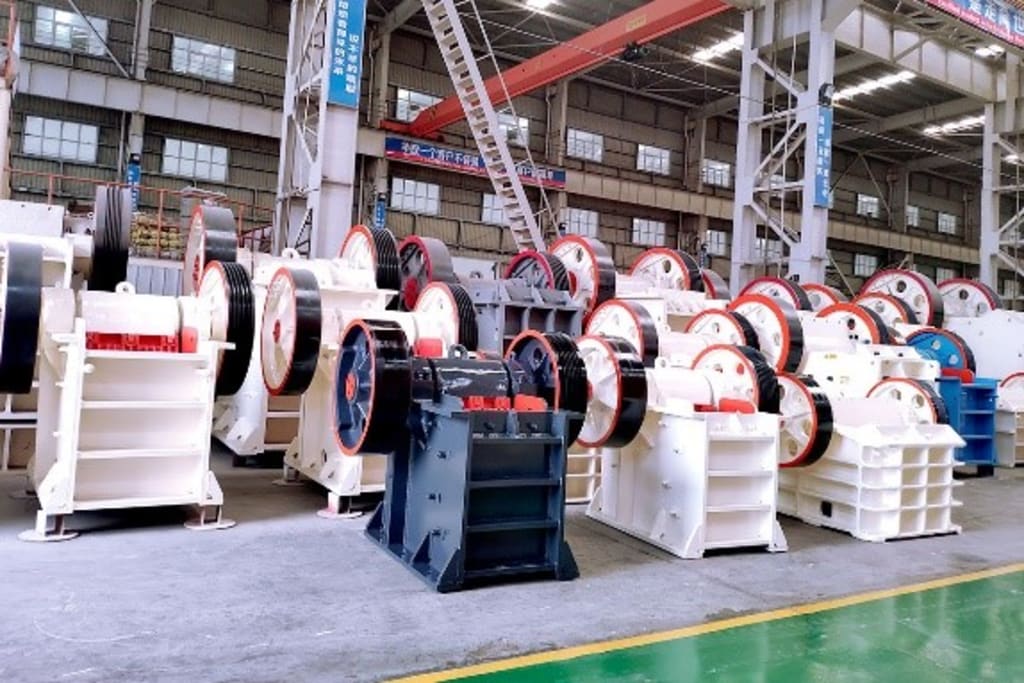
Selecting the right primary crusher is a crucial step in any mining, quarrying, or aggregate production operation. The primary crusher breaks down large raw material into manageable sizes for secondary crushing or direct use. Among the most common primary crushers are the jaw crusher and the gyratory crusher, each with its own advantages and ideal applications. This article explores the key factors to consider when choosing between these two powerful machines.
What Is a Primary Crusher?
A primary crusher is the first stage of material reduction in a crushing plant. It receives raw feed from mining or excavation and reduces the size of large rocks or ore to prepare it for further processing. The goal is to produce material small enough to be transported or further crushed by secondary and tertiary crushers.
The most widely used types of primary crushers are: jaw crushers and gyratory crushers. Choosing the right type of primary crusher can significantly impact efficiency, cost, and product quality.
Jaw Crusher Overview
A jaw crusher uses compressive force to break down materials. It has a fixed jaw and a moving jaw that create a V-shaped chamber. The feed material is crushed between these two jaws as the moving jaw oscillates against the fixed one.
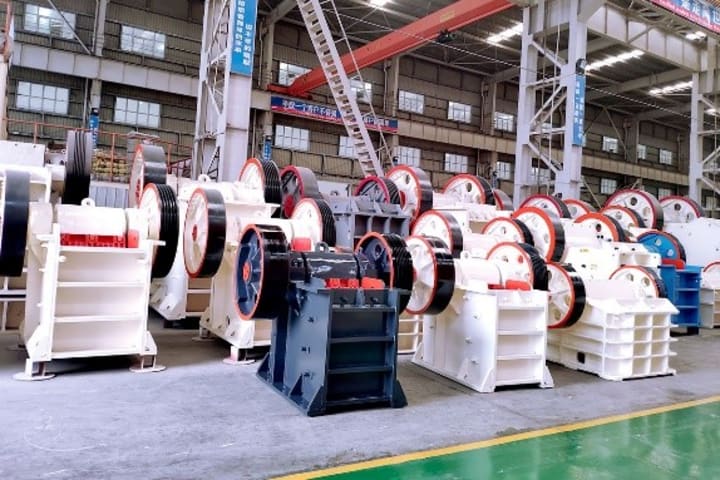
Key Advantages:
Simple design and structure
Lower capital and maintenance costs
Ideal for hard, abrasive materials like granite, basalt, and iron ore
Capable of handling large feed sizes (up to 1 meter)
Gyratory Crusher Overview
A gyratory crusher also uses compression, but with a rotating cone-shaped crushing head that gyrates inside a concave shell. Material is continuously crushed as it moves downward through the crushing chamber.
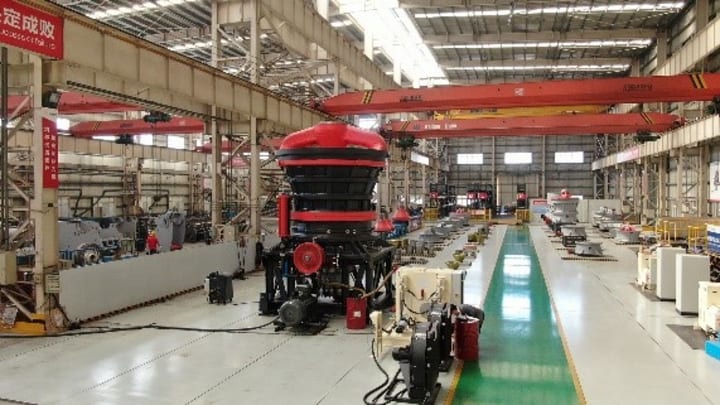
Key Advantages:
Higher capacity than jaw crushers
Suitable for very high throughput operations
Capable of handling very hard and abrasive rock
Constant feed opening reduces chances of blockages
Key Factors to Consider When Choosing a Primary Crusher
1. Feed Size and Capacity Requirements
The feed size is a major factor when selecting a primary crusher. Jaw crushers typically handle feed sizes up to 1,000 mm, while gyratory crushers can accept even larger sizes. If you're working with exceptionally large boulders, a gyratory crusher may be more suitable.
Jaw Crusher: Ideal for smaller operations with feed size under 1 meter
Gyratory Crusher: Better suited for large-scale operations with high-volume, oversized feed
2. Material Characteristics
The hardness, abrasiveness, and moisture content of the material will influence your decision.
Jaw crushers perform well with hard and abrasive rock.
Gyratory crushers are more effective when dealing with materials that are not just hard but also bulky and dense.
For sticky or clay-rich materials, jaw crushers are usually easier to clean and maintain.
3. Throughput Requirements
If your operation requires high output (e.g., >1,000 tons per hour), a gyratory crusher is often preferred due to its higher crushing capacity. For medium-capacity plants or portable crushing setups, a jaw crusher may offer more flexibility.
4. Maintenance and Operating Costs
Jaw crushers are known for their simple mechanics and lower maintenance needs. They are easier to install and require fewer special tools or technicians. Gyratory crushers, while durable and powerful, involve more complex maintenance procedures and higher upfront costs.
Tip: If ease of maintenance and lower capital costs are priorities, choose a jaw crusher. For long-term durability and higher efficiency in large operations, consider a gyratory crusher.
5. Space and Installation Constraints
Jaw crushers are generally more compact and easier to install in limited-space environments such as underground mines or mobile plants. Gyratory crushers, while larger and bulkier, are typically installed in permanent installations due to their size and weight.
Conclusion: How to Decide
Both jaw and gyratory crushers serve as effective primary crushers in different scenarios. Choose a jaw crusher for small to medium operations, mobile setups, and applications with moderate throughput and space constraints. Choose a gyratory crusher for high-capacity, continuous feed operations where long-term durability and efficiency are critical.
Selecting the right primary crusher is foundational to the productivity and success of your crushing operation. By carefully evaluating your material characteristics, capacity goals, and installation constraints, you can make a well-informed decision that enhances both operational efficiency and cost-effectiveness.
About the Creator
Keep reading
More stories from FTM Machine and writers in Trader and other communities.
Ilmenite: An Ore of Titanium | Beneficiation and Plant
Ilmenite is the most important titanium ore. It is often used for the production of the metal titanium and titanium dioxide (FeTiO3) accessory products, such as paint, paper, titanium white (white pigment), plastics, fabrics, etc.
By FTM Machine3 years ago in Earth
Understanding Bonds: A Beginner’s Guide to Fixed-Income Investing
Introduction Bonds are debt securities issued by governments, corporations, or other entities to raise capital. Investors who buy bonds are essentially lending money in exchange for interest payments and the return of principal at maturity.
By Hammad Nawaz6 days ago in Trader



Comments
There are no comments for this story
Be the first to respond and start the conversation.