
Iran Real Estate Market 2026: Urban Growth, Investment Potential & Market Dynamics
How demographic trends, housing demand and economic conditions are shaping Iran’s real estate sector

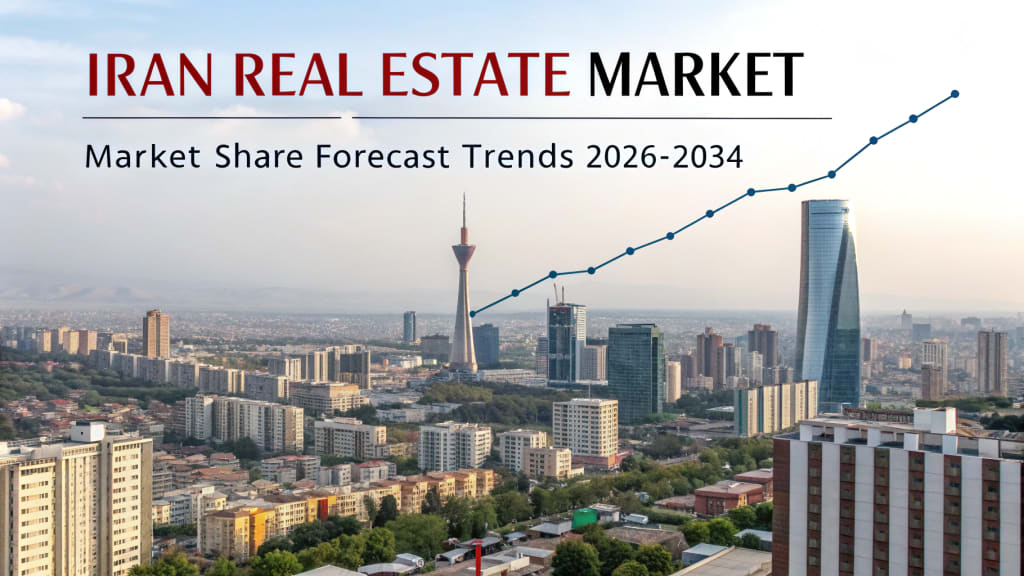
The Iran real estate market remains a cornerstone of the country’s economic and investment landscape as residential needs, demographic growth and gradual policy reforms influence housing demand, commercial property development and urban transformation. According to market estimates, the Iran real estate market size reached USD 29.54 Billion in 2025 and is projected to grow to USD 39.12 Billion by 2034, exhibiting a CAGR of 2.85% during 2026–2034. This expansion reflects an enduring appetite for property ownership, rental housing, commercial developments and infrastructure-linked real estate activity, even amid broader macroeconomic dynamics.
Real estate in Iran spans residential housing, commercial office and retail spaces, industrial logistics facilities, hospitality and mixed-use developments — each responding to population shifts, evolving consumer expectations and urbanisation patterns that define the sector’s trajectory.
What’s Driving Market Growth?
Iran’s sizable and young demographic — focused in key cities like Tehran, Mashhad, Isfahan, Shiraz, and Tabriz — persists in driving the need for housing and rental accommodations. Urban migration, the establishment of households, and multi-generational families looking for housing close to jobs and educational centers sustain ongoing housing requirements.
Housing Demand & Ownership Culture Property ownership holds significant cultural and economic value in Iran, leading to ongoing demand for residential units in various segments. Middle-income families and new buyers are actively searching for homes that align with their lifestyle choices, budget limitations, and local amenities.
Infrastructure & Development Projects Government-led infrastructure initiatives and urban redevelopment programmes contribute to real estate demand by improving connectivity, enabling township expansions, and unlocking opportunities for new housing, commercial and mixed-use developments. Transit-oriented projects and urban regeneration schemes enhance access and boost neighbourhood desirability.
Commercial & Retail Property Expansion Retail growth, service sector expansion and enterprise decentralisation drive demand for office spaces, retail complexes and mixed-use properties. As consumer behaviour shifts toward modern shopping experiences and service-oriented businesses, commercial property activity adapts to evolving market requirements.
Market Segmentation & Key Insights
By Property Type The Iran real estate market includes residential housing units, commercial offices and retail spaces, industrial and logistics properties, hospitality and tourism-linked real estate, mixed-use developments, and land parcels for future construction. Residential units command the largest share due to high demand for living space.
By Geography Demand is most prominent in major urban centres such as Tehran, Mashhad, Isfahan, Shiraz, Tabriz and Karaj, where population density, employment opportunities and infrastructure access drive property purchases and rentals.
By End User End users comprise individual homeowners, real estate investors, corporate tenants, small and medium enterprises (SMEs), institutional landlords, developers, and government entities seeking properties for public use or infrastructure projects.
By Distribution & Transaction Channels Real estate transactions occur through estate agencies, digital property listing platforms, developer sales offices, property brokerage networks, auctions, direct owner sales, and mortgage-linked purchase arrangements where available — enabling buyers and investors to access listings, finance options and property portfolios.
What the Opportunities Are?
Affordable & Mid-Income Housing Development There is strong opportunity for developers to focus on affordable and mid-income housing that meets the needs of first-time buyers, young families and urban renters, addressing shortages in quality and cost-accessible units while supporting broader homeownership goals.
Mixed-Use & Transit-Oriented Projects Integrating residential, commercial, retail and public space components into transit-oriented developments near major transport corridors can enhance liveability, reduce commute times, and attract lifestyle-oriented buyers seeking convenience and integrated amenities.
Urban Renewal & Infill Development Redevelopment of older urban districts, refurbishment of outdated building stock, and infill construction in established neighbourhoods offer attractive prospects for boosting property values, enhancing community infrastructure and meeting evolving market tastes.
Commercial Real Estate & Flexible Workspaces With rising business activity, there are opportunities in modern office spaces, flexible coworking centres and retail-anchor properties that support SMEs, startups and expanding service sectors — catering to dynamic commercial real estate demand.
Property Tech & Digital Real Estate Platforms Digital platforms that simplify property search, virtual tours, transaction facilitation, mortgage coordination and investment analytics can accelerate buyer experience, enhance market transparency and support efficient deal-making between buyers and sellers.
Recent News and Developments in Iran Real Estate Market
Jul 2025: Real estate industry groups highlighted an uptick in urban housing demand, particularly among young families and first-time buyers, supported by promotional financing schemes and buyer incentives in select regions.
Sep 2025: Reports showed rising interest among developers in mixed-use projects near transit hubs and commercial corridors, reflecting a shift toward integrated urban living and multi-purpose property models.
Nov 2025: Digital property platforms reported increased engagement as buyers leveraged virtual tours and online listings to explore residential and commercial properties — expanding reach beyond traditional sales channels and improving market access.
Why Should You Know About Iran Real Estate Market?
Understanding this market is essential as it shows how demographic trends, cultural values, and economic conditions affect real estate demand in one of the region's largest economies. The real estate market in Iran goes beyond mere property deals — it embodies enduring dreams of owning homes, urban living choices, and the strategic gathering of assets that transcend generations
For investors, the real estate market offers exposure to a fundamental asset class that combines stable demand, diversification potential and inflation-hedging characteristics, particularly in urban and developing districts. The projected CAGR of 2.85% suggests measured but consistent growth anchored in enduring housing needs and commercial property expansion.
For developers, real estate professionals and urban planners, understanding segmentation, demographic drivers, and opportunity zones helps inform project pipeline decisions, pricing strategies and design innovations that resonate with diverse buyer segments and market conditions.
In essence, the Iran real estate market captures how people, places and economic forces intersect — making it a compelling area for investors, homebuyers and trend watchers who want to understand property dynamics in a changing urban landscape.
About the Creator
Thomas
Market Research Analyst | Industry Trends & Forecasting | Turning market data into clear, actionable business insights across global sectors.
How Money Moves When No One Is Watching
Most people imagine money moving loudly. It moves through markets, headlines, and visible transactions. Share prices rise and fall, deals are announced, and governments issue statements. From the outside, finance appears to be a public performance. Yet much of the most important movement of capital happens quietly, away from screens and attention, long before anyone realises that anything has changed.
By Hamish Clarke3 days ago in Trader


Comments
There are no comments for this story
Be the first to respond and start the conversation.