
Iran Seeds Market 2026: Agricultural Supply, Crop Productivity & Sustainable Farming
How crop demand, farming practices and quality seed adoption are shaping growth in Iran’s seeds sector

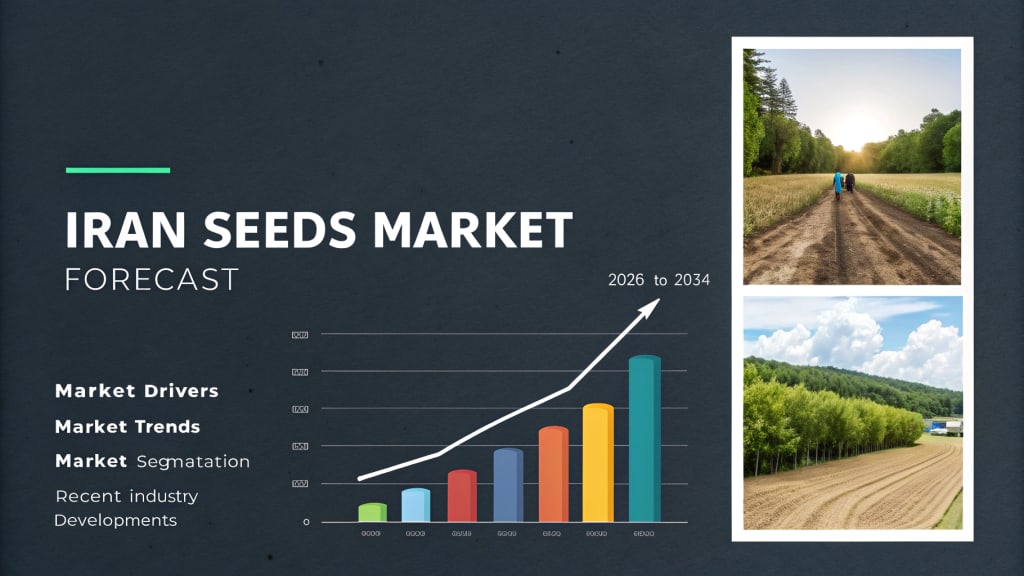
The Iran seeds market is steadily expanding as farmers, agribusinesses and supply chains focus on improving crop yields, enhancing food security and embracing modern agricultural practices. According to market estimates, the Iran seeds market size reached USD 183.88 Million in 2025 and is projected to grow to USD 234.69 Million by 2034, exhibiting a CAGR of 2.47% during 2026–2034. Seeds — including cereals, oilseeds, vegetable seeds, forage seeds and hybrid varieties — are foundational inputs in crop production, directly influencing productivity, plant health and farming outcomes.
The growth in the seeds market reflects wider trends in commercial farming, rural investment, quality seed adoption, varietal improvements and demand for crops that support both domestic consumption and industrial processing. As Iran’s agricultural landscape evolves, seeds remain central to productivity strategies that balance yield, resource efficiency and crop quality.
What’s Driving Market Growth?
Enhancing crop productivity and quality inputs is a fundamental focus for farmers and agribusiness participants. Premium seeds — particularly hybrid and certified types — provide improved germination rates, enhanced disease resistance, drought resilience, and consistent growth traits in comparison to conventional seeds. Farmers are progressively embracing enhanced seed varieties to increase yields, minimize crop losses, and optimize the use of inputs like fertilizers and water.
Supportive Agricultural Practices Government initiatives and agricultural assistance programs focused on rural development, farm mechanization, seed certification, and extension services promote increased formal seed utilization. These programs promote the use of enhanced seeds instead of farm-stored varieties, enabling a reliable supply and improved crop management techniques throughout growing seasons.
Crop Variety & Market Needs The Iran seeds market caters to a wide array of crop types, such as cereals (wheat, barley), oilseed varieties (sunflower, canola), vegetable seeds, forage and pasture seeds, legumes, corn and sorghum, along with hybrid seeds tailored for specific performance attributes. Diversity in crop types allows farmers to handle risks, rotate their crops, and take advantage of market prices that benefit specific agricultural commodities.
Retail Access & Farmer Awareness Expansion of seed distributors, agricultural co-ops, farm input supply chains and rural e-commerce platforms improves farmer access to certified and quality seed products. Outreach campaigns, agronomic advisory services and demonstration plots raise awareness of seed performance benefits, encouraging wider adoption.
Market Segmentation & Key Insights
By Seed Type The market is segmented by conventional seeds, hybrid seeds, vegetable seeds, forage seeds and certified/quality seeds. Hybrid seeds often represent a significant portion due to superior performance attributes, especially in commercial crop systems where yield consistency and stress resistance matter.
By Crop Application Seeds are used across key crop categories including cereals, oilseeds, vegetables, forages, legumes and industrial crops. Cereal and oilseed seeds typically contribute large volumes due to their extensive cultivation across major farming regions.
By Distribution Channel Seeds reach farmers through agricultural input retailers, seed companies/distributors, co-operative networks, wholesale agricultural markets, farm suppliers, online agritech platforms, direct enterprise contracts and government extension channels that facilitate certified seed delivery.
By Geography Demand patterns vary across provinces and farming zones, with regions such as Tehran’s agricultural hinterlands, Khuzestan, Isfahan, Fars and Khorasan acting as major cultivation areas where seed demand aligns with cropping intensity and irrigation availability.
What the Opportunities Are?
Hybrid & Premium Seed Varieties There is strong opportunity to introduce higher-yield hybrid seed offerings and premium quality seeds tailored to local soil conditions, climate stressors and specific crop performance traits. These varieties appeal to progressive farmers looking to enhance results and maximise returns per hectare.
Precision Agriculture & Seed Technology Integration Integrating seeds with precision agriculture tools, soil mapping, digital seeding recommendations and crop modelling enhances seed performance outcomes. Digital advisory services that help farmers optimise variety selection and sowing timelines can differentiate seed suppliers.
Value-Added Services & Farmer Education Providers can offer agronomic support, seed treatment options, pest management guidance and crop planning tools that extend beyond basic product sales — building deeper relationships and improving crop outcomes.
Cold Chain & Supply Infrastructure Expanding temperature-controlled storage, seed preservation facilities and logistics solutions ensures seed quality is maintained from manufacturer to farm gate, especially for hybrid seeds that require specific handling conditions.
Recent News and Developments in Iran Seeds Market
Jul 2025: Agricultural extension services highlighted expanded awareness campaigns on hybrid seed benefits, promoting yield improvement and disease resistance among farming communities in major crop belts.
Sep 2025: Seed distribution networks reported increased investments in rural retail access points and farmer advisory kiosks, improving availability of certified seeds and agronomic guidance in remote areas.
Nov 2025: Crop innovation forums emphasised quality assurance and seed certification processes as key drivers for building trust between seed suppliers and farmers, encouraging uptake of improved seed technologies.
Why Should You Know About Iran Seeds Market?
You should know about this market because it reflects how agricultural productivity, rural development and food security priorities intersect to shape ongoing demand for foundational agricultural inputs. Seeds form the basis of crop yields, farm profitability, mechanised farming practices and sustainable agricultural pathways that matter deeply to food systems and rural livelihoods.
For investors, the seeds market represents exposure to a key agricultural input segment with stable, enduring demand tied to cropping cycles, farmer adoption trends and ongoing transitions to higher-yielding seed varieties. The projected CAGR of 2.47% signals consistent growth anchored in farming fundamentals rather than speculative fluctuations.
For agribusinesses, seed companies, distributors and agricultural service providers, understanding segmentation, crop preferences, performance traits and distribution dynamics helps craft tailored products, pricing strategies and delivery solutions that resonate with farmer needs and yield expectations.
In essence, the Iran seeds market encapsulates how crop performance, input innovation and agricultural evolution converge — making it an insightful segment to watch for stakeholders seeking opportunities in food production, farm supply chains and rural economic progress.
About the Creator
Thomas
Market Research Analyst | Industry Trends & Forecasting | Turning market data into clear, actionable business insights across global sectors.
US Rare Earth Elements Market Growth, Trends & Outlook 2034
US Rare Earth Elements Market Overview The US Rare Earth Elements (REE) Market is gaining significant strategic importance as the country strengthens domestic supply chains and reduces dependence on imports. Rare earth elements are critical components in advanced technologies, including electric vehicles, renewable energy systems, defense equipment, semiconductors, and consumer electronics.
By Kim Soo hyun6 days ago in Trader
Wearable Technology Market Size and Forecast 2025–2033
Introduction The global technology landscape is undergoing a quiet but powerful transformation—one that sits not in our hands, but on our wrists, in our shoes, and even woven into our clothes. Wearable technology has evolved far beyond simple step counters and notification screens. Today, it plays a central role in health monitoring, fitness management, workplace safety, and even immersive digital experiences.
By shibansh kumar6 days ago in Trader


Comments
There are no comments for this story
Be the first to respond and start the conversation.