
Wearable Technology Market Size and Forecast 2025–2033
From Fitness Tracking to Digital Healthcare: How Smart Wearables Are Reshaping the Global Tech Landscape

Introduction
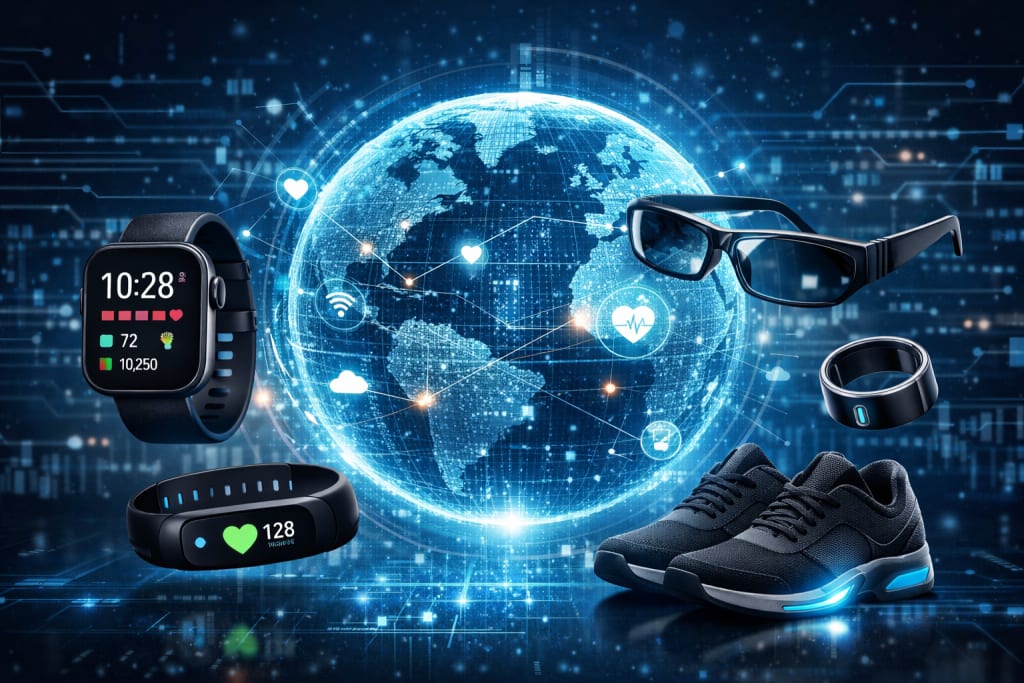
The global technology landscape is undergoing a quiet but powerful transformation—one that sits not in our hands, but on our wrists, in our shoes, and even woven into our clothes. Wearable technology has evolved far beyond simple step counters and notification screens. Today, it plays a central role in health monitoring, fitness management, workplace safety, and even immersive digital experiences.
According to Renub Research, the Wearable Technology Market is expected to grow from US$ 82.33 billion in 2024 to US$ 230.15 billion by 2033, expanding at a compound annual growth rate (CAGR) of 12.1% from 2025 to 2033. This impressive growth trajectory reflects rising consumer interest in health tracking, rapid advancements in sensor technology, increasing healthcare applications, and deeper integration with Internet of Things (IoT) ecosystems.
From smartwatches and fitness bands to smart rings, augmented reality glasses, and sensor-enabled clothing, wearable devices are becoming an everyday companion for millions of people worldwide. What once felt futuristic is now a normal part of modern life—and the market is only getting started.
Global Wearable Technology Industry Overview
Wearable technology refers to electronic devices designed to be worn on the body as accessories, clothing, or implants. These devices are capable of collecting real-time data such as heart rate, blood pressure, oxygen saturation, sleep quality, physical activity, calorie consumption, and even stress levels.
Today’s wearables serve a diverse user base that includes fitness enthusiasts, athletes, healthcare patients, corporate workers, explorers, and everyday consumers looking to live healthier and more connected lives. Smartwatches, wireless earbuds, fitness trackers, and smart shoes are no longer niche products—they are mainstream consumer electronics.
One of the biggest reasons for this surge is the growing global focus on health and wellness. Consumers increasingly want continuous insights into their bodies rather than occasional checkups. Wearables provide exactly that: ongoing, non-invasive, real-time monitoring that helps users understand their health patterns and make informed lifestyle choices.
The healthcare sector has played a particularly important role in accelerating adoption. Wearables are now widely used for remote patient monitoring, early disease detection, and post-treatment follow-ups. In many cases, these devices act as early warning systems, alerting users to irregular heart rhythms, abnormal oxygen levels, or unusual activity patterns.
At the same time, innovation in artificial intelligence (AI), the Internet of Things (IoT), and even virtual and augmented reality (VR/AR) is expanding what wearables can do. Devices are becoming smarter, more accurate, and more seamlessly connected to broader digital ecosystems.
Key Factors Driving the Wearable Technology Market Growth
1. Integration with the Internet of Things (IoT)
The integration of wearable devices into IoT ecosystems has significantly enhanced their functionality and appeal. Today’s wearables can communicate effortlessly with smartphones, smart home devices, fitness equipment, and healthcare platforms, creating a connected environment where data flows smoothly across systems.
By the end of 2023, billions of IoT-connected devices were already in use globally, and wearables are becoming an increasingly important part of this network. For example, a fitness tracker can now sync with smart gym equipment, health apps, and even smart home systems to provide a more holistic view of a user’s lifestyle.
The rollout of 5G technology is expected to further accelerate this trend by enabling faster data transfer, lower latency, and more reliable connections. This will support more advanced applications such as real-time health monitoring, cloud-based analytics, and seamless device-to-device communication.
2. Growing Use in Medical and Healthcare Applications
Wearable technology is transforming healthcare by making continuous, non-invasive monitoring a reality. Devices such as smartwatches and medical-grade wearables can now track heart rhythm, blood oxygen levels, sleep patterns, and physical activity with impressive accuracy.
These capabilities are particularly valuable for managing chronic diseases, monitoring elderly patients, and supporting remote healthcare models. Instead of relying solely on hospital visits, doctors can now access real-time data from patients, allowing for earlier interventions and more personalized treatment plans.
Remote patient monitoring has gained strong momentum, especially in the post-pandemic world, where healthcare systems are focusing on reducing unnecessary hospital visits while maintaining quality care. Insurance companies and healthcare providers are also beginning to recognize the value of wearable data in promoting preventive healthcare and healthier lifestyles.
3. Rising Health and Fitness Awareness
Another major growth driver is the global rise in health and fitness awareness. Consumers across age groups are becoming more proactive about their well-being, focusing on exercise, sleep quality, stress management, and overall lifestyle improvement.
Wearables make this easier by offering goal setting, real-time feedback, progress tracking, and integration with mobile health apps. Whether it’s counting steps, monitoring workouts, or analyzing sleep cycles, these devices turn health management into a daily, data-driven habit.
The increasing prevalence of lifestyle-related diseases has also pushed more people toward preventive healthcare solutions. Wearable health monitors fit perfectly into this trend, offering accessible and user-friendly tools for long-term wellness management.
Challenges in the Wearable Technology Market
Data Privacy and Security Concerns
Despite rapid growth, data privacy and security remain significant concerns. Wearable devices collect highly sensitive personal information, including health metrics, location data, and daily activity patterns. If not properly protected, this data can become vulnerable to cyberattacks, unauthorized access, or misuse.
Many consumers worry about who owns their data, how it is stored, and whether it is being shared with third parties. The lack of fully standardized global regulations for wearable data privacy also adds complexity for manufacturers operating across multiple regions.
To sustain long-term growth, companies must invest heavily in cybersecurity, transparent data policies, and compliance with evolving privacy regulations.
Battery Life Limitations
Battery life continues to be a practical challenge for both users and manufacturers. Advanced features such as high-resolution displays, continuous health monitoring, GPS tracking, and wireless connectivity consume significant power, often requiring frequent recharging.
For devices meant to be worn all day—or even all night—short battery life can be inconvenient and disruptive. While battery technology is improving, manufacturers still face the difficult task of balancing performance, size, comfort, and power efficiency.
Wearable Technology Market Overview by Regions
North America
North America remains one of the leading regions in the wearable technology market, driven by high consumer adoption, strong healthcare infrastructure, and rapid technological innovation. The United States, in particular, dominates the regional market with widespread use of smartwatches, fitness trackers, and medical wearables.
Europe
Europe is seeing steady growth, supported by digital health initiatives, aging populations, and increasing interest in wellness technology. Countries like Germany, the UK, and France are integrating wearables into healthcare and lifestyle management at a growing pace.
Asia-Pacific
The Asia-Pacific region is emerging as one of the fastest-growing markets, fueled by large populations, expanding middle classes, and strong consumer electronics manufacturing ecosystems. China, Japan, South Korea, and India are key contributors to regional growth.
Latin America, Middle East & Africa
These regions are gradually adopting wearable technology, supported by rising smartphone penetration, improving digital infrastructure, and growing awareness of health and fitness. While challenges related to cost and healthcare integration remain, long-term growth potential is strong.
Country-Level Insights
United States Wearable Technology Market
The U.S. market is driven by strong consumer demand for fitness and health tracking, along with rapid advancements in AI and sensor technology. Wearables are increasingly used not only for personal fitness but also for chronic disease management and corporate wellness programs. Despite challenges like data privacy and battery life, innovation continues to push the market forward.
Germany Wearable Technology Market
Germany’s market benefits from a well-developed digital health ecosystem and an aging population that increasingly relies on health monitoring technologies. Wearable payment systems and fashion-forward designs are also gaining traction, reflecting consumer demand for both functionality and style.
China Wearable Technology Market
China is one of the most dynamic wearable markets globally, supported by strong domestic manufacturers, government initiatives, and rapid adoption of 5G and AI technologies. Smartwatches, fitness trackers, and AR glasses are gaining widespread popularity, making China a key growth engine for the global market.
United Arab Emirates Wearable Technology Market
The UAE’s tech-savvy population, strong digital transformation initiatives, and rising health awareness are driving rapid adoption of wearable devices. Smartwatches and fitness trackers dominate the market, while emerging technologies like smart fabrics and AR wearables are beginning to attract attention.
Recent Developments in the Wearable Technology Industry
June 2024: Samsung entered the smart ring segment with the launch of its AI-powered Galaxy Ring, expanding its wearable ecosystem and strengthening its position in digital health monitoring.
June 2024: Wearable Devices Ltd. showcased new XR-integrated wearable solutions in collaboration with Qualcomm Technologies at AWE 2024, highlighting the growing convergence of wearables and immersive technologies.
Market Segmentation
By Product
Wrist-Wear
Eye-Wear & Head-Wear
Foot-Wear
Neck-Wear
Body-Wear
Others
By Application
Consumer Electronics
Healthcare
Enterprise & Industrial Application
Others
By Region
North America (United States, Canada)
Europe (France, Germany, Italy, Spain, UK, Belgium, Netherlands, Turkey)
Asia Pacific (China, Japan, India, South Korea, Thailand, Malaysia, Indonesia, Australia, New Zealand)
Latin America (Brazil, Mexico, Argentina)
Middle East & Africa (Saudi Arabia, UAE, South Africa)
Key Companies Profiled
Samsung Group
Oculus VR LLC (Facebook)
Alphabet Inc.
Sony Corporation
HTC Corporation
Fitbit Inc.
Xiaomi Inc.
Apple Inc.
Microsoft Corporation
DAQRI Company
AIQ Smart Clothing Inc.
These companies are actively investing in product innovation, ecosystem integration, and strategic partnerships to strengthen their positions in the global wearable technology market.
Final Thoughts
The wearable technology market is no longer just about counting steps or checking notifications—it is becoming a central pillar of digital health, connected living, and personalized technology. With the market projected to grow from US$ 82.33 billion in 2024 to US$ 230.15 billion by 2033, the next decade will likely see wearables become even more intelligent, more integrated, and more essential to daily life.
As sensor accuracy improves, AI capabilities expand, and connectivity becomes faster and more reliable, wearable devices will continue to move closer to the core of healthcare, fitness, enterprise productivity, and consumer electronics. While challenges like data privacy and battery life remain, the overall direction is clear: wearable technology is set to play a defining role in the future of how we live, work, and take care of our health.
About the Creator
Keep reading
More stories from shibansh kumar and writers in Trader and other communities.
Wearable Technology Market Size and Forecast 2025–2033
Introduction The global technology landscape is undergoing a quiet but powerful transformation—one that sits not in our hands, but on our wrists, in our shoes, and even woven into our clothes. Wearable technology has evolved far beyond simple step counters and notification screens. Today, it plays a central role in health monitoring, fitness management, workplace safety, and even immersive digital experiences.
By shibansh kumarabout 15 hours ago in Trader
Global Health and Wellness Market Size & Forecast 2025–2033: The Business of Living Better
Introduction: Wellness Becomes a Global Economic Powerhouse The global health and wellness industry is no longer a niche lifestyle trend—it has evolved into one of the most influential and resilient sectors of the world economy. According to Renub Research, the Health and Wellness Market is projected to grow from US$ 3,520.00 billion in 2024 to US$ 4,818.30 billion by 2033, expanding at a CAGR of 3.55% from 2025 to 2033.
By Sakshi Sharmaabout 8 hours ago in Trader
Australia’s Confectionery Market 2026: Indulgence, Premiumisation and the Future of Sweet Innovation
Australia Confectionery Market Overview Australia’s confectionery market continues to demonstrate resilience and steady expansion, supported by strong consumer affinity for sweet treats across everyday consumption, celebrations and gifting occasions. The category encompasses chocolates, sugar confectionery, gums, jellies, mints and specialty products, all widely available through diverse retail channels. While indulgence remains central to consumption, the industry is increasingly adapting to shifting consumer priorities around health, sustainability and premium experiences.
By Amyra Singh5 days ago in Trader



Comments
There are no comments for this story
Be the first to respond and start the conversation.