
Japan Organic Food Market Size and Forecast 2025–2033
Rising Health Awareness, JAS Certification, and Sustainable Farming Drive a Decade of Strong Growth

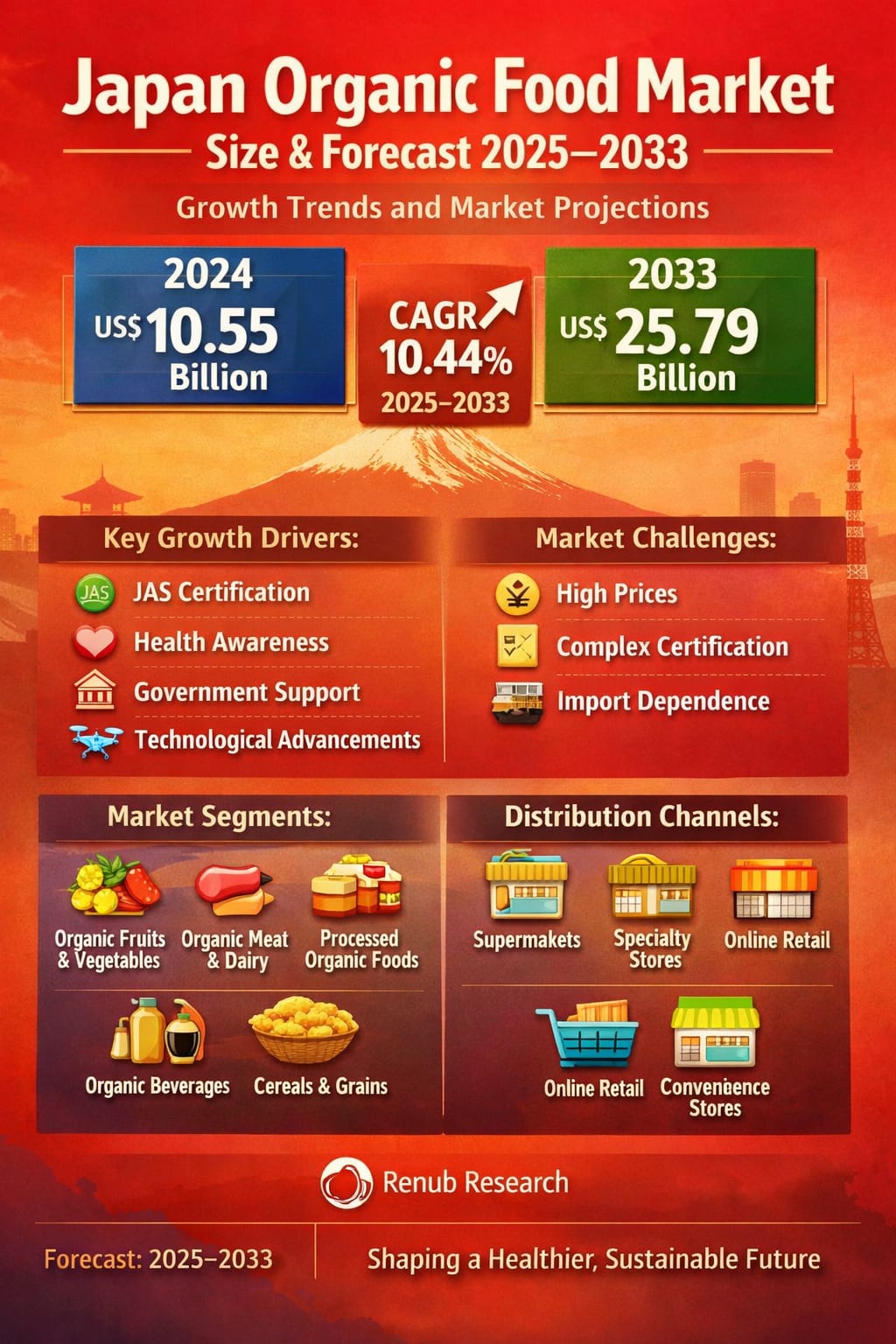
Japan Organic Food Market: A Market on the Rise
The Japan Organic Food Market is entering a decisive growth phase as consumers increasingly prioritize health, food safety, and environmental sustainability in their daily purchasing decisions. According to industry estimates, the market is expected to reach US$ 25.79 billion by 2033, up from US$ 10.55 billion in 2024, expanding at a robust CAGR of 10.44% from 2025 to 2033. This strong upward trajectory reflects a structural shift in Japanese food consumption, where quality, transparency, and sustainability are becoming just as important as price and convenience.
Traditionally, the Japanese diet has been closely linked to fresh, seasonal, and minimally processed foods. In many ways, organic food values align naturally with this cultural heritage. However, modern lifestyle changes, urbanization, and rising concerns about pesticide residues, chemical additives, and genetically modified organisms have further accelerated interest in certified organic products. While Japan’s organic food sector is still relatively small compared to markets such as the United States or parts of Europe, it is gaining steady momentum, particularly among urban consumers and younger generations who are more environmentally and health conscious.
Retail expansion and the rapid growth of e-commerce platforms have played a crucial role in making organic food more accessible. Supermarkets, specialty stores, and online retailers are increasingly broadening their product portfolios to include organic grains, vegetables, dairy products, beverages, snacks, and processed foods. At the same time, government initiatives—most notably the Japanese Agricultural Standards (JAS) for organic certification—have strengthened market credibility by improving product traceability and consumer trust.
Despite these positive developments, the industry still faces notable structural challenges. Limited arable land, high labor costs, and strict farming standards restrict domestic supply, making Japan heavily dependent on imports for several organic product categories. Moreover, higher prices and a complex certification process continue to act as barriers for both producers and consumers. Even so, the long-term outlook remains optimistic, supported by demographic shifts, rising lifestyle-related diseases, and a broader societal push toward sustainable and ethical consumption.
Key Factors Driving the Japan Organic Food Market Growth
Government Initiatives and Certification
One of the most important pillars supporting the growth of Japan’s organic food market is strong regulatory backing from the government. The Japanese Agricultural Standards (JAS) system plays a central role in ensuring authenticity, quality, and consumer confidence in organic products. These standards strictly regulate production methods, including the prohibition of synthetic pesticides, chemical fertilizers, and genetically modified organisms. As a result, JAS certification has become a trusted benchmark for consumers seeking genuine organic products.
Beyond certification, the Japanese government has also introduced policies to encourage sustainable agriculture, including funding for research, technical training programs, and financial incentives for farmers transitioning to organic methods. These measures not only help improve supply-side capabilities but also contribute to building a more structured and transparent organic ecosystem. Over time, this regulatory support is expected to further normalize organic consumption and strengthen the market’s long-term growth foundation.
Technological Advancements in Farming
Technology is transforming the way organic farming is practiced in Japan. The adoption of precision agriculture tools—such as drones, soil sensors, and Internet of Things (IoT) devices—has made it easier for farmers to monitor crop health, optimize irrigation, and manage soil quality without relying on synthetic inputs. These innovations are particularly important in a country where arable land is limited and efficiency is critical.
By improving yields and reducing resource waste, modern farming technologies are making organic agriculture more economically viable. This not only helps farmers maintain consistent quality standards but also addresses one of the long-standing challenges of organic farming: higher production costs. As these technologies become more widespread, they are expected to play a key role in scaling up Japan’s organic food production while preserving environmental sustainability.
Retail Expansion and E-commerce Growth
The expansion of modern retail and digital commerce channels has significantly improved the availability and visibility of organic food in Japan. Large supermarket chains, specialty organic stores, and convenience stores are gradually increasing shelf space for organic products, making them easier to find for everyday consumers. At the same time, e-commerce platforms have emerged as powerful distribution channels, especially for niche and premium organic products.
Online retail offers additional advantages, such as detailed product information, certification transparency, and access to imported organic goods that may not be widely available in physical stores. For consumers in both urban and semi-urban areas, this convenience is helping integrate organic food into regular shopping habits. As digital adoption continues to grow, e-commerce is expected to remain one of the strongest drivers of market expansion.
Challenges in the Japan Organic Food Market
High Price Points and Consumer Perception
One of the most persistent obstacles to wider adoption of organic food in Japan is its higher price compared to conventional alternatives. Organic farming typically involves more labor-intensive practices, lower yields, and additional certification costs, all of which contribute to higher retail prices. While health-conscious and environmentally aware consumers are often willing to pay a premium, a large segment of the population remains price-sensitive.
In addition, some consumers still question whether organic products provide sufficient added value to justify the higher cost, viewing them as a lifestyle trend rather than a necessity. This perception limits market penetration, particularly in rural areas and among lower-income households. Addressing this challenge will require a combination of better consumer education, improved supply chain efficiency, and gradual price normalization as the market scales up.
Complex Certification and Regulatory Processes
Although the JAS certification system is essential for maintaining quality and trust, it can also be a barrier for producers—especially small and medium-sized farmers. The certification process involves strict compliance requirements, regular inspections, and extensive documentation, which can be both time-consuming and costly. For imported organic products, additional regulatory checks often increase lead times and expenses.
This complexity can discourage new entrants from joining the organic sector and may limit product diversity. Some producers even choose to market their products as “natural” or “eco-friendly” rather than fully certified organic, which can create confusion among consumers. Simplifying certification procedures and offering more institutional support to farmers could help expand supply and foster a more dynamic organic food ecosystem in Japan.
Market Segmentation Overview
By Product Type
The Japan Organic Food Market covers a broad range of product categories, reflecting changing consumer preferences and expanding retail offerings. Key segments include:
Organic Fruits and Vegetables: The largest and most visible segment, driven by daily household consumption and strong health associations.
Organic Meat, Poultry, and Dairy: Growing steadily as consumers become more conscious about animal welfare, antibiotic use, and food safety.
Organic Processed Food: Includes ready-to-eat meals, snacks, and packaged foods, catering to busy urban lifestyles while maintaining health credentials.
Organic Bread and Bakery: Supported by rising demand for clean-label and whole-grain products.
Organic Beverages: Covers organic tea, coffee, juices, and functional drinks, benefiting from Japan’s strong beverage consumption culture.
Organic Cereal and Food Grains: Gaining traction among consumers focused on balanced nutrition and traditional diets.
Others: Includes niche products such as organic condiments, baby food, and specialty health foods.
By Distribution Channel
Distribution plays a critical role in shaping consumer access and purchase behavior. The main channels include:
Supermarkets and Hypermarkets: The primary sales channel, offering convenience and growing organic product ranges.
Specialty Stores: Focused on premium and niche organic products, often catering to highly health-conscious consumers.
Convenience Stores: Gradually introducing organic options, especially in urban areas where convenience is key.
Online Retail Stores: One of the fastest-growing channels, driven by convenience, wider selection, and detailed product information.
Others: Includes direct-to-consumer sales, farmers’ markets, and cooperative stores.
Competitive Landscape and Company Analysis
The Japan Organic Food Market features a mix of global and regional players, each leveraging strong brands, supply chain networks, and product innovation to capture market share. Key companies active in this space include:
Danone S.A.
General Mills Inc.
Sprouts Farmers Market Inc.
The Hain Celestial Group Inc.
The Kroger Company
United Natural Foods Inc.
Dole Food Company Inc.
Newman’s Own
These companies compete through product diversification, strategic partnerships, investment in sustainable sourcing, and expansion of distribution networks. Many are also focusing on transparency, clean-label formulations, and eco-friendly packaging to align with evolving consumer expectations. Regular product launches, acquisitions, and collaborations with local suppliers are common strategies used to strengthen their presence in the Japanese market.
Market Outlook: 2025–2033
Looking ahead, the Japan Organic Food Market is set for sustained growth, supported by powerful structural trends. The projected rise from US$ 10.55 billion in 2024 to US$ 25.79 billion by 2033 highlights not only increasing demand but also the gradual mainstreaming of organic consumption in Japan. Health awareness, environmental concerns, and trust in certification systems will continue to shape purchasing decisions.
Urbanization, digital transformation, and changing dietary habits—particularly among younger consumers—are expected to further accelerate market expansion. At the same time, ongoing improvements in farming technology and supply chain efficiency may help reduce cost pressures over the long term, making organic products more accessible to a broader audience.
Final Thoughts
Japan’s organic food market is no longer just a niche segment—it is steadily evolving into an important pillar of the country’s broader food and beverage industry. With strong regulatory support, rising health consciousness, expanding retail access, and technological progress in agriculture, the sector is well-positioned for long-term growth. While challenges such as high prices and complex certification remain, the overall direction is clearly positive.
As sustainability and wellness continue to shape consumer behavior, organic food is likely to become an increasingly familiar part of everyday life in Japan. The impressive growth forecast for 2025–2033 reflects not just market expansion, but a deeper transformation in how Japanese consumers think about food, health, and the environment.
About the Creator
Keep reading
More stories from shibansh kumar and writers in Trader and other communities.
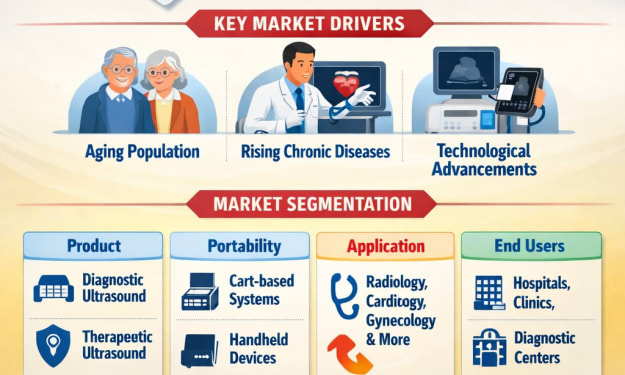
Japan Ultrasound Device Market Size and Forecast 2025–2033
Introduction: A Clearer View into Japan’s Healthcare Future Japan’s healthcare system is globally recognized for its technological sophistication, strong infrastructure, and commitment to early diagnosis and preventive care. Among the many medical technologies supporting this ecosystem, ultrasound devices play a particularly vital role. These systems, which use high-frequency sound waves to produce real-time images of internal organs and tissues, have become indispensable tools across hospitals, diagnostic centers, maternity clinics, and ambulatory care settings.
By shibansh kumarabout 16 hours ago in Trader
At My Wits’ End
Life is about taking out the trash and calling it trash because you have every reason to. It wasn't meant to be linear, they say. But the times you tried to make it straight led to problems, and you didn’t have the tools to put any of it to use. You don't put your right shoes on the right feet; you put the left shoes on the left feet. The grey hardened slab will trip you up anyway.
By Caitlin Charltona day ago in Humans


Comments
There are no comments for this story
Be the first to respond and start the conversation.