
Netherlands Diabetes Device Market Size and Forecast 2026–2034
From Smart Glucose Monitoring to Intelligent Insulin Delivery: How the Netherlands Is Building a Future-Ready Diabetes Care Ecosystem

Introduction: A Market Shaped by Technology and Prevention
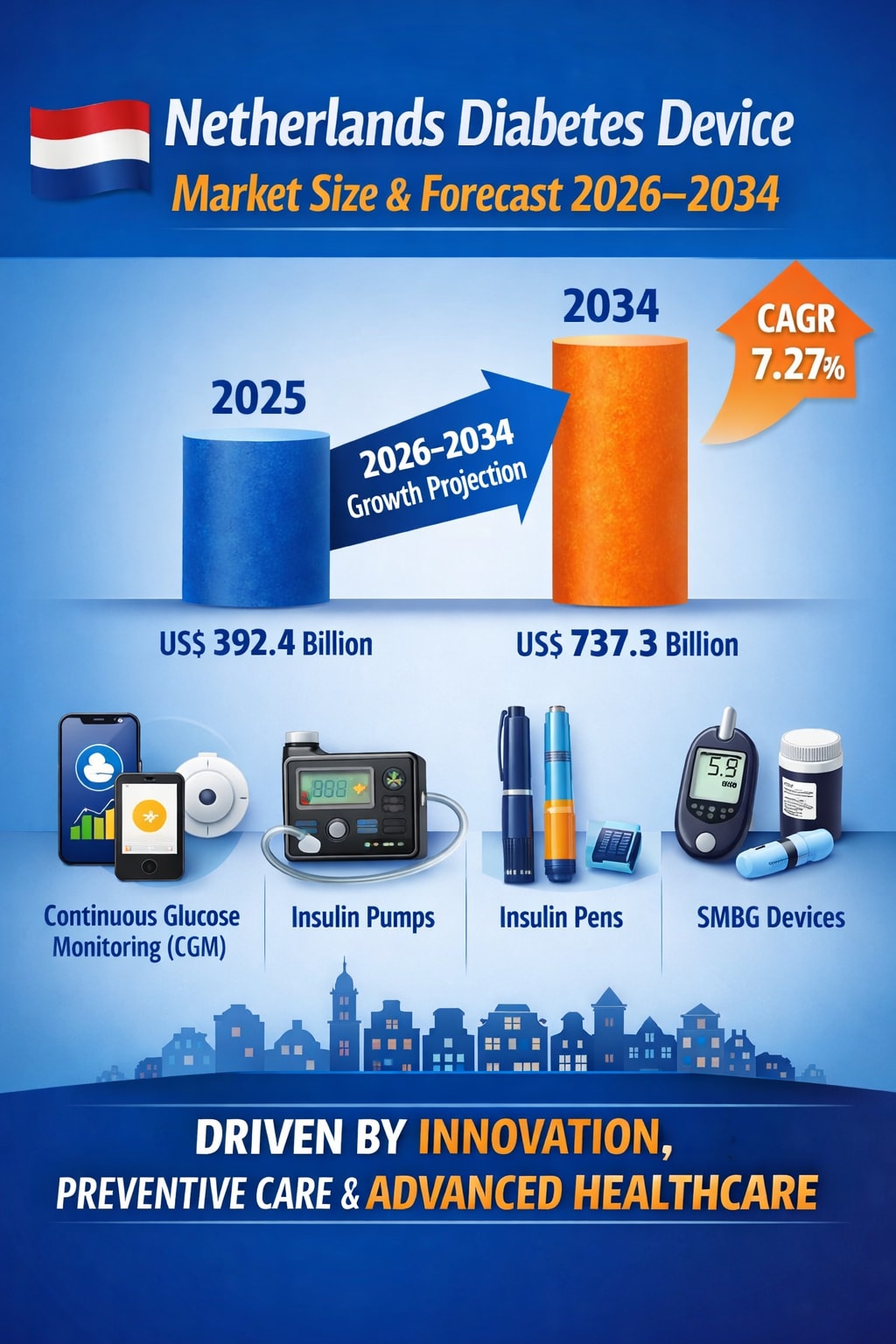
The market for diabetes-care devices in the Netherlands is entering a decisive growth phase, supported by rising disease prevalence, rapid adoption of digital health technologies, and one of Europe’s most advanced healthcare systems. According to industry projections, the Netherlands diabetes devices market is expected to grow from US$ 392.4 billion in 2025 to US$ 737.3 billion by 2034, registering a compound annual growth rate (CAGR) of 7.27% during 2026–2034.
This impressive expansion reflects more than just numbers. It highlights a fundamental shift in how diabetes is diagnosed, monitored, and managed in the country. From traditional self-monitoring blood glucose (SMBG) tools to sophisticated continuous glucose monitoring (CGM) systems and smart insulin delivery devices, the Dutch healthcare ecosystem is increasingly centered on early detection, continuous monitoring, and patient-led disease management.
The Netherlands has long been recognized for its strong primary healthcare network, preventive care culture, and openness to digital health solutions. These structural advantages are now translating into a fertile environment for diabetes device manufacturers, healthcare providers, and technology innovators.
What Are Diabetes Devices?
Diabetes devices refer to the medical tools used to monitor blood glucose levels and assist in insulin administration for people living with diabetes. These devices include:
Self-monitoring blood glucose (SMBG) systems such as glucometers and test strips
Continuous glucose monitoring (CGM) systems with sensors, transmitters, and receivers
Insulin delivery devices, including insulin pens and insulin pumps
Digital platforms and mobile applications that track glucose data and support treatment decisions
Over the past decade, these devices have evolved from simple measuring tools into connected, data-driven healthcare solutions. Modern systems now offer wireless connectivity, real-time alerts, cloud-based data sharing, and integration with smartphones and clinical platforms. This technological progress has significantly improved glycaemic control, reduced complications, and enhanced the quality of life for people with diabetes.
Netherlands Diabetes Devices Market Outlook
In the Netherlands, the growing focus on preventive healthcare and chronic disease management has placed diabetes devices at the center of long-term treatment strategies. The Dutch healthcare model encourages early diagnosis, continuous tracking, and patient empowerment, all of which strongly support the adoption of CGM systems, insulin pumps, and smart insulin pens.
High health awareness among citizens, easy access to medical technology, and supportive reimbursement policies have further accelerated market growth. As a result, diabetes devices are no longer seen as optional tools but as essential components of daily diabetes management.
With an estimated 1.2 million people living with diabetes in the Netherlands, and around 10% of them affected by type 1 diabetes, the demand for accurate, reliable, and user-friendly devices continues to rise. At the same time, lifestyle changes, aging populations, and increasing rates of overweight and obesity are contributing to a steady growth in type 2 diabetes cases, further expanding the addressable market.
Key Growth Drivers in the Netherlands Diabetes Devices Market
1. Strong Emphasis on Preventive and Self-Managed Care
One of the most powerful drivers of market growth is the Netherlands’ healthcare philosophy, which places prevention and self-management at the core of chronic disease care. People with diabetes are actively encouraged to monitor their glucose levels, understand their data, and make informed decisions about lifestyle and treatment.
Devices such as SMBG meters, CGMs, and insulin pens play a critical role in this approach. Patients rely on these tools to adjust diet, physical activity, and medication in real time. This not only improves clinical outcomes but also drives repeat purchases of consumables such as test strips, sensors, and infusion sets, creating a stable and recurring revenue stream for the market.
As more care shifts from hospitals to home settings, the demand for easy-to-use, reliable, and connected diabetes devices is expected to grow even further.
2. High Acceptance of Digital Health Technologies
The Netherlands is among Europe’s leaders in digital health adoption, and this has had a direct impact on the diabetes devices market. Both patients and healthcare professionals are increasingly comfortable using smart devices, mobile apps, and cloud-based platforms for disease management.
This digital readiness has boosted demand for:
Smart glucose monitoring systems
App-connected CGM devices
Smart insulin pens with dose tracking
Data-driven therapy optimization tools
Real-time access to glucose data has improved patient engagement and treatment adherence, while healthcare professionals are now using these digital insights to fine-tune therapy plans more precisely.
A notable example is the launch of Dexcom ONE+ in Europe in February 2024, a customizable real-time CGM system that can be worn on multiple body sites and offers enhanced usability. Such innovations underline how technology continues to reshape diabetes care in the Dutch market.
3. Supportive Healthcare Access and Reimbursement Policies
Another crucial growth factor is the strong reimbursement framework in the Netherlands. Patients can access advanced glucose monitoring and insulin delivery devices with significantly reduced out-of-pocket costs, which lowers financial barriers to adoption.
This supportive environment encourages:
Early use of CGM systems
Wider adoption of insulin pumps among insulin-dependent patients
Long-term compliance with prescribed devices
In 2023, Roche introduced the Accu-Chek Guide system in the Dutch market, offering improved ease of use compared to older glucose monitoring systems. Such product launches, combined with reimbursement support, continue to strengthen patient confidence in upgrading to newer technologies.
Challenges Facing the Netherlands Diabetes Devices Market
1. Healthcare Cost Pressure
Despite high adoption levels, cost remains a critical concern. Advanced technologies such as CGM systems and insulin pumps involve recurring expenses for sensors, consumables, and maintenance. From a healthcare policy perspective, authorities must continuously assess cost-effectiveness and budget impact.
These financial pressures can slow down the pace of adoption of high-end technologies, especially when balancing innovation with long-term sustainability of healthcare spending.
2. Clinician Adoption and Usability Barriers
While awareness is high, not all patients—particularly older individuals—feel comfortable using advanced digital devices. Challenges include:
Device setup and calibration
Data interpretation
Ongoing maintenance and sensor replacement
Concerns about wearing devices continuously
These factors can affect long-term adherence. Although education and support programs help, they also add complexity to care delivery and can limit the speed at which advanced technologies achieve universal adoption.
Segment Analysis
Netherlands SMBG Device Market
The SMBG segment in the Netherlands is mature and stable. Glucometers, test strips, and lancets remain essential tools for both type 1 and type 2 diabetes patients, particularly those managing their condition with oral medications or lifestyle changes.
Affordability, simplicity, and ease of use continue to support steady demand, especially among older patients and newly diagnosed individuals. While growth is slower compared to CGM systems, the replacement and consumables-driven nature of this segment ensures long-term market stability.
Netherlands CGM Device Market
The CGM segment is one of the fastest-growing areas of the Dutch diabetes devices market. These systems provide continuous, real-time glucose readings, trend analysis, and alerts, helping patients achieve tighter glycaemic control and reduce the risk of hypoglycaemia.
CGMs are widely used among:
Type 1 diabetes patients
Insulin-dependent type 2 diabetes patients
Smartphone integration and remote monitoring capabilities have further increased their appeal, making CGMs a cornerstone of modern diabetes management in the Netherlands.
Netherlands Insulin Pump Industry
The insulin pump market is driven by the need for precise, continuous insulin delivery. These devices offer greater flexibility and more stable glucose control compared to multiple daily injections.
Although insulin pumps require higher upfront investment and patient training, strong clinical support and structured education programs in the Netherlands have helped expand their adoption. This segment represents a high-value, technologically advanced part of the overall market.
Netherlands Insulin Pen Device Market
Insulin pens are widely used due to their convenience, portability, and dosing accuracy. They are commonly prescribed for both type 1 and type 2 diabetes patients, particularly those transitioning to insulin therapy.
The market includes both disposable and reusable pens, and ongoing innovation—such as smart pens with dose tracking—continues to enhance their role in daily diabetes care.
Distribution and End-User Landscape
Diabetes Devices & Diagnostics Centers
Diagnostic centers play a critical role in detection, monitoring, and treatment optimization. These centers use SMBG tools, professional CGM systems, and insulin management solutions to analyze glycaemic patterns and adjust therapies.
With the growing emphasis on preventive care, the use of accurate and advanced diabetes devices in diagnostic settings is steadily increasing.
Retail Pharmacy Channel
Retail pharmacies are a key distribution channel in the Netherlands, providing easy access to glucose meters, test strips, insulin pens, CGM sensors, and other consumables. As more diabetes care shifts to home settings, pharmacies continue to serve as an essential link between patients and daily diabetes management tools.
Market Segmentation Overview
By Type:
Self-Monitoring Devices
Test Strips
Lancets
Blood Glucose Meters
Continuous Glucose Monitoring Devices
Sensors
Transmitters
Receivers
Insulin Pumps
Patch Pumps
Tethered Pumps
Consumables
Insulin Pens
Disposable Insulin Pens
Reusable Insulin Pens
By End User (Volume):
Hospitals
Diagnostic Centers
Homecare
By Cities:
Amsterdam
Rotterdam
The Hague
Utrecht
Eindhoven
Groningen
Tilburg
Almere
Breda
Nijmegen
Competitive Landscape: Key Companies
The Netherlands diabetes devices market features strong participation from global leaders, each evaluated across five viewpoints: Overview, Key Person, Recent Developments, SWOT Analysis, and Revenue Analysis.
Major Players:
Dexcom Inc.
Medtronic
Roche
Abbott Laboratories
Eli Lilly
Terumo Corporation
BD
These companies continue to invest in R&D, product innovation, and digital integration to strengthen their positions in the Dutch market.
Final Thoughts: A Market Built for the Future
The Netherlands diabetes devices market is on a clear growth trajectory, supported by strong healthcare infrastructure, high digital adoption, and a deep-rooted culture of preventive care. With the market projected to nearly double from US$ 392.4 billion in 2025 to US$ 737.3 billion by 2034, the opportunities for device manufacturers, healthcare providers, and technology innovators are substantial.
While cost pressures and usability challenges remain, ongoing innovation, supportive reimbursement policies, and increasing patient engagement are expected to keep the market moving forward. In many ways, the Netherlands is shaping a future-ready model of diabetes care, where technology, data, and patient empowerment come together to deliver better outcomes and a higher quality of life for millions.
About the Creator
Asia Pacific Data Centre Market Size and Forecast 2025
Introduction: The Digital Backbone of Asia-Pacific’s Future The Asia-Pacific data center market is entering a golden era of expansion as the region accelerates its digital transformation journey. Valued at US$ 26.95 billion in 2024, the market is projected to grow at a robust CAGR of 12.70% from 2025 to 2033, reaching an impressive US$ 79.05 billion by 2033. This growth reflects not just rising data consumption, but a fundamental shift in how businesses, governments, and consumers across the region operate in an increasingly digital-first world.
By Sakshi Sharma7 days ago in Trader


Comments
There are no comments for this story
Be the first to respond and start the conversation.