Latest Stories
Most recently published stories in Trader.
Koho: Nearly Two Years In
Writer's Note: I believe in full disclosure. Koho has sent me a gift before, but that will not influence this review. I will be pointing out the good, and also the spots where they can improve. Also, at the end of the article, I've provided a link in case you want to sign up for Koho. That link is my referral link, and I have provided more information on it at the bottom.
By Such A Geek7 years ago in Trader
Why Do You Need a Lot of Money to Invest in Hedge Funds?
Hedge funds are the kind of investments that are equal parts passive income vehicle and bragging rights. Everyone knows it, especially those who love the idea of letting money work for them. Even the term "hedge fund" has a fancy ring to it.
By Iggy Paulsen7 years ago in Trader
10 Must Read Finance Books for Beginners
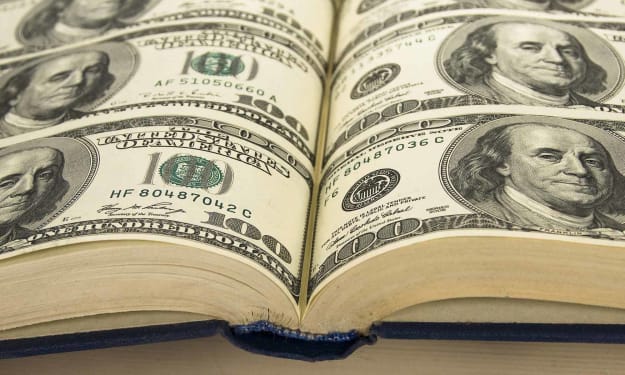
Finance books for beginners are a great resource for anyone looking to gain financial independence, save money, learn about the stock market, or overall, just feel more confident around money. A finance book can give you a wide range of knowledge that you never knew you needed. Instead of paying big money for a financial planner, consider reading some of these personal finance books, so you can invest in yourself, your money, or your life long-term.
By Morgan E. Westling7 years ago in Trader
What Is the Origin of Bull Market and Bear Market Terms?
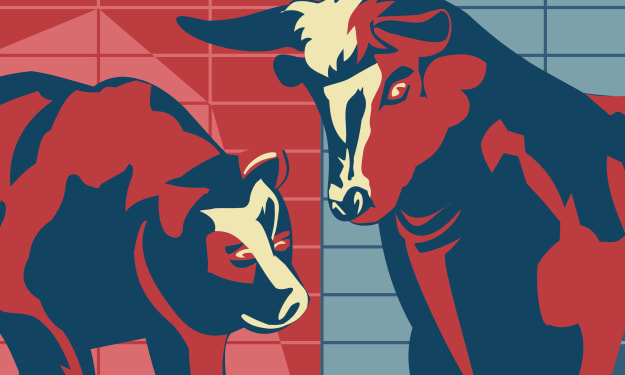
With its global financial epicenter in New York City, the stock market has long been a source of curiosity for many Americans. With numerous popular films like Wall Street and The Wolf of Wall Street uncovering the unsavory side of investment, people are often skeptical of the financial industry. Though few truly understand the inner workings of the world economy, they are fascinated by the culture around it and are envious of those who thrive off of trading in the stock market. If you have an intermediate or advanced knowledge about the world of finance or investment, you have at very least probably heard the terms bull and bear markets. These terms are used to describe the performance of the stock exchange in terms of stock prices and subsequent investor confidence. There are few factors more important in the fluctuations of the market than the state of investor confidence. The state of the market hinges greatly on the confidence of the investor, meaning that high confidence is good for the market and low confidence is obviously bad. In fact, before the Great Depression, many of the large economic collapses in history were referred to as "panics," occurring every few decades, despite the general upward trend of the nineteenth century. The origin of bull market and bear market terms still stands today, though, as vocabulary has evolved to describe trends in the market, and are exceedingly important for anyone with a vetted interest in the stock market to know.
By Fred Eugene Park7 years ago in Trader
How to Trade Like the Pros
Trading is no less a contact sport than professional football. Glory and disappointment are the extreme weights of each decision. The good news about trading is that, unlike playing in the NFL, you don’t have to be a professional to play with the big boys and girls.
By Claire Peters7 years ago in Trader
Becoming Goal Oriented
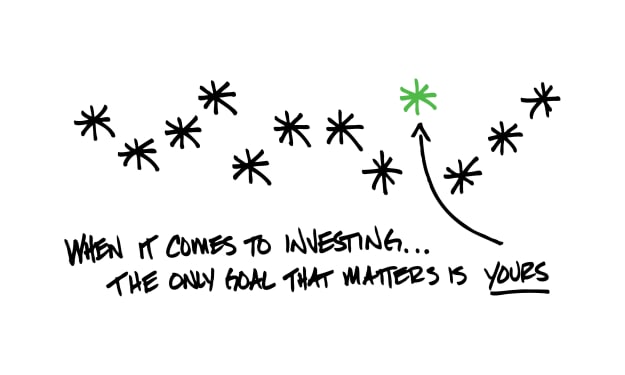
We're starting off with "Becoming Goal Oriented: Planning Your Goals." What does that have to do with money? Everything. Have you heard of the book Start with Why by Simon Sinek? If you haven't, go check it out! The main concept is this, begin with the end in mind. I want you to start thinking about the goals you have for you life. Buying a home, paying off loans, sending kids to college, sure those are the typical ones I hear. Those are fine, but what about traveling to Germany to see your homeland. Or starting your own business, getting in shape—all of these things in our lives typically take money. The lives we want to live and the goals that we have for our lives take money to accomplish them. It may not be a ton of money, and we can be frugal and get deals and be smart, but it.still.takes.money (insert handclap emoji).
By Isaiah Goodman7 years ago in Trader
How to Prepare for a Depression
The Great Depression was one of the worst times for Americans—rich or poor. When the stock market plunged, prices shot down and the job market got chopped up into tiny pieces. People ran out of money, lost their homes, and also watched as their portfolios evaporated into thin air.
By Skunk Uzeki7 years ago in Trader
Becoming a Doer
The word procrastinate comes from Latin, "pro" (forward) + "crastinus" (belonging to tomorrow). So in a nut shell when we say we have trouble procrastinating it means that we tell ourselves that we'll do it tomorrow—or some other magical time when we have the time, energy, or money. When it comes to money and financial planning I've seen that there are four main reasons we procrastinate.
By Isaiah Goodman7 years ago in Trader
10 Books About Budgeting Every New Investor Needs to Own
If you ask most people out there, learning about budgets is boring. Many of us don’t even really take the time to think about our budgets or where we’re headed. We just spend money, try to save, and hope for the best.
By Cato Conroy7 years ago in Trader