
Mexico Factory Automation Market Size, Share, Industry Trends, Growth Factors and Forecast 2034
Explore the trends, challenges, and future outlook shaping Mexico’s factory automation market as robotics, smart manufacturing, and nearshoring transform industry.

Why the Mexico Factory Automation Market Is Accelerating Industrial Transformation: Trends & Future Outlook
Mexico’s manufacturing sector is entering a new technological era powered by factory automation. As global competition intensifies and supply chains demand higher efficiency, companies are investing in robotics, smart systems, and data-driven production environments. The Mexico factory automation market is growing as manufacturers seek precision, speed, and cost optimization without sacrificing quality.
Automation is no longer optional — it is becoming essential for industrial survival in a rapidly modernizing economy.
Request a Sample Report with Latest 2026 Data & Forecasts:
The Shift Toward Smart Manufacturing
Traditional manufacturing relied heavily on manual labor and mechanical systems. Today, smart factories integrate robotics, sensors, and digital controls to create seamless production environments. Automated systems reduce human error, increase consistency, and accelerate output.
Mexico’s position as a global manufacturing hub makes automation particularly important. Industries such as automotive, electronics, aerospace, and consumer goods require high-precision production that automation can deliver.
Smart manufacturing transforms factories into intelligent ecosystems.
Nearshoring and Global Supply Chains
Mexico benefits from its proximity to the United States and strong trade integration. As companies rethink global supply chains, many are shifting production closer to North American markets. Automation strengthens Mexico’s competitiveness by improving productivity and reducing operational costs.
Factories that adopt advanced automation can meet international quality standards while maintaining fast delivery times. Nearshoring combined with automation creates a powerful economic advantage.
Efficiency attracts investment.
Labor Dynamics and Workforce Evolution
Automation does not eliminate jobs — it reshapes them. Routine manual tasks are increasingly handled by machines, while human workers move into technical, supervisory, and maintenance roles. Skilled technicians, engineers, and programmers are in growing demand.
Training and education become critical. Universities and technical institutes must prepare workers for digital manufacturing environments. Workforce evolution ensures that automation enhances productivity without displacing opportunity.
Human expertise remains central to smart factories.
Robotics and Precision Engineering
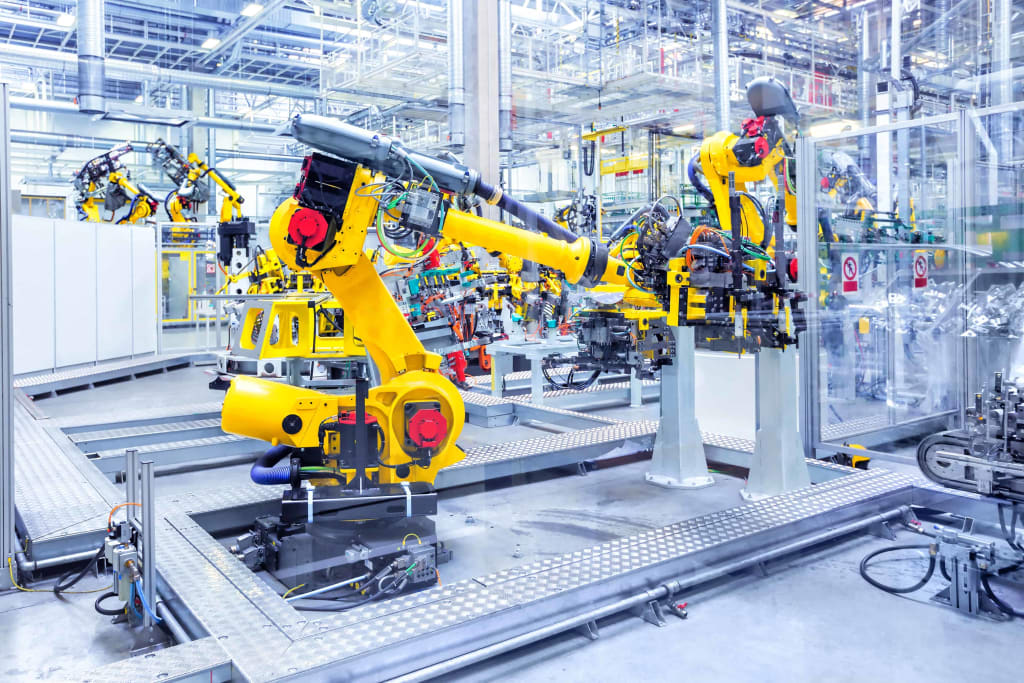
Industrial robotics represent one of the most visible aspects of automation. Robotic arms assemble components, weld materials, and handle delicate processes with speed and accuracy. Consistent performance reduces defects and improves product reliability.
Companies specializing in automation technologies, including global leaders such as Siemens, support Mexico’s industrial modernization with advanced control systems and robotics integration.
Precision engineering is becoming a defining competitive factor.
Data-Driven Production Systems
Automation extends beyond machines — it includes software that monitors and optimizes entire production lines. Sensors collect real-time data on equipment performance, energy consumption, and workflow efficiency.
Predictive maintenance systems identify potential failures before they occur, minimizing downtime. Data analytics allow manufacturers to refine processes continuously, improving profitability and sustainability.
Factories are evolving into data centers for production intelligence.
Sustainability and Energy Efficiency
Automated systems often consume less energy and produce less waste than traditional manufacturing methods. Precision controls reduce material loss, while smart energy management lowers environmental impact.
Sustainability goals encourage manufacturers to adopt automation as part of broader environmental strategies. Efficient factories support both profitability and regulatory compliance.
Green manufacturing is a growing priority.
Small and Medium Enterprise Adoption
While large corporations lead automation investment, small and medium enterprises (SMEs) are increasingly adopting scaled solutions. Affordable robotics and modular automation platforms make technology accessible to smaller manufacturers.
SME participation strengthens the overall industrial ecosystem. Widespread adoption increases national productivity and innovation capacity.
Automation is becoming democratized.
Infrastructure and Investment Challenges
Despite strong momentum, automation requires significant capital investment. Equipment costs, system integration, and employee training represent financial barriers for some companies. Infrastructure upgrades may also be necessary to support advanced machinery.
Government incentives and private financing programs can accelerate adoption. Public-private partnerships encourage modernization while reducing risk for smaller firms.
Investment determines the pace of transformation.
Competitive Industrial Landscape
Mexico’s manufacturing competitiveness depends on speed, quality, and adaptability. Companies that adopt automation early gain advantages in cost efficiency and global reputation. Late adopters risk falling behind international standards.
Competition pushes innovation. Automation providers continuously develop smarter, faster, and more flexible systems that respond to changing industrial needs.
The market rewards technological leadership.
Future Outlook
The Mexico factory automation market is expected to expand alongside digital transformation and nearshoring trends. Artificial intelligence, machine learning, and collaborative robots will further enhance productivity. Smart factories may soon operate with minimal downtime and real-time global connectivity.
Investment in workforce training will shape long-term success. Countries that combine automation with skilled labor achieve the strongest industrial growth.
Mexico’s industrial future is increasingly automated.
Conclusion
Factory automation represents a turning point for Mexico’s manufacturing sector. By combining robotics, data analytics, and smart systems, companies can achieve higher efficiency, sustainability, and competitiveness.
Automation is not about replacing workers — it is about empowering industries to operate at global standards. As investment continues and technology evolves, Mexico is positioned to become a leader in advanced manufacturing.
The transformation is already underway.
About the Creator
Jackson Watson
I'm a market research analyst at Imarc group company delivering data-driven insights, industry analysis, and customized research solutions. We support businesses with market sizing, competitive analysis, and strategic decision-making.
Keep reading
More stories from Jackson Watson and writers in Trader and other communities.
Mexico Tequila Market Size, Share, Trends, Industry Analysis, Report 2026-2034
Why the Mexico Tequila Market Is Expanding Globally: Trends & Future Outlook Tequila has evolved from a regional cultural drink into a global premium spirit that symbolizes Mexican heritage, craftsmanship, and innovation. The Mexico tequila market is experiencing strong momentum as international demand rises and consumers increasingly seek authentic, high-quality beverages. What makes this market especially interesting is how it blends tradition with modern branding, sustainability, and premium positioning.
By Jackson Watsonabout 17 hours ago in Trader
Philippines Retail Market 2026: Set for Rapid Expansion on Digital, Urban & Consumer Trends
Philippines Retail Market Overview The Philippines retail market is experiencing significant expansion as rising consumer spending, omnichannel retailing, and modern retail innovations reshape how Filipinos shop. According to the latest IMARC Group report, the market size reached USD 648.2 billion in 2025 and is expected to grow to USD 1,223.1 billion by 2034, exhibiting a compound annual growth rate (CAGR) of 7.31% during 2026–2034 — reflecting robust demand across product segments and distribution channels.
By Manisha Dixita day ago in Trader
Philippines Vending Machine Market 2026: Grows on Urban Convenience & Digital Payments
Philippines Vending Machine Market Overview The Philippines vending machine market size is steadily expanding as urban lifestyles, digital payment adoption, and changing consumer expectations drive demand for automated retail solutions. According to the latest IMARC Group analysis, the market was valued at USD 466.28 million in 2025 and is projected to reach USD 658.90 million by 2034, reflecting a compound annual growth rate (CAGR) of 3.92% during 2026–2034.
By Manisha Dixita day ago in Trader




Comments
There are no comments for this story
Be the first to respond and start the conversation.