
Philippines Vending Machine Market 2026: Grows on Urban Convenience & Digital Payments
Rising demand for automated retail, cashless systems, and strategic public placement is propelling the Philippines vending machine market toward USD 658.9 million by 2034.

Philippines Vending Machine Market Overview
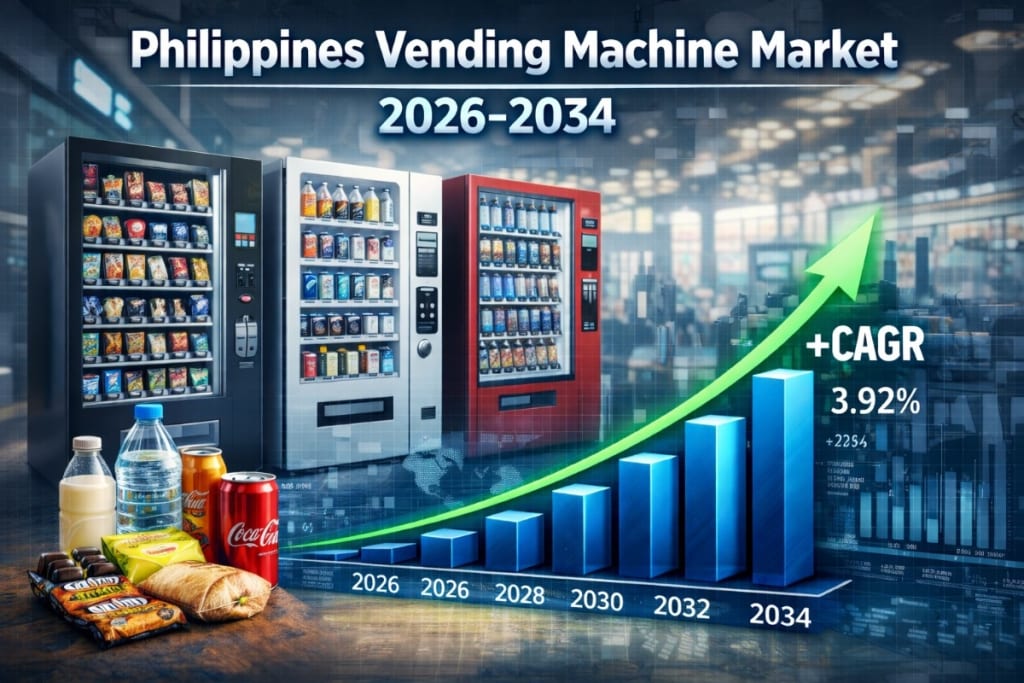
The Philippines vending machine market size is steadily expanding as urban lifestyles, digital payment adoption, and changing consumer expectations drive demand for automated retail solutions. According to the latest IMARC Group analysis, the market was valued at USD 466.28 million in 2025 and is projected to reach USD 658.90 million by 2034, reflecting a compound annual growth rate (CAGR) of 3.92% during 2026–2034.
Vending machines — automated self-service retail units dispensing snacks, beverages, and other products — are increasingly seen as convenient alternatives to traditional retail formats. Their deployment spans high-traffic urban locations like malls, transportation hubs, public spaces, universities, and corporate campuses. Alongside traditional machines, operators are introducing smart, cashless, and multi-functional units that offer enhanced consumer experiences and operational efficiencies.
Why the Market Is Growing So Rapidly
1. Rapid Urbanization and Lifestyle Demand
The Philippines continues to urbanize, with metropolitan regions like Metro Manila, Cebu, and Davao witnessing high foot traffic and busy lifestyles. Urban consumers increasingly value convenient, quick access to products without the need to visit traditional retail stores. As a result, vending machines find strategic placement opportunities where time-pressed workers, students, and commuters frequent — from office buildings to train stations.
2. Adoption of Cashless and Digital Payments
The widespread acceptance of mobile wallets and QR-based transactions has transformed vending machine operations. Cashless payment modes accounted for approximately 53% of transactions in 2025, driven by platforms like GCash and Maya that resonate with tech-savvy Filipino consumers. This digital ecosystem lowers barriers to use, simplifies purchases, and enhances transaction security — making vending machines more attractive to a broader demographic.
3. Convenience-Oriented Consumer Behavior
Modern consumers seek products on their own terms, and vending machines deliver on this expectation by offering round-the-clock access to food, beverages, and small essentials. The convenience factor is particularly prominent in places where traditional retail options may be limited during off-peak hours — boosting vending adoption in public spaces, corporate offices, and universities.
4. Strategic Placement in High-Traffic Locations
Operators focus on high-footfall areas — such as transportation hubs, malls, and commercial centres — where demand for quick purchases is consistently high. Placement in these locations maximises visibility and transaction volume, fostering adoption and incremental revenue for vending operators. Public places accounted for the largest share by application in 2025.
5. Broader Product Portfolios and Technology Integration
Vending machines have evolved beyond snacks and cold drinks. Operators increasingly offer diverse products — including healthier food options, premium beverages, and multi-service kiosk solutions that integrate services like mobile top-ups and bill payments. Additionally, smart vending technologies featuring touchscreens, real-time monitoring, and predictive inventory systems enhance user experience and operational efficiency.
Request a Sample Report with the Latest 2026 Data & Forecasts
What the Opportunities Are
1. Smart and Connected Machines
Innovating with IoT-enabled vending machines that support remote monitoring, data analytics, and adaptive product offerings can unlock greater operational value and customer insights.
2. Cashless Integration Partnerships
Aligning with mobile wallet providers and QR payment systems can further enhance accessibility, encourage digital adoption, and reduce transaction friction for consumers.
3. Product Diversification
Expanding beyond traditional snacks and beverages to include fresh foods, health-oriented items, and other convenience goods caters to evolving consumer preferences and premium demand.
4. Strategic Urban Deployment
Placing vending units in emerging commercial developments, university campuses, and transit hubs can maximize visibility and revenue potential.
5. Multi-Functional Service Kiosks
Machines that combine retail access with services like transportation card top-ups, e-commerce parcel pick-ups, or utility payments create additional utility and capture higher usage frequency.
6. Regional Expansion Beyond Major Cities
Exploring placements in secondary urban centres and high-traffic regional markets can extend reach and increase penetration beyond metro hubs.
7. Sustainability Initiatives in Products and Operations
Offering eco-friendly, locally sourced items and implementing energy-efficient machines align with sustainability trends and appeal to environmentally conscious consumers.
Recent News & Developments
January 2025: Public Infrastructure Integrates Automated Solutions
In early 2025, local authorities collaborated with industry operators to install vending machines at transit hubs, including major commuter stations. These placements provided commuters with snacks, beverages, and essential items through contactless payments — reinforcing automated retail as a permanent convenience fixture in public infrastructure.
April 2025: Expanded Smart Deployments by Global Brands
In April 2025, major beverage companies announced expanded installation of automatic vending machines at high-traffic urban locations, including Refresh Stations at multiple LRT stations. These integrated cashless systems and modern interface designs to deliver convenient, round-the-clock beverage access to commuters and urban dwellers.
August 2025: Innovative Free-Service Pilot in Commuter Hubs
In August 2025, foodpanda Philippines launched pink “We Gotchu Stop” vending machines at key commuter hubs like One Ayala Terminal, offering free essentials such as water and sanitiser to travellers — showcasing how vending technology can be adapted for community service and brand engagement while increasing foot traffic around automated kiosks.
Why Should You Know About Philippines Vending Machine Market?
The Philippines vending machine market exemplifies how automated retail solutions can thrive amidst urbanisation and digital transformation. With projected growth to USD 658.9 million by 2034 and a steady 3.92% CAGR, the sector presents a compelling opportunity for entrepreneurs, retail technology firms, and investors alike.
This market matters for businesses seeking to capitalise on convenience-driven consumer behaviour and digital payment adoption. For investors, vending technology innovations — particularly smart, cashless, and multi-service units — offer a chance to participate in automated retail expansion. For policymakers and urban planners, integrating vending solutions into public infrastructure enhances service accessibility and aligns with evolving lifestyle expectations. As consumer preferences continue shifting toward flexible, contactless, and efficient retail experiences, the Philippines vending machine market is positioned for sustained relevance and growth.
About the Creator
Keep reading
More stories from Manisha Dixit and writers in Trader and other communities.
Philippines Dairy Market 2026: Rising on Nutrition Awareness, Urban Lifestyles & Supply Expansion
Philippines Dairy Market Overview The Philippines dairy market size is on a strong growth trajectory, supported by rising nutritional consciousness, shifting lifestyle preferences, and strategic efforts to strengthen domestic production and distribution. According to the latest analysis from IMARC Group, the market reached USD 20,980.1 million in 2025 and is expected to grow to USD 33,997.8 million by 2034, exhibiting a compound annual growth rate (CAGR) of 5.51% from 2026 to 2034.
By Manisha Dixitabout 20 hours ago in Trader
Shopify Stock Analysis: Can Shopify Continue Dominating the E-Commerce Platform Market?
Introduction Shopify stock has become synonymous with the growth of online commerce. Shopify provides a cloud-based platform that enables businesses of all sizes to create online stores, manage inventory, and process payments. With small businesses, entrepreneurs, and large brands increasingly shifting to e-commerce, Shopify stock is closely watched by investors seeking exposure to the digital retail revolution. The central question is whether Shopify can sustain its growth amid rising competition and market saturation.
By Hammad Nawazabout 7 hours ago in Trader
Small Molecule API Market: Driving Innovation in Modern Pharmaceutical Manufacturing
Overview – Small Molecule API Market Small molecule APIs are chemically synthesized compounds that form the active components of most conventional pharmaceutical drugs. They dominate the drug development pipeline due to their stability, oral bioavailability, and well-established regulatory pathways. The market includes both innovative and generic small molecule APIs, serving branded pharmaceutical manufacturers, generic drug producers, and contract manufacturing organizations (CMOs). With the growing aging population and increasing healthcare expenditure worldwide, demand for therapeutic drugs continues to rise, strengthening the need for high-quality APIs. Emerging technologies such as artificial intelligence and advanced chemical synthesis methods are also enhancing drug discovery processes and improving production efficiency, contributing to overall market growth.
By James Smith6 days ago in Trader



Comments
There are no comments for this story
Be the first to respond and start the conversation.