
Netherlands Diabetes Device Market Size and Forecast 2026–2034
How Technology, Preventive Care, and Digital Health Are Reshaping Diabetes Management in the Netherlands

Introduction: A Market Moving Toward Smarter Diabetes Care
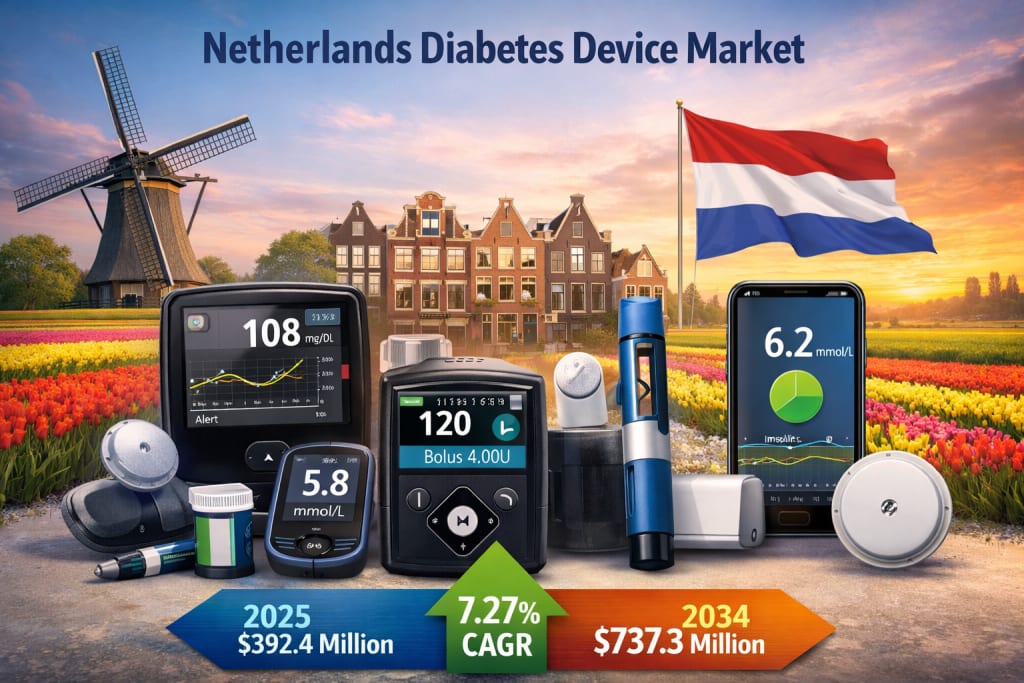
The Netherlands has long been recognized for its strong healthcare infrastructure, early adoption of medical technology, and emphasis on preventive care. These strengths are now clearly reflected in the country’s diabetes devices market, which is entering a phase of sustained and technology-driven growth. According to Renub Research, the Netherlands diabetes-care devices market is projected to expand from US$ 392.4 million in 2025 to US$ 737.3 million by 2034, registering a compound annual growth rate (CAGR) of 7.27% during 2026–2034.
This growth trajectory is not accidental. It is being shaped by a rising prevalence of diabetes, wider adoption of continuous glucose monitoring (CGM) systems, increasing use of insulin delivery devices, and a healthcare system that prioritizes early diagnosis and long-term disease management. In a country where digital health solutions are increasingly integrated into routine care, diabetes devices are no longer seen as optional tools—they are becoming essential components of everyday disease control.
Diabetes devices refer to tools used to monitor blood glucose levels and assist in insulin administration. These include self-monitoring blood glucose (SMBG) devices, continuous glucose monitors, insulin pens, insulin pumps, and supportive digital platforms that track and analyze glucose data. Together, these technologies help patients maintain better glycaemic control, reduce complications, and improve overall quality of life.
In the Netherlands, the growing focus on preventive healthcare and patient self-management has further accelerated the acceptance of these devices. High health awareness, easy access to medical technology, and supportive reimbursement policies have made advanced diabetes management tools more accessible to a broader population. As a result, diabetes devices are now firmly embedded in long-term diabetes care strategies across the country.
Market Outlook: Why the Netherlands Is Embracing Diabetes Technology
The Dutch healthcare model strongly encourages early detection, continuous monitoring, and patient participation in disease management. This approach naturally supports the widespread use of CGM systems, insulin pumps, and smart insulin pens. Patients are increasingly empowered to track their own health data, make informed lifestyle adjustments, and work closely with healthcare professionals using digital insights.
An estimated 1.2 million people in the Netherlands live with diabetes, and around 10% of them have type 1 diabetes. While type 1 diabetes is often linked to genetic and autoimmune factors, lifestyle changes and rising obesity rates are also influencing the broader diabetes burden, particularly for type 2 diabetes. This growing patient base is a fundamental driver of demand for reliable, user-friendly, and accurate diabetes management devices.
At the same time, the Netherlands has one of the highest rates of digital health adoption in Europe. Patients and clinicians alike are comfortable using apps, connected devices, and cloud-based health platforms. This digital readiness makes it easier for innovative diabetes technologies to gain traction, from real-time glucose monitoring systems to data-driven insulin delivery solutions.
A notable example of this trend is the launch of Dexcom ONE+ in Europe in early 2024, a customizable real-time CGM system designed to be worn on different parts of the body. Similarly, Roche’s Accu-Chek Guide system, introduced in the Dutch market in 2023, reflects ongoing innovation in user-friendly glucose testing solutions.
Key Growth Drivers in the Netherlands Diabetes Devices Market
1. Strong Emphasis on Preventive and Self-Managed Care
One of the most important growth drivers is the Netherlands’ focus on preventive healthcare and self-management. Diabetes care guidelines encourage patients to regularly monitor their glucose levels and actively participate in managing their condition. SMBG devices, CGMs, and insulin pens play a central role in this process.
Patients are increasingly trained to rely on these devices to adjust diet, physical activity, and medication. This not only improves health outcomes but also drives repeat purchases of consumables such as test strips and sensors. As more care shifts from hospitals to home settings, the demand for personal monitoring and insulin delivery devices continues to rise.
Preventive care is no longer just a policy goal—it is becoming a daily practice for millions of people living with diabetes in the Netherlands.
2. High Acceptance of Digital Health Technologies
The Netherlands stands out for its high acceptance of digital healthcare solutions. Both patients and healthcare professionals are comfortable using connected devices and data-driven platforms. This has fueled demand for smart glucose management systems, app-connected insulin pens, and cloud-integrated CGM platforms.
Real-time data access improves patient engagement and allows clinicians to optimize therapy based on actual glucose trends rather than occasional measurements. As digital healthcare infrastructure continues to mature, demand for advanced, connected diabetes devices is expected to remain strong throughout the forecast period.
3. Supportive Healthcare Access and Reimbursement Policies
Easy access to healthcare services and a supportive reimbursement framework are also crucial factors behind market growth. Many advanced diabetes devices, including CGMs and insulin pumps, are covered or partially reimbursed, reducing the financial burden on patients.
This encourages earlier adoption of modern devices, especially among insulin-dependent patients. Consistent reimbursement policies also support long-term adherence, ensuring that patients continue using these technologies rather than reverting to less effective methods.
Challenges Facing the Market
1. Pressure from Healthcare Costs
Despite strong adoption, cost remains a key challenge. Advanced diabetes devices such as CGMs and insulin pumps involve recurring expenses for sensors, consumables, and maintenance. Healthcare authorities must continuously assess the cost-effectiveness of these technologies, which can slow down the pace of adoption in certain segments.
Even in a well-funded healthcare system, balancing innovation with budget constraints remains a delicate task.
2. Usability and Clinician Adoption Barriers
While awareness is high, not all patients are equally comfortable with advanced technology. Older patients, in particular, may struggle with device setup, data interpretation, or continuous wear of sensors. Concerns about usability and data overload can affect long-term compliance.
Education and training are essential, but they also add complexity to care pathways. Overcoming these barriers will be critical to ensuring that the benefits of advanced diabetes technologies reach the widest possible audience.
Segment Insights: A Closer Look at Key Device Categories
Netherlands SMBG Device Market
The self-monitoring of blood glucose (SMBG) segment remains a stable and mature part of the Dutch diabetes care landscape. Glucometers and test strips are still widely used by both type 1 and type 2 diabetes patients, especially those on insulin therapy or oral medications.
Affordability, simplicity, and ease of use make SMBG devices particularly popular among older patients and newly diagnosed individuals. While growth in this segment is slower compared to CGMs, the steady replacement cycle and continued clinical relevance ensure a stable market presence.
Netherlands CGM Device Market
The CGM segment is one of the fastest-growing areas of the market. CGM devices provide continuous glucose readings, trend analysis, and alerts, helping patients achieve better glycaemic control and reduce the risk of hypoglycaemic events.
These devices are especially popular among type 1 diabetes patients and insulin-dependent type 2 patients. Integration with smartphones and digital health platforms further enhances their appeal, making remote monitoring and data sharing with healthcare providers easier than ever.
Netherlands Insulin Pump Industry
Insulin pumps represent a high-value and technologically advanced segment. They offer continuous subcutaneous insulin infusion, providing more precise dosing and greater lifestyle flexibility compared to multiple daily injections.
Although insulin pumps are more expensive and require thorough training, strong support from healthcare professionals and patient education programs has driven steady adoption in the Netherlands.
Netherlands Insulin Pen Device Market
Insulin pens are widely used due to their convenience, portability, and dosing accuracy. They are commonly prescribed for both type 1 and type 2 diabetes patients, particularly those starting insulin therapy.
The introduction of smart insulin pens with dose-tracking features is further boosting this segment, aligning it with the broader digital health trend.
Distribution and End-User Landscape
Diagnostics Centers and Hospitals
Diagnostics centers play a crucial role in early detection, ongoing monitoring, and therapy optimization. These centers use SMBG systems, professional CGM solutions, and insulin management tools to analyze glucose patterns and treatment effectiveness.
Hospitals remain important, particularly for initial diagnosis and complex cases, but long-term management is increasingly shifting toward outpatient and home-based care.
Retail Pharmacies
Retail pharmacies are a major distribution channel for diabetes devices in the Netherlands. They provide easy access to glucose meters, test strips, insulin pens, CGM sensors, and other consumables, making them a vital link in everyday diabetes management.
As home-based care continues to grow, the role of retail pharmacies in supporting patients is becoming even more significant.
Market Segmentation Overview
By Device Type:
Self-Monitoring Devices
Test Strips
Lancets
Blood Glucose Meters
Continuous Glucose Monitoring Devices
Sensors
Transmitters
Receivers
Insulin Pumps
Patch Pumps
Tethered Pumps
Consumables
Insulin Pens
Disposable Insulin Pens
Reusable Insulin Pens
By End User (Volume):
Hospitals
Diagnostics Centers
Homecare
By City:
Amsterdam
Rotterdam
The Hague
Utrecht
Eindhoven
Groningen
Tilburg
Almere
Breda
Nijmegen
Competitive Landscape: Key Companies in Focus
The Netherlands diabetes devices market features a strong presence of global leaders, each analyzed across five viewpoints: overview, key people, recent developments, SWOT analysis, and revenue performance.
Major Companies Covered:
Dexcom Inc
Medtronic
Roche
Abbott Laboratories
Eli Lilly
Terumo Corporation
BD
These companies continue to invest in innovation, digital integration, and patient-centric design, shaping the future of diabetes care in the Netherlands.
Final Thoughts: A Market Built on Technology and Trust
The Netherlands diabetes devices market is on a clear upward path, supported by strong healthcare infrastructure, high digital adoption, and a growing focus on preventive and self-managed care. With the market expected to grow from US$ 392.4 million in 2025 to US$ 737.3 million by 2034, the coming decade will likely see even deeper integration of technology into everyday diabetes management.
While cost pressures and usability challenges remain, ongoing innovation, supportive reimbursement policies, and patient education initiatives are helping to overcome these barriers. In many ways, the Netherlands is setting an example of how modern healthcare systems can combine technology, accessibility, and patient empowerment to manage chronic diseases more effectively.
About the Creator
Sakshi Sharma
Content Writer with 7+ years of experience crafting SEO-driven blogs, web copy & research reports. Skilled in creating engaging, audience-focused content across diverse industries.
Keep reading
More stories from Sakshi Sharma and writers in Trader and other communities.
United Kingdom Diabetes Devices Market Size and Forecast 2026–2034
United Kingdom Diabetes Devices Market: An Expanding Healthcare Priority The United Kingdom diabetes devices market is entering a phase of steady and technology-driven expansion, reflecting both the rising burden of diabetes and the healthcare system’s growing emphasis on early diagnosis, continuous monitoring, and long-term disease management. According to Renub Research, the market is expected to grow from US$ 1,214.80 million in 2025 to US$ 2,333.50 million by 2034, registering a compound annual growth rate (CAGR) of 7.53% from 2026 to 2034.
By Sakshi Sharmaabout 5 hours ago in Trader
United States Digital Transformation Market Size, Share, Industry Overview, Latest Trends & Outlook 2034
Why the United States Digital Transformation Market Is Reshaping the Economy: Trends & Future Outlook Digital transformation is no longer a buzzword in the United States — it is a structural shift that is redefining how businesses operate, compete, and grow. Organizations across industries are redesigning processes, adopting cloud infrastructure, and integrating artificial intelligence to stay relevant in a rapidly evolving marketplace. The United States digital transformation market is expanding as enterprises recognize that technology is not just support infrastructure; it is the core engine of modern business strategy.
By Jackson Watson7 days ago in Trader
The Bank of New York Mellon Corporation: Global Financial Leadership and Market Influence
Introduction The Bank of New York Mellon Corporation (BNY Mellon) is one of the most respected and longstanding financial institutions globally. Founded in 1784, BNY Mellon has become a cornerstone of asset management, investment services, and custody solutions. Its reach extends to institutional clients, corporations, governments, and investors seeking efficient financial services.
By Hammad Nawaza day ago in Trader



Comments
There are no comments for this story
Be the first to respond and start the conversation.