
Online Event Ticketing Market Size and Forecast 2025–2033
How Mobile Apps, Contactless Payments, and Smart Ticketing Are Reshaping the Global Live Entertainment Economy

Online Event Ticketing Market: A Digital Gateway to Live Experiences
The global entertainment industry is in the middle of a powerful digital transformation, and few segments reflect this shift as clearly as online event ticketing. From concerts and sports matches to movies and live performances, the way people discover, purchase, and access events has changed dramatically over the past decade. What was once dominated by physical box offices and long queues has now become a mobile-first, app-driven experience built around speed, convenience, and personalization.
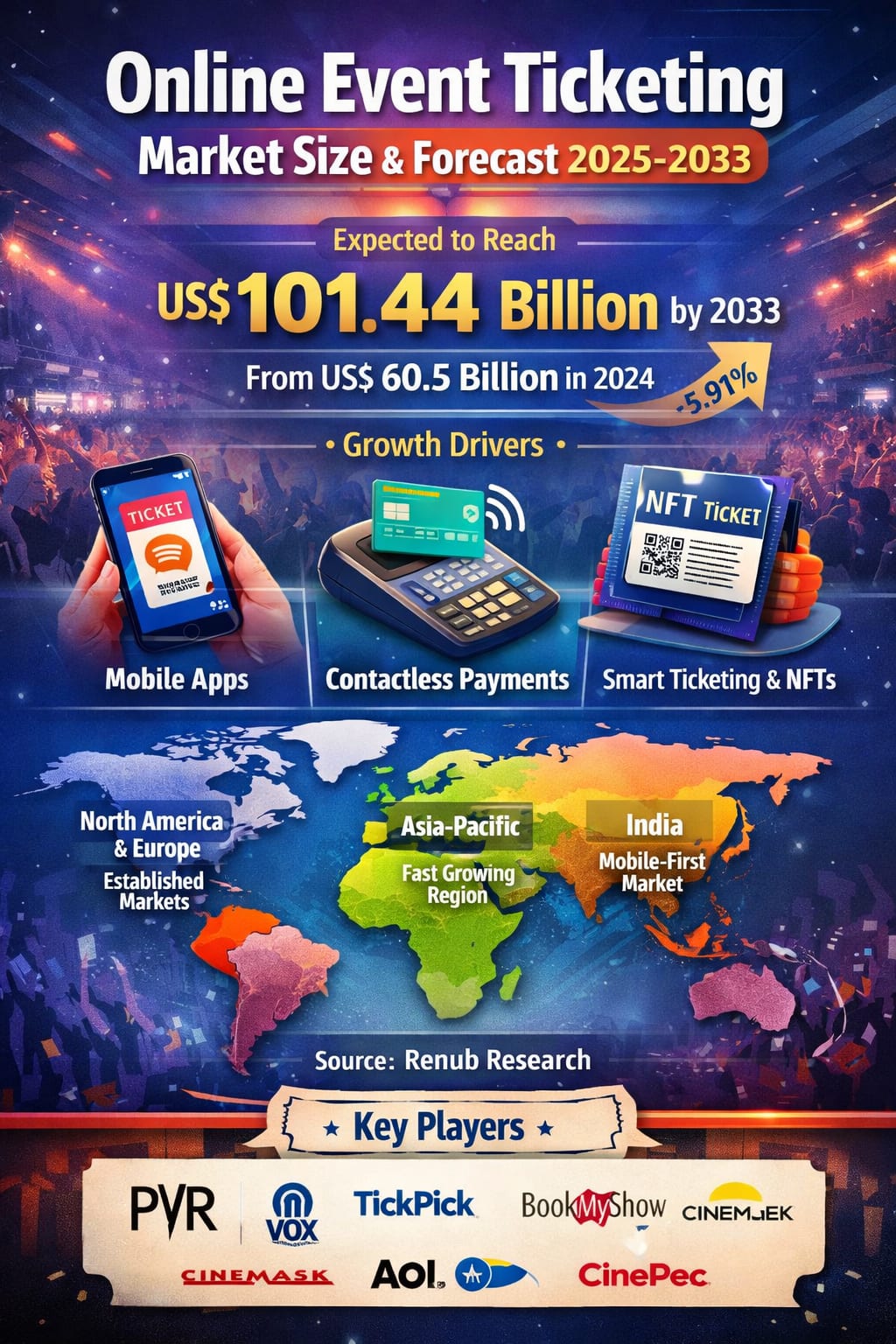
According to Renub Research, the Online Event Ticketing Market is expected to reach US$ 101.44 billion by 2033, up from US$ 60.5 billion in 2024, growing at a compound annual growth rate (CAGR) of 5.91% from 2025 to 2033. This steady growth is being fueled by the rising penetration of the internet, the widespread adoption of smartphones, and the growing comfort of consumers with digital payments and app-based services.
The shift is especially visible in Asia Pacific, where customers are increasingly willing to pay extra for online handling and convenience in order to avoid long queues and manual booking hassles. Globally, online ticketing platforms are no longer just sales channels—they are becoming full-fledged digital ecosystems that connect fans, venues, artists, and organizers in real time.
A Market in the Middle of a Digital Revolution
The online event ticketing industry is undergoing a deep structural change driven by technology. Smart ticketing systems that integrate QR codes, NFC, RFID, and mobile wallets are becoming the norm, replacing paper tickets and manual verification processes. Industry sources suggest that smart ticket adoption has been rising steadily, supported by venues and organizers looking for better crowd management, improved security, and richer data insights.
Artificial intelligence is also playing a growing role. Chatbots and AI-driven customer service tools now help users search for events, complete payments, resolve booking issues, and receive personalized recommendations. For platforms, this automation reduces operational costs and improves scalability, especially during peak demand periods when millions of users may attempt to book tickets simultaneously.
Another major innovation is the use of blockchain and NFT-based ticketing solutions. Companies such as SeatlabNFT and YellowHeart Wallet are experimenting with blockchain-based systems that give artists and event organizers more control over ticket distribution and resale. These platforms aim to reduce fraud, curb unauthorized scalping, and even allow creators to earn royalties from secondary market sales. At the same time, blockchain enables the creation of both anonymous and uniquely identifiable tickets, helping platforms balance data collection with user privacy.
Investment activity reflects the sector’s long-term potential. Major funding rounds, such as Dice’s USD 122 million raise led by SoftBank Vision Fund 2 and Vivenu’s USD 50 million Series B, highlight how investors see online ticketing not just as a utility, but as a core layer of the global live entertainment economy.
Key Factors Driving the Online Event Ticketing Market
1. The Global Rise of Music and Live Entertainment
Music events remain the single most powerful growth engine for online ticketing platforms. Concerts, festivals, operas, musicals, and live shows generate massive volumes of ticket sales and consistent digital traffic. Leading platforms have repeatedly pointed out that music accounts for a large share of their gross transaction value growth, reflecting the strong emotional and cultural pull of live performances.
The rise of global superstars, the expansion of music festivals, and the influence of social media have turned concerts into must-attend experiences, especially for younger audiences. Even as ticket prices continue to climb, demand has remained resilient. Fans are increasingly willing to pay premium prices for unique experiences, better seating, and VIP access, all of which are easily packaged and sold through online platforms.
Large-scale events such as international EDM festivals, world tours, and multi-day music gatherings continue to drive spikes in online ticket sales. These events also push platforms to innovate, improve server capacity, and refine user experience, further strengthening the digital infrastructure of the industry.
2. The Shift Toward Contactless Transactions
The move toward contactless and paperless transactions has become one of the most important structural drivers of the online event ticketing market. Accelerated by the COVID-19 pandemic, consumers now strongly prefer digital options that minimize physical contact and reduce waiting times.
Online ticketing platforms meet this demand by offering instant delivery through email, apps, or digital wallets. Entry systems based on QR codes and mobile scanning have become standard in many venues, improving both security and crowd flow. For organizers, contactless systems reduce staffing needs, lower printing and logistics costs, and provide real-time attendance data.
Beyond health and safety, this shift also aligns with broader trends in digital transformation and cashless economies. As consumers become more comfortable with mobile payments and digital identities, contactless ticketing is likely to remain a permanent feature of the live events ecosystem.
3. Integration with E-commerce Platforms
Another powerful growth lever is the integration of ticketing services with major e-commerce and digital platforms. Partnerships with well-known ecosystems allow ticketing companies to tap into large, already-engaged user bases and simplify the purchase journey.
When users can buy event tickets through interfaces they already trust, friction in the customer journey is reduced. Secure payment gateways, saved payment methods, and familiar user experiences encourage impulse purchases and repeat bookings. For event organizers, this integration boosts visibility and marketing reach, turning ticketing into a natural extension of online shopping behavior.
This convergence of ticketing and e-commerce is gradually transforming how people discover and attend live events, making the process more seamless, personalized, and data-driven.
Challenges Facing the Online Event Ticketing Industry
Technical Glitches and Traffic Overload
One of the most persistent challenges in online ticketing is handling traffic surges during high-demand events. Major concerts, sports finals, and exclusive shows can attract millions of users within minutes, putting enormous strain on digital infrastructure.
System crashes, slow load times, and failed transactions not only frustrate users but also damage brand reputation and lead to lost revenue. Inadequate server capacity, outdated software, and weak load-balancing strategies can make these problems worse. To stay competitive, ticketing platforms must invest continuously in scalable cloud infrastructure, robust cybersecurity, and stress-tested booking systems.
Refund and Cancellation Complexities
Refunds and cancellations remain another sensitive issue, especially in times of uncertainty such as pandemics, weather disruptions, or last-minute event changes. Consumers often complain about unclear policies, delayed refunds, or non-refundable tickets, which can erode trust and discourage future bookings.
Manual processing and slow customer service responses further amplify dissatisfaction. To address this, platforms are increasingly focusing on transparent, automated, and user-friendly refund systems. Flexible policies not only improve customer confidence but also strengthen long-term brand loyalty in a highly competitive market.
Regional Outlook: Where the Growth Is Coming From
United States: A Mature but Innovative Market
The United States represents one of the most advanced and competitive online event ticketing markets in the world. High internet penetration, a strong entertainment culture, and widespread smartphone usage have made digital ticketing the default choice for consumers.
Platforms compete by offering features such as interactive seat selection, mobile wallet integration, personalized recommendations, and dynamic pricing tools. At the same time, the market continues to grapple with issues like ticket scalping, service fee transparency, and technical bottlenecks during peak demand. Despite these challenges, ongoing innovation ensures that the U.S. remains a key driver of global market trends.
United Kingdom: Technology-Driven Growth
The UK market is expanding steadily, supported by rising digital adoption and a vibrant live events scene spanning music, sports, and theater. Innovations such as contactless payments, blockchain-based anti-fraud tools, and AI-powered personalization are enhancing user experience and platform security.
While concerns around dynamic pricing and reselling practices persist, the long-term outlook remains positive. The UK’s strong digital infrastructure and appetite for live experiences continue to make it a fertile ground for ticketing innovation.
India: A High-Growth, Mobile-First Market
India’s online event ticketing market is one of the most dynamic globally, driven by rapid smartphone adoption, affordable data plans, and a young, entertainment-hungry population. Platforms like BookMyShow dominate the landscape, offering tickets for movies, concerts, sports, and theater across major cities and increasingly in smaller towns.
QR code-based entry, mobile apps, and integration with digital wallets have streamlined the ticketing experience. The sheer volume of movie releases and the culture of advance bookings make India particularly attractive for ticketing companies. Reports suggest that leading platforms sell tens of thousands of tickets daily, underlining the scale of digital demand.
Challenges remain, especially in terms of infrastructure in tier-2 and tier-3 cities and issues related to ticket scalping. However, continued innovation and rising disposable incomes are expected to keep India among the fastest-growing markets in this sector.
United Arab Emirates: A Premium Entertainment Hub
The UAE’s online event ticketing market is growing rapidly, supported by strong internet infrastructure, high smartphone usage, and a thriving calendar of international events. Platforms such as Platinumlist, BookMyShow, and Ticketmaster offer access to concerts, sports events, festivals, and theater shows across the region.
Digital ticketing, mobile apps, and QR-based entry systems have become standard, improving both convenience and security. Strategic partnerships with venues and event organizers continue to expand the market’s reach. While challenges such as reselling practices and infrastructure gaps in certain areas remain, the overall outlook is strongly positive.
Recent Developments Shaping the Industry
In June 2023, Seat Unique raised EUR 7 million (around USD 9 million) in its Series A funding round, following its success in selling over EUR 30 million (USD 32.6 million) worth of tickets and partnering with more than 40 major UK venues, clubs, and promoters. The platform focuses on premium and VIP experiences for events such as Wimbledon, Premier League matches, Formula 1 races, and major cricket tournaments. This investment highlights the growing demand for curated, high-end ticketing experiences and the continued confidence of investors in the sector.
Market Segmentation Snapshot
By Platform:
Desktop
Mobile
By Event Type:
Sports
Music
Movies
Regional Coverage:
North America: United States, Canada
Europe: France, Germany, Italy, Spain, United Kingdom, Belgium, Netherlands, Turkey
Asia Pacific: China, Japan, India, Australia, South Korea, Thailand, Malaysia, Indonesia, New Zealand
Latin America: Brazil, Mexico, Argentina
Middle East & Africa: South Africa, Saudi Arabia, United Arab Emirates
Key Companies Covered:
PVR Ltd, Bigtree, VOX Cinemas, AOL Inc. (Yahoo), TickPick LLC, Carnival Cinemas, EasyMovies, Cinemark Holdings Inc., KyaZoonga Inc., Cineplex Inc.
Final Thoughts: A Market Built on Convenience and Experience
The online event ticketing market is no longer just about selling access—it is about shaping the entire journey of live entertainment, from discovery and purchase to entry and post-event engagement. With the market projected to grow from US$ 60.5 billion in 2024 to US$ 101.44 billion by 2033, the sector is clearly positioned as a core pillar of the global digital economy.
As mobile usage, contactless payments, smart ticketing, and blockchain solutions continue to evolve, platforms that invest in reliability, transparency, and user experience will be best placed to win long-term loyalty. In a world where experiences matter more than ever, online ticketing is not just enabling access—it is redefining how people connect with live moments.
About the Creator
Keep reading
More stories from shibansh kumar and writers in Trader and other communities.
Wearable Technology Market Size and Forecast 2025–2033
Introduction The global technology landscape is undergoing a quiet but powerful transformation—one that sits not in our hands, but on our wrists, in our shoes, and even woven into our clothes. Wearable technology has evolved far beyond simple step counters and notification screens. Today, it plays a central role in health monitoring, fitness management, workplace safety, and even immersive digital experiences.
By shibansh kumarabout 12 hours ago in Trader
CrowdStrike Stock Analysis: Is CrowdStrike Leading the Cybersecurity Market?
Introduction CrowdStrike stock has become one of the most recognized names in cybersecurity. CrowdStrike specializes in cloud-native endpoint protection, threat intelligence, and security solutions for enterprises. As cyber threats continue to increase in frequency and sophistication, organizations globally are investing heavily in cybersecurity. This trend has positioned CrowdStrike as a key player in the industry and a stock of interest for investors seeking exposure to digital security growth.
By Hammad Nawaz5 days ago in Trader




Comments
There are no comments for this story
Be the first to respond and start the conversation.