
Orthopedic Prosthetics Market Trends & Summary: Innovation, Aging Populations, and the Future of Mobility
How technology, demographics, and healthcare access are reshaping the global orthopedic prosthetics industry through 2033

Introduction
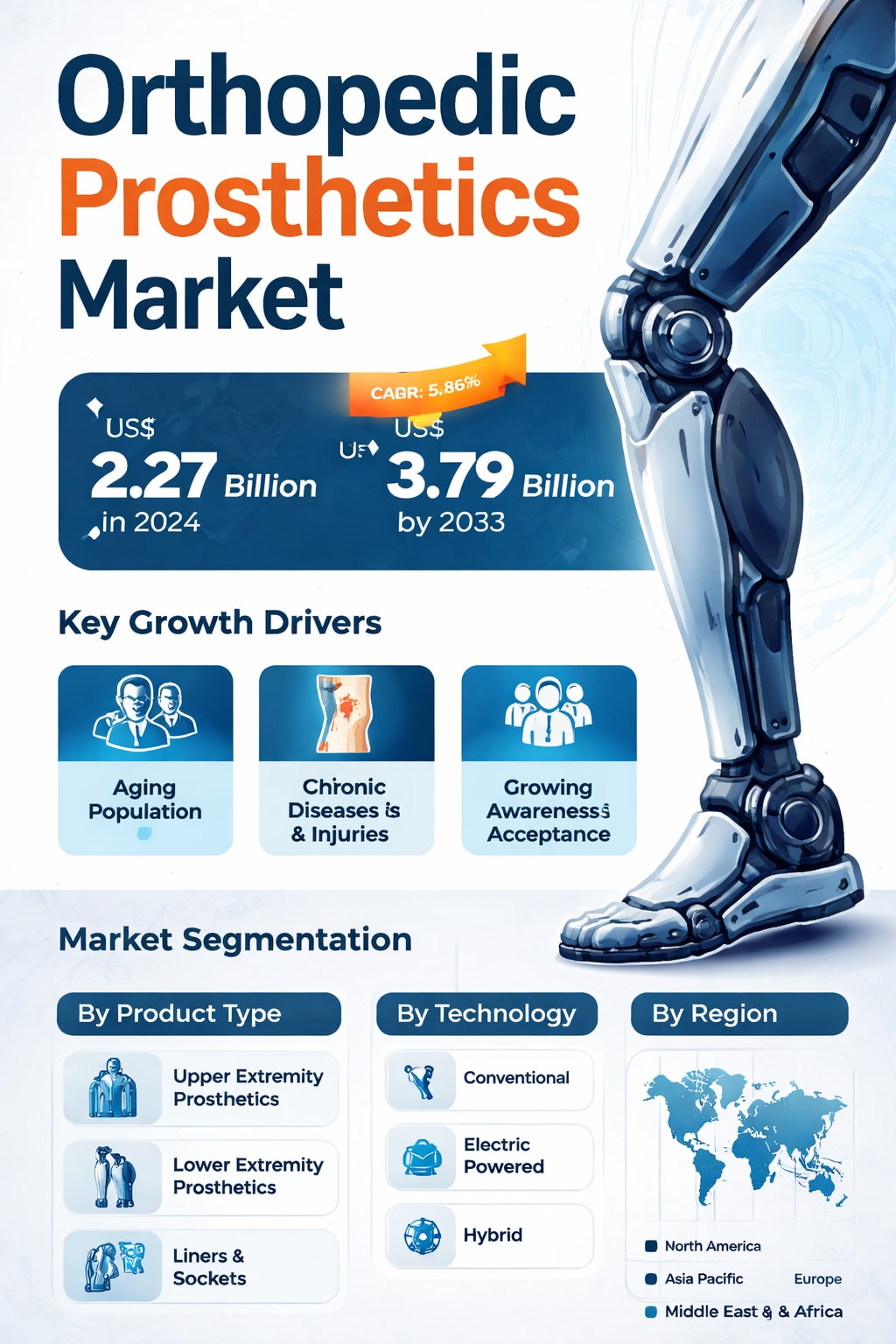
The global orthopedic prosthetics market is entering a new era of transformation, driven by rapid technological progress, shifting demographics, and rising expectations for quality of life. According to Renub Research, the Orthopedic Prosthetics Market is expected to reach US$ 3.79 billion by 2033, up from US$ 2.27 billion in 2024, growing at a CAGR of 5.86% from 2025 to 2033. This steady growth reflects not only the increasing medical need for prosthetic solutions but also the expanding acceptance of these devices as life-enhancing technologies rather than mere medical aids.
Orthopedic prosthetics include a wide range of devices designed to replace or support bones, joints, and limbs—such as artificial arms and legs, hip and knee implants, and spinal prostheses. Over the past decade, these products have evolved from purely functional tools into sophisticated, patient-centric solutions that combine comfort, durability, and intelligent design. Innovations in materials science, 3D printing, robotics, and digital modeling are redefining what prosthetics can achieve, enabling better fit, improved mobility, and more natural movement.
At the same time, global health trends are amplifying demand. Aging populations, the rising burden of chronic musculoskeletal disorders, and an increase in trauma and sports-related injuries are all contributing to the expanding need for orthopedic prosthetic solutions. Together, these factors are shaping a market that is not only growing in size but also becoming more technologically advanced and strategically important within the broader healthcare ecosystem.
Global Orthopedic Prosthetics Industry Overview
Recent technological developments and demographic shifts have propelled major advancements in the global orthopedic prosthetics market. Artificial limbs, knee, hip, and spinal implants are among the most widely used orthopedic prostheses, designed to support or replace damaged bones and joints. These devices are no longer limited to basic mechanical functions; instead, they increasingly integrate smart materials, digital design, and precision engineering to enhance performance and user comfort.
The adoption of 3D printing, for example, has made it possible to create highly customized prosthetic components with greater speed and cost efficiency. Advanced polymers, lightweight metals, and composite materials are improving durability while reducing weight, helping users achieve more natural movement. In parallel, sensor-based and microprocessor-controlled systems are making prosthetics more responsive to real-world conditions, particularly in lower-limb applications.
Beyond technology, medical need remains a central driver. A growing number of people worldwide suffer from chronic conditions such as osteoarthritis, rheumatoid arthritis, and degenerative joint diseases that often require joint replacement or limb-support solutions. In addition, trauma cases resulting from road accidents, workplace incidents, sports injuries, and conflicts continue to increase the demand for prosthetic limbs and orthopedic implants.
As healthcare systems expand and awareness improves, more patients are seeking timely orthopedic interventions rather than delaying treatment. This shift toward proactive care, combined with continuous innovation, is reinforcing the long-term growth outlook of the orthopedic prosthetics market.
Market Growth Drivers
Rising Aging Population
One of the most powerful forces behind the expansion of the orthopedic prosthetics market is the global aging population. As life expectancy increases, so does the prevalence of age-related musculoskeletal conditions such as osteoarthritis, osteoporosis, and joint degeneration. Older adults are significantly more likely to require hip and knee replacements, spinal implants, and other orthopedic prosthetic solutions to maintain mobility and independence.
With seniors forming a larger share of the population in many countries, healthcare systems are witnessing a steady rise in orthopedic procedures. Prosthetic devices play a critical role in helping elderly patients regain function, reduce pain, and improve overall quality of life. This demographic trend is expected to remain a long-term growth engine for the market, ensuring sustained demand for advanced and reliable prosthetic solutions.
Rising Incidence of Chronic Diseases and Injuries
The increasing burden of chronic diseases and traumatic injuries is another major factor supporting market growth. Conditions such as osteoarthritis, which leads to progressive joint deterioration, are becoming more common worldwide. According to widely cited global health data, hundreds of millions of people live with arthritis and related disorders, many of whom eventually require surgical intervention and prosthetic support.
At the same time, traumatic injuries from road accidents, sports activities, and occupational hazards continue to contribute to limb loss and severe orthopedic damage. These cases often require advanced prosthetic limbs or implants to restore mobility and functionality. As access to healthcare improves and more patients seek treatment, the demand for orthopedic prosthetics is expected to rise steadily.
Growing Awareness and Acceptance
Public perception of prosthetic devices has changed significantly over the years. What was once viewed primarily as a last-resort medical solution is now increasingly seen as a pathway to an active, independent life. Awareness campaigns, social media, and real-life success stories have played a key role in reducing stigma and highlighting the benefits of modern prosthetics.
Patients today are more informed about their options and more willing to consider advanced prosthetic solutions early in their treatment journey. This growing acceptance is not only expanding the user base but also encouraging manufacturers to invest in innovation and design. As prosthetics become more visible in sports, media, and everyday life, demand is likely to continue rising.
Key Challenges in the Market
High Cost of Prosthetics
Despite technological progress, cost remains one of the biggest barriers in the orthopedic prosthetics market. Advanced prosthetic devices—especially those incorporating robotics, microprocessors, or custom 3D-printed components—can be extremely expensive. For many patients, particularly in low- and middle-income countries, these costs place high-quality prosthetics out of reach.
Even in developed markets, reimbursement policies and insurance coverage may not fully cover advanced devices, limiting patient access. This cost barrier slows adoption and creates inequalities in care. Addressing affordability through innovation, policy support, and scalable manufacturing will be essential for the market’s inclusive growth.
Limited Customization and Fit Issues
Although customization has improved significantly, fit and comfort remain ongoing challenges. Every patient has unique anatomical and functional needs, and off-the-shelf prosthetic solutions may not always provide an ideal fit. Poorly fitted devices can lead to discomfort, skin irritation, alignment problems, and reduced mobility, ultimately affecting patient satisfaction and long-term outcomes.
While fully customized prosthetics offer better results, they often come with higher costs and longer production times. Balancing personalization with affordability and accessibility remains a critical challenge for manufacturers and healthcare providers alike.
Regional Market Perspectives
United States Orthopedic Prosthetics Market
The United States represents one of the most important markets for orthopedic prosthetics, supported by an aging population, high healthcare spending, and strong adoption of advanced medical technologies. The prevalence of osteoarthritis and other degenerative joint diseases is driving steady demand for hip, knee, and spinal implants, while sports and accident-related injuries continue to fuel the need for prosthetic limbs.
Technological innovation is a major strength of the U.S. market, with widespread use of 3D printing, robotics, and digital design tools. However, high device costs and access disparities remain challenges, particularly for underserved populations. Despite these issues, the long-term outlook remains positive as innovation and healthcare access continue to improve.
Germany Orthopedic Prosthetics Market
Germany’s orthopedic prosthetics market benefits from a strong healthcare system and a reputation for engineering excellence. An aging population and a high incidence of joint-related disorders are driving demand for hip and knee replacements, as well as other orthopedic implants.
The country’s focus on medical technology innovation has led to widespread adoption of advanced prosthetic solutions, including digitally designed and robot-assisted devices. While regulatory requirements and cost considerations can limit access for some patients, ongoing technological progress and rising medical needs are expected to sustain market growth.
China Orthopedic Prosthetics Market
China is emerging as a fast-growing market for orthopedic prosthetics, supported by a large population, rapid urbanization, and expanding healthcare infrastructure. The rising prevalence of chronic joint diseases and trauma cases is increasing demand for both joint replacements and prosthetic limbs.
Government initiatives to improve healthcare access, combined with growing domestic manufacturing capabilities, are helping to make prosthetic solutions more widely available. Technologies such as 3D printing and AI-assisted design are also gaining traction, improving both affordability and performance. Despite regional disparities in access, the overall market outlook in China remains highly promising.
Saudi Arabia Orthopedic Prosthetics Market
In Saudi Arabia, the orthopedic prosthetics market is being driven by rising rates of chronic diseases such as osteoarthritis and diabetes, as well as an increasing number of trauma cases. The country’s investment in healthcare infrastructure and medical technology is supporting the adoption of advanced prosthetic solutions.
Government support, improving insurance coverage, and growing patient awareness are further strengthening the market. While cost and awareness gaps still exist in certain areas, continued healthcare investment is expected to support steady growth in the coming years.
Market Segmentation Overview
By Product Type:
Upper Extremity Prosthetics
Lower Extremity Prosthetics
Liners
Sockets
Modular Components
By Technology:
Conventional
Electric Powered
Hybrid Orthopedic Prosthetics
By End User:
Research Institutes
Hospitals
Diagnostic Laboratories
Others
By Region and Country:
North America: United States, Canada
Europe: France, Germany, Italy, Spain, United Kingdom, Belgium, Netherlands, Turkey
Asia Pacific: China, Japan, India, Australia, South Korea, Thailand, Malaysia, Indonesia, New Zealand
Latin America: Brazil, Mexico, Argentina
Middle East & Africa: South Africa, Saudi Arabia, United Arab Emirates
Competitive Landscape and Company Insights
The global orthopedic prosthetics market is characterized by the presence of several well-established players and innovative specialists. Leading companies continue to focus on product development, strategic partnerships, and technological integration to strengthen their market positions.
Key Companies Include:
Johnson & Johnson
Össur hf.
Smith & Nephew plc
Stryker Corporation
B. Braun Melsungen AG
Hanger Inc.
Zimmer Biomet
These companies compete on the basis of product quality, technological innovation, global reach, and clinical outcomes. Investments in research and development, as well as in digital and smart prosthetic technologies, are expected to remain central to their long-term strategies.
Future Outlook
Looking ahead, the orthopedic prosthetics market is poised for steady and sustainable growth through 2033. The combination of demographic pressures, rising disease burden, and continuous technological innovation creates a strong foundation for expansion. As Renub Research projects, the market’s growth from US$ 2.27 billion in 2024 to US$ 3.79 billion by 2033 reflects both increasing demand and improving product value.
Future developments are likely to focus on smarter, lighter, and more personalized prosthetic solutions. Digital design, AI-assisted fitting, and advanced materials will continue to improve patient outcomes, while efforts to reduce costs and expand access will be crucial for broader adoption.
Final Thoughts
The global orthopedic prosthetics market stands at the intersection of medicine, engineering, and human need. It is not just a story of market growth, but also one of restored mobility, improved quality of life, and technological progress that directly impacts millions of people worldwide. As populations age and expectations for active living rise, prosthetic solutions will become even more central to modern healthcare.
With strong growth projections, ongoing innovation, and expanding awareness, the orthopedic prosthetics industry is set to remain a vital and dynamic part of the global medical device landscape for years to come.
About the Creator
Keep reading
More stories from shibansh kumar and writers in Trader and other communities.
Global Diagnostic Imaging Market Size and Forecast 2025–2033
Global Diagnostic Imaging Market Outlook The global Diagnostic Imaging Market is entering a decisive growth phase as healthcare systems worldwide increasingly depend on fast, accurate, and non-invasive tools to detect disease and guide treatment. According to industry estimates, the Diagnostic Imaging Market is expected to reach US$ 64.96 billion in 2033, up from US$ 39.04 billion in 2024, expanding at a CAGR of 5.82% from 2025 to 2033.
By shibansh kumar7 days ago in Trader
Junk Silver in 2026: Is It Still a Good Investment?
Junk silver refers to US currency coins in circulation prior to 1965. They are often considered a great way to get into silver investments. The reason for this is that junk silver coins have a 90% silver composition, which allows them to track the spot price of silver.
By Sound Money7 days ago in Trader


Comments
There are no comments for this story
Be the first to respond and start the conversation.