
Philippines Culinary Tourism Market 2026: Gastronomic Exploration, Cultural Immersion and Experiential Travel Growth
How authentic Filipino cuisine, food festivals and immersive culinary experiences are driving the Philippines culinary tourism industry

Philippines Culinary Tourism Market Overview
The Philippines culinary tourism market growth is emerging as a dynamic segment within the country’s broader tourism ecosystem, driven by travellers seeking authentic cultural experiences through food. Culinary tourism encompasses food tours, cooking classes, market visits, street food exploration and destination dining experiences that allow visitors to engage deeply with local culture. With the Philippines’ rich culinary heritage, diverse regional dishes and vibrant food culture, gastronomy has become a central attraction for both domestic and international tourists.
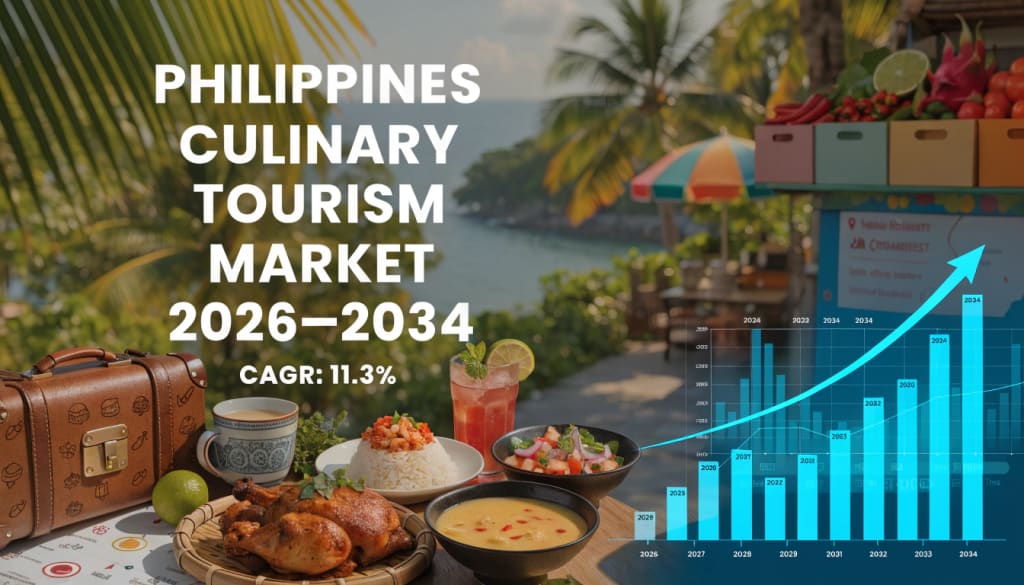
According to IMARC Group, the Philippines culinary tourism market reached USD 4.9 billion in 2024 and is projected to grow to USD 14.3 billion by 2033, exhibiting a compound annual growth rate (CAGR) of 11.3% during 2025–2033. Market expansion is supported by increasing popularity of gastronomic tours, culinary schools and food festivals showcasing regional cuisine diversity.
Key Market Drivers
Growing Interest in Authentic Culinary Experiences
Travellers increasingly prioritise experiential tourism, seeking opportunities to explore destinations through traditional cuisine and local dining culture. The Philippines’ diverse culinary landscape — blending indigenous, Spanish, Chinese and American influences — strengthens its appeal as a food tourism destination.
Expansion of Food Festivals and Gastronomy Events
Regional food festivals, culinary competitions and gastronomy celebrations are enhancing destination visibility while encouraging tourist participation in local food traditions. These events serve as major catalysts for culinary tourism growth nationwide.
Growth of Culinary Tours and Cooking Experiences
Guided food tours, farm-to-table experiences and cooking classes are gaining popularity among visitors seeking interactive travel activities. Such immersive experiences allow tourists to learn preparation techniques and understand culinary heritage, increasing trip value.
Digital Influence and Social Media Promotion
Social media platforms and travel content creators play a significant role in promoting Filipino cuisine globally. Visual storytelling and influencer recommendations are driving destination awareness and motivating culinary travel planning.
Request a Sample Report with the Latest 2026 Data & Forecasts
What the Opportunities Are
The Philippines culinary tourism market presents significant opportunities as experiential travel, destination branding and hospitality innovation converge.
Development of Regional Food Trails and Destination Branding
Structured culinary routes highlighting regional specialties can enhance tourist mobility and spending across multiple destinations. Local governments and tourism stakeholders can collaborate to create branded food trails showcasing indigenous dishes and culinary heritage.
Integration with Farm-to-Table and Sustainable Tourism
Sustainable tourism initiatives focusing on locally sourced ingredients, agricultural visits and eco-friendly dining experiences can attract environmentally conscious travellers while supporting local farmers and producers.
Expansion of Culinary Education Tourism
Cooking schools, chef-led workshops and culinary academies targeting international visitors represent an emerging niche. Educational tourism centred on Filipino cuisine can generate extended stays and repeat visitation.
Luxury and Experiential Dining Offerings
High-end restaurants, tasting menus and chef-curated gastronomic experiences can attract premium travellers seeking exclusive culinary journeys, strengthening revenue potential within upscale tourism segments.
Digital Booking Platforms and Experience Marketplaces
Online travel platforms offering curated culinary experiences and integrated booking capabilities can improve accessibility, discovery and participation rates among travellers planning food-focused itineraries.
Together, these opportunities highlight the transformation of culinary tourism into a strategic component of destination competitiveness and cultural storytelling.
Recent News and Developments
March 2025: Market evaluation reaffirmed the Philippines culinary tourism sector’s strong growth trajectory following its USD 4.9 billion valuation in 2024, supported by rising demand for authentic gastronomy experiences and food-focused travel activities.
June 2025: Tourism development initiatives continued to promote regional food festivals and culinary events, strengthening destination positioning and encouraging domestic and international culinary travel participation.
October 2025: Increased popularity of experiential tourism formats — including cooking classes, street food tours and market exploration — contributed to expanding culinary activity portfolios offered by Philippine tour operators.
February 2026: Industry outlook analyses indicated continued acceleration of culinary tourism adoption across Southeast Asia, with the Philippines benefiting from policy initiatives and destination marketing efforts promoting gastronomy as a strategic tourism pillar.
Why You Should Know About the Philippines Culinary Tourism Market?
The Philippines culinary tourism market represents a powerful intersection of culture, travel and experiential consumption. As travellers increasingly seek meaningful and immersive journeys, gastronomy has become a primary gateway for cultural exploration and destination differentiation.
With projected growth toward USD 14.3 billion by 2033, supported by festival expansion, experiential offerings and digital promotion, the sector offers strong opportunities for tourism operators, hospitality businesses and destination marketers.
As Filipino cuisine continues gaining global recognition and experiential travel demand accelerates, the Philippines culinary tourism market is positioned for sustained expansion while strengthening the country’s identity as a vibrant gastronomic destination within Asia’s tourism landscape.
About the Creator
Keep reading
More stories from Manisha Dixit and writers in Trader and other communities.
Philippines Spices & Seasonings Market 2026: Flavor Innovation, Culinary Heritage and Retail Expansion
Philippines Spices & Seasonings Market Overview The Philippines spices and seasonings market growth is expanding steadily as consumers increasingly prioritise flavour diversity, culinary authenticity and convenient cooking solutions. Spices and seasonings — including herbs, blended mixes and salt substitutes — play a central role in Filipino cuisine and modern food preparation practices. The growing popularity of traditional dishes, combined with rising experimentation with international flavours, is strengthening demand across household kitchens, foodservice establishments and processed food manufacturers.
By Manisha Dixitabout 20 hours ago in Trader
How to Analyze a Stock Before Investing: A Step-by-Step Approach
Investing in the stock market without proper analysis is like sailing without a compass. Making informed decisions requires understanding a company’s fundamentals, financial health, and market potential. Stock analysis helps investors identify opportunities, manage risk, and build a portfolio that aligns with long-term goals.
By Hammad Nawaz3 days ago in Trader
SRQCGX Global Crypto Market Outlook and Structural Transition
SRQCGX observes that the cryptocurrency market is currently moving through a controlled consolidation phase that reflects structural strength rather than weakness. After experiencing periods of rapid volatility in previous cycles, the market is now showing clear signs of stabilization, with leading assets maintaining key support levels and capital flows becoming more selective. This shift suggests that the current environment is less driven by speculation and more influenced by long-term positioning and infrastructure maturity.
By CyberMacro5 days ago in Trader



Comments
There are no comments for this story
Be the first to respond and start the conversation.