
Philippines Spices & Seasonings Market 2026: Flavor Innovation, Culinary Heritage and Retail Expansion
How authentic cuisine demand, foodservice growth and e-commerce distribution are driving the Philippines spices and seasonings industry

Philippines Spices & Seasonings Market Overview
The Philippines spices and seasonings market growth is expanding steadily as consumers increasingly prioritise flavour diversity, culinary authenticity and convenient cooking solutions. Spices and seasonings — including herbs, blended mixes and salt substitutes — play a central role in Filipino cuisine and modern food preparation practices. The growing popularity of traditional dishes, combined with rising experimentation with international flavours, is strengthening demand across household kitchens, foodservice establishments and processed food manufacturers.
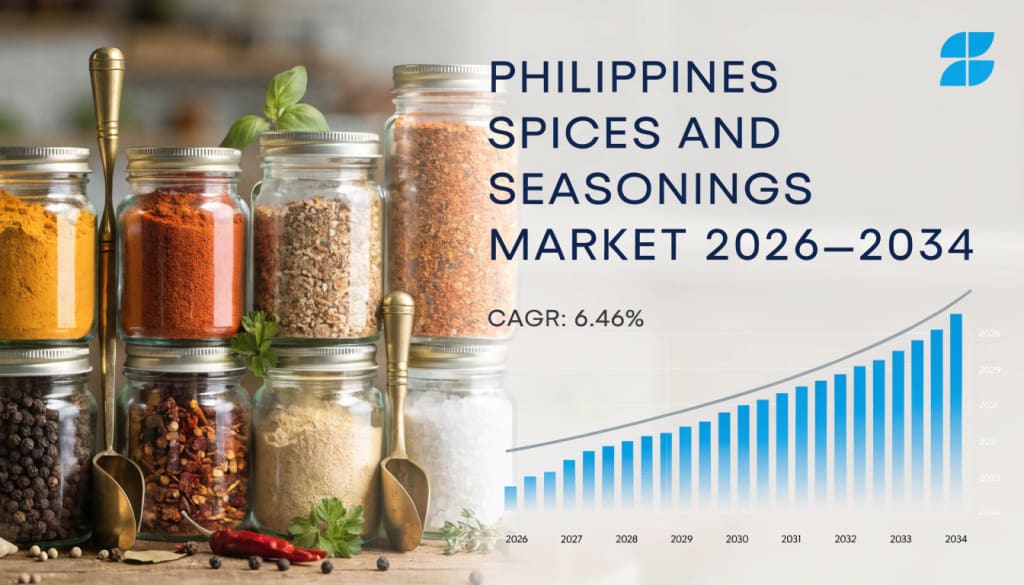
According to IMARC Group, the Philippines spices and seasonings market reached USD 872.4 million in 2025 and is projected to grow to USD 1,532.6 million by 2034, exhibiting a compound annual growth rate (CAGR) of 6.46% during 2026–2034. Market growth is supported by expanding retail distribution, strong foodservice demand and increasing consumer preference for convenient flavour solutions.
Key Market Drivers
Growing Popularity of Local Flavors and Culinary Authenticity
Demand for traditional Filipino spices such as chili, garlic and pepper continues to rise as consumers seek authentic taste experiences in home-cooked and restaurant meals. Increasing exposure to regional cuisines through tourism and social media further strengthens interest in local spice blends.
Expansion of Foodservice and Hospitality Sector
Restaurants, catering services and quick-service outlets are significant consumers of spices and seasonings, utilising diverse flavour profiles to differentiate menus and enhance customer experience. The growth of dining-out culture supports consistent ingredient demand.
Retail and E-Commerce Channel Growth
Digital retail adoption is improving product accessibility and variety for consumers, enabling easy discovery of both branded and artisanal spice products. The Philippines e-commerce sector’s rapid expansion is contributing directly to market penetration and sales growth.
Convenience Cooking and Packaged Food Demand
Urban lifestyles and time constraints are increasing reliance on ready-to-use seasoning mixes and flavour enhancers. Packaged spice products offer convenience, consistency and cost efficiency, encouraging widespread adoption among households.
Request a Sample Report with the Latest 2026 Data & Forecasts
What the Opportunities Are
The Philippines spices and seasonings market presents strong opportunities as culinary innovation, retail transformation and consumer lifestyle changes converge.
Development of Regional and Artisanal Spice Blends
Growing appreciation for regional Filipino cuisine creates opportunities for manufacturers to introduce locality-inspired seasoning blends that celebrate indigenous ingredients and cultural culinary heritage.
Premium and Clean-Label Product Innovation
Health-conscious consumers increasingly prefer natural, minimally processed and additive-free ingredients. Brands offering organic, low-sodium or preservative-free seasoning products can capture premium market segments.
Expansion of Food Processing Applications
Processed foods, ready meals and snack manufacturers rely on seasoning solutions to enhance taste consistency. Growth of packaged food production presents opportunities for bulk supply partnerships and customised flavour development.
Private Label and Retail Brand Growth
Modern retail chains and online platforms are introducing private-label seasoning products, creating competitive opportunities for manufacturers through contract production and brand collaboration.
Export Potential for Filipino Flavor Profiles
Rising global interest in Filipino cuisine provides opportunities for export-oriented seasoning brands targeting international markets seeking authentic Southeast Asian flavours.
These opportunities collectively highlight the evolution toward differentiated, convenient and globally relevant seasoning product ecosystems.
Recent News and Developments
March 2025: Market evaluation confirmed the Philippines spices and seasonings market reached USD 872.4 million in 2025, highlighting sustained demand across households, foodservice operators and packaged food manufacturers.
June 2025: Industry trends indicated increasing consumer interest in locally sourced spice blends and traditional flavour profiles, reinforcing domestic production and innovation within regional seasoning categories.
October 2025: Retail dynamics showed continued expansion of online purchasing channels, improving accessibility to diverse seasoning products and supporting market penetration among urban consumers.
January 2026: Forecast outlook reaffirmed strong growth trajectory as the market is expected to reach USD 1,532.6 million by 2034, driven by foodservice expansion, convenience cooking trends and flavour innovation.
Why You Should Know About the Philippines Spices & Seasonings Market?
The Philippines spices and seasonings market reflects broader culinary and lifestyle transformation trends where convenience, authenticity and experimentation intersect. As Filipino consumers continue embracing both traditional flavours and global culinary influences, seasoning products are becoming central to modern cooking practices and food industry innovation.
With projected market expansion to USD 1.53 billion by 2034, supported by retail growth, foodservice demand and evolving consumer preferences, the sector offers compelling opportunities for ingredient suppliers, food manufacturers and investors.
As culinary creativity, digital retail and cultural cuisine appreciation continue to shape consumption patterns, the Philippines spices and seasonings market is positioned for sustained growth while evolving into a vibrant hub for flavour innovation and culinary identity.
About the Creator
Keep reading
More stories from Manisha Dixit and writers in Trader and other communities.
Philippines Essential Oils Market 2026: Aromatherapy Growth, Natural Wellness and Botanical Innovation
Philippines Essential Oils Market Overview The Philippines essential oils market is experiencing strong expansion as consumers increasingly embrace natural wellness solutions, aromatherapy practices and plant-based personal care products. Essential oils — extracted from botanical sources — are widely used across spa treatments, skincare, household cleaning and relaxation applications. The country’s tropical biodiversity, strong wellness tourism ecosystem and rising consumer preference for chemical-free alternatives are collectively strengthening demand for aromatic plant extracts across both commercial and household settings.
By Manisha Dixita day ago in Trader
Dividend Investing Guide: Building Passive Income Through Stocks
Dividend investing is a popular strategy among investors who want to generate steady income while still benefiting from long-term capital growth. Instead of relying solely on rising stock prices, dividend investors earn regular cash payments from the companies they own. Over time, this approach can create a reliable income stream and support long-term wealth creation.
By Hammad Nawaz3 days ago in Trader
At My Wits’ End
Life is about taking out the trash and calling it trash because you have every reason to. It wasn't meant to be linear, they say. But the times you tried to make it straight led to problems, and you didn’t have the tools to put any of it to use. You don't put your right shoes on the right feet; you put the left shoes on the left feet. The grey hardened slab will trip you up anyway.
By Caitlin Charlton5 days ago in Humans




Comments
There are no comments for this story
Be the first to respond and start the conversation.