
Philippines Higher Education Market 2026: A Thriving Sector Driven by Increasing Demand for Quality Education and Global Learning Opportunities
The Philippines higher education market is experiencing impressive growth, driven by rising domestic demand for tertiary education, government support, and increasing opportunities for international collaborations.

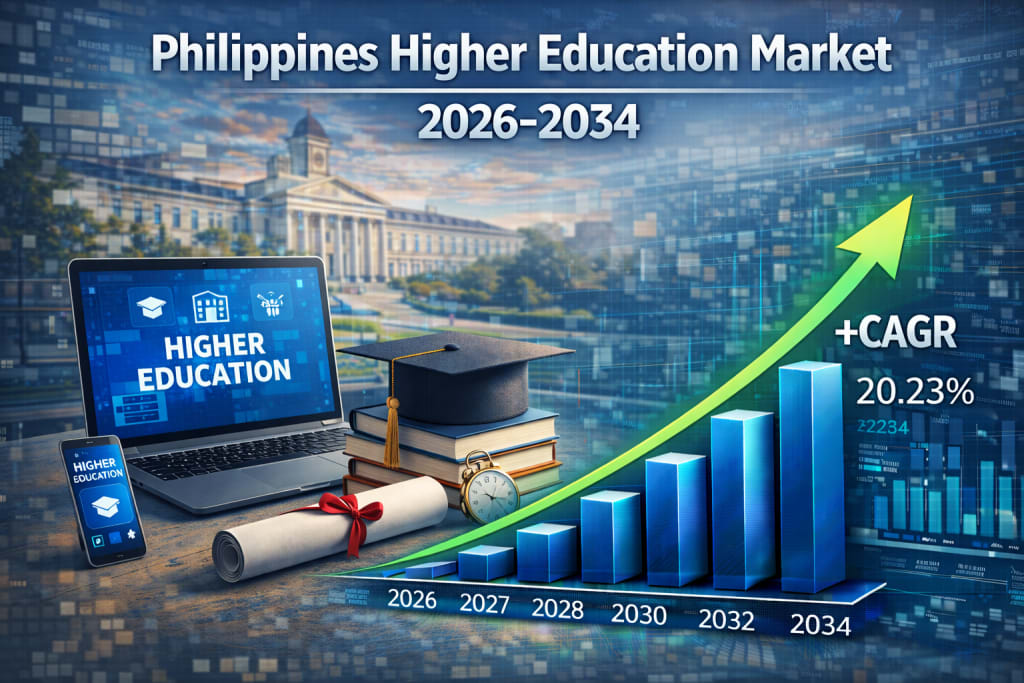
Philippines Higher Education Market
The Philippines higher education market size is on a rapid growth trajectory. In 2025, the market size is expected to be USD 154.0 million, with a projected compound annual growth rate (CAGR) of 20.23%, reaching USD 847.0 million by 2034. This expansion is being driven by the growing demand for quality tertiary education, increasing opportunities for international collaborations, and the government's commitment to improving the higher education system.
Why the Market Is Growing So Rapidly
The rapid growth of the Philippines higher education market can be attributed to several key drivers:
1. Rising Domestic Demand for Tertiary Education: The increasing number of high school graduates seeking higher education opportunities in the Philippines is one of the primary drivers of the market's growth. As more students pursue university degrees to secure better employment prospects, the demand for higher education institutions is intensifying. This trend is expected to continue as the country’s population grows and the middle class expands.
2. Government Support for Higher Education: The Philippine government has made significant investments in higher education through funding programs, scholarships, and infrastructure development. Initiatives like the Universal Access to Quality Tertiary Education Act (UAQTEA) are providing financial support to students, making tertiary education more accessible to a broader segment of the population. Government support is expected to increase enrollment rates and boost the market's growth over the coming decade.
3. Expanding International Collaborations: The Philippines' higher education institutions are becoming increasingly attractive to international students, especially from neighboring countries in Southeast Asia. The growing number of international partnerships, exchange programs, and student mobility initiatives is enhancing the Philippines’ position as a regional hub for higher education. This trend is expected to drive growth in the higher education market as universities expand their global reach and attract students from abroad.
4. Growing Demand for Specialized and Technical Education: As the labor market continues to evolve, there is a rising demand for specialized and technical education programs. Students are increasingly seeking degrees and certifications in areas such as information technology, healthcare, engineering, and business administration. This shift is leading higher education institutions to develop more targeted and industry-specific curricula, further fueling market growth.
5. Digital Transformation of Education: The Philippines is embracing digital learning technologies, and many higher education institutions are incorporating e-learning platforms, online courses, and hybrid learning models to offer flexible education solutions. The growing adoption of digital tools in the classroom is expanding access to education, especially for students in rural or underserved areas, and is expected to continue as universities invest in online platforms and digital resources.
Request a Sample Report with the Latest 2026 Data & Forecasts
What the Opportunities Are
The Philippines higher education market offers numerous opportunities for businesses, educational institutions, and investors:
1. Expansion of Online and Distance Learning: The increasing adoption of e-learning platforms presents a significant opportunity for higher education institutions to offer flexible and accessible learning options. Online degree programs, certifications, and MOOCs (Massive Open Online Courses) are expanding, allowing students to study from home while pursuing degrees or skills training. Companies that provide digital learning tools, platforms, and services will play a key role in shaping this transition.
2. Internationalization of Higher Education: The Philippines is well-positioned to attract international students due to its affordable tuition fees, high-quality education, and strong English proficiency. Universities that focus on creating global partnerships, international student exchange programs, and English-language courses will benefit from this expanding market. This trend is likely to result in higher enrollment rates and increased demand for services catered to international students.
3. Vocational and Technical Education: As industries such as IT, healthcare, and manufacturing continue to grow, there is a rising demand for vocational and technical education. Institutions that offer technical and skills-based programs will be in high demand, particularly in fields like digital marketing, software development, healthcare management, and electrical engineering. The development of industry-focused curricula will drive further growth in these specialized education segments.
4. Private Sector Investment in Education: As the demand for higher education grows, private sector investment in universities, training institutes, and educational technology companies is expected to increase. Partnerships between the government and private sector players in areas like infrastructure development, research programs, and education technology will drive further expansion in the sector.
5. Sustainable and Green Education Programs: As sustainability becomes a key concern in various sectors, there is an opportunity for universities to offer specialized programs in environmental studies, sustainable business practices, and green technologies. As businesses and industries increasingly focus on sustainability, graduates with expertise in green technology and environmental management will be in high demand.
6. Corporate Training and Upskilling Programs: With the increasing need for workforce upskilling, universities and higher education institutions can partner with businesses to offer training and certification programs. Corporate partnerships to provide continuing education programs for professionals will drive market growth, especially in sectors like IT, business management, and healthcare.
7. Hybrid Learning Models: The demand for hybrid education models that blend in-person and online learning is on the rise. Universities that develop robust hybrid learning solutions, allowing students to switch between traditional classroom learning and online formats, will attract a broader range of students. This flexible model helps cater to students who need more flexibility due to work, family obligations, or geographic limitations.
Recent News & Developments
February 2026: The Second Congressional Commission on Education (EDCOM II) released findings showing that the Commission on Higher Education (CHED) takes an average of 11 years to update bachelor’s degree policies and faces staffing shortages that limit its ability to monitor quality across higher education institutions, underscoring urgent calls for regulatory and capacity reforms in the sector.
January 2026: A final national education report prepared by the Philippine Congress is set to press the government for long-term solutions to systemic issues — including quality gaps, classroom shortages, and concerns over so-called diploma mills — as part of broader higher education reform measures.
January 2025: Government incentives were announced to attract foreign universities and international higher education campuses to establish branches in the Philippines, aiming to broaden academic options, boost global competitiveness, and stimulate market expansion in the higher education sector.
Why Should You Know About Philippines Higher Education Market?
The Philippines higher education market is on an impressive growth trajectory, with a projected market size of USD 847.0 million by 2034. The combination of government initiatives, rising demand for specialized education, the internationalization of the education system, and digital transformation are key factors driving this growth. For educational institutions, investors, and businesses in the education technology sector, the Philippines offers a vibrant and expanding market with diverse opportunities. With a CAGR of 20.23%, the higher education market is set to become a significant player in Southeast Asia’s educational landscape.
About the Creator
Keep reading
More stories from Manisha Dixit and writers in Trader and other communities.
Philippines EdTech Market 2026: Accelerating Growth in Digital Learning and Technology Integration
Philippines EdTech Market The Philippines EdTech market size is poised for significant growth. In 2025, the market size is estimated at USD 5,593.6 million. With a projected compound annual growth rate (CAGR) of 10.87%, the market is expected to reach USD 14,554.1 million by 2034. This robust growth is driven by a combination of rising digitalization in the education sector, increasing internet penetration, government support for online learning, and the growing demand for flexible, tech-driven educational solutions.
By Manisha Dixit2 days ago in Trader
Why “No Markup” Pricing Matters in Online Trading
In online forex and CFD trading, pricing transparency has become one of the most important concerns for retail traders. While platforms often advertise tight spreads and competitive fees, the structure behind those costs is not always obvious.
By Darren Lee4 days ago in Trader




Comments
There are no comments for this story
Be the first to respond and start the conversation.