
Russia Wine Market Size & Forecast 2025–2033: A New Era for Domestic Vineyards and Changing Consumer Tastes
How local production, premiumization, and evolving lifestyles are reshaping Russia’s wine industry

Introduction
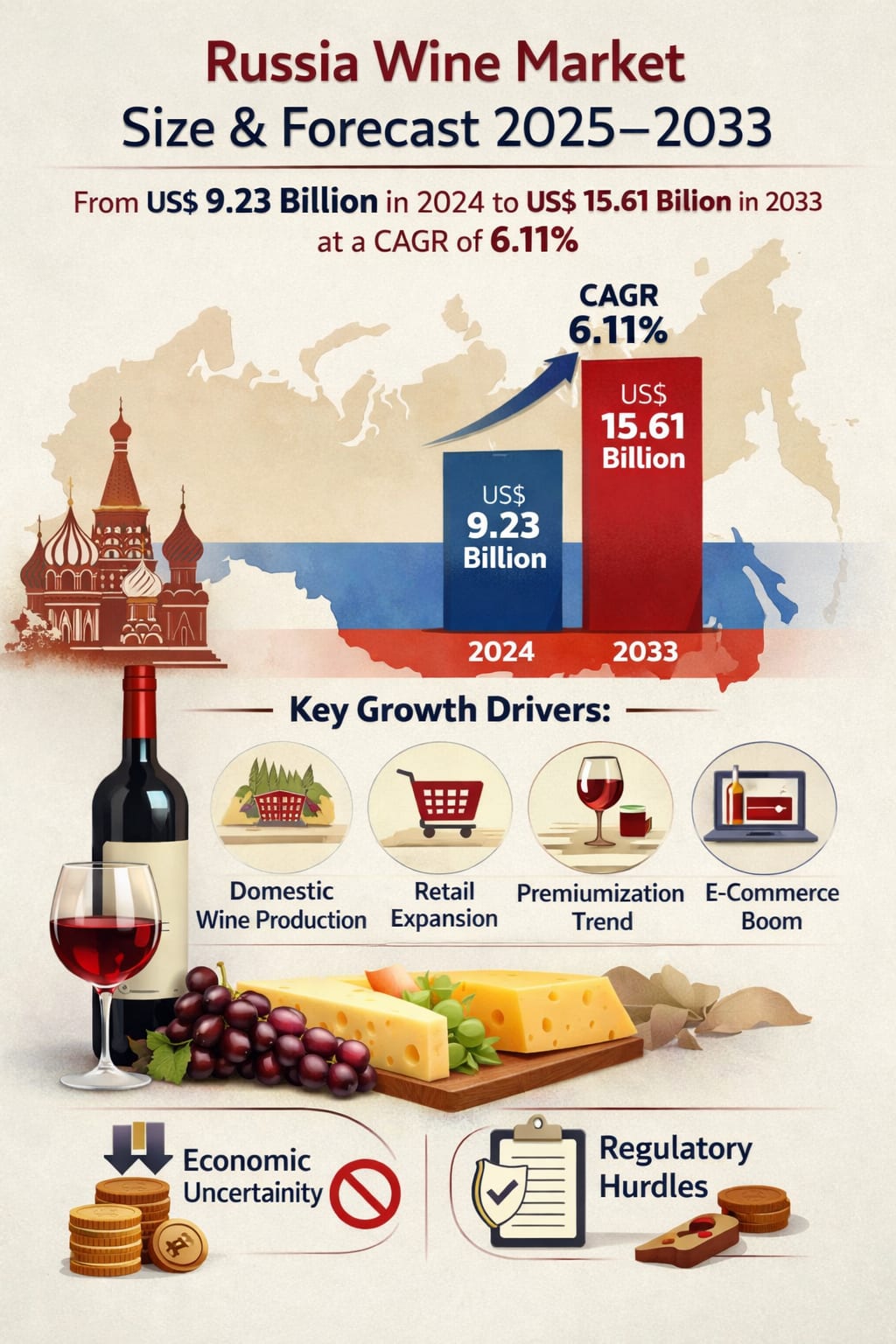
The Russia wine market is entering a transformative phase marked by rising domestic production, shifting consumer preferences, and a renewed focus on quality and origin. According to market estimates, the Russia wine market is anticipated to grow from US$ 9.23 billion in 2024 to US$ 15.61 billion by 2033, expanding at a compound annual growth rate (CAGR) of 6.11% during 2025–2033. This steady rise reflects not only increasing wine consumption but also the structural evolution of the industry itself.
Several factors are supporting this upward trajectory. These include the expansion of retail outlets, changing drinking habits among younger and urban consumers, government support for vineyard development, tax incentives for winemakers, and regulations that increasingly favor domestic wine production. Together, these elements are reshaping Russia’s wine landscape from a market once heavily reliant on imports into one that is progressively more confident in its own terroir and production capabilities.
Wine in Russia is no longer viewed merely as an occasional indulgence or a substitute for other alcoholic beverages. Instead, it is increasingly associated with lifestyle, dining culture, and social experiences. This shift is helping to drive both volume growth and value growth, especially in the premium and mid-range segments.
Russia Wine Industry Overview
Wine is a fermented alcoholic beverage produced from grapes or other fruits, with a history that spans thousands of years across different civilizations. In Russia, wine consumption has evolved significantly over the past few decades. What was once largely a functional or occasional drink has gradually become a more refined and diversified product category, appreciated for its taste, origin, and pairing with food.
The revival of wine culture in Russia is closely linked to broader socio-economic changes. Rising disposable incomes, the gradual expansion of the middle class, and increased exposure to global food and beverage trends have all contributed to a more sophisticated consumer base. Today’s Russian wine consumers are more experimental, showing greater interest in grape varieties, regions of origin, and production methods. Artisan and boutique wines, both domestic and imported, are gaining attention alongside more established brands.
At the same time, domestic vineyard development—particularly in regions such as Krasnodar and the Republic of Crimea—has significantly improved the quality and availability of locally produced wines. Investments in modern viticulture techniques, better winemaking equipment, and skilled labor have helped Russian producers raise their standards and compete more effectively with foreign labels.
Wine bars, tasting sessions, and themed wine events are becoming more common in major cities, helping to build a community of enthusiasts and encouraging deeper appreciation of wine. As a result, wine is increasingly integrated into social gatherings, dining experiences, and even everyday consumption for a growing segment of the population.
Growth Drivers in the Russia Wine Market
Increased Consumer Sophistication and the Premiumization Trend
One of the most important growth drivers in the Russian wine market is the gradual premiumization of consumption. Urban consumers, especially in cities like Moscow and St. Petersburg, are becoming more discerning in their choices. They are paying greater attention to quality, taste profiles, brand stories, and regions of origin.
Wine is increasingly associated with sophistication, social status, and a modern lifestyle. This perception has fueled the growth of wine bars, tasting clubs, and educational content related to wine pairing and tasting. As consumers become more knowledgeable, they are more willing to trade up from low-cost options to mid-range and premium products.
Local producers are also responding to this trend by improving quality standards, investing in branding, and highlighting regional identity. The result is a more competitive market where both domestic and imported wines are pushing toward higher value segments. This shift toward premiumization is strengthening overall market revenues, even when volume growth is moderate.
Vineyard Development and Domestic Production Expansion
Domestic wine production in Russia has expanded significantly in recent years, supported by government initiatives and favorable agricultural policies. Regions such as Krasnodar, Crimea, and Rostov have become key centers of winemaking due to suitable climate conditions and improving infrastructure.
Investments in vineyard management, modern equipment, and winemaking technology have led to noticeable improvements in quality and consistency. In addition, the broader push for import substitution, influenced by geopolitical and economic considerations, has further encouraged local production.
Russian wineries are increasingly focusing on brand identity, heritage, and geographic indications to appeal to consumers who are looking for high-quality domestic alternatives to imported wines. This not only reduces dependence on foreign suppliers but also helps position Russian wines as distinctive products with their own character.
In 2024, Russia was among the few countries to expand its wine production, with output reportedly increasing by 19% to around 5.4 million hectoliters, placing it among the top global producers. This growth underscores the rising importance of domestic production in meeting local demand.
Development of E-commerce and Online Wine Sales Channels
E-commerce has emerged as a powerful enabler of growth in the Russian wine market. Online platforms offer consumers greater convenience, wider product selection, and access to detailed information about wines, including grape varieties, regions, and food pairings.
Digital marketing, influencer content, and educational campaigns have also helped raise awareness and interest in wine, particularly among younger consumers. While regulations around online alcohol sales remain strict, gradual adjustments and verified delivery models have encouraged both traditional retailers and specialized wine sellers to strengthen their online presence.
The COVID-19 pandemic played a significant role in accelerating online purchasing habits, and many of these behaviors have persisted. As digitalization continues to expand across retail, e-commerce is expected to remain a key pillar of wine distribution in Russia, supporting both accessibility and brand discovery.
Challenges Faced by the Russia Wine Market
Economic Uncertainty and Price Sensitivity
Despite positive growth prospects, the Russian wine market faces ongoing challenges related to economic volatility. Fluctuations in currency values, inflation, and changes in consumer purchasing power can quickly influence buying behavior. During periods of economic pressure, consumers often shift toward more affordable domestic or mid-range wines, putting pressure on premium and imported segments.
For importers, exchange rate instability creates additional risks, affecting pricing strategies and profit margins. At the same time, rising production and logistics costs challenge both producers and retailers to maintain competitive prices without compromising quality.
To navigate these conditions, market participants need to balance cost efficiency with value proposition, emphasize local sourcing, and strengthen brand differentiation. Economic uncertainty remains a structural factor that shapes consumption patterns across all price segments.
Complex Regulatory Environment and Import Barriers
The Russian wine industry operates within a tightly regulated framework, particularly in areas such as imports, labeling, certification, and advertising. Frequent policy changes and administrative requirements increase compliance costs for both domestic producers and foreign brands.
Excise taxes, tariff rules, and restrictions on alcohol advertising limit marketing flexibility and can slow down new product launches. Geopolitical tensions have further increased scrutiny on imported alcohol, adding complexity to market access for international suppliers.
While local producers often benefit from protective measures, the overall diversity of the market can be constrained. Simplifying procedures, improving transparency, and modernizing certification systems would help create a more efficient and competitive market environment.
Russia Sparkling Wine Market
Sparkling wine holds a special place in Russian consumption culture, closely associated with celebrations and special occasions. This segment has been witnessing steady growth, supported by both improving domestic production and continued interest in imported brands from countries such as France, Italy, and Spain.
Locally produced sparkling wines, particularly from Crimea and Krasnodar, are gaining popularity due to better quality and more competitive pricing. Younger consumers are especially drawn to sparkling wines for their light, refreshing taste and versatility in both casual and formal settings.
With ongoing improvements in production techniques and strong lifestyle-oriented marketing, the sparkling wine segment is expected to remain one of the most dynamic parts of the Russian wine market.
Russia Dessert Wine Market
Dessert wines occupy a smaller but valuable niche in the Russian market. They are often associated with indulgence, fine dining, and special occasions. Domestic producers in Crimea and the Black Sea region have a tradition of producing fortified and dessert-style wines, and these products are now being repositioned with a stronger focus on heritage and craftsmanship.
Although the overall market share of dessert wines remains limited, the segment benefits from growing interest in premium dining experiences and culinary experimentation. As Russian food culture continues to evolve, dessert wines are likely to attract connoisseurs and collectors who value quality and tradition.
Russia Red Wine Market
Red wine dominates the Russian wine market in terms of consumption share. Its popularity is driven by rich flavor profiles, compatibility with traditional meat-based cuisine, and widespread cultural acceptance. Both domestic and imported red wines enjoy strong demand.
Local production of red wines using grape varieties such as Cabernet Sauvignon and Merlot has improved significantly in recent years. At the same time, imported reds from countries like Georgia, Italy, and France continue to appeal to urban and premium consumers.
Ongoing investments in vineyard research, blending techniques, and branding are expected to further strengthen the position of red wine in the Russian market over the forecast period.
Russia Rosé Wine Market
Rosé wine is one of the fastest-growing segments, particularly among younger consumers and women. The shift toward lighter, more refreshing alcoholic beverages has helped position rosé as a fashionable choice for social gatherings and casual occasions.
Domestic producers are increasingly experimenting with rosé styles, while imported rosés from regions such as Provence continue to influence market trends. The visual appeal, versatility, and association with summer and lifestyle experiences make rosé a strong growth category in Russia’s evolving wine landscape.
Russia Wine Offline Market
Offline retail remains the backbone of wine distribution in Russia. Supermarkets, hypermarkets, specialized wine shops, and hospitality venues continue to account for the majority of sales. Many consumers still prefer the in-store experience, where they can receive advice, explore new products, and participate in tastings.
Restaurants, hotels, and duty-free channels also play a significant role, especially in premium wine sales. While online channels are growing, regulatory constraints and cultural preferences ensure that offline retail will remain dominant, albeit with increasing integration of digital tools for inventory and customer engagement.
Central Russia Wine Market
Central Russia, including Moscow and surrounding regions, represents the largest and most dynamic wine market in the country. High income levels, dense urban populations, and strong exposure to global trends support robust demand for both domestic and imported wines.
Moscow, in particular, serves as a hub for premium consumption, wine festivals, and international brands. A well-developed retail and hospitality infrastructure, combined with strong consumer education, continues to drive market growth in this region.
Northwestern Russia Wine Market
Northwestern Russia, led by St. Petersburg, has a cosmopolitan and internationally influenced wine culture. The city’s vibrant restaurant and bar scene, along with strong tourism, supports demand for premium and boutique wines.
Although high import costs and taxes can limit product diversity, the region remains an important growth center, driven by affluent consumers and openness to global wine traditions.
Urals Wine Market
The Urals region is an emerging wine market, supported by economic growth in cities such as Yekaterinburg. While wine culture is less developed compared to western Russia, increasing retail presence, promotional activities, and rising middle-class incomes are creating new opportunities.
Infrastructure development and expanding hospitality sectors are expected to gradually strengthen wine consumption in this region over the coming years.
Final Thoughts
The Russia wine market is on a clear growth path, projected to rise from US$ 9.23 billion in 2024 to US$ 15.61 billion by 2033 at a CAGR of 6.11%. This expansion is being driven by stronger domestic production, evolving consumer tastes, premiumization trends, and the gradual modernization of retail and distribution channels.
While economic uncertainty and regulatory complexity remain challenges, the long-term outlook is positive. The increasing confidence of local producers, combined with a more sophisticated and curious consumer base, is reshaping Russia’s wine industry into a more mature, diverse, and resilient market. Over the next decade, wine is set to play an even more prominent role in Russia’s food, lifestyle, and social culture—marking a new chapter for the country’s growing wine economy.
About the Creator
Keep reading
More stories from shibansh kumar and writers in Trader and other communities.
Asia Pacific Dairy Market Size & Forecast 2025–2033
Introduction: A Region Powering Global Dairy Growth The Asia Pacific dairy industry is entering a decisive growth phase, driven by changing consumer habits, urban expansion, and rising health awareness. According to Renub Research, the market is expected to expand from US$ 333.00 billion in 2024 to US$ 616.45 billion by 2033, registering a strong compound annual growth rate (CAGR) of 7.10% between 2025 and 2033.
By shibansh kumar9 days ago in Trader




Comments
There are no comments for this story
Be the first to respond and start the conversation.