
Saudi Arabia Bedroom Furniture Industry Analysis: Design, Lifestyle, and the Future of Home Living
How Urban Growth, Rising Incomes, and Modern Design Preferences Are Reshaping Saudi Bedrooms

Introduction: A Market Shaped by Lifestyle Transformation
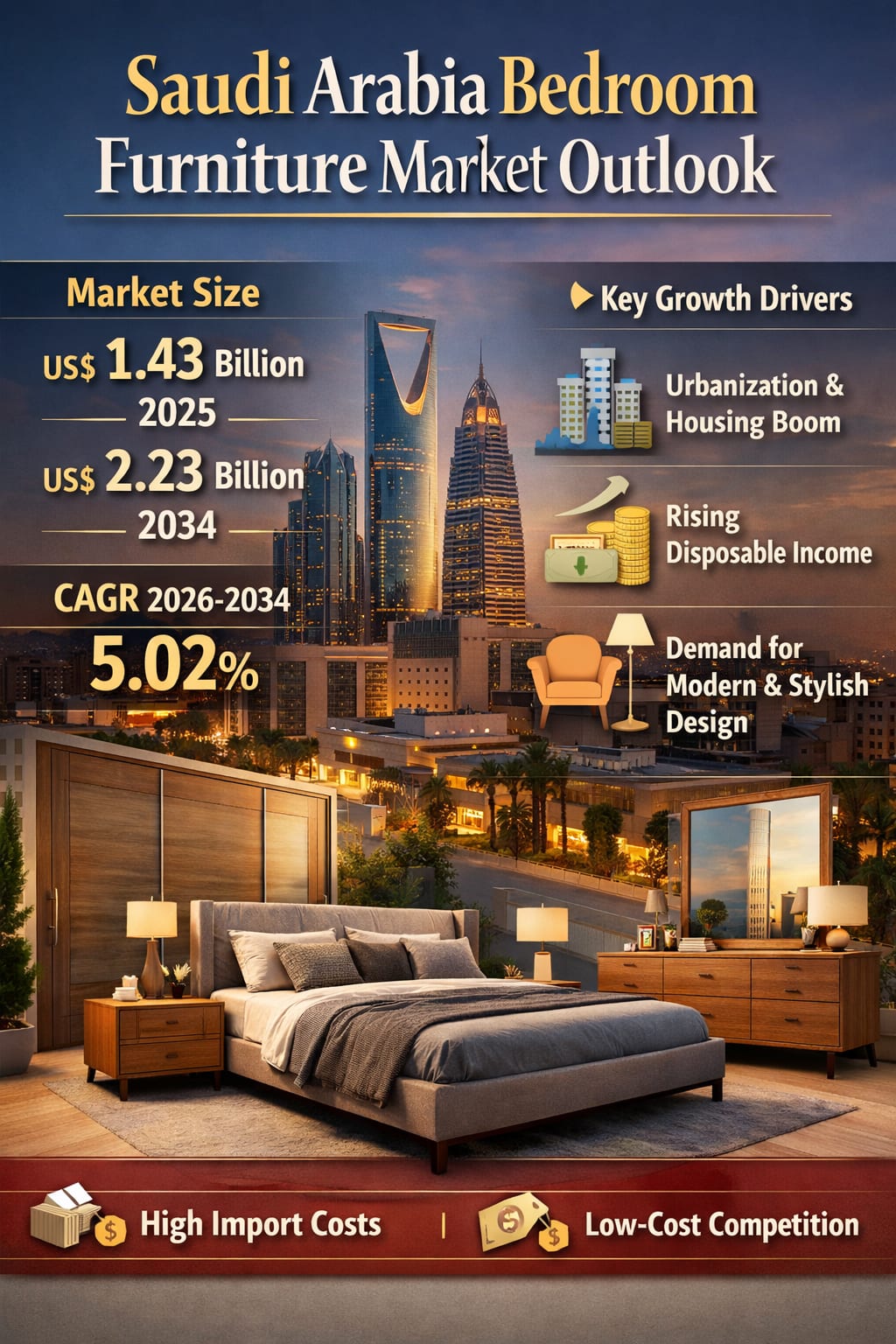
The Saudi Arabia Bedroom Furniture Market is undergoing a steady and structural transformation, mirroring the Kingdom’s broader economic and lifestyle evolution. According to Renub Research, the market is projected to expand from US$ 1.43 Billion in 2025 to US$ 2.23 Billion by 2034, registering a CAGR of 5.02% during 2026–2034.
This growth is being driven by a combination of rapid urbanization, increasing residential construction, rising disposable incomes, and a noticeable shift in consumer preferences toward modern, functional, and aesthetically refined bedroom furniture. As Saudi households increasingly prioritize comfort, storage efficiency, and interior harmony, bedroom furniture has moved beyond basic utility to become a reflection of personal identity and lifestyle aspirations.
Saudi Arabia Bedroom Furniture Market Outlook
Bedroom furniture refers to a coordinated set of furnishings designed to enhance comfort, storage, and visual appeal within a bedroom. This typically includes beds, mattresses, wardrobes or closets, bedside tables, dressers, mirrors, and, in some cases, benches or accent seating. Modern bedroom furniture emphasizes durability, ergonomic comfort, modularity, and alignment with interior design themes.
In Saudi Arabia, demand for bedroom furniture has surged alongside the expansion of villas, gated communities, and modern apartment complexes. Traditionally, Saudi households favor spacious bedrooms furnished with multi-piece sets. While older generations often prefer ornate and heavy furniture, younger consumers increasingly gravitate toward minimalist, modular, and contemporary designs. The growing influence of global brands, social media inspiration, and online retail platforms has further diversified consumer tastes and expanded access to premium and mid-range furniture solutions.
Key Growth Drivers of the Saudi Arabia Bedroom Furniture Industry
Expanding Residential Construction and Housing Development
Residential development remains the strongest growth engine for the bedroom furniture market. Saudi Arabia’s ambitious urban development agenda under Saudi Vision 2030 has accelerated the construction of smart cities, affordable housing projects, and integrated residential communities.
New homeowners and tenants typically purchase complete bedroom furniture sets when moving into newly built properties. Government-backed housing initiatives and large-scale developments are creating a consistent flow of demand, not only from individual households but also from real estate developers furnishing multiple housing units simultaneously. This sustained construction activity ensures long-term market stability for bedroom furniture manufacturers and retailers.
Rising Disposable Income and Preference for Modern Design
Improving income levels and lifestyle upgrades are reshaping furniture buying behavior across Saudi Arabia. Middle-income families and younger professionals increasingly prioritize design, comfort, and customization over traditional bulk furniture. Exposure to international trends through digital platforms and global furniture brands has significantly influenced design preferences.
Consumers are now investing in modular wardrobes, ergonomic beds, coordinated furniture sets, and customized storage solutions. Comfort-focused features, premium finishes, and contemporary aesthetics are gaining prominence. Strategic collaborations between real estate developers and luxury design houses are also elevating expectations around bedroom interiors, further stimulating demand for high-quality furniture.
Growth of E-commerce, Retail Chains, and Global Furniture Brands
Saudi Arabia’s furniture retail landscape has evolved rapidly, supported by organized retail expansion and the rise of online platforms. E-commerce offers convenience, broader product selection, transparent pricing, and doorstep delivery—appealing strongly to digitally savvy consumers.
Physical retail remains equally important, with specialty stores and branded showrooms offering immersive experiences through 3D visualizers, personalized consultations, and customization services. The entry of international luxury and lifestyle brands has intensified competition while raising quality standards across the market. This omnichannel environment encourages frequent furniture upgrades and fuels sustained demand in the bedroom segment.
Challenges Facing the Saudi Arabia Bedroom Furniture Industry
High Cost of Quality Materials and Import Dependence
Saudi Arabia relies heavily on imported wood, fittings, and premium raw materials for furniture production. Fluctuating freight costs, currency movements, and global supply chain disruptions often translate into higher furniture prices. Manufacturers face the challenge of balancing affordability with quality, particularly in the mid-range segment where price sensitivity remains high.
Competition from Low-Cost Alternatives and Informal Markets
Low-priced imported furniture and unorganized local markets create intense price competition. While such products attract cost-conscious buyers, they often lack durability, warranty coverage, and after-sales support. Established brands must justify higher prices through superior materials, craftsmanship, and customer service, which can be challenging in a highly competitive environment.
Segment Insights: Understanding Market Dynamics
Wardrobes and Closets
Wardrobes and closets represent one of the most essential components of bedroom furniture in Saudi homes. Spacious layouts drive demand for large wardrobes with sliding or hinged doors, modular shelving, and soft-close mechanisms. Walk-in closets and wall-fitted storage systems are particularly popular among high-income households seeking luxury and organization.
Dressers and Dressing Tables
Dressers and dressing tables hold cultural and functional significance in Saudi households. Beyond storage, they contribute to bedroom aesthetics and personal grooming routines. Contemporary designs combine mirrors, lighting, and multi-functional storage, while traditional carved styles continue to appeal to classic design enthusiasts.
Wooden Bedroom Furniture
Wood remains the most preferred material due to its durability, aesthetic appeal, and cultural value. Solid wood and engineered wood furniture symbolize quality and longevity, making them popular across both luxury and mid-range segments. Sustainability awareness is also encouraging interest in responsibly sourced and eco-friendly wood furniture.
Residential Segment Dominates Market Demand
The residential sector accounts for the largest share of the Saudi Arabia bedroom furniture market. Population growth, rising marriage rates, and frequent home renovations continue to drive demand for master, children’s, and guest bedroom furniture. Customization options aligned with floor plans, color themes, and storage needs are especially attractive to young families and first-time homeowners.
Distribution Channels: The Role of Specialty Furniture Stores
Specialty furniture stores focusing exclusively on bedroom solutions play a vital role in the market. These outlets offer curated collections, professional design guidance, customization services, and extended warranties. Design-conscious consumers, particularly in urban centers, increasingly prefer specialty stores for premium finishes and personalized solutions.
Regional Market Overview
Riyadh
Riyadh leads the Saudi bedroom furniture market, driven by rapid urban expansion, luxury residential projects, and high disposable incomes. Consumers favor contemporary designs and international brands, supported by the presence of premium showrooms and design galleries.
Dammam
Dammam’s market benefits from its industrial economy and growing residential developments catering to the oil, gas, and logistics workforce. Demand is strongest for durable, functional, and mid-priced bedroom furniture.
Jeddah
Jeddah’s cosmopolitan culture and coastal lifestyle influence furniture preferences toward stylish, modern designs with artistic elements. The city’s diverse population supports demand across luxury, mid-range, and economy segments, making it a key hub for furniture retail.
Competitive Landscape and Company Analysis
The Saudi Arabia bedroom furniture market features a mix of global leaders and established manufacturers. Key companies operating in the market include:
IKEA
Ashley Furniture Industries Inc.
Leggett & Platt Incorporated
Nitori Co. Ltd.
Steinhoff International Holdings N.V.
La-Z-Boy Incorporated
Vaughan-Bassett Furniture Company
Hooker Furnishings Corporation
Bassett Furniture Industries
Century Furniture LLC
Each company is evaluated across five viewpoints: overview, key leadership, recent developments, SWOT analysis, and revenue performance, highlighting a competitive yet innovation-driven market environment.
Final Thoughts: A Market Built on Comfort and Aspirations
The Saudi Arabia bedroom furniture industry stands at the intersection of economic growth, urban development, and evolving lifestyle preferences. With a projected rise from US$ 1.43 Billion in 2025 to US$ 2.23 Billion by 2034, the market reflects not just increased furniture consumption, but a deeper transformation in how Saudi households view comfort, design, and personal living spaces.
As residential construction continues and consumers increasingly invest in quality and customization, bedroom furniture will remain a core segment within Saudi Arabia’s home furnishings market—one shaped as much by aspiration as by functionality.
About the Creator
Philippines Logistics Market: Supply Chain Expansion, E-Commerce Growth & Trade Connectivity
Philippines Logistics Market Overview The Philippines logistics market growth is a vital component of the country’s economic infrastructure, facilitating the movement of goods across domestic regions and international links while underpinning trade efficiency, e-commerce fulfilment and supply chain resilience. The Philippines logistics market size reached USD 30.0 Billion in 2024. Looking forward, IMARC Group expects the market to reach USD 40.0 Billion by 2033, exhibiting a growth rate (CAGR) of 3.6% during 2025-2033. This steady growth reflects rising demand driven by expanding e-commerce activities, investments in transportation and warehousing infrastructure, and government efforts to improve trade logistics performance within Southeast Asia.
By Manisha Dixit5 days ago in Trader
Australia E-Learning Market: Digital Education Expansion, Tech Integration & Lifelong Learning Demand
Australia E-Learning Market Overview The Australia e-learning market is undergoing significant expansion as education providers, enterprises and learners increasingly adopt digital platforms, personalised content delivery and subscription-based learning models. E-learning — the use of electronic technologies to access educational curriculum outside of traditional classrooms — encompasses online courses, virtual classrooms, micro-learning modules, corporate training portals and professional certification platforms. The Australia e-learning market size was valued at USD 6.8 Billion in 2024. Looking forward, the market is projected to reach USD 18.6 Billion by 2033, exhibiting a CAGR of 11.70% from 2025-2033. This growth highlights the rising demand for flexible, scalable and tech-enabled learning solutions across student, corporate and lifelong learner populations. (Market data based on IMARC Group analysis.)
By Manisha Dixit6 days ago in Trader




Comments
There are no comments for this story
Be the first to respond and start the conversation.