
Thailand Organic Fertilizer Market Size and Forecast 2025–2033: Cultivating a Sustainable Future
Rising health awareness, government backing, and eco-friendly farming practices are transforming Thailand’s agriculture sector and fueling rapid growth in the organic fertilizer industry.

Thailand Organic Fertilizer Market Overview
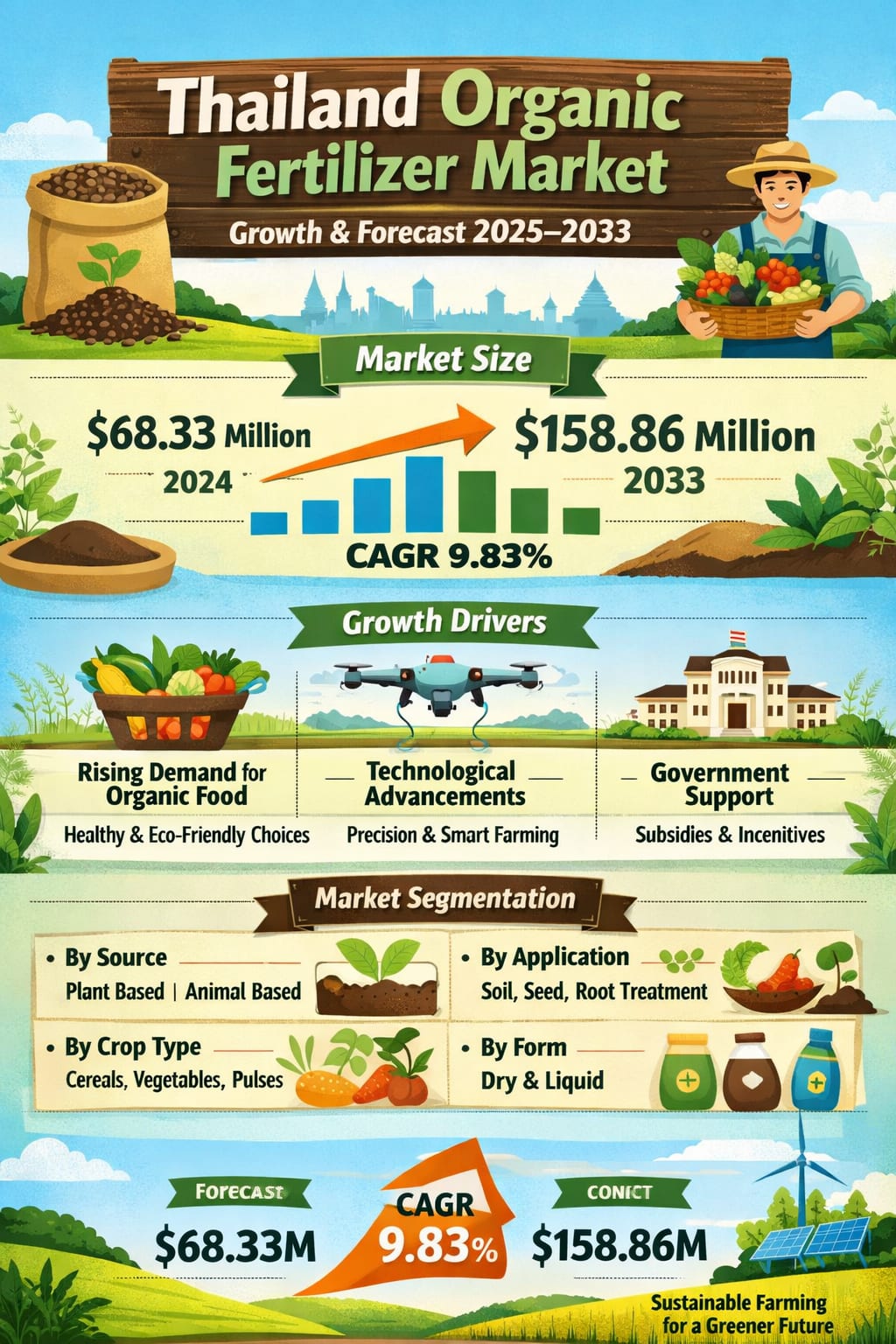
According to Renub Research, the Thailand Organic Fertilizer Market is expected to reach US$ 158.86 million by 2033, rising from US$ 68.33 million in 2024, growing at a compound annual growth rate (CAGR) of 9.83% from 2025 to 2033. This strong growth trajectory reflects a broader shift in Thailand’s agricultural ecosystem—one that is increasingly focused on sustainability, soil health, and environmentally responsible farming practices.
Organic fertilizers, derived from plant, animal, or mineral sources, are gaining traction as a reliable alternative to chemical fertilizers. Unlike synthetic products, organic fertilizers release nutrients slowly and naturally, improving soil structure, enhancing microbial activity, and supporting long-term agricultural productivity. Common examples include compost, manure, bone meal, and seaweed-based formulations. These inputs not only nourish crops with essential nutrients such as nitrogen, phosphorus, and potassium, but also contribute to better water retention and reduced soil erosion.
In Thailand, where agriculture remains a vital pillar of the economy and rural livelihoods, the transition toward sustainable farming is no longer just a trend—it is becoming a necessity. Concerns over soil degradation, rising consumer demand for organic food, and increasing regulatory scrutiny on chemical inputs are all accelerating the adoption of organic fertilizers across the country.
Why Organic Fertilizers Matter for Thailand’s Agriculture
Thailand’s agricultural sector has long been one of Southeast Asia’s most important, supporting millions of farmers and contributing significantly to exports of rice, fruits, vegetables, and other crops. However, decades of intensive farming and heavy reliance on chemical fertilizers have taken a toll on soil health and environmental quality.
Organic fertilizers offer a practical solution to these challenges. By improving soil fertility naturally, they help restore degraded land, increase biodiversity in the soil, and reduce the risk of chemical runoff into water bodies. Over time, farms that adopt organic inputs often see improved crop resilience, better yields stability, and reduced dependency on expensive synthetic products.
Equally important is the growing alignment between farming practices and consumer expectations. As Thai consumers become more health-conscious and environmentally aware, demand for organically grown food is rising. This shift in consumption patterns is creating a powerful incentive for farmers to adopt organic fertilizers and sustainable cultivation methods.
Market Growth Drivers
1. Rising Consumer Demand for Organic Food
One of the strongest forces behind the growth of Thailand’s organic fertilizer market is changing consumer behavior. More people are actively seeking food that is free from harmful chemicals, grown using environmentally responsible methods, and aligned with healthier lifestyles.
This rising demand for organic produce is encouraging farmers to rethink traditional practices and transition toward organic and sustainable farming systems. As a result, the use of organic fertilizers is increasing, not only to meet certification requirements but also to improve soil quality and long-term farm productivity.
In addition, urbanization and rising incomes are shaping food choices in Thailand. Middle-class consumers are more willing to pay a premium for organic fruits, vegetables, rice, and processed foods. This creates a ripple effect across the agricultural value chain, boosting demand for organic inputs such as compost, biofertilizers, and microbial-based nutrient solutions.
2. Technological Advancements in Agriculture
Technology is playing a crucial role in making organic fertilizers more effective and more appealing to farmers. Innovations such as microbial inoculants, slow-release nutrient formulations, and bio-enhanced composts are improving nutrient uptake and crop performance while minimizing environmental impact.
Precision agriculture tools—including soil sensors, drones, and data analytics—are also transforming how fertilizers are applied. Instead of blanket application, farmers can now optimize nutrient use based on real-time soil and crop data. This reduces waste, lowers costs, and improves overall efficiency.
Another emerging trend is the development of “smart” organic fertilizers that release nutrients in response to specific crop needs or soil conditions. These products bridge the gap between traditional organic inputs and modern agricultural technology, making sustainable farming both practical and profitable for Thai farmers.
3. Strong Government Support
The Thai government has been actively promoting sustainable agriculture and reducing dependence on chemical inputs. National policies and development plans focus on encouraging organic farming, improving certification systems, and expanding market access for organic products.
Subsidies, training programs, and awareness campaigns are helping farmers understand the long-term benefits of organic practices. At the same time, initiatives aimed at boosting domestic production of fertilizers and reducing import dependence are strengthening the local organic fertilizer industry.
In June 2024, for example, the Thai government announced a co-payment program to support fertilizer costs for more than 4 million rice-growing households. Farmers can access this program through the Bank for Agriculture and Agricultural Cooperatives’ mobile application, while fertilizer suppliers are being encouraged to participate in price standardization efforts to reduce volatility. Such measures not only ease the financial burden on farmers but also create a more stable and supportive environment for the fertilizer market as a whole.
Key Challenges Facing the Market
1. Supply Chain and Distribution Issues
Despite strong growth prospects, Thailand’s organic fertilizer market faces notable challenges in supply chain and distribution. Small-scale farmers and producers often struggle with limited access to modern logistics networks and high costs associated with organic certification.
Transporting organic fertilizers—especially bulky materials like compost and manure—can be expensive and inefficient, particularly in rural areas. This raises overall costs and reduces competitiveness compared to conventional chemical fertilizers, which often benefit from more established distribution systems.
In addition, the availability of raw materials such as animal manure and compostable organic waste can be inconsistent due to seasonal variations and fluctuations in market demand. These disruptions can affect production schedules and product quality, making it harder for manufacturers to scale up operations smoothly.
Addressing these challenges will require coordinated efforts to improve infrastructure, streamline certification processes, and build more efficient distribution networks that can support both large and small producers.
2. High Production Costs
High production costs remain one of the biggest barriers to wider adoption of organic fertilizers in Thailand. Sourcing natural raw materials—such as plant waste, animal manure, or organic residues—can be expensive and sometimes unreliable.
Moreover, processing these materials into high-quality, standardized products requires investment in technology, quality control, and compliance with organic certification standards. Certification fees and regulatory requirements add further financial pressure, particularly for small and medium-sized producers.
As a result, organic fertilizers often come with a higher price tag than synthetic alternatives. This price gap can discourage cost-sensitive farmers from making the switch, even if they recognize the long-term benefits of organic farming. Bridging this affordability gap will be critical for the market’s sustained growth.
Thailand Organic Fertilizer Market Segmentation
The Thailand organic fertilizer market is diverse and segmented across multiple dimensions, reflecting the wide range of products and applications in modern agriculture.
By Source:
Plant Based
Animal Based
Synthetic Based
By Mode of Application:
Seed Treatment
Soil Treatment
Root Dripping
By Product Type:
Microorganism
Azospirillum
Cyanobacteria
Phosphate-Solubilizing Bacteria
Azolla
Aulosira
Rhizobium
Azotobacter
Other
By Organic Residues:
Farm Yard Manure
Crop Residue
Green Manure
Other Products
By Crop Type:
Cereals & Grains
Oilseeds & Pulses
Fruits & Vegetables
Others
By Form:
Dry
Liquid
This wide segmentation highlights how organic fertilizers are being tailored to different crops, soil conditions, and farming practices across Thailand.
Competitive Landscape and Key Players
The market features a mix of domestic and international players, all competing to expand their presence in Thailand’s growing organic fertilizer sector. Companies are typically evaluated across four key dimensions: Company Overview, Key Persons, Recent Developments & Strategies, and Sales Analysis.
Some of the prominent players in the market include:
National Fertilizers
Madras Fertilizers
Seek Biotechnology Co. Ltd
Coromandel International
Nagarjuna Fertilizers and Chemicals Ltd
T Stanes & Company Limited
Novozymes
Kribhco
These companies are investing in product innovation, partnerships, and distribution expansion to strengthen their positions in the Thai market. The increasing focus on bio-based solutions and microbial fertilizers is also opening new avenues for differentiation and growth.
The Road Ahead: Market Outlook to 2033
With the Thailand Organic Fertilizer Market projected to grow from US$ 68.33 million in 2024 to US$ 158.86 million by 2033, the next decade looks highly promising for this sector. The expected CAGR of 9.83% reflects not just rising demand, but also a structural shift in how agriculture is practiced in the country.
Sustainability is no longer a niche concept—it is becoming central to Thailand’s agricultural strategy. As consumers continue to prioritize health and environmental responsibility, and as the government strengthens its support for organic farming, organic fertilizers are likely to move from a complementary input to a mainstream necessity.
Technological innovation will further accelerate this transition, making organic farming more efficient, more predictable, and more profitable. At the same time, addressing challenges related to cost, supply chains, and infrastructure will be crucial to ensure that the benefits of this growth are shared across the entire farming community.
Final Thoughts
Thailand stands at an important crossroads in its agricultural journey. The rapid expansion of the organic fertilizer market signals a broader transformation toward sustainable, resilient, and future-ready farming systems. With strong consumer demand, supportive government policies, and continuous technological progress, the sector is well-positioned to play a vital role in shaping the country’s green economy.
While challenges such as high production costs and distribution inefficiencies remain, they also present opportunities for innovation, investment, and collaboration. If these hurdles are addressed effectively, organic fertilizers will not only improve farm productivity and soil health but also contribute to a healthier environment and a more sustainable food system for Thailand in the years to come.
In short, the growth story of Thailand’s organic fertilizer market is not just about numbers—it’s about cultivating a more balanced and sustainable future for agriculture, farmers, and consumers alike.
About the Creator
Sakshi Sharma
Content Writer with 7+ years of experience crafting SEO-driven blogs, web copy & research reports. Skilled in creating engaging, audience-focused content across diverse industries.
Keep reading
More stories from Sakshi Sharma and writers in Trader and other communities.
Saudi Arabia Household Cleaners Market Size and Forecast 2025–2033
Saudi Arabia Household Cleaners Market Outlook The Saudi Arabia Household Cleaners Market is expected to reach US$ 661.97 million by 2033, up from US$ 460.29 million in 2024, growing at a CAGR of 4.12% from 2025 to 2033. This steady growth reflects the country’s rising focus on hygiene, wellness, and overall living standards, alongside rapid urbanization and lifestyle modernization.
By Sakshi Sharmaabout 11 hours ago in Trader
Unofficial Challenge: What would you do if you were rich?
I love the kind of work I get to do in my career, but as I job search and browse apartments again due to another understaffed and unsustainable work environment that I did not intend to get into, my daydreams of better days consistently lean into the same question: What would I do if I didn't have to worry about my basic needs being met?
By Kay Husnick3 days ago in Writers


Comments
There are no comments for this story
Be the first to respond and start the conversation.