
United States Epilepsy Drugs Market Size and Forecast 2025–2033 | Renub Research
Innovation in Antiepileptic Therapies, Rising Diagnosis Rates, and Regulatory Support to Drive Steady Market Expansion Through 2033

United States Epilepsy Drugs Market Overview
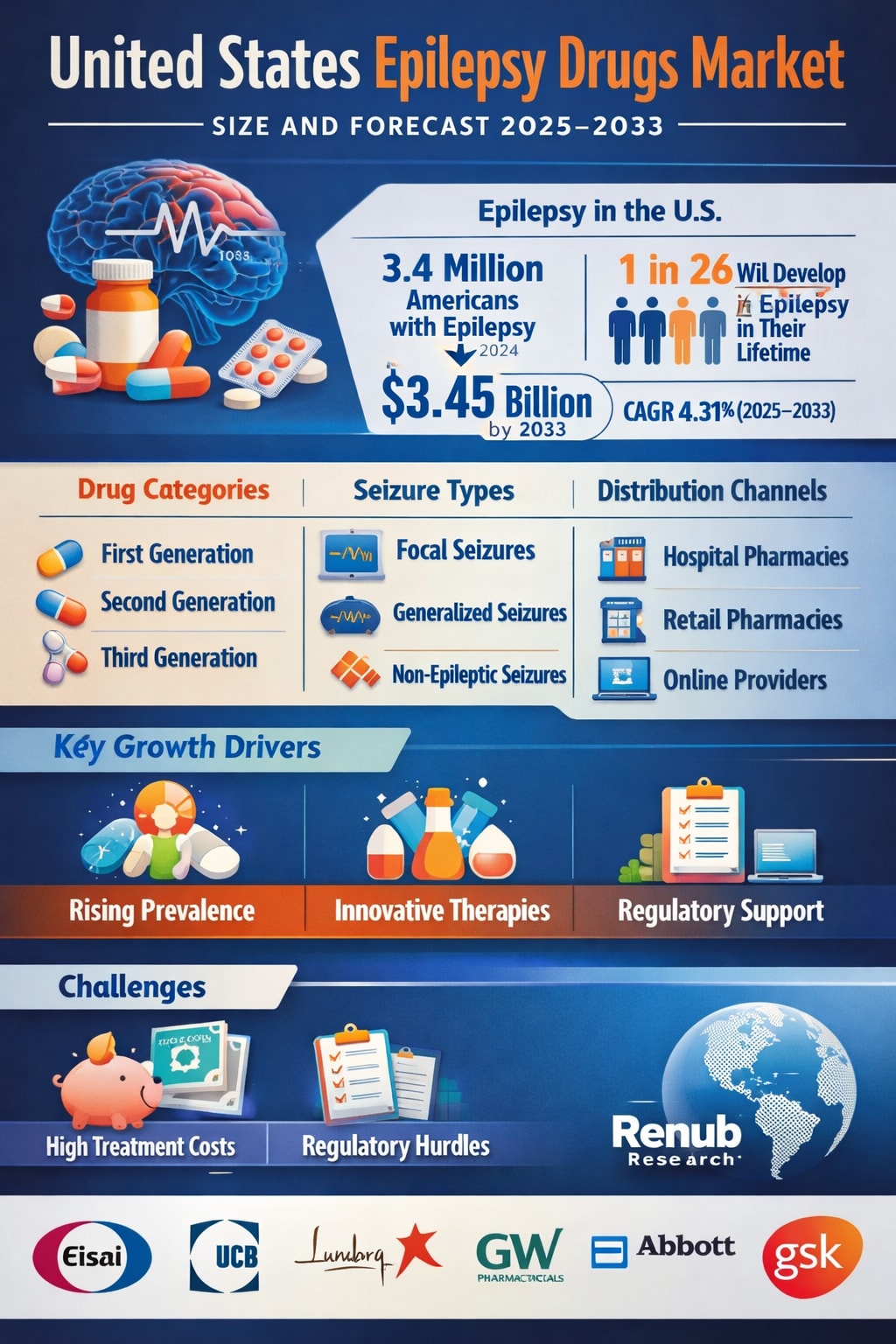
The United States Epilepsy Drugs Market is poised for steady and sustained growth over the forecast period, reflecting both rising disease awareness and continuous innovation in neurological therapeutics. According to Renub Research, the market is expected to reach US$ 3.45 billion by 2033, up from US$ 2.36 billion in 2024, registering a compound annual growth rate (CAGR) of 4.31% from 2025 to 2033.
Epilepsy remains one of the most common chronic neurological disorders in the United States, characterized by recurrent and often unpredictable seizures that significantly affect quality of life. The U.S. market forms a critical part of the global epilepsy therapeutics landscape, supported by advanced healthcare infrastructure, strong pharmaceutical R&D capabilities, and relatively faster adoption of novel therapies.
The market is broadly structured around drug categories (first, second, and third-generation antiepileptic drugs), seizure types (focal, generalized, and non-epileptic seizures), and distribution channels (hospital pharmacies, retail drug stores, and online providers). Among these, second and third-generation drugs are gaining momentum due to their improved safety profiles, better tolerability, and more targeted mechanisms of action.
Over the years, epilepsy treatment in the U.S. has shifted from a one-size-fits-all approach toward more personalized and precision-based therapies. This transition is encouraging pharmaceutical companies to diversify their product portfolios, invest in rare and complex epilepsy syndromes, and explore therapies with fewer side effects and better long-term outcomes.
United States Epilepsy Drugs Industry Landscape
The U.S. epilepsy drugs industry is a dynamic segment within the broader neurology therapeutics market. It encompasses a wide range of antiepileptic drugs (AEDs) designed to manage different seizure types and patient profiles. Historically, treatment relied heavily on first-generation drugs such as phenytoin, carbamazepine, and valproate. While these medications remain in use, their side-effect profiles and drug–drug interaction risks have accelerated the shift toward newer alternatives.
Today, second-generation AEDs (such as levetiracetam, lamotrigine, and topiramate) and third-generation drugs are increasingly preferred due to improved safety, better patient compliance, and broader therapeutic coverage. These newer agents are especially important for patients who are resistant to older therapies or who experience intolerable side effects.
From a regional perspective, North America holds the largest share of the global epilepsy drugs market, with the United States leading in terms of revenue and innovation. This leadership is supported by strong clinical research ecosystems, robust FDA regulatory frameworks, and high healthcare spending.
The disease burden remains substantial. It is estimated that more than 3.4 million Americans live with epilepsy, and approximately 1 in 26 people in the U.S. will be diagnosed with epilepsy at some point in their lifetime. Each year, over 150,000 new cases are reported, reinforcing the persistent and growing need for effective treatment solutions.
Market Size and Forecast: 2025–2033
Renub Research projects a steady upward trajectory for the United States epilepsy drugs market over the next decade. The market’s expansion from US$ 2.36 billion in 2024 to US$ 3.45 billion by 2033 reflects both volume growth in treated patients and the increasing adoption of higher-value, next-generation therapies.
The 4.31% CAGR anticipated during the 2025–2033 period is supported by several structural factors:
Rising prevalence and improved diagnosis rates of epilepsy
Ongoing innovation in drug development
Growing focus on rare and treatment-resistant epilepsy syndromes
Strong regulatory support for novel therapies
Expansion of digital and retail pharmacy distribution channels
While growth is not explosive, it is consistent and resilient, underpinned by the chronic nature of the disease and the lifelong treatment needs of many patients.
Key Factors Driving the United States Epilepsy Drugs Market
Increasing Prevalence of Epilepsy
One of the most significant drivers of market growth is the rising prevalence of epilepsy in the United States. The condition affects millions of adults and children, with a notable impact across diverse demographic groups. Studies indicate that epilepsy is more common among certain populations, including individuals from minority racial and ethnic backgrounds and those with lower socioeconomic status.
As awareness improves and diagnostic tools become more accessible, more patients are being identified and treated, directly expanding the addressable market for antiepileptic drugs. Public health campaigns and advocacy efforts by organizations such as the Epilepsy Foundation have also played a crucial role in reducing stigma and encouraging people to seek medical care.
This growing patient pool creates sustained demand for both established therapies and innovative new drugs, reinforcing long-term market expansion.
Advancements in Drug Development
Continuous progress in pharmaceutical research and development is reshaping the epilepsy treatment landscape. Second and third-generation AEDs have been developed to overcome many of the limitations of older drugs, including severe side effects, complex dosing regimens, and limited effectiveness in certain seizure types.
A notable example is the FDA’s approval of FINTEPLA (fenfluramine) oral solution for the treatment of seizures associated with Lennox-Gastaut syndrome. Similarly, the approval of ganaxolone (Ztalmy) for CDKL5 deficiency disorder marked a major milestone for rare epilepsy syndromes that previously had very limited treatment options.
These innovations not only improve clinical outcomes but also expand the commercial potential of the market by addressing unmet medical needs and highly specialized patient segments.
Favorable Regulatory and Awareness Environment
The U.S. Food and Drug Administration (FDA) plays a central role in shaping the epilepsy drugs market. Through accelerated approval pathways and orphan drug designations, the FDA has made it easier for innovative therapies targeting rare and severe epilepsy forms to reach patients faster.
In parallel, national awareness initiatives such as National Epilepsy Awareness Month and advocacy campaigns have significantly improved public understanding of the condition. Increased awareness leads to earlier diagnosis, better treatment adherence, and higher demand for effective medications, all of which contribute to market growth.
Challenges Facing the United States Epilepsy Drugs Market
High Treatment Costs and Affordability Concerns
Despite medical progress, cost remains a major barrier for many patients. Several branded antiepileptic drugs can cost thousands of dollars per month, especially when generic alternatives are not available. Even when generics exist, they may not be suitable for every patient due to differences in tolerability or effectiveness.
Insurance coverage gaps, high deductibles, and limited access to co-pay assistance programs—particularly for Medicare beneficiaries—further complicate affordability. These financial pressures can lead to medication non-adherence, increasing the risk of breakthrough seizures, hospitalizations, and long-term complications.
Addressing cost and access issues will be essential for ensuring equitable treatment and sustaining market growth.
Regulatory Hurdles and Market Entry Delays
While the FDA provides supportive pathways for innovation, the overall regulatory process remains rigorous, time-consuming, and expensive. Extensive clinical trials, safety evaluations, and documentation requirements can delay the launch of new drugs and increase development costs for pharmaceutical companies.
Additionally, when patents expire and generic versions enter the market, pricing pressure intensifies. Although generics improve affordability, they can also reduce incentives for innovation in certain segments, particularly for niche or rare epilepsy indications.
These factors create a complex environment where balancing innovation, access, and profitability remains an ongoing challenge.
Market Segmentation Analysis
By Drugs Category
First Generation Drugs:
These include traditional AEDs such as phenytoin, carbamazepine, and valproate. While still widely used due to familiarity and lower cost, their growth is relatively limited because of side-effect concerns and drug interaction risks.
Second Generation Drugs:
This segment represents the fastest-growing category, driven by better safety profiles, broader indications, and higher physician preference. Drugs like levetiracetam and lamotrigine are now mainstays in epilepsy management.
Third Generation Drugs:
These newer therapies focus on targeted mechanisms and improved tolerability, particularly for treatment-resistant and rare epilepsy syndromes. Although smaller in volume, they command higher value and are strategically important for market expansion.
By Seizure Type
Focal Seizures:
The largest segment, reflecting the high prevalence of focal epilepsy in the U.S. population.
Generalized Seizures:
This segment includes widely recognized seizure types and continues to drive strong demand for both first-line and adjunctive therapies.
Non-Epileptic Seizures:
Although not caused by abnormal electrical brain activity, this category still influences diagnostic and treatment pathways, indirectly affecting drug utilization patterns.
By Distribution Channel
Hospital Pharmacies:
Play a critical role in acute care settings and in initiating treatment for newly diagnosed or severe cases.
Drug Stores and Retail Pharmacies:
Represent the dominant distribution channel, driven by convenience, accessibility, and long-term prescription refills.
Online Providers:
A rapidly growing channel, supported by digital health adoption, home delivery services, and improved patient convenience.
Competitive Landscape and Company Analysis
The U.S. epilepsy drugs market is highly competitive, with both global pharmaceutical giants and specialized neurology-focused companies actively participating. Key players include:
Eisai Co., Ltd.
UCB Inc.
H. Lundbeck A/S
GW Pharmaceuticals Plc.
Abbott Laboratories
Alkem Laboratories Limited
Bausch Health Companies Inc.
GSK plc
These companies compete on the basis of product efficacy, safety profiles, pipeline strength, and market access strategies. Recent years have seen increased merger and acquisition activity, strategic partnerships, and targeted investments in rare epilepsy syndromes and next-generation therapies.
For example, Lundbeck’s acquisition activities highlight the industry’s growing focus on specialized and high-value neurological treatments, particularly in areas with significant unmet medical need.
Future Outlook: Where the Market Is Headed
Looking ahead, the United States epilepsy drugs market is expected to continue its steady growth trajectory through 2033. The focus will increasingly shift toward:
Personalized and precision medicine approaches
Treatments for rare and drug-resistant epilepsy syndromes
Improved safety and tolerability profiles
Greater integration of digital health and remote care models
Expanded access through diversified distribution channels
While cost and regulatory challenges will persist, the fundamental drivers—rising prevalence, continuous innovation, and strong healthcare infrastructure—remain firmly in place.
Final Thoughts
The United States Epilepsy Drugs Market stands at an important intersection of medical need, scientific innovation, and healthcare policy. With the market projected to grow from US$ 2.36 billion in 2024 to US$ 3.45 billion by 2033 at a CAGR of 4.31%, the outlook remains positive and resilient.
As pharmaceutical companies continue to invest in next-generation therapies and as awareness and diagnosis rates improve, patients can expect more effective, safer, and more personalized treatment options. At the same time, addressing affordability and access challenges will be crucial to ensuring that these advances benefit the widest possible population.
About the Creator
Sakshi Sharma
Content Writer with 7+ years of experience crafting SEO-driven blogs, web copy & research reports. Skilled in creating engaging, audience-focused content across diverse industries.
Keep reading
More stories from Sakshi Sharma and writers in Trader and other communities.
Global Logistics Market Size and Forecast 2025–2033: The Backbone of Modern Global Trade
Global Logistics Market Overview In 2024, the Global Logistics Market was valued at US$ 6.68 trillion and is projected to expand to US$ 11.27 trillion by 2033, growing at a CAGR of 5.98% during 2025–2033, according to Renub Research. This impressive growth trajectory highlights how logistics has become one of the most critical pillars of the modern global economy.
By Sakshi Sharmaabout 8 hours ago in Trader
Buyers seek relief from high home loan rates, causing an increase in the popularity of assumeable mortgages.
In a tight housing market, many potential homebuyers are having trouble finding options that are affordable because mortgage rates are expected to remain high through the beginning of 2026. As a result, some homebuyers and sellers are returning to an older method of financing known as the assumable mortgage. This strategy lets a buyer take over an existing loan at the original interest rate rather than securing a new mortgage at today's higher rates.
By Raviha Imran4 days ago in Trader



Comments
There are no comments for this story
Be the first to respond and start the conversation.