
United States Hazelnut Market Size and Forecast 2025–2033
Health Trends, Plant-Based Diets, and Premium Food Demand Are Reshaping America’s Hazelnut Industry

United States Hazelnut Market Overview
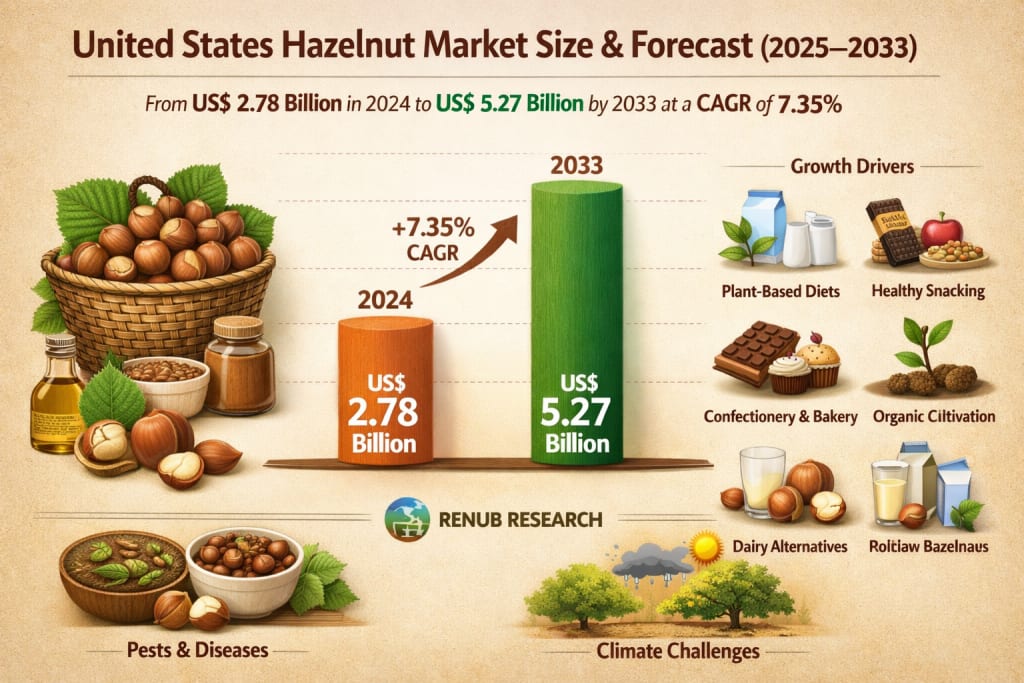
The United States Hazelnut Market is on a strong growth trajectory and is expected to reach US$ 5.27 billion by 2033, up from US$ 2.78 billion in 2024, registering a CAGR of 7.35% from 2025 to 2033. This impressive expansion reflects shifting consumer preferences toward healthier foods, rising adoption of plant-based diets, and the growing use of hazelnuts across food, beverage, cosmetic, and pharmaceutical applications.
Hazelnuts, also known as filberts, belong to the Corylus genus, with Corylus avellana being the most widely recognized variety. These nuts are valued for their rich, nutty flavor and impressive nutritional profile. They are packed with healthy fats, protein, dietary fiber, antioxidants, and essential vitamins such as vitamin E and B-complex vitamins. Because of these benefits, hazelnuts have moved far beyond being just a baking ingredient and are now considered a premium, functional food component.
In the United States, hazelnuts are commonly consumed raw or roasted, ground into pastes, pressed into oil, or used in spreads, chocolates, baked goods, and dairy alternatives. Their compatibility with vegan, gluten-free, and clean-label diets has further strengthened their market position. As consumers become more mindful of what they eat, hazelnuts are increasingly seen as a smart, nutritious, and versatile choice.
The U.S. hazelnut market is benefiting from multiple overlapping trends: a growing health-conscious population, rising demand for plant-based and dairy-free products, premiumization in confectionery and bakery segments, and expanding interest in organic and sustainably sourced ingredients. Together, these forces are transforming hazelnuts from a niche nut category into a mainstream, high-value agricultural and food ingredient market.
Market Size and Growth Outlook
From 2024 to 2033, the United States hazelnut market is set to nearly double in value. The projected growth from US$ 2.78 billion to US$ 5.27 billion highlights the strong commercial momentum behind this segment. A 7.35% CAGR is notable for an agricultural and food-based market, especially in a mature economy like the United States.
This growth is not being driven by a single factor. Instead, it reflects a combination of demand-side and supply-side developments. On the demand side, consumers are actively seeking healthier snack options, functional foods, and plant-based alternatives. On the supply side, improvements in processing technologies, better product innovation, and wider distribution networks are making hazelnut-based products more accessible than ever.
The market is also being supported by the premiumization trend in food and beverages. Hazelnuts are often associated with high-quality chocolates, gourmet spreads, specialty bakery items, and premium snacks. As consumers show a willingness to pay more for better ingredients, traceability, and sustainability, hazelnuts are well positioned to benefit.
United States Hazelnut Industry Overview
Hazelnuts have long been valued for both taste and nutrition, but their role in the U.S. food system is expanding rapidly. Traditionally used in chocolates, desserts, and bakery products, hazelnuts are now increasingly found in plant-based milks, protein bars, nut butters, and even functional nutrition products.
Nutritionally, hazelnuts stand out for their high content of monounsaturated fats, which are linked to heart health. They also provide antioxidants that help combat oxidative stress, along with minerals and vitamins that support overall well-being. This makes them especially appealing to consumers focused on preventive health and balanced diets.
Beyond food, hazelnuts are also finding applications in cosmetics and personal care products, thanks to hazelnut oil’s moisturizing and antioxidant properties. In pharmaceuticals and nutraceuticals, hazelnut-derived ingredients are being explored for their nutritional and functional benefits. This multi-industry demand base adds resilience and long-term growth potential to the U.S. hazelnut market.
Key Growth Drivers for the United States Hazelnut Market
1. Rising Health Awareness
Health awareness is one of the most powerful forces driving the U.S. hazelnut market. Consumers today are more informed about nutrition than ever before, and they are actively seeking foods that support heart health, weight management, and overall wellness.
Hazelnuts are rich in monounsaturated fats, dietary fiber, protein, and antioxidants. Regular consumption is associated with better cholesterol profiles, improved digestion, and enhanced antioxidant protection. These benefits align perfectly with current consumer priorities, such as clean eating, functional foods, and preventive nutrition.
As a result, hazelnuts are increasingly being used in health-oriented snacks, spreads, and beverages. Their natural, nutrient-dense profile makes them a strong fit for products that emphasize “better-for-you” positioning without compromising on taste.
2. Growth in Plant-Based Diets
The rapid rise of plant-based and flexitarian diets in the United States is another major driver for the hazelnut market. More consumers are reducing their intake of animal products, whether for health, environmental, or ethical reasons, and are turning to plant-based alternatives instead.
Hazelnuts offer an excellent nutritional profile for this audience. They provide plant-based protein, healthy fats, and essential vitamins, making them suitable for vegans, vegetarians, and flexitarians alike. Hazelnut-based products such as plant milks, dairy-free spreads, and nut butters are gaining popularity, especially among consumers who want minimally processed, clean-label options.
Their versatility in both sweet and savory applications further strengthens their appeal in the expanding plant-based food ecosystem. From coffee creamers to dessert fillings, hazelnuts are becoming a go-to ingredient in modern plant-based formulations.
3. Rising Usage in the Confectionery Industry
The confectionery sector remains one of the largest consumers of hazelnuts worldwide, and this trend is strongly reflected in the United States market. Hazelnuts are widely used in chocolates, cookies, spreads, and premium desserts, where they add both flavor and texture.
A significant portion of global hazelnut consumption goes into confectionery products, and major chocolate and snack brands continue to expand their hazelnut-based offerings. Hazelnuts are often associated with premium quality and indulgence, making them especially attractive in high-end and specialty product lines.
At the same time, manufacturers are innovating with healthier formulations, combining hazelnuts with dark chocolate, reduced sugar recipes, and functional ingredients. This helps attract health-conscious consumers who still want indulgent experiences, further supporting demand growth.
Challenges in the United States Hazelnut Market
1. Pests and Diseases
One of the major challenges facing the U.S. hazelnut industry is the threat from pests and diseases. A well-known issue is Eastern filbert blight, a fungal disease that can severely damage hazelnut trees, reducing both yield and quality. In addition, pests such as aphids and filbertworms can infest orchards and further impact production.
Managing these biological threats requires constant monitoring, along with the use of fungicides and insecticides, which increases production costs. In severe cases, disease outbreaks can also disrupt supply chains and limit expansion efforts. These risks make hazelnut cultivation more complex and add uncertainty to long-term supply growth in the United States.
2. Climate Sensitivity
Hazelnut trees are sensitive to climatic conditions and perform best in regions with mild winters and temperate summers. Extreme weather events such as droughts, heavy rainfall, unexpected frosts, or sharp temperature fluctuations can damage blossoms and reduce nut yields.
Climate change is making weather patterns more unpredictable, increasing the risk for growers. Shifts in climate zones may also limit suitable growing areas over time, making it more challenging to maintain consistent production levels. This environmental sensitivity adds both risk and cost to hazelnut farming and can act as a constraint on rapid domestic expansion.
Market Segmentation Analysis
By Product
Whole Hazelnut:
Whole hazelnuts are widely used in snacks, baking, and confectionery products. They appeal to consumers who prefer minimally processed, natural foods and are also popular in premium and gourmet applications.
Hazelnut Paste:
Hazelnut paste is a key ingredient in spreads, fillings, and desserts. It plays a central role in the confectionery and bakery industries and is increasingly used in premium and artisanal food products.
Hazelnut Oil:
Hazelnut oil is valued for its light flavor, high smoke point, and nutritional benefits. It is used in gourmet cooking, salad dressings, and also in cosmetics and personal care products due to its skin-friendly properties.
Others:
This category includes hazelnut flour, chopped hazelnuts, and other processed forms used in specialized food and industrial applications.
By Application
Food & Beverage:
This is the largest and most important segment, covering chocolates, bakery products, spreads, snacks, plant-based milks, and more. The ongoing innovation in healthy and premium food products is driving strong growth here.
Cosmetics & Personal Care:
Hazelnut oil and extracts are used in skincare and haircare products for their moisturizing and antioxidant properties. Growing demand for natural and plant-based cosmetics is supporting this segment.
Pharmaceuticals:
Hazelnut-derived ingredients are being explored for their nutritional and functional benefits in supplements and health products, adding another layer of demand beyond traditional food uses.
Others:
This includes niche and industrial applications where hazelnut components are used for specific functional or nutritional purposes.
Competitive Landscape and Key Players
The U.S. hazelnut market features a mix of global agribusiness companies, specialized growers, and ingredient suppliers. Companies are competing on quality, supply reliability, product innovation, and sustainability practices.
Key players operating in the market include:
Archer Daniels Midland Company
Olam International
Arslanturk S.A.
Holmquist Hazelnut Orchards, LLC
DurakFindik
DeveHerbes
Azerstar LLC
American Hazelnut Company
These companies are analyzed across four main dimensions: company overview, key persons, recent developments and strategies, and sales analysis. Strategic focus areas include expanding processing capabilities, strengthening supply chains, developing value-added products, and responding to the growing demand for organic and sustainably sourced hazelnuts.
Future Outlook
Looking ahead, the United States hazelnut market is well positioned for sustained growth through 2033. The combination of health-driven consumption, plant-based food expansion, and premium food trends creates a strong demand foundation. At the same time, innovation in product development and processing technologies will continue to open new application areas.
While challenges related to climate and crop health remain, ongoing improvements in agricultural practices and supply chain management are expected to help mitigate these risks over time. As hazelnuts become more deeply embedded in everyday diets and across multiple industries, their role in the U.S. food and ingredient landscape will only grow stronger.
Final Thoughts
The United States Hazelnut Market is entering a dynamic phase of growth, driven by powerful consumer trends and expanding application areas. With the market projected to rise from US$ 2.78 billion in 2024 to US$ 5.27 billion by 2033, hazelnuts are no longer just a specialty nut—they are becoming a mainstream, high-value ingredient across food, beverage, and beyond.
Health awareness, plant-based diets, and premium food demand are reshaping how consumers view and use hazelnuts. Despite challenges related to climate and crop management, the long-term outlook remains positive. For producers, processors, and brands, hazelnuts represent not just a nutritious ingredient, but a strategic growth opportunity in the evolving U.S. food market.
About the Creator
Germany Service Robotics Market Size Set to Surge by 2033: How AI, Automation, and Aging Demographics Are Reshaping the Future
Germany Service Robotics Market: A New Era of Intelligent Automation According to Renub Research’s latest industry analysis, the Germany Service Robotics Market is expected to expand dramatically, reaching US$ 20.8 billion by 2033 from US$ 1.4 billion in 2024, growing at an impressive CAGR of 35.00% from 2025 to 2033. This rapid rise highlights how service robotics is no longer a niche technology but a foundational pillar of Germany’s digital and industrial transformation.
By shibansh kumarabout 2 hours ago in Trader
Philippines Retail Market 2026: Set for Rapid Expansion on Digital, Urban & Consumer Trends
Philippines Retail Market Overview The Philippines retail market is experiencing significant expansion as rising consumer spending, omnichannel retailing, and modern retail innovations reshape how Filipinos shop. According to the latest IMARC Group report, the market size reached USD 648.2 billion in 2025 and is expected to grow to USD 1,223.1 billion by 2034, exhibiting a compound annual growth rate (CAGR) of 7.31% during 2026–2034 — reflecting robust demand across product segments and distribution channels.
By Manisha Dixit4 days ago in Trader



Comments
There are no comments for this story
Be the first to respond and start the conversation.