
Global Health and Wellness Market Size & Forecast 2025–2033: The Business of Living Better
From preventive healthcare to functional foods and digital fitness, the global wellness economy is reshaping how the world invests in longevity, balance, and better living.

Introduction: Wellness Becomes a Global Economic Powerhouse
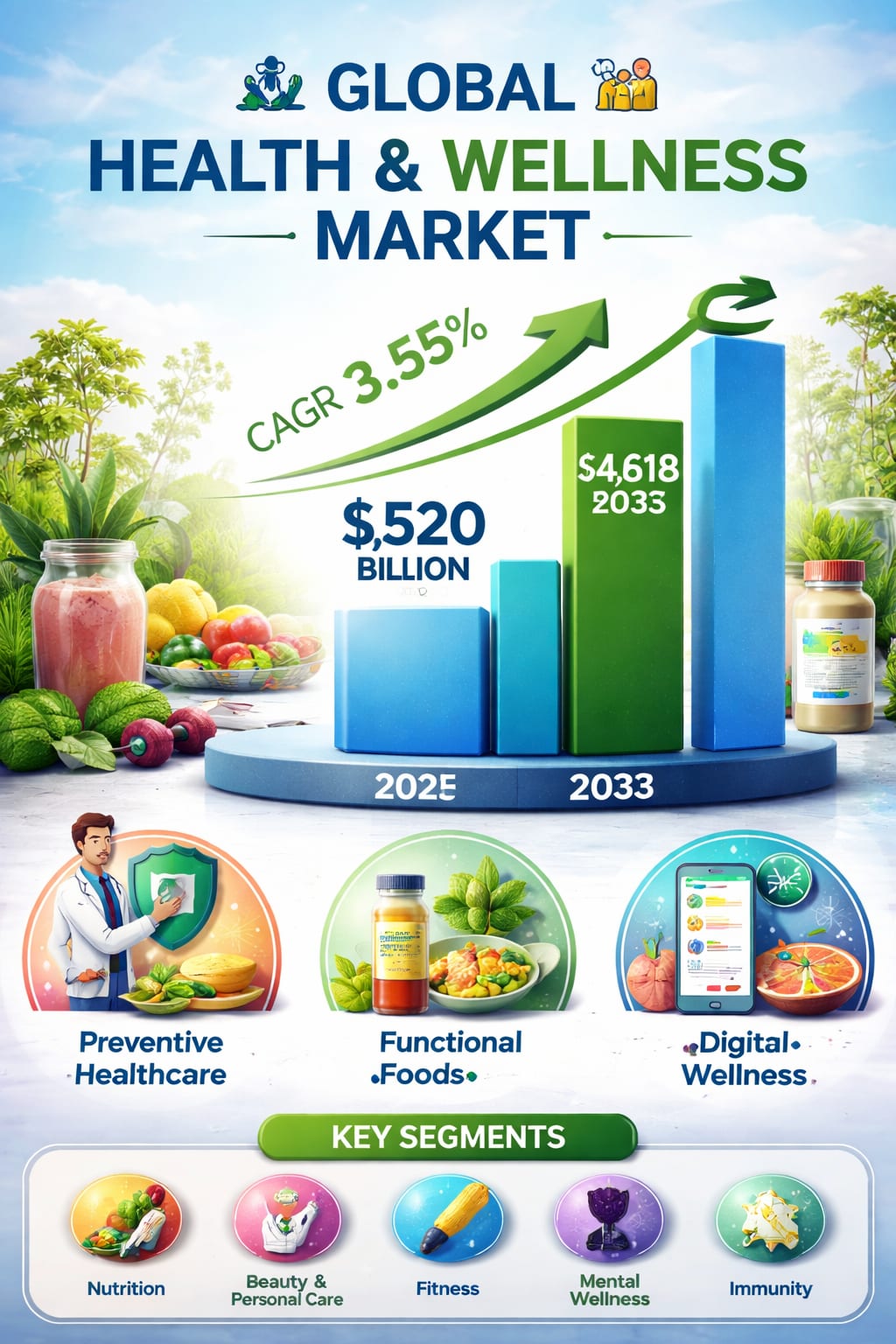
The global health and wellness industry is no longer a niche lifestyle trend—it has evolved into one of the most influential and resilient sectors of the world economy. According to Renub Research, the Health and Wellness Market is projected to grow from US$ 3,520.00 billion in 2024 to US$ 4,818.30 billion by 2033, expanding at a CAGR of 3.55% from 2025 to 2033.
This steady and sustainable growth reflects a deeper shift in consumer behavior: people across the world are no longer waiting to get sick before taking action. Instead, they are investing in prevention, performance, mental well-being, and long-term quality of life.
Health and wellness today is a broad, interconnected ecosystem that spans nutrition, fitness, mental health, beauty and personal care, preventive medicine, digital health technologies, and alternative therapies. What once was considered a luxury or a personal lifestyle choice is now a mainstream economic and social priority, supported by governments, employers, insurers, and technology platforms alike.
From yoga studios and organic food aisles to wearable devices and AI-powered health apps, wellness has become both a personal mission and a trillion-dollar global industry.
Understanding the Global Health and Wellness Market
Health and wellness is best described as a holistic approach to physical, mental, and emotional well-being, focusing not just on treating illness but on preventing disease and optimizing daily life. It includes sectors such as:
Nutrition and functional foods
Fitness and physical activity
Mental well-being and stress management
Beauty and personal care
Preventive and personalized medicine
Digital health tools and wearables
Globally, rising chronic disease prevalence, aging populations, urban stress, and lifestyle-related health issues are pushing consumers to seek proactive solutions. Social media, health influencers, mobile apps, and wearable technologies have further empowered individuals to track, measure, and manage their own health in real time.
What makes this market especially powerful is its cross-industry nature. Food companies, pharmaceutical firms, beauty brands, technology giants, and fitness providers are all competing—and collaborating—within the same wellness ecosystem.
Key Growth Drivers Shaping the Market
1. The Shift Toward Preventive Healthcare
One of the strongest forces behind market growth is the global pivot from treatment to prevention. With healthcare costs rising and chronic diseases becoming more common, consumers are increasingly choosing to invest early in their health through supplements, regular fitness routines, mental wellness programs, and health screenings.
Preventive health is no longer viewed as optional—it is becoming a necessity. Governments and public health systems are also reinforcing this shift through awareness campaigns and digital health initiatives. The result is rising demand for vitamins, diagnostics, wellness apps, telemedicine, and lifestyle coaching, all of which fuel the broader wellness economy.
2. The Boom in Functional Foods and Beverages
Functional foods and beverages—products enriched with probiotics, vitamins, minerals, antioxidants, adaptogens, and plant-based proteins—are transforming everyday nutrition. Busy consumers now want convenient products that deliver both taste and health benefits.
Items like kombucha, protein bars, fortified cereals, collagen drinks, and immunity-boosting teas are no longer niche—they are mainstream grocery staples. Brands are investing heavily in clean labels, transparent sourcing, and science-backed formulations to win consumer trust.
This fusion of nutrition and functionality is one of the fastest-growing pillars of the global wellness market.
3. Digital Technology and Personalization
Technology has become a core engine of wellness growth. Fitness trackers, smartwatches, meditation apps, sleep monitors, and AI-driven nutrition platforms are helping consumers personalize their health journeys like never before.
Digital tools now analyze sleep patterns, stress levels, activity data, and dietary habits to provide real-time, customized recommendations. This not only improves engagement but also lowers access barriers, especially in a post-pandemic world where remote care and virtual coaching are widely accepted.
As consumers increasingly expect personalized, data-driven health solutions, tech-enabled wellness brands are gaining a major competitive advantage.
Challenges Facing the Global Wellness Industry
Regulatory Gaps and Trust Issues
The rapid expansion of the wellness market has, in many regions, outpaced regulation. Supplements, functional foods, and wellness devices often sit in a gray zone between food, cosmetics, and pharmaceuticals. This can lead to inconsistent standards and questionable health claims, which may weaken consumer trust.
To counter this, leading brands are investing more in clinical validation, third-party certifications, and transparent labeling. Trust and credibility are becoming just as important as innovation.
Market Saturation and Differentiation Pressures
The wellness space is increasingly crowded. From collagen supplements to meditation apps, many categories are filled with look-alike products. This makes differentiation difficult and pushes companies to compete on branding, storytelling, scientific backing, and user experience.
Long-term winners will be those that combine real efficacy, strong identity, and personalized customer engagement.
Major Market Segments in Focus
Beauty and Personal Care Products
The line between beauty and health is rapidly fading. Today’s consumers want cosmeceutical products that offer both aesthetic and therapeutic benefits—such as microbiome-friendly skincare, SPF-infused moisturizers, and probiotic serums.
Clean-label, cruelty-free, and eco-friendly products are in high demand, and social media continues to play a massive role in trend formation and adoption. Consumers are increasingly willing to pay premium prices for research-backed, multifunctional products.
Functional Foods and Beverages
This segment represents the everyday face of wellness. Products targeting digestion, immunity, energy, and weight management are now part of daily routines. Clean ingredients, plant-based formulations, and scientific credibility are key purchase drivers.
Retailers are dedicating more shelf space to wellness foods, and brands are partnering with nutritionists and digital platforms to enhance transparency and consumer education.
Immunity Wellness
Since the pandemic, immunity has become a year-round priority rather than a seasonal concern. Demand for vitamin C, vitamin D, zinc, probiotics, and herbal extracts remains strong, supported by growing awareness of preventive health.
Innovation continues in delivery formats such as gummies, fortified drinks, sachets, and functional teas, making immunity one of the most resilient segments in the wellness economy.
Bone Health Wellness
With global aging accelerating, bone health is gaining serious attention. Supplements containing calcium, vitamin D, magnesium, collagen, and other minerals are seeing strong demand, along with fortified foods and targeted exercise programs.
Digital health platforms now include bone-strengthening routines and fall-prevention tools, making this a fast-growing and clinically relevant wellness vertical.
Regional Market Insights
United States
The U.S. remains the world’s largest and most influential wellness market, driven by high spending on supplements, fitness, mental health tools, and digital health services. Consumers demand science-backed claims, pushing brands to invest in R&D and clinical validation.
Retail giants and digital platforms accelerate distribution, while wearable technology and telehealth continue to reshape daily health habits. The U.S. often acts as a trendsetter for global wellness innovation.
Germany
Germany’s wellness market is defined by strict quality standards, strong regulation, and evidence-based products. Herbal remedies, orthomolecular nutrition, and preventive care are especially popular, supported by statutory health insurance in many cases.
Sustainability, transparency, and safety are core values, making Germany a leader in responsible, science-driven wellness solutions in Europe.
India
India’s wellness economy is a unique blend of traditional systems like Ayurveda and yoga with modern fitness, nutrition, and digital health services. Rising middle-class incomes, smartphone penetration, and government focus on preventive health are fueling rapid growth.
Functional foods, immunity supplements, and online fitness platforms are booming, while innovation is increasingly tailored to local culture and value-conscious consumers.
Brazil
Brazil stands out in Latin America for its strong fitness culture and preference for natural, locally sourced ingredients. Post-pandemic, immunity, weight management, and anti-aging products have gained momentum.
Social media and e-commerce play a huge role in shaping demand, and sustainability credentials are becoming more important in purchasing decisions.
Saudi Arabia
Under Vision 2030, Saudi Arabia is investing heavily in sports, fitness, preventive healthcare, and digital health infrastructure. Demand is rising for premium, halal-certified wellness products, along with telemedicine and nutrition platforms.
Cultural shifts toward healthier lifestyles, combined with regulatory modernization, are turning Saudi Arabia into one of the fastest-growing wellness markets in the Gulf region.
Market Segmentation Snapshot
By Product Type:
Functional Foods and Beverages
Beauty and Personal Care Products
Preventive and Personalized Medicinal Products
Others
By Functionality:
Nutrition & Weight Management
Heart & Gut Health
Immunity
Bone Health
Skin Health
Others
By Region:
North America (U.S., Canada)
Europe (Germany, France, UK, Italy, Spain, and others)
Asia-Pacific (China, Japan, India, South Korea, ASEAN, Australia, New Zealand)
Latin America (Brazil, Mexico, Argentina)
Middle East & Africa (Saudi Arabia, UAE, South Africa)
Competitive Landscape: Key Players
Leading companies shaping the global wellness ecosystem include:
Amway Corp.
Bayer AG
Danone S.A.
David Lloyd Leisure Ltd.
Fitness First India Pvt Ltd.
Herbalife Nutrition Ltd.
Holland & Barrett Retail Limited
L'Oréal SA
Nestlé SA
Procter & Gamble
These players compete across product innovation, scientific validation, brand trust, global reach, and digital integration, making the market both dynamic and highly competitive.
Final Thoughts: The Future of Wellness Is Preventive, Personal, and Digital
The global health and wellness market is no longer just about looking good or feeling better—it is about living longer, living smarter, and living healthier. With the market projected to reach US$ 4,818.30 billion by 2033, wellness is firmly established as one of the most important pillars of the global consumer economy.
The future will be shaped by preventive care, personalized solutions, digital technologies, and science-backed products. Brands that can combine trust, innovation, and meaningful consumer engagement will be the ones that define the next era of wellness.
About the Creator
Sakshi Sharma
Content Writer with 7+ years of experience crafting SEO-driven blogs, web copy & research reports. Skilled in creating engaging, audience-focused content across diverse industries.
Keep reading
More stories from Sakshi Sharma and writers in Trader and other communities.
Mexico Foodservice Market Trends & Opportunities: A Sector on the Fast Track
Introduction: A Market Entering Its Golden Decade Mexico’s foodservice industry is entering a period of powerful transformation. According to Renub Research, the Mexico foodservice market was valued at USD 65.4 billion in 2024 and is projected to reach USD 148.26 billion by 2033, expanding at a compound annual growth rate (CAGR) of 9.52% over the forecast period. This impressive trajectory is being driven by a combination of rapid urbanization, rising disposable incomes, booming tourism, and shifting consumer lifestyles that increasingly favor convenience, variety, and digitally enabled dining experiences.
By Sakshi Sharmaabout 11 hours ago in Trader
ASX Midday Update: Australian Market Trades Cautiously as Sector Rotation Dominates
ASX Midday Update In today’s ASX midday update, Australian shares are trading in a narrow range as investors remain cautious ahead of key global and domestic cues. The market is seeing clear signs of sector rotation, with strength in banking and defensive stocks balancing losses in mining and energy shares. As a result, benchmark indices are hovering near flat levels at midday.
By Hammad Nawaz5 days ago in Trader
Asia Luxury Goods Market Size, Trends & Forecast 2025–2033
Asia Luxury Goods Market Outlook The Asia Luxury Goods Market is entering a decisive growth phase, reflecting deep structural shifts in consumer behavior, wealth creation, and digital commerce across the region. According to Renub Research, the market is expected to expand from USD 135.25 billion in 2024 to USD 192.17 billion by 2033, registering a CAGR of 3.98% during the forecast period. This steady rise is being powered by increasing disposable incomes, growing brand consciousness, and the rapid expansion of the middle-class population in countries such as China, India, and Japan.
By shibansh kumar7 days ago in Trader




Comments
There are no comments for this story
Be the first to respond and start the conversation.