basketball
The world of Basketball detailed by the voices of the unathletic. Discussing play, culture, and, of course, who's the best. Trust the Process.
When Recovery Becomes a Violation
When Paul George was asked how he managed to recover from one of the most devastating injuries an NBA player can suffer, his answer was refreshingly honest. Speaking about the long road back and offering advice to teammates dealing with similar physical wear and tear — including Joel Embiid — George said plainly that “drugs helped me” during his recovery.
By Logan M. Snyder3 minutes ago in Unbalanced
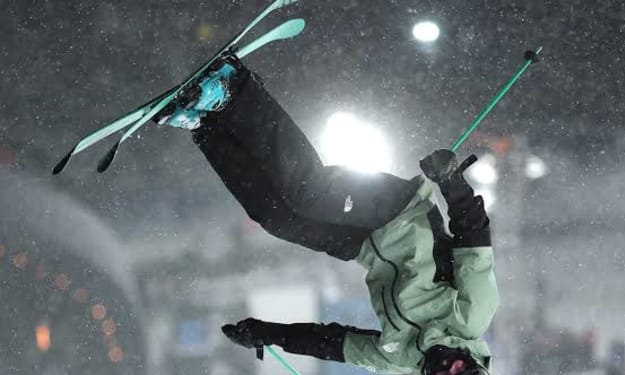
Australia’s Youngest Winter Olympian Indra Brown: ‘I Just Love the Feeling of Flying’. AI-Generated.
When Indra Brown launched off the icy ramp at her first Olympic training run, she felt something few teenagers ever experience: the sensation of defying gravity on the world’s biggest sporting stage. At just 15 years old, Brown became Australia’s youngest-ever Winter Olympian, a milestone that reflects not only extraordinary talent but also an uncommon maturity and dedication. “I just love the feeling of flying,” Brown said in a recent interview. “When you’re in the air, everything else disappears. It’s just you and the moment.” Brown competes in freestyle skiing, a discipline that demands fearless precision, explosive strength, and technical finesse. Her journey from a curious child on the slopes to an Olympic athlete has been shaped by early passion, family support, and relentless training in a sport still growing in Australia. From Local Slopes to Global Stage Born and raised in Victoria, Brown was introduced to skiing almost as soon as she could walk. Family holidays to alpine regions sparked her interest, but it wasn’t long before casual skiing turned into structured training. By the age of nine, she was already competing in junior freestyle events, showing a natural aptitude for aerial tricks and jumps. Coaches quickly noticed her balance and spatial awareness. “She had an instinct for movement in the air,” said one of her early trainers. “That’s something you can’t really teach.” Australia is not traditionally known for producing Winter Olympic athletes at scale, but recent investment in snow sports programs has helped young talents like Brown access elite coaching and facilities. Much of her development took place overseas, particularly in North America and Europe, where she trained alongside more experienced competitors. “It was intimidating at first,” Brown admitted. “Everyone was older and stronger. But I learned so much just by watching and trying to keep up.” Balancing School and Sport Behind the glamour of Olympic competition lies a demanding daily routine. Brown balances schoolwork with hours of physical conditioning, technical drills, and travel. Her education has shifted to a flexible learning program to accommodate training camps and international competitions. “There are days when I train in the morning and study on planes or in hotel rooms,” she said. “It’s not easy, but I really enjoy learning and I don’t want to give that up.” Her parents have played a critical role in helping her manage pressure and expectations. They insist on maintaining structure and normalcy, ensuring she remains connected to friends and family despite her growing public profile. “She’s still a teenager,” her mother said. “We want her to enjoy this experience, not feel like everything depends on results.” The Mental Challenge of Flight Freestyle skiing is as much a mental test as a physical one. Athletes launch themselves into the air at high speed, performing spins and flips that leave little margin for error. For a 15-year-old, managing fear is part of the learning process. Brown admits she still feels nervous before big jumps. “If you’re not scared at all, something’s wrong,” she laughed. “But I trust my training. Once I’m in the air, it feels natural.” Sports psychologists working with young Olympians emphasize the importance of emotional resilience. They focus on visualization techniques, breathing exercises, and routines that help athletes stay grounded amid intense competition. “Indra has shown remarkable composure,” said a team official. “She listens, adapts, and learns quickly. That’s rare at her age.” Representing a New Generation Brown’s Olympic appearance has already made her a role model for young athletes across Australia. Social media has amplified her story, inspiring children who might not have considered winter sports a realistic path. “I get messages from kids saying they want to ski like me,” Brown said. “That’s really cool. I hope they just have fun with it first.” She is careful not to frame her success as the end goal but as part of a longer journey. Her immediate focus is improving technique and gaining experience rather than chasing medals. “I’m here to learn,” she said. “If I do my best run, I’m happy.” Looking Ahead While the Olympics mark a historic moment in her career, Brown sees them as the beginning rather than the peak. Her long-term ambitions include competing in multiple Olympic cycles and helping raise the profile of freestyle skiing in Australia. “I want to keep pushing myself and see what I can do,” she said. “There’s so much more to learn.” Coaches caution against rushing development. Physical growth, injury prevention, and emotional well-being remain priorities. “We want her to have a long career,” said her head coach. “Not burn out too early.” More Than Medals What sets Brown apart is not just her age or her technical ability, but her joy in the sport. She speaks about skiing with enthusiasm rather than pressure, framing competition as an opportunity rather than a burden. “When I jump, it feels like freedom,” she said. “That’s why I love it.” In a sporting world often defined by results and rankings, Indra Brown’s story stands out as one of curiosity, courage, and youthful wonder. As Australia’s youngest Winter Olympian, she represents both the future of her sport and the timeless thrill of pushing boundaries. Whether she finishes on the podium or not, her message is simple and powerful: sometimes success is not about winning, but about daring to fly.
By Fiaz Ahmed about 12 hours ago in Unbalanced
John Jay Enters Passing Lanes in 71-62 Win
Scroll down for photos On Friday January 9, John Jay welcomed Hen Hud to the high school for some Friday night basketball and kicked off the festivities by taking an early 8-3. But the scoreboard wasn’t as telling as the style of play.
By Rich Monetti5 days ago in Unbalanced
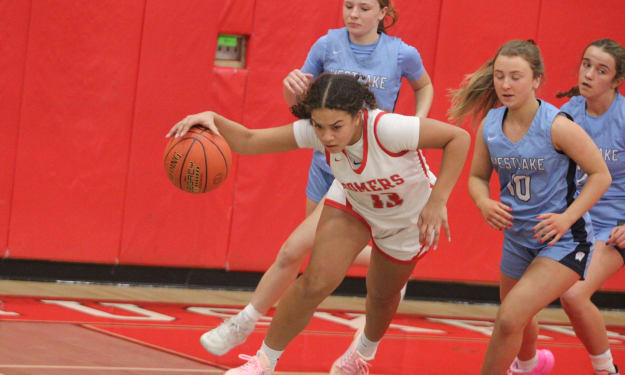
Somers Presses on the Gas in 46-35 Victory over Pleasantville
See Photos at end of article. (At home vs Pleasantville now included) On Wednesday December 10, Somers got on the bus and traveled south to Pleasantville. Arriving, the elephants maintained their stomp and never let up on the gas.
By Rich Monetti11 days ago in Unbalanced
Lamar Odom DUI Arrest Article – Complete
Sober driving is the only rational way to drive on the roadways. NBA two-time champion Lamar Odom was picked up for driving under the influence, violating lane changing protocol, and for not maintaining his vehicle in his own lane.
By Skyler Saunders15 days ago in Unbalanced
Somers Dominates at John Jay
Scroll down for freshman basketball pics and varsity vs John Jay, Panas and Put Valley After beating Croton-Harmon to open the season, Somers traveled to John Jay on Saturday, December 6 with a long memory. “They beat us up pretty bad last year,” said Leo Keimig. But going up 18 half way through the third certainly seemed to alleviate old wounds. That is until John Jay cut the lead to ten. So an answer was needed, and Keimig made the grade, according to Coach Loughlan.
By Rich Monetti16 days ago in Unbalanced
A Grand Night for James
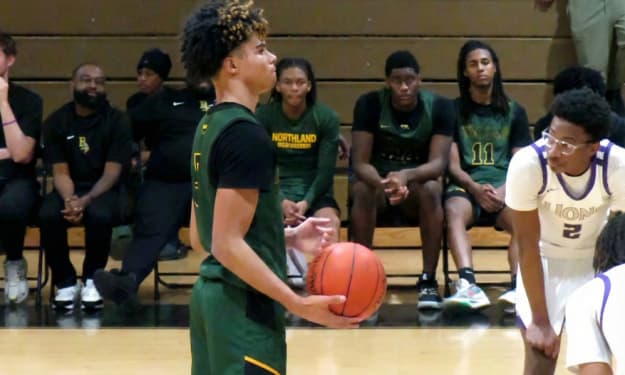
It can be said that the 2025-26 season has been a bit magical for Northland senior point guard Diante James. Not only is he hitting buzzer beaters and game-winning shots on a seemingly weekly basis, he added a new accomplishment to his basketball resume.
By Winners Only19 days ago in Unbalanced
Vikings slide past Hayes
In a period of seven days, Northland (7-4) has had two games that have been decided by a two-point margin. The Vikings are 2-0 in those contests as seniors Diante James and Daneal Krylov have made big shots that won both games respectively. On Jan. 3, at Columbus Academy, James knocked down a shot with less than two seconds remaining to deliver Northland to its biggest win so far this season. On his way to 19 points, James has proven to be one of the most confident shot makers in central Ohio. His big time basket led Northland to a 58-56 win over Westland which is currently 7-2.
By Winners Only22 days ago in Unbalanced
Alex Eala. AI-Generated.
Tennis has always been a sport where stories of discipline, sacrifice, and quiet resilience shape champions long before trophies do. In recent years, one name has steadily gained international attention for embodying those qualities with grace and ambition: Alex Eala. Still early in her professional journey, Eala represents more than individual success. She symbolizes a shift in global tennis, where talent now rises from regions once considered outside the sport’s traditional power centers. From junior Grand Slam glory to appearances on the professional tour, Eala’s path reflects patience, planning, and belief. Her performances, including moments connected to tournaments like the Auckland Open and the ASB Classic, show a player learning to translate promise into lasting impact. Early Foundations of a Rising Star Alex Eala’s story begins with a strong foundation built on family support and access to elite training. Unlike many players who rise through local circuits alone, Eala’s development was guided by a long-term vision. That vision led her to the Rafa Nadal Academy, an environment known for shaping technically sound and mentally strong athletes. At the academy, Eala refined her baseline game, improved her court movement, and learned how to compete with intention rather than emotion. These lessons were evident in her junior career, where she achieved milestones that placed her among the most promising young players of her generation. What stood out was not only her results but her composure. Eala played with a maturity that suggested she understood tennis as a marathon, not a sprint. Junior Success and Global Recognition Eala’s junior achievements opened doors to the international tennis spotlight. Winning major junior titles placed her name alongside players who would later become tour regulars. For many fans, this was the first time they encountered Alex Eala, and it quickly became clear she was not just another short-term prospect. Her left-handed style added variety to her game, creating angles that disrupted opponents. Combined with strong court awareness, this made her matches engaging to watch and difficult to predict. Junior success, however, is only a stepping stone, and Eala approached the professional transition with measured expectations. Rather than rushing into high-pressure events, she balanced growth with experience, a strategy that often separates sustainable careers from fleeting hype. Stepping Into the Professional Arena The move from juniors to the professional circuit can be unforgiving. Higher intensity, physical demands, and mental pressure test even the most gifted athletes. For Alex Eala, this transition has been deliberate rather than dramatic. She has taken part in ITF and WTA-level events, gaining experience against seasoned players. Each match has contributed to her understanding of pace, consistency, and endurance at the professional level. Losses have been treated as lessons, and victories as confirmation of progress. Events connected to the Auckland Open and the ASB Classic are particularly meaningful in this phase. These tournaments attract a competitive field while still offering young players exposure to high-quality opposition. For Eala, participation in such events represents an opportunity to measure herself against established professionals. Auckland Open and ASB Classic: Learning on a Bigger Stage The ASB Classic, held in Auckland, is more than just a warm-up event for the tennis season. It has a reputation for blending experienced tour players with emerging talent. Competing in or around the Auckland Open environment allows players like Eala to experience elite tournament structures, media attention, and crowd energy. For a young athlete, these elements matter. They teach how to manage nerves, expectations, and recovery over consecutive matches. Even brief appearances in such tournaments contribute significantly to development. Alex Eala’s connection with events like the ASB Classic highlights her gradual integration into the professional ecosystem. Each appearance adds confidence and clarity about what needs improvement, whether it is serve consistency, shot selection, or physical conditioning. Style of Play and Competitive Identity Eala’s game is built around controlled aggression. She prefers constructing points rather than rushing winners, relying on precision and movement. Her left-handed forehand remains one of her most effective weapons, creating angles that pull opponents off the court. Equally important is her defensive awareness. Eala often turns defense into offense, a trait that reflects her disciplined training background. While power tennis dominates many modern matches, her style emphasizes balance and adaptability. As she continues to evolve, adding strength and depth to her serve and net play will likely be key areas of focus. These improvements often come with time, experience, and physical maturity. Representation and Inspiration Beyond the Court Alex Eala’s rise carries significance beyond rankings and results. She represents hope for aspiring players from underrepresented regions, proving that access to global stages is possible with commitment and support. Her journey inspires younger athletes to believe that tennis is not limited by geography. Every appearance she makes, whether in major tournaments or developmental events, reinforces the idea that talent can emerge from anywhere. This broader impact gives Eala a unique position in the sport. She is not only building her own career but also helping expand tennis’s global narrative. The Road Ahead The future for Alex Eala remains open and full of possibility. Tennis careers are shaped over years, not seasons, and her measured approach suggests a focus on longevity rather than quick success. Continued participation in international tournaments, including those linked to the Auckland Open and ASB Classic, will provide valuable benchmarks for growth. As rankings fluctuate and competition intensifies, the true test will be consistency and resilience. Based on her journey so far, Eala appears well-equipped for both. Final Thoughts Alex Eala’s story is still being written, but its early chapters reveal a player grounded in discipline, learning, and quiet confidence. From junior triumphs to professional challenges, she has approached each step with intention. In a sport where pressure can derail even the brightest prospects, Eala’s calm progression stands out. Whether competing in global events like the ASB Classic or continuing her steady rise through the tour, Alex Eala represents a future built on patience, skill, and belief. For tennis fans watching the next generation take shape, her journey is one worth following closely.
By Saboor Brohi 23 days ago in Unbalanced