
The US Moved Away From Its Heartland to Set a Winter Olympics High in Italy
Team USA sets national Winter Olympic records in Italy, driven by diverse talent and historic victories far from traditional winter sport heartlands.

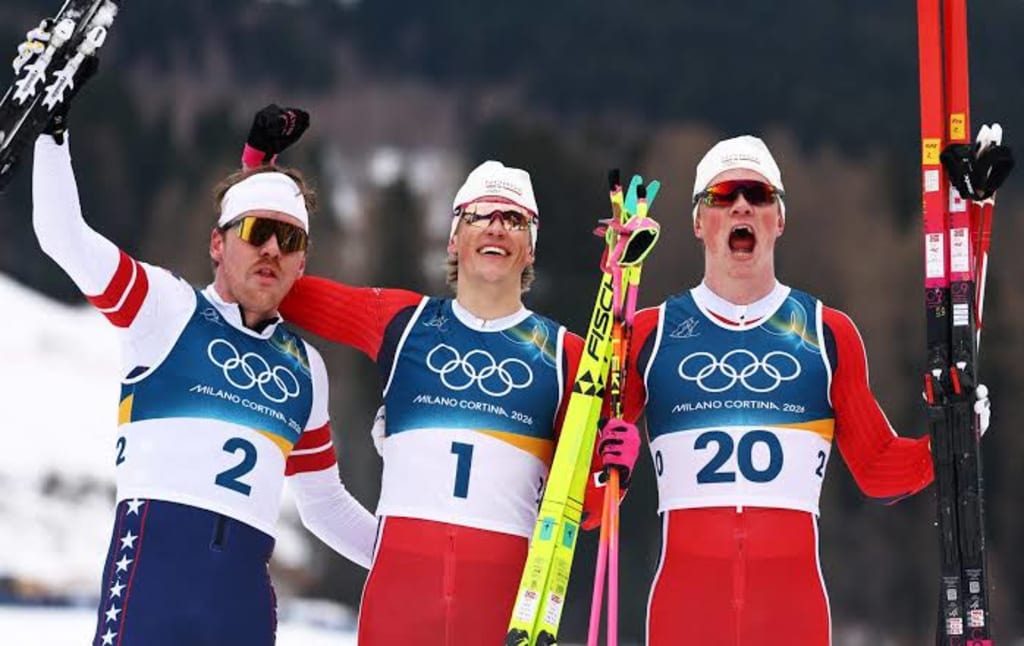
The 2026 Winter Olympics in Italy will be remembered as a turning point for Team USA — a Games where American athletes delivered historic performances far from home, in a mountains‑and‑city setting unlike anything seen in previous Winter Games. At Milano‑Cortina 2026, the United States not only matched its best achievements on snow and ice, but also showcased an evolution in winter sports that goes beyond traditional strongholds and star names.
For decades, the U.S. ski and snowboarding community were at the core of American winter success stories, largely rooted in the Rocky Mountains and the country’s colder heartlands. But this year’s Olympic medal haul — a record 12 gold medals, the most ever for the U.S. at a Winter Olympics and the first time the country exceeded 30 total medals outside North America — came from a blend of expected champions and rising talents competing across a spectrum of winter disciplines.
Historic Medal Count and Diverse Talent
In 2002, when the U.S. hosted the Games in Salt Lake City, Team USA set national records with 10 golds and 34 total medals. Twenty‑four years later, American athletes in Italy surpassed that gold medal count and demonstrated depth beyond traditional podium favorites. While elite stars like Mikaela Shiffrin, Alysa Liu, and Jordan Stolz performed admirably, a significant part of the victory came from lesser‑known athletes and disciplines — a shift that signalled a broadening of the U.S. winter sport ecosystem.
In a surprising twist, the U.S. won more medals in cross‑country skiing than in snowboarding, an indicator of growing investment and interest in Nordic disciplines. Ben Ogden, for example, earned silver in the men’s sprint and added another together with teammate Gus Schumacher, while Jessie Diggins returned to the podium and reinforced her status as one of America’s greatest skiers.
Heart‑Stopping Victories and Breaking Droughts
One of the most emotional moments of the Games came in men’s ice hockey, where the U.S. team defeated Canada men's national ice hockey team 2‑1 in overtime, winning gold for the first time since the iconic “Miracle on Ice” of 1980 — a full 46 years earlier. Jack Hughes scored the decisive goal, etching his name into Olympic lore and providing American fans with one of the memorable highlights of Milano‑Cortina 2026.
Other standout achievements included an Olympic gold for freeskiing legend Alex Ferreira, plus strong performances from the U.S. women’s hockey team and mixed‑team events in figure skating, where Ilia Malinin played a key role.
Beyond the Heartland: A Strategic Shift
The U.S. performance in Italy reflected a strategic shift: success is no longer just about mountains, snow belts, and heartland winter traditions. It is now also rooted in year‑round training facilities, a growing cadre of coaches and youth programs, and a willingness to innovate across disciplines. American skiing, skating, and winter team programs are benefiting from broader recruitment and development pipelines, and Italy’s varied venues — from the urban ice rinks of Milan to the alpine slopes of Cortina d’Ampezzo — provided a diverse Olympic landscape that rewarded versatility and depth.
This broader base of talent also meant the U.S. could compete at high levels in events that once belonged almost exclusively to European powerhouses. The result was not just a medal count to be proud of, but a statement about the resilience and adaptability of American winter sport programs.
Looking Ahead
While Norway topped the overall medal table with 18 golds, the U.S. second‑place finish — especially with a record number of gold medals — will be viewed as a major achievement and a stepping stone toward future Olympic success. With new talents emerging and veteran champions still performing, the American winter sport landscape looks brighter and more competitive than ever.
As the Milano‑Cortina Games close and the torch passes to the French Alps for 2030, the U.S. experience in Italy demonstrates that winter glory can come from unexpected places, fueled by a new generation of athletes who are redefining what American success looks like on the international stage.
About the Creator
Fiaz Ahmed
I am Fiaz Ahmed. I am a passionate writer. I love covering trending topics and breaking news. With a sharp eye for what’s happening around the world, and crafts timely and engaging stories that keep readers informed and updated.
Keep reading
More stories from Fiaz Ahmed and writers in Unbalanced and other communities.
U.S. Boosts Gold Medal Tally at Winter Games, Led by Athletes From a Handful of States
The 2026 Winter Olympics have so far provided a showcase of American athletic strength, with the United States climbing the medals table thanks to a strong showing by competitors from a diverse group of states. As the Games reach their midpoint, Team USA’s gold medal haul continues to grow, reflecting years of investment in winter sport programs and the emergence of athletes from regions not traditionally known for snow and ice. The U.S. delegation has already secured multiple gold medals across figure skating, skiing, snowboarding, curling, and ice hockey. Key victories came from athletes hailing from Colorado, Minnesota, California, and Vermont, highlighting both traditional winter sport hubs and surprising new talent pools. Snow and Ice Success Stories In alpine skiing, Megan Larson of Aspen, Colorado, captured gold in the giant slalom, completing two near-perfect runs on a challenging course. Her precision and speed — honed on Colorado’s rugged terrain — made her one of the standout performers of the Games. “It’s an amazing feeling to bring home gold for the U.S.,” Larson said after her victory. “All those early mornings on the mountain pay off.” From the frozen lakes of Minnesota came another golden performance. Derek Olsen, a standout in men’s hockey, helped secure the United States’ narrow victory over rival teams. Olsen’s leadership and defensive prowess were praised by teammates and commentators alike, cementing his role as one of the sport’s rising stars. Changing Geographic Landscape While states like Colorado and Minnesota have long been associated with winter sports, the U.S. medal map is now showing broader geographic diversity. California’s Emma Reyes earned gold in freestyle skiing’s halfpipe, an event where style and technical dexterity are paramount. Reyes, who grew up skiing the Sierra Nevada, said her upbringing was crucial in shaping her competitive edge. “I never thought I’d stand on an Olympic podium when I was a kid in Lake Tahoe,” Reyes said. “But here we are.” Vermont’s own Lucas Whitman delivered a thrilling performance in the men’s cross-country sprint, bringing home another gold for the U.S. contingent. Whitman’s endurance and tactical racing were key factors in his victory on a snow-packed track that challenged even seasoned competitors. Team Events and Emerging Stars Team USA also shone in team events such as ice hockey and curling, where preparation and strategy played decisive roles. In curling, the American squad demonstrated remarkable consistency and precision, topping the round-robin standings and advancing with momentum toward the medal rounds. Co-skip Rachel Kimball from Wisconsin said the team’s chemistry and mental focus were as important as technical skill. “We walked onto the ice knowing we could compete with the best,” she said. “Now we’re showing it.” Youth and Experience Combine A defining feature of the U.S. team has been the blend of veteran performance and youthful exuberance. Some athletes in their late 20s and early 30s brought experience and poise, while emerging teens and young adults injected energy and fearlessness. This mix has been described by coaches as a “perfect storm” of talent and cohesion. “Our approach has always been to nurture talent early and let it grow,” said Team USA head coach Mark Sullivan. “You see that strategy playing out here with medals across multiple disciplines.” Broader Impacts Back Home The success at the Winter Games is already generating buzz across the United States, with schools and local clubs reporting increased interest in winter sports. Youth programs in regions without traditional snow seasons, such as parts of California and Texas, are seeing a surge in enrollments for skiing and ice skating. “This kind of representation helps make winter sports feel accessible to everyone,” said sports development expert Linda Foster. “Kids see athletes who grew up in very different places and think, ‘I can do that too.’” Looking Ahead With several events still to be contested, the United States could add even more gold medals to its tally. The depth of talent and geographic spread of medal contenders point to a strong finish, reflecting the country’s broad investment in winter athletics. As the Winter Games enter their final days, one thing is clear: American athletes are leaving a strong imprint on the international stage — and their stories are inspiring a new generation of winter sport enthusiasts across the nation.
By Fiaz Ahmed about 7 hours ago in Unbalanced
Super Bowl LX Recap: A Team Called Hawks
Sixty. The Super Bowl turned 60! Still amazes me that this was the sixtieth Super Bowl played in NFL history. It seems like yesterday that I watched Super Bowl XXVII, the first SB I ever watched. The QB who won Super Bowl XXVII has since called a few SBs, and will call next year's game, but that's another story. Super Bowl LX took place at Levi's Stadium in Santa Clara, California, the home stadium of the San Francisco 49ers. However, it was one of their division foes who represented the NFC, as the Seattle Seahawks faced off against the New England Patriots.
By Clyde E. Dawkins15 days ago in Unbalanced
YouTube Outages
For billions of people, YouTube is more than a website. It is a classroom, a stage, a newsroom, and a source of daily entertainment. So when the platform experiences an outage, the disruption is felt immediately and globally. Creators lose revenue, viewers lose access to information, and businesses lose a vital marketing channel. A YouTube outage may last only minutes, but its ripple effects can stretch far beyond that window.
By Saboor Brohi 5 days ago in Unbalanced



Comments
There are no comments for this story
Be the first to respond and start the conversation.