
10 Countries You Probably Didn’t Know Existed (But Absolutely Should!)
From hidden island nations to self-declared republics, these overlooked places will blow your mind.
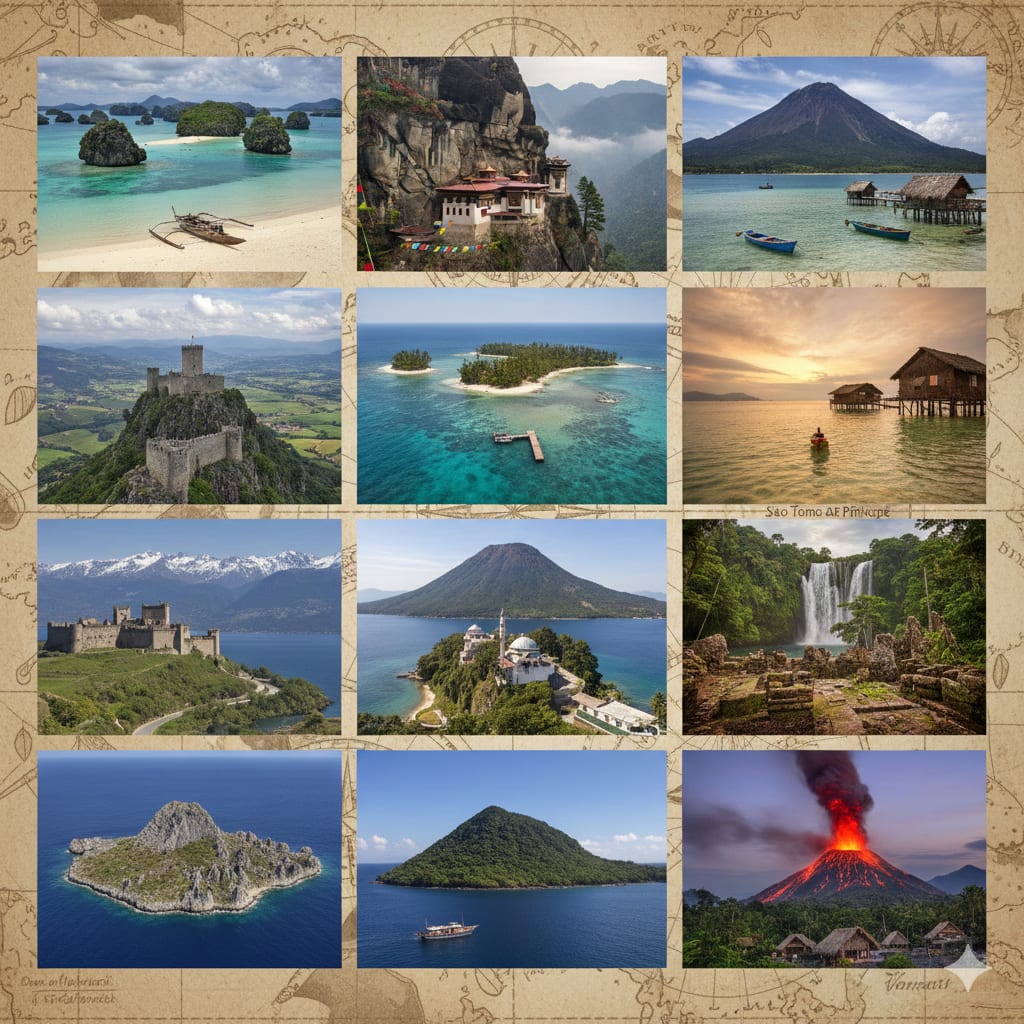
We all dream about visiting iconic destinations like France, Italy, or tropical paradises like Hawaii and Bali. But what if I told you there are countries and territories most people have never even heard of?
Some are tiny island nations barely above sea level. Others are regions fighting for international recognition. A few operate like full countries but aren’t widely acknowledged as such.
So grab your passport. Let’s explore 10 countries you may not know existed.
10. Kiribati - The First Place to See the Sunrise
Located in the central Pacific Ocean, Kiribati is made up of 33 coral atolls and reef islands, plus one raised coral island.
Here’s what makes it fascinating:
- One of the lowest-lying countries on Earth
- Among the first places to welcome the sunrise
- Surrounded by stunning coral reefs and rich marine life
But there’s a heartbreaking reality. Because of rising sea levels and climate change, Kiribati faces the very real threat of disappearing beneath the ocean in the coming decades.
It’s paradise on the brink.
9. Nauru - From “Pleasant Island” to Forgotten Gem
Right near Kiribati lies Nauru, once known as Pleasant Island due to its wealth from phosphate mining.
Despite being one of the smallest countries in the world, Nauru has:
- Beautiful, uncrowded beaches
- Historic World War II sites like Command Ridge
- A fascinating economic rise-and-fall story
The best time to visit? After February and before November to avoid heavy rainfall.
It’s tiny. It’s remote. And it’s surprisingly intriguing.
8. Tuvalu - A Nation Barely Above Water
Halfway between Australia and Hawaii sits Tuvalu, once known as the Ellice Islands under British rule.
The highest point in Tuvalu?
Just 16 feet above sea level.
Like Kiribati, Tuvalu is extremely vulnerable to global warming. If sea levels continue rising, this beautiful Polynesian country could be among the first casualties of climate change.
7. The Isle of Man - Not Quite the UK, Not Quite Independent
Nestled in the Irish Sea between England and Northern Ireland lies the fascinating Isle of Man.
Technically, it’s a British Crown Dependency, not part of the UK, but it governs itself internally.
With a population of just over 80,000 and 9,000 years of history, it’s famous for:
- Dramatic coastal landscapes
- Celtic and Viking heritage
- The legendary Isle of Man TT motorcycle race
It may be small, but it’s packed with personality.
6. Andorra - Europe’s Mountain Playground
Tucked between Spain and France in the Pyrenees Mountains is Andorra.
About the size of Rhode Island, Andorra attracts a staggering 8 million tourists per year thanks to:
- World-class skiing
- Scenic mountain trekking
- Low taxes and duty-free shopping
Europeans know it well, but much of the world forgets it’s even a country.
5. Barotseland - A Nation Seeking Recognition
Barotseland is a region that claims independent nationhood but remains part of Zambia.
Historically independent before 1964, Barotseland argues it was incorporated into Zambia under disputed agreements.
Tensions have simmered for decades, with renewed declarations of independence in recent years.
It’s a powerful example of how history and politics shape national identity.
4. Abkhazia - A Country That Exists… But Doesn’t?
By definition, a country needs borders, a government, a population, and sovereignty. Abkhazia checks all those boxes.
It has:
- A functioning government
- Armed forces
- Its own passport
- A national bank
Yet most of the world considers it part of Georgia.
After the collapse of the Soviet Union, Abkhazia declared independence, leading to a conflict that still affects the region today.
Recognition in international politics? It’s complicated.
3. Nagorno-Karabakh - A Landlocked Dispute
Nagorno-Karabakh is internationally recognized as part of Azerbaijan, but has functioned as a de facto independent state.
It has its own:
- Constitution
- Government
- Military
However, its landlocked geography and location within Azerbaijan make full recognition highly controversial.
This region has been at the center of ethnic conflict and territorial disputes for decades.
2. Balochistan - A Region of Turmoil
Balochistan comprises nearly 44% of Pakistan’s land area and has a long history of separatist movements.
While it is officially a province of Pakistan, certain groups advocate for independence, citing historical autonomy and political grievances.
The region has experienced unrest for decades, making it one of South Asia’s most sensitive geopolitical areas.
1. The Republic of Lakotah – A Declaration Within the U.S.
The Republic of Lakotah is a proposed independent nation declared in 2007 by activists representing members of the Lakota Sioux.
The claim references the 1868 Treaty of Fort Laramie, which recognized Native American territorial rights across parts of:
- North Dakota
- South Dakota
- Nebraska
- Wyoming
- Montana
Although not recognized by the U.S. government, the declaration highlights ongoing discussions about sovereignty and treaty rights.
What This List Really Shows
Some of these places are fully recognized sovereign nations. Others are disputed territories or independence movements. But together, they reveal something powerful:
The idea of a “country” isn’t always simple.
Borders shift. Governments change. Recognition depends on politics as much as geography.
And beyond the headlines, each of these places has:
- Real people
- Real cultures
- Real histories
Final Thoughts: Would You Visit Any of These?
Would you snorkel the reefs of Kiribati? Ski the slopes of Andorra? Or explore the political complexity of Abkhazia?
The world is full of places that don’t make it onto typical travel bucket lists, but maybe they should.
If you discovered a new country today, which one would you choose to explore first?
.
.
.
.
.
.
.
.
.
.
Countries you didn’t know existed, Hidden countries of the world, Unrecognized countries, Small island nations, Disputed territories, Microstates in Europe, Pacific island countries, Countries at risk of climate change
About the Creator
Areeba Umair
Writing stories that blend fiction and history, exploring the past with a touch of imagination.
Keep reading
More stories from Areeba Umair and writers in Wander and other communities.
10 Times Tourists Completely Ruined Priceless History
There’s something magnetic about ancient architecture and historic artifacts. Whether it’s a crumbling amphitheater, a sacred temple high in the mountains, or a centuries-old painting in a quiet chapel, we’re drawn to these places. Maybe it’s the mystery. Maybe it’s the legends. Maybe it’s the simple realization that these structures have survived hundreds, sometimes thousands of years.
By Areeba Umairabout 8 hours ago in Wander
Seattle Nightlife Report: Pony
Mid-winter Friday night. Early but already so dark. The days are getting longer but 6 PM is still pitch black. “Firepit!” You declare things after just a few seconds of solemn thought – not a request or suggestion, not a demand. Last week you walked around saying, “Hot tub?” to anyone who would listen. Or one afternoon you pointed at two men holding hands as they crossed 12th Avenue, looked me in the eyes and said, “Boyfriends.”
By Joe Nasta | Seattle foodie poet26 days ago in Wander
Oh Hello!
The two characters in oh hello really are quintessentially New York and that's why I said this play is so quintessentially New York it's great being a native New Yorker for most of my life ask one of the reasons why I love this play so much. I have seen oh hello beforeBut it's one of those plays where I like to sit and watch it again because it's so good.ThisPlayIs about two aging geriatric New YorkersWho tried to make it in Show Business and they were around in the '70s you know the typeAnd that's why I like this show so much becauseHe's two guys are really likable one is aAspiring author and the other one was aAspiring actor and together theyHave this one showFictional show ratherCall too much tuna where theyIt's a in their headA pranksha where they like give their guests too much tunaAnd that's the prank they got too much tuna on their dishPeriodThe two characters on this showOr actually born on aCommon CentralShow called The Krish crow show by comedian and actor Nick CrowAnd that is howThese two guysIn this showWhat officially born out of the headOfNick KrollPeriod
By Revista Miko:XCI by Rikki La Rouge4 days ago in Wander




Comments
There are no comments for this story
Be the first to respond and start the conversation.