culture
Get the authentic cultural experience on your next foreign jaunt. Wander like a local; here, there, and everywhere.
Is it still cultural appropriation if you are not aware of it?
"Do you find it offensive when foreigners wear your garments?" Marta Lema gives me a baffled look and a small laugh. She is one of the several merchants and artisans that are allocated in Plaza de los Ponchos, a nickname by locals for the textile market in Otavalo, a small town in Ecuador that has been praised by tourists and that stands as a must-visit spot for anyone who is in the South American country.
By Sofia Rubio5 years ago in Wander
The Historic City: Kathmandu valley
Kathmandu Valley Is home to ancient temples and monuments where Hinduism and Buddhism co-exist in perfect harmony. Through which we can study the myths and legends that shaped the lifestyle of Nepalis for hundreds of years, since past.
By thirdeye adventure5 years ago in Wander
Head First Into Philippine Culture
In order to experience the true culture of another country, I believe it is important to go there yourself. Also it is equally important to go places outside the typical tourist spots. The reason for this is that no matter how hard a country tries to keep its cultural integrity intact, visitors from foreign lands bring much-needed money into the economy. This creates a trade-off as the areas tend to become homogeneous with the foreigners that visit there.
By Stephan Carpenter5 years ago in Wander
Just a typical day in the Philippines
My morning in LaCarlota City, Philippines started out like most, waking up with the sun already heating up the day. While the wife went outside to start whatever she could find for breakfast, I got up and made the bed for her. She is near her ninth month of pregnancy and getting across the bed to put the fitted sheets back onto the corners was harder for her than it was me, so I tried to make sure it was done before I left the room in the mornings. I went out back to find her at the small two burner gas stove making pancakes and hot dogs. A couple of eggs sat sunny side up waiting for the rest of the food to finish up, so we could sit together for breakfast as I had since my arrival over a week ago. Instant coffee in the pouch pre-mixed with cream and sugar was my drink of choice with breakfast here in the Philippines. Brewed coffee was not something most households in the Providences have.
By Stephan Carpenter5 years ago in Wander
Can the Euro Survive Part 8 – A Historic Postcard From Romania
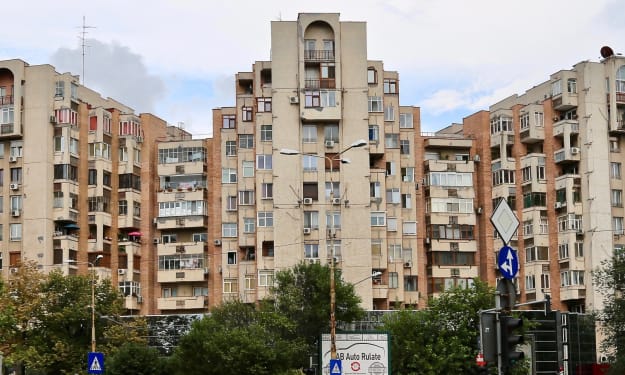
Can the Euro survive, let’s see if Romania can add to the floundering union/empire. To visit Romania is to be transported back in time. The former Soviet country is a decaying snapshot of the 1970s. Romania is listed as one of Europe’s most corrupt countries, and it is obvious that a large portion of public funds has not been spent on public works and general upkeep. Roads are in disrepair, buildings are falling down, and the overall feeling is decidedly Athenian.
By A Man's Guide5 years ago in Wander
I Lived in 4 Countries and This is What I Learnt
I was born and raised in Portugal but in the past 10 years, I have lived and worked in France, the UK, and Hungary. Each move came with a set of challenges and adventures, but also with lessons learnt, and there is nothing I would recommend more to anyone than to move, at least, once in their lives.
By Diana Bernardo5 years ago in Wander
Experiencing the sweaty, tear-filled Mayan Medicine that is the Temazcal
If the Native Americans have sweat lodges, the pre-hispanic Mayans of Mexico had the temazcal. "Temazcal is an ancient ceremony similar to the sweat lodge ceremonies of other cultures and was practiced by many Mesoamerican cultures. The word comes from the Nahuatl language and translates as 'house of heat.' Mayans used temazcal to treat illness, aid in childbirth, purification... This spiritual renewal in the Mayan tradition is often connected to the goddess Ixchel." (From 'Mayan Temazcal Ceremony' by The Working Grillos at yucatanliving.com)
By Celesdina Devi5 years ago in Wander
Flor De Izote
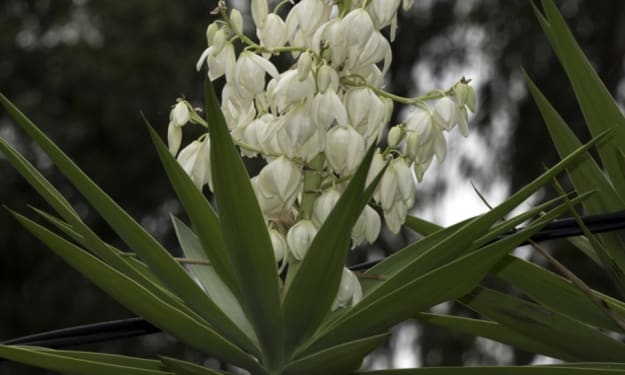
Flor de Izote Or Yucca flower (not to be confused with Yucca Root) Also known by the names of Yucca Elephantipes; there are several species of this flower, but the one mostly used is one with no thorns, It is the National Flower of El Salvador. it was known to be their national flower for the longest time, but it had not been made official until 1995 when it was declared by a legislative decree. It was first named National Flower in 1939 along with the national tree and the national shrub, but it is believed that it was not made official at the time.
By Claudia Rodriguez5 years ago in Wander