humanity
If nothing else, travel opens your eyes to the colorful quilt that is humankind.
Class Act
In the area of Mexico where I live (Baja, California) there is really only one main highway. This road which is (very appropriately I think) known as route 1 (officially carretera federal 1) runs north south along the pacific coast (mostly) of the Baja Peninsula from almost the southernmost tip (Cabo) to the border with the state of California in the United States. There are two different "versions" of route 1 in many portions of Baja, the cuoto (toll) portion and the libre (free) version. As you might guess the toll version of route 1 is more like a traditional highway in the United States, with faster speed limits (90-110KPH, 55-70MPH) and no stop lights or signs. In contrast the libre sets up much like a state route or large county road in the states with slower speeds and either a few stop lights and signs or many of these depending on where exactly one is driving. The two versions run mostly parallel to each other, though not always. This can be quite confusing as it is often not clear which version of route 1 one needs to be on to reach any given destination. It definitely challenges Google Maps and it is notorious for not differentiating between the two, resulting in many wasted trips and miles when navigating around the peninsula.
By Everyday Junglist3 years ago in Wander
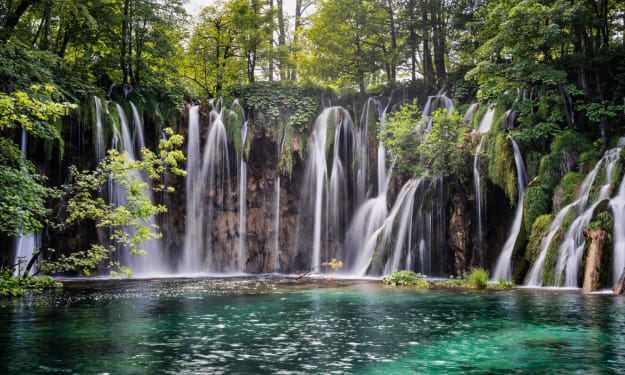
Plitvice Lakes National Park: A Journey Through Croatia's Enchanted Wonderland
The Hidden Eden of Croatia Tucked away amidst the lush forests and rolling hills of central Croatia, Plitvice Lakes National Park is a mesmerizing destination that captures the essence of nature's beauty and wonder.
By Cosmin Min3 years ago in Wander
Belarus
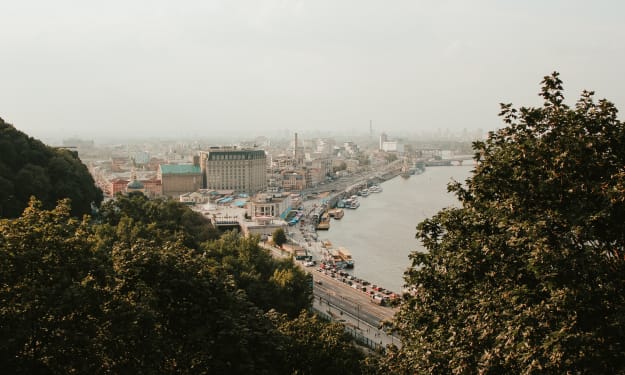
Belarus, officially known as the Republic of Belarus, is a landlocked country located in Eastern Europe. It is bordered by Russia to the east and northeast, Ukraine to the south, Poland to the west, and Lithuania and Latvia to the northwest. The capital and largest city of Belarus is Minsk, which has a population of over 2 million people.
By Nouman Yousaf3 years ago in Wander
Resources for Elevating Our Cultural Intelligence
When I conduct surveys involving global teams, there is always one common thread strung throughout: people want to learn more about the different cultures of their team members. While having direct dialogue is important, it is also crucial we seek information on our own so as not to overwhelm our team members. As such, I have compiled a few online resources to help us all become better familiarized with the cultures and practices of different countries around the world:
By Dima Ghawi3 years ago in Wander
Ghanaians Tell Nigerians & Foreigners Doing Business to Go Back to Their Own Countries
Monday, 1 May 2023 By: TB Obwoge The 'Wig Fair' was set to take place today in Ghana on Labour Day. However Ghanaian fake hair sellers came to protest foreigners selling products in their country.
By IwriteMywrongs3 years ago in Wander
Navigating Identity in a Global City: The Complexities of Hong Kong's Cultural Landscape
Introduction The influence of British colonialism on Hong Kong's identity is a topic of great interest and importance, given the city's rich cultural heritage and complex history. Hong Kong's unique identity is deeply influenced by its history of British colonialism, which lasted for over 150 years and transformed the city into an international hub for trade, finance, and culture. This essay will explore the impact of British colonial rule on the development of Hong Kong's cultural identity, focusing on the blending of Eastern and Western traditions, the adaptation of British institutions, and the implications of the 1997 handover to China. The blending of Eastern and Western cultures created a unique hybrid culture, reflected in Hong Kong's architecture, food, and customs. The adaptation of British institutions, including the legal and education systems, helped shape Hong Kong's identity as a global city with a strong emphasis on trade and finance. The 1997 handover marked a significant turning point in Hong Kong's identity, with tensions between Hong Kong and mainland China highlighting the challenges faced by the city in preserving its autonomy and unique cultural identity. The use of language, particularly Cantonese, English, and Mandarin, is a crucial marker of Hong Kong's identity, reflecting the city's history, culture, and social and political realities. Cantonese remains the dominant language in Hong Kong and is seen as a crucial aspect of the city's unique identity, while English and Mandarin reflect Hong Kong's global connections and its relationship with mainland China. The use of language in Hong Kong has significant implications for social, political, and cultural aspects of life in the city, and as Hong Kong continues to evolve, so too will its cultural identity.
By Ivan Ipšić3 years ago in Wander
Wallonia Wanders
Never underestimate the power of travel to turn that frown upside down! I was feeling a little low, when I left Brussels on Sunday morning, tired from too many late nights, drained by an intense work schedule, and clouded with a disproportionate amount of travel anxiety for the week ahead.
By Hannah Kawira Hartwell3 years ago in Wander