
The Endless Wall
The Story of Sacrifice, Strength, and the Spirit of Ancient China

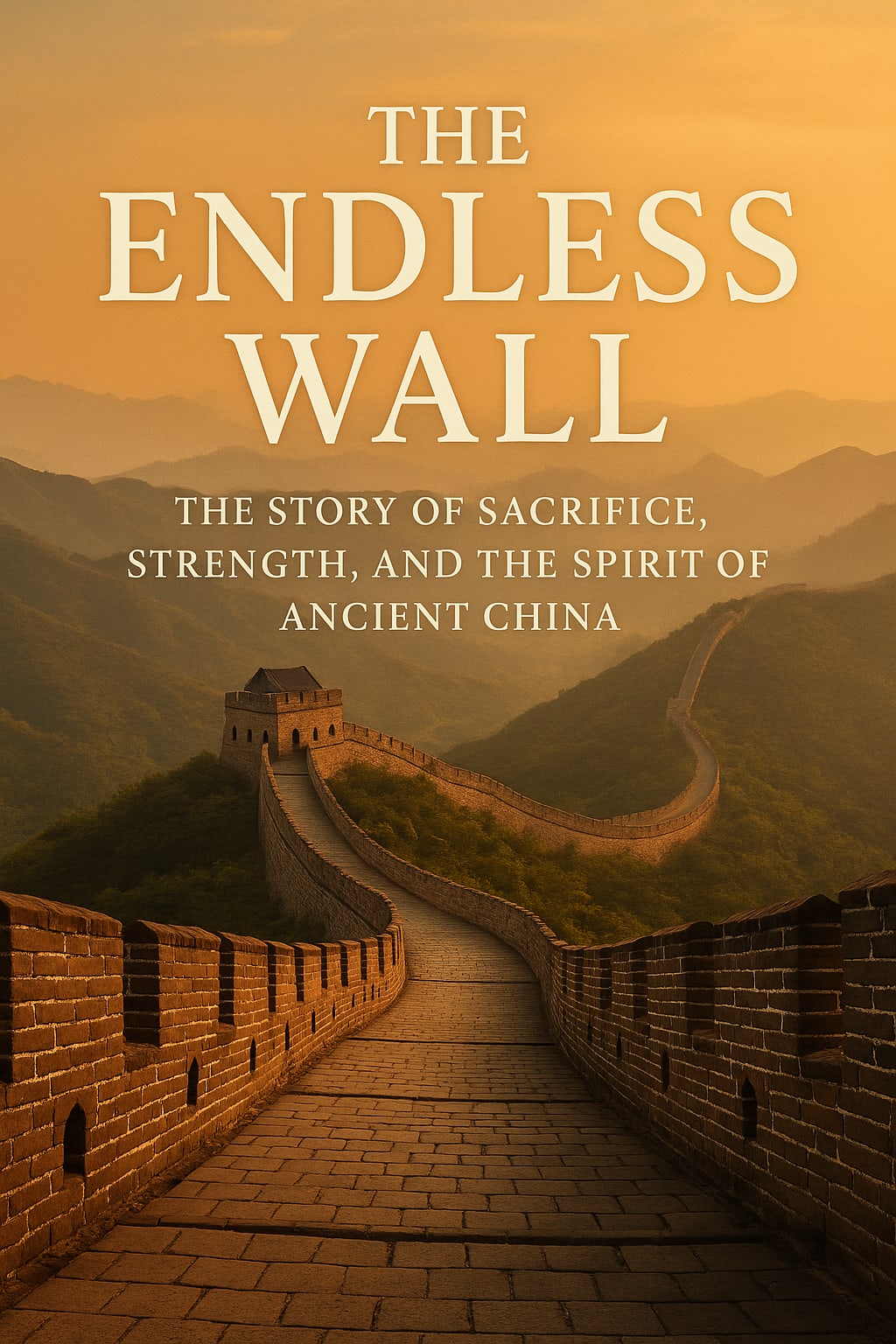
High above the misty mountains of northern China, where the wind sings through stone towers and the sky meets the earth, stretches one of the greatest feats in human history — The Great Wall of China. Built over centuries, brick by brick, life by life, it stands not just as a wall, but as a silent witness to the ambition, fear, and unity of an empire.
More than 2,000 years ago, when China was a land of warring kingdoms, the Qin Dynasty rose to power under a single vision — to unite and protect. Emperor Qin Shi Huang, the first emperor, saw enemies beyond the northern borders: nomadic tribes who raided towns and threatened the fragile new unity. So he ordered something no ruler had ever dared: “Build a wall. A wall to guard the soul of China.”
Thus began a construction unlike any the world had ever seen.
---
The Rise of the Wall
It was not one wall, but many — smaller walls from the Warring States period, stitched together with new stone, blood, and sweat. Villagers, prisoners, and soldiers were forced into labor. For many, it was a sentence harsher than death. Some called it "the longest graveyard", for countless workers perished during its construction and were buried beneath its foundations.
Among them was Li Wei, a young farmer from the Wei Valley. He was taken from his family with thousands of others.
“I build not for glory,” he whispered to himself on his first day, lifting heavy stones with bleeding hands. “But so my sons may sleep without fear.”
Days turned into months. Seasons changed. The wall rose with the mountains. Tower by tower, path by path, it climbed through hills, deserts, and forests — always forward, never ending.
---
The Soul of the People
Though built under harsh rule, the Great Wall also became a symbol of resilience. Villagers nearby began bringing food to the workers. Some secretly sent letters home for the laborers. In time, songs were sung about those who died, turning sorrow into shared memory.
Li Wei befriended a fellow worker, Chen, a poet imprisoned for criticizing the emperor.
“Even stone remembers,” Chen said one night as they camped under the stars. “This wall will carry our names, if not on scrolls, then in spirit.”
Chen died in the winter of the third year. Li Wei carved his name into one of the bricks near a watchtower, as a quiet rebellion against being forgotten.
---
The Fall and Rise Again
Centuries passed. Dynasties rose and fell — the Han, the Ming, each adding, restoring, or abandoning parts of the Wall. During the Ming Dynasty, the Wall saw its greatest construction: strong bricks, fortified towers, signal fires to alert cities of invasion.
But even the strongest wall could not stop time.
Eventually, with gunpowder and diplomacy, the Wall’s military purpose faded. Parts crumbled. Villages grew around it. Tourists climbed it, marveled at it, but few truly knew its story.
---
Legacy Beyond Stone
In 1987, the Great Wall of China was declared a World Heritage Site. Today, it stretches over 13,000 miles, a dragon-like spine across the landscape. Its beauty lies not just in its size, but in the millions of hands that built it, and the untold sacrifices buried beneath it.
Historians often say the Wall was built to keep enemies out. But perhaps, more than anything, it was built to hold a civilization together.
---
In the Present
Modern-day traveler Mei Lin, a Chinese-American historian, once stood atop the Mutianyu section of the Wall. She had spent years researching her ancestry and believed one of her ancestors had worked on the Wall during the Qin era.
As the sun dipped low, casting golden light across the winding stones, she placed her palm on one of the aged bricks.
“I don’t know your name,” she whispered. “But I know your strength.”
For Mei Lin, and many others, the Wall is no longer just a monument — it’s a bridge between generations.
---
The Great Wall of China stands today, not as a fortress, but as a reminder: that unity demands effort, that ambition leaves a mark, and that even in silence, the past still speaks.
---
About the Creator
Raza Ullah
Raza Ullah writes heartfelt stories about family, education, history, and human values. His work reflects real-life struggles, love, and culture—aiming to inspire, teach, and connect people through meaningful storytelling.
Keep reading
More stories from Raza Ullah and writers in Wander and other communities.
When the River Turned to Dust
Under the scorching sun of the Sindh desert, time seems to pause over the dust-covered ruins of Mohenjo-Daro, an ancient city that once pulsed with life. The wind carries forgotten whispers through its crumbling streets, speaking of a time when knowledge, architecture, and civilization thrived in the heart of the Indus Valley.
By Raza Ullah7 months ago in Wander
Seattle Nightlife Report: Pony
Mid-winter Friday night. Early but already so dark. The days are getting longer but 6 PM is still pitch black. “Firepit!” You declare things after just a few seconds of solemn thought – not a request or suggestion, not a demand. Last week you walked around saying, “Hot tub?” to anyone who would listen. Or one afternoon you pointed at two men holding hands as they crossed 12th Avenue, looked me in the eyes and said, “Boyfriends.”
By Joe Nasta | Seattle foodie poet14 days ago in Wander
A Little History In Heptonstall
Introduction Last week I holidayed in Hebden Bridge in Yorkshire and discovered a couple of things that I didn't know before getting there. One thing I did know is that several BBC series have been filmed there, "Happy Valley" and the current "Riot Women":
By Mike Singleton 💜 Mikeydred 3 days ago in Wander


Comments (1)
Great wall of china.