
Japan Electric Vehicle Charging Equipment Market: Size, Share and Industry Forecast
How Government Subsidies, Rural Infrastructure Expansion, and EV Adoption Acceleration Drive Japan's Charging Infrastructure Sector

Market Overview
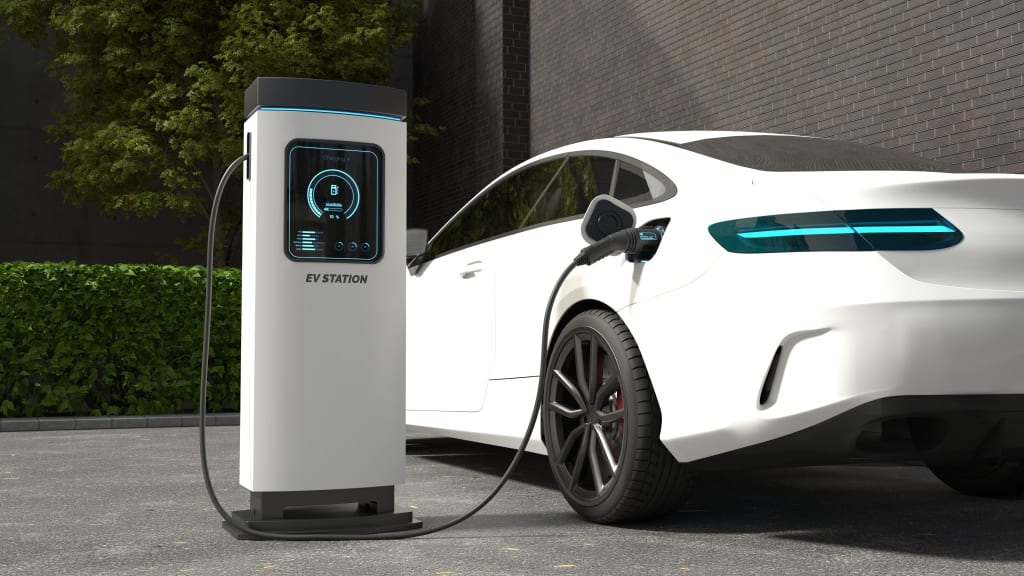
Electric vehicle charging equipment encompasses diverse technologies and infrastructure solutions enabling efficient and convenient charging of battery electric vehicles (BEVs), plug-in hybrid electric vehicles (PHEVs), and hybrid electric vehicles (HEVs). Charging solutions range from portable chargers for on-the-go convenience to fixed installations at residences, workplaces, retail locations, and highway corridors. Equipment includes AC charging stations providing slower but cost-effective charging, DC fast-charging solutions delivering rapid power delivery, and emerging inductive wireless charging technologies. Charging systems incorporate smart features including user authentication, energy management, payment integration, and renewable energy optimization. Japan's charging infrastructure represents critical enabling technology for electric vehicle adoption, supporting residential convenience, commercial accessibility, and long-distance travel capabilities. Modern charging equipment integrates connectivity features enabling grid optimization, demand response participation, and vehicle-to-grid (V2G) energy services.
The Japan electric vehicle charging station market size was valued at USD 1,456.0 Million in 2025, reflecting accelerating EV adoption and infrastructure investment. Looking forward, IMARC Group estimates the market to reach USD 24,835.9 Million by 2034, exhibiting exceptional growth rate (CAGR) of 37.05% during 2026-2034. This extraordinary expansion is driven by government subsidies and policies accelerating EV usage and charging infrastructure development, expansion into rural areas ensuring equitable geographic access, rising EV adoption catalyzing public and private charging solution demand, renewable energy integration supporting sustainability goals, smart city projects incorporating charging networks, and urban planning prioritizing EV infrastructure development.
Request PDF Sample for more detailed market insights:
Role of Innovation in Market Development
• Ultra-Fast DC Charging and High-Power Solutions
Innovation is revolutionizing charging speed through ultra-fast DC technology and high-power solutions. 150 kW charging capability enables 100-200 miles range in 30 minutes addressing range anxiety. 350+ kW extreme fast charging systems enable battery replenishment comparable to gasoline refueling. Thermal management systems prevent battery degradation during rapid charging cycles. Multi-connector compatibility accommodates diverse vehicle standards and future proofing. Modular power electronics enable incremental capacity expansion. Grid synchronization features integrate charging demand with power supply. Battery protection algorithms ensure vehicle battery health and longevity. Ultra-fast technology transforming customer perception and EV viability. Innovation drives competitive differentiation and market expansion.
• Smart Charging and Grid Integration Technologies
Artificial intelligence and smart networking represent transformative innovations in charging infrastructure. AI algorithms optimize charging timing based on electricity prices and grid demand. Predictive analytics forecast charging patterns optimizing network capacity. Real-time demand response enables participation in grid balancing services. Vehicle-to-grid (V2G) technology enables vehicles to supply power to grid during peak demand. Integration with renewable energy systems maximizes clean energy utilization. Mobile applications provide real-time station availability and reservation capabilities. Smart metering enables transparent cost tracking and usage monitoring. Energy storage integration optimizes power delivery and grid stability. Smart technologies transform chargers from passive infrastructure to active grid participants. Innovation creates new revenue streams through demand response and energy services.
• Wireless and Inductive Charging Innovation
Wireless charging technology represents emerging innovation reducing cable infrastructure requirements. Inductive charging pads enable convenient charging through simple vehicle positioning. Dynamic wireless charging embedded in roadways provides continuous energy during travel. Magnetically aligned coils ensure reliable power transfer across varying vehicle positions. Foreign object detection prevents safety hazards and charging interference. Efficiency improvements approach 85-90% rivaling wired charging systems. Integration with autonomous vehicles enables seamless charging without driver intervention. Charging rate improvements enable practical rapid charging capability. Wireless innovation enhances convenience and user experience. Emerging technology represents future charging paradigm transformation.
Japan Electric Vehicle Charging Infrastructure Industry Trends and Drivers
• Government Subsidies and Policy Support
Government initiatives represent the primary market growth driver. Tax incentives reduce charging station installation costs for businesses and residences. Subsidies cover 50-75% of equipment and installation expenses. Regulations mandate charging infrastructure in new building developments. Public procurement programs require charging accessibility in government facilities. Carbon neutrality targets by 2050 necessitate rapid EV and charging infrastructure deployment. Zero-emission vehicle mandates compel automakers to develop EVs driving charging demand. Smart city initiatives integrate charging networks in urban planning. Renewable energy policies encourage solar and wind-powered charging stations. Government support ensures sustained market investment and deployment. Policy backing provides fundamental market foundation.
• Electric Vehicle Adoption Acceleration
Rising EV adoption drives direct charging infrastructure demand. BYD Sealion 07 and Tesla Model Y competition accelerates EV model diversity and consumer choice. Improved battery technology extends vehicle range reducing charging frequency anxiety. Decreasing EV prices expand addressable consumer market. Corporate sustainability commitments drive fleet electrification. Public transport electrification including buses and taxis requires commercial charging infrastructure. Taxi and ride-sharing fleet electrification creates high-utilization demand. EV ownership growth ensures sustained charging infrastructure investment. Adoption momentum provides sustained market demand catalyst.
• Rural Infrastructure Expansion and Geographic Equity
Rural area electrification represents a significant market expansion opportunity. Remote community access improvement reduces range anxiety and EV adoption barriers. Highway corridor charging networks enable long-distance travel confidence. Agricultural and logistics fleet electrification in rural regions increases commercial charging needs. Renewable energy-powered rural stations support energy independence. Strategic charging placement along rural routes supports tourism and commerce. Government rural development programs prioritize charging infrastructure investment. Geographic equity ensures market accessibility across all regions. Rural expansion diversifies market beyond urban concentration.
Key Growth Drivers of Japan Electric Vehicle Charging Equipment Market
• Renewable Energy Integration and Sustainability Alignment
Renewable-powered charging infrastructure supports carbon neutrality goals and environmental alignment. Solar-powered charging stations reduce grid dependency and operational costs. Wind and hydroelectric integration diversifies renewable energy sources. Battery storage enables charging during renewable generation peaks optimizing efficiency. Microgrid systems localize power generation and distribution. Energy independence through renewable charging appeals to environmental consciousness. Government renewable energy policies mandate clean power integration. Sustainability alignment supports premium positioning and market differentiation. Renewable integration ensures sustained market growth.
• Smart City Development and Urban Planning Integration
Smart city initiatives prioritize EV charging as core infrastructure component. Integrated transportation systems incorporate charging accessibility planning. Urban mobility solutions emphasize convenient EV charging in residential and commercial areas. Parking infrastructure modernization includes charging capabilities. Traffic management systems optimize charging demand distribution. Energy management platforms coordinate charging with renewable generation. Connected infrastructure enables data-driven optimization and planning. Smart development supports user convenience and operational efficiency. Urban integration ensures fundamental market support.
• Commercial Fleet Electrification Demands
Commercial fleet electrification creates high-capacity charging infrastructure requirements. Taxi electrification programs require dense public charging networks. Bus fleet conversions demand high-power commercial charging stations. Logistics fleet electrification supports sustainable supply chains. Charging requirements during peak operating hours necessitate robust infrastructure. Fleet management systems optimize charging scheduling and costs. Commercial applications provide stable, high-utilization customer base. Fleet transition ensures sustained commercial charging demand. Commercial growth provides substantial market expansion catalyst.
Opportunities of Japan Electric Vehicle Charging Equipment Market
• Bidirectional Charging and Vehicle-to-Grid Services
Substantial opportunities exist in V2G technology enabling vehicles to supply grid power. Bidirectional charging enables vehicles to act as distributed energy resources. Peak demand management through V2G reduces grid stress and infrastructure costs. Ancillary services revenue generation compensates EV owners for grid support. Frequency regulation and voltage support services create new market opportunities. Virtual power plant aggregation combines vehicles into collective grid assets. Emergency backup power during grid disruptions addresses resilience needs. Battery degradation management enables sustainable V2G implementation. V2G opportunities transform vehicles from loads to grid assets. Technology commercialization creates emerging revenue streams.
• Workplace and Commercial Charging Expansion
Significant opportunities exist in workplace and commercial charging infrastructure. Corporate sustainability commitments drive employee charging availability. Retail parking lot charging attracts eco-conscious customers. Hotel and hospitality charging supports guest convenience. Fleet parking facilities require high-volume charging capacity. Workplace charging adoption rates exceed 60% supporting employee EV adoption. Charging availability as employee benefit improves retention. Revenue opportunities through usage fees support infrastructure ROI. Commercial expansion reaches high-utilization customer segments. Workplace opportunities support sustained market growth.
• Emerging Technology Integration and Autonomous Vehicle Support
Emerging opportunities exist in charging infrastructure supporting autonomous vehicle fleets. Autonomous vehicle charging requires optimized, automated systems. Fleet charging coordination maximizes utilization and minimizes wait times. Robotic charging arm technologies enable unattended charging. Dynamic routing optimization reduces charging downtime. Predictive maintenance prevents operational disruptions. Integration with autonomous fleet management systems streamlines operations. Automation support reduces labor costs and operational complexity. Technology integration creates competitive differentiation. Emerging applications represent future market opportunities.
Japan Electric Vehicle Charging Equipment Market Segmentation
By Charging Station Type
• AC Charging
• DC Charging
• Inductive Charging
By Vehicle Type
• Battery Electric Vehicle (BEV)
• Plug-in Hybrid Electric Vehicle (PHEV)
• Hybrid Electric Vehicle (HEV)
By Installation Type
• Portable Charger
• Fixed Charger
By Charging Level
• Level 1
• Level 2
• Level 3
By Connector Type
• Combined Charging System (CCS)
• CHAdeMO
• Normal Charging
• Tesla Supercharger
• Type-2 (IEC 62196)
• Others
By Application
• Residential
• Commercial
By Region
• Kanto Region
• Kansai/Kinki Region
• Central/Chubu Region
• Kyushu-Okinawa Region
• Tohoku Region
• Chugoku Region
• Hokkaido Region
• Shikoku Region
This comprehensive segmentation reflects the diverse structure of Japan's EV charging market, encompassing AC, DC, and wireless charging technologies, support for diverse vehicle types, flexible portable and fixed installations, multiple charging speed levels, diverse connector standards ensuring compatibility, residential and commercial applications, and geographic distribution across all major Japanese regions.
Competitive Landscape
The Japan EV charging market includes global charging equipment manufacturers, Japanese automotive company charging divisions, energy companies expanding into charging infrastructure, specialized charging solution providers, and emerging technology startups. Competitive positioning is influenced by charging speed, infrastructure reliability, user interface design, payment system integration, environmental credentials, and service quality. Global manufacturers leverage scale and technology. Japanese companies emphasize quality and reliability. Energy providers bring grid expertise. Startups introduce innovation and specialization. Successful competitors balance technology advancement with user experience. Strategic partnerships enable market expansion and ecosystem development.
Market Outlook
The Japan EV charging market is expected to witness explosive growth as EV adoption accelerates, government support continues, and charging infrastructure matures. Ultra-fast charging will become standard addressing long-distance travel concerns. Smart charging and grid integration will optimize energy utilization. V2G technology will enable vehicles to support grid services. Rural infrastructure expansion will ensure geographic equity. Wireless charging will enhance convenience. Renewable energy integration will support sustainability goals. Commercial fleet charging will expand supporting logistics electrification. Autonomous vehicle requirements will drive charging innovation. Subscription-based charging models will emerge. Standardization across connector types will improve interoperability. Infrastructure companies will consolidate creating nationwide networks. As Japan pursues electric vehicle leadership and carbon neutrality, charging infrastructure represents essential enabling technology. Market explosion from USD 1,456.0 Million in 2025 to USD 24,835.9 Million by 2034 reflects Japan's commitment to EV transition and charging infrastructure development. Charging equipment will remain critical infrastructure supporting Japan's automotive transformation and climate commitments through sustained technological innovation and market expansion.
About IMARC Group
IMARC Group is a leading market research and consulting firm providing strategy development, industry analysis, feasibility studies, and data-driven insights across global markets. The firm supports businesses, investors, and governments in making informed decisions through reliable and actionable research.
About the Creator
Yoshio
Market Research Analyst with 5+ years of experience in consumer insights and market segmentation. Skilled in data analysis and qualitative research.
The Human Need for Connection: Friendship, Love, and Belonging
Humans are fundamentally social beings. From early childhood friendships to deep emotional bonds formed in adulthood, the relationships we build shape our emotional well-being, identity, and resilience. Meaningful connection helps people feel understood, valued, and supported, especially during periods of stress or personal change. Friendship and love are not optional aspects of life; they are essential human needs that contribute to psychological stability and long-term fulfillment. In broader cultural conversations about companionship, references may sometimes appear to concepts such as a Real Love Doll, often reflecting discussions about loneliness or simulated presence rather than genuine human exchange. Ultimately, these conversations reinforce how vital authentic, emotionally reciprocal relationships remain in sustaining true well-being.
By James Mburu5 days ago in 01
Compose Multiplatform for iOS Production Readiness in 2026
Engineering leaders must evaluate Kotlin Multiplatform today. The cross-platform UI debate has shifted recently. It is no longer about if it works. The focus is now on maintenance at scale. Compose Multiplatform (CMP) for iOS has reached a critical tipping point. Developers can share business logic and the UI layer. This works across both Android and iOS platforms. It provides a unified codebase for your team. It avoids the lag of web-based wrappers. It also lacks the overhead found in Flutter. This guide evaluates readiness for technical decision-makers. We focus on long-term stability and development speed.
By Devin Rosario3 days ago in 01



Comments
There are no comments for this story
Be the first to respond and start the conversation.