
Creating Faceless Worlds
Why I blur identity in my art
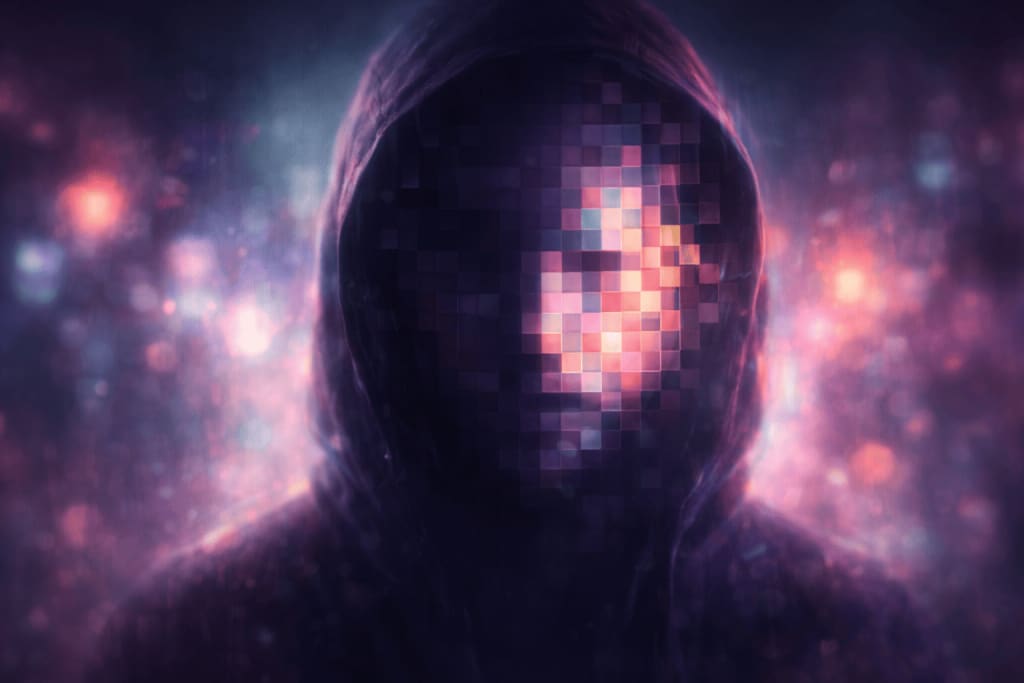
There’s something unsettling about faces.
Even when they’re beautiful, perfectly rendered, or lit like a dream, they hold stories that aren’t yours. They hold assumptions. Memories. Recognition.
When I started creating AI-generated portraits, I realized I didn’t want to capture people. I wanted to explore presence without identity. The result was a series of faceless figures their outlines clear, their forms expressive, but their features dissolved into light, shadow, or texture.
It wasn’t just an aesthetic choice. It was a meditation on privacy. On consent. On the strange permanence of images online.
Sometimes a face would peek through too clearly a glint of eye, a faint jawline. At first, I tried ignoring it, but it pulled me out of the mood I was creating. That’s when I started experimenting with subtle editing. I would blur face in photo gently, just enough to preserve the emotion while removing recognition. It wasn’t a tool to hide mistakes it was a way to give the viewer space to project themselves into the scene.
Backgrounds became part of the story too. A glowing cityscape or a crowded gallery might overwhelm a faceless figure, so I learned to blur photo background in places where clarity distracted from the emotional core. The blurred backdrop became a stage rather than a distraction, letting the figure breathe.
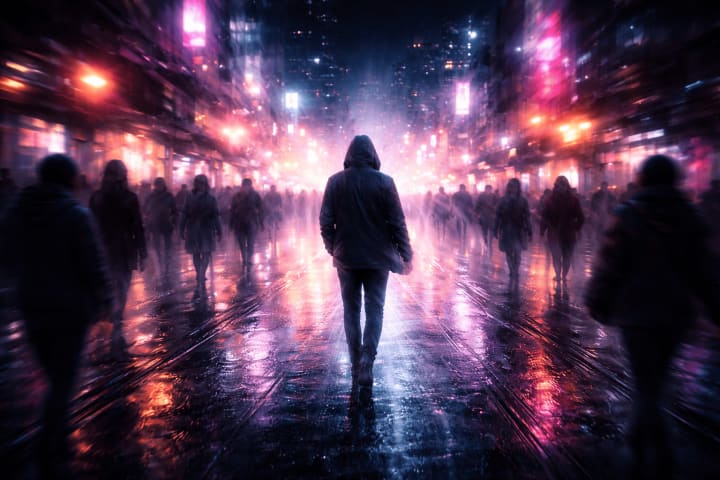
Blurred with BlurMe Face Blur.
Sometimes I worked with motion small AI-generated video loops of people moving through dreamlike spaces. In those moments, a figure moving too sharply could feel almost too human. I would carefully blur video sections to keep them ethereal, ghostlike, and unrecognizable, emphasizing movement over identity.
For convenience, I use a browser-based tool to handle these edits quickly. It automatically detects faces and areas that might stand out, which makes the process almost effortless, even when working on dozens of images in a batch. This keeps the creative flow intact without compromising the artistic intention.
Conceptually, pixelation can also add weight to a piece. A fragmented, mosaic-like face reads differently than a smooth blur it feels like a digital memory breaking apart. I’ve started exploring pixelate image or mosaic blur image effects sparingly, usually to add tension or mystery.
All of this taught me something important: erasing or softening identity isn’t censorship. It’s storytelling. It’s creating space for interpretation. It’s a way to acknowledge the permanence of the internet while still honoring the impermanence of human life.
When I post these pieces online, I know that every faceless figure, every softened background, every subtle pixelated fragment is a conscious decision. It’s part of my philosophy: presence without exposure. Identity without intrusion. Art without harm.
And that quiet intention, the invisible editing behind the scenes, might just be the most important part of the work.
About the Creator
Danielle Jara
Digital artist exploring identity, anonymity, and minimalism through faceless visuals. I create content about AI-assisted art, creative privacy, and visual stories. Creator of the Blurred Identity series and tutorials using blur face tools.
Keep reading
More stories from Danielle Jara and writers in Art and other communities.
from death into life
Young Aldin of Wiloh had never contemplated death. It was almost strange — so many around him had the tendency to obsess over it, to clamor and claw almost desperately at their own perceptions of the end to know death as much as they could: when it would come, why it would come, where it would take them when it did.
By angela hepworth2 days ago in Fiction


Comments
There are no comments for this story
Be the first to respond and start the conversation.