
Leonardo da Vinci’s Study for Madonna with the Yarnwinder: A Masterpiece in Red Chalk and Silverpoint
Ancient Art

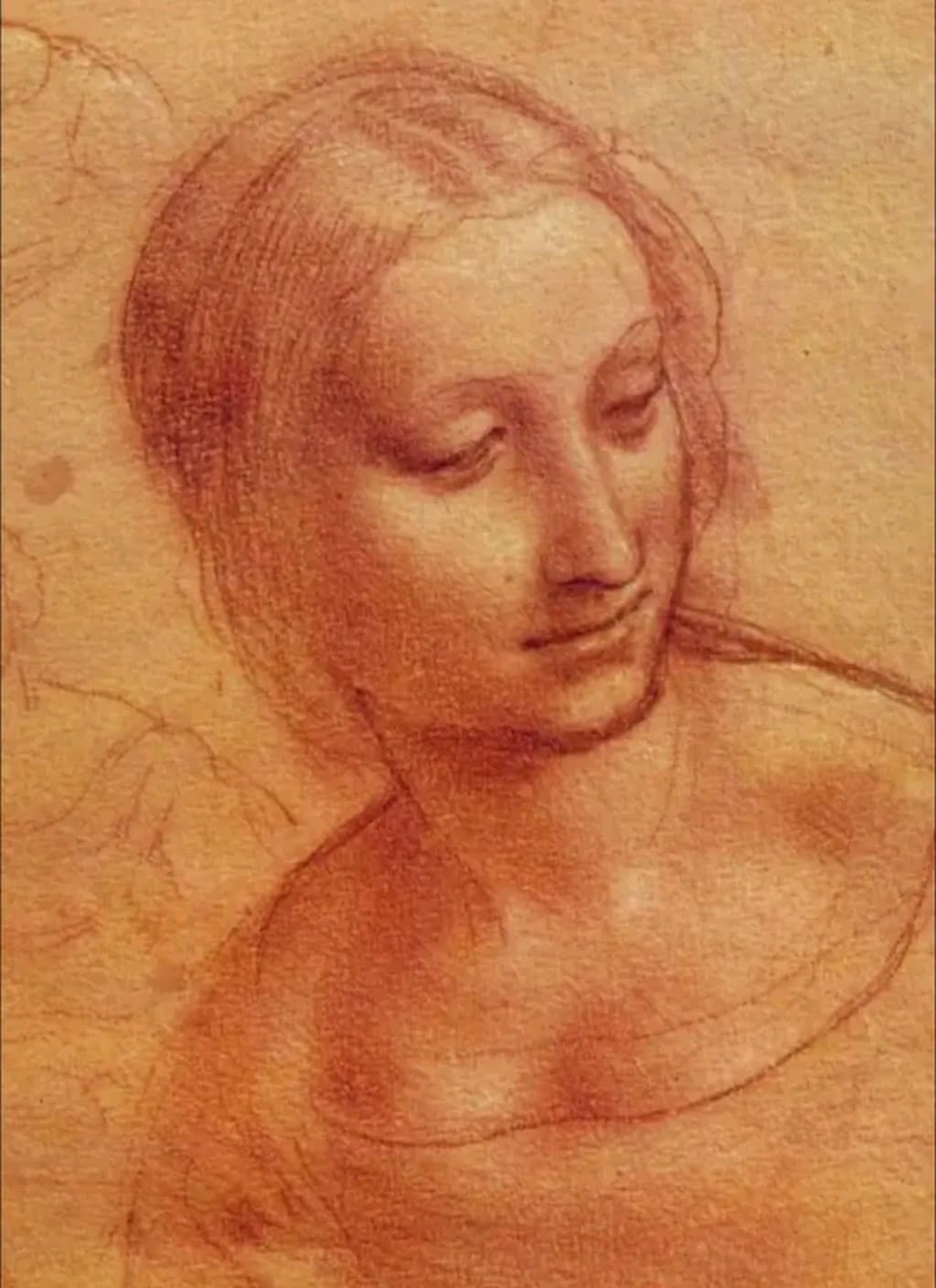
Leonardo da Vinci’s Study for Madonna with the Yarnwinder, created around 1501, is a remarkable example of his genius as an artist, thinker, and innovator. This exquisite drawing, crafted with red chalk and silverpoint on rose-colored prepared paper, resides in the Gallerie dell’Accademia in Venice. It provides a glimpse into Leonardo’s creative process, showcasing his unparalleled ability to fuse technical precision with emotional depth.
The Context: The Madonna with the Yarnwinder
The Study for Madonna with the Yarnwinder is a preparatory work for one of Leonardo’s unfinished paintings, the Madonna with the Yarnwinder. This painting, produced around the same time, features the Virgin Mary holding the Christ Child as he reaches for a yarnwinder, symbolizing the cross and foreshadowing the Passion.
The theme of the Virgin and Child was a recurring one in Leonardo’s oeuvre, reflecting both the religious devotion of the time and his personal fascination with maternal tenderness. This study captures the essence of these themes, portraying the Madonna and Child with an intimacy and grace that speaks to Leonardo’s mastery.
The Medium: Red Chalk and Silverpoint
Leonardo’s use of red chalk and silverpoint in this study is a testament to his technical expertise.
- Red Chalk: By the late 15th century, red chalk had become one of Leonardo’s preferred mediums for its versatility and ability to create subtle tonal variations. The softness of red chalk allowed Leonardo to explore the nuances of light and shadow, giving his figures a lifelike quality.
- Silverpoint: Silverpoint, a technique involving a silver stylus on prepared paper, was a demanding medium requiring precision and confidence. Leonardo used it for its fine lines and permanence, enabling him to sketch delicate details and contours.
The rose-colored prepared paper adds warmth to the composition, enhancing the drawing’s emotional resonance. This combination of mediums demonstrates Leonardo’s innovative approach, blending traditional techniques with his own artistic sensibilities.
Composition: Elegance in Simplicity
The Study for Madonna with the Yarnwinder captures the essence of maternal love and divine grace through a seemingly simple composition.
- The Madonna: Leonardo depicts the Virgin Mary with serene beauty, her face characterized by soft, flowing lines and a contemplative expression. Her pose, slightly inclined toward the Christ Child, conveys a sense of gentle protection and devotion.
- The Christ Child: The infant Jesus is rendered with remarkable naturalism, his chubby form and playful gesture exuding a lifelike charm. His movement toward the yarnwinder, symbolic of the cross, is both tender and poignant, reflecting the dual nature of joy and foreboding in the Christian narrative.
Leonardo’s signature sfumato technique, though primarily associated with his paintings, is evident in this study as well. The soft transitions between light and shadow lend the figures a three-dimensional quality, imbuing the drawing with a sense of depth and realism.
Symbolism and Meaning
The Madonna with the Yarnwinder carries rich symbolic significance, much of which is encapsulated in this preparatory study.
- The Yarnwinder: As a household object, the yarnwinder connects the divine figures to the everyday lives of Renaissance viewers. At the same time, its resemblance to a crucifix foreshadows Christ’s sacrifice, linking the mundane with the sacred.
- Maternal Love and Sacrifice: The interaction between Mary and Jesus highlights the themes of maternal care and the inevitability of loss. Mary’s gentle demeanor and the child’s innocent curiosity underscore the human emotions that underpin the spiritual narrative.
Through these symbolic elements, Leonardo transcends the boundaries of religious art, creating a work that speaks to universal human experiences.
Leonardo’s Creative Process
The Study for Madonna with the Yarnwinder offers valuable insights into Leonardo’s working methods.
- Exploration of Gesture: The drawing captures Leonardo’s fascination with movement and gesture, particularly in the way Jesus reaches for the yarnwinder. This dynamic interaction exemplifies Leonardo’s ability to convey emotion through physicality.
- Focus on Anatomy: As a dedicated student of human anatomy, Leonardo’s attention to detail is evident in the lifelike proportions and forms of the figures. His understanding of musculature and bone structure enhances the realism of the composition.
This study is more than just a preparatory sketch—it is a work of art in its own right, reflecting the meticulous thought and effort Leonardo devoted to every aspect of his creations.
Legacy and Influence
The Study for Madonna with the Yarnwinder is a shining example of Leonardo’s ability to blend technical skill with profound emotional depth. Its influence can be seen in the works of later artists who sought to emulate Leonardo’s mastery of gesture, expression, and symbolism.
For modern viewers, the study remains a source of inspiration, reminding us of the timeless power of art to capture the essence of human experience. Leonardo’s exploration of universal themes—love, sacrifice, and the connection between the divine and the everyday—continues to resonate, bridging the gap between past and present.
Visiting the Gallerie dell’Accademia
Today, visitors to the Gallerie dell’Accademia in Venice can view this remarkable study up close, marveling at the precision and beauty of Leonardo’s work. Seeing the Study for Madonna with the Yarnwinder in person offers a rare opportunity to connect with the mind of one of history’s greatest artists, whose genius continues to captivate and inspire.
In this drawing, Leonardo da Vinci transcends the boundaries of preparatory art, creating a timeless masterpiece that embodies the spirit of the Renaissance and the enduring power of human creativity.
About the Creator
Keep reading
More stories from Deji Akomolafe and writers in Art and other communities.
The Mural Paintings in the Tomb of Seti I: A Window into Ancient Egypt
Deep within the arid hills of the Valley of the Kings on Luxor’s West Bank lies one of the most remarkable archaeological treasures of ancient Egypt: the tomb of Seti I. Discovered in 1817 by Italian explorer Giovanni Battista Belzoni, this tomb is renowned not only for its impressive architecture but also for its extraordinary mural paintings. These vivid and meticulously crafted artworks provide a profound insight into the beliefs, artistry, and culture of one of history's most fascinating civilizations.
By Deji Akomolafeabout a year ago in Art
If You Build It, Will They Come? Smart Pallets and theier Slow March Toward Supply Chain Transformation
In the 1989 film Field of Dreams, a quiet voice whispers a simple promise: If you build it, they will come. It is a line that has echoed for decades in innovation culture, often invoked to suggest that the mere existence of new technology will inevitably create its own demand.
By Ayush Bagwari3 days ago in Art




Comments
There are no comments for this story
Be the first to respond and start the conversation.