A História
Bio
"Hi. My name is Wellington and I'm a passion for general history. Here, I publish articles on different periods and themes in history, from prehistory to the present day.
Stories (165)
Filter by community
Ctésias of Cnidus
Ctésias of Cnidus was an intriguing personality from antiquity—a Greek doctor, historian, and author who thrived during the 5th and 4th centuries BCE. Renowned for his accounts of Persia and India, Ctésias dedicated many years to the Persian court, acquiring direct insights into Eastern civilizations. Although his works have faced criticism for their inaccuracies and exaggerations, they continue to be significant for their distinctive viewpoint on the Achaemenid Empire and far-off regions.
By A História9 months ago in History
Timaeus of Tauromenium
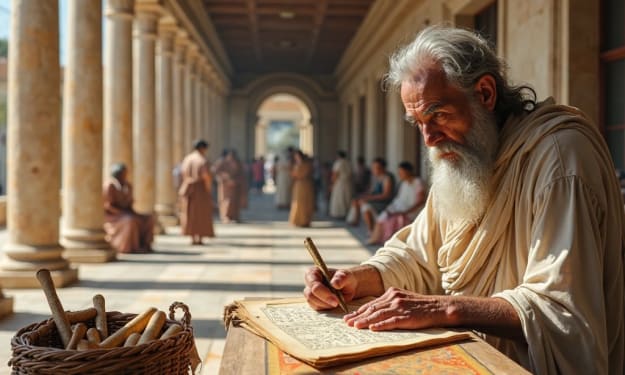
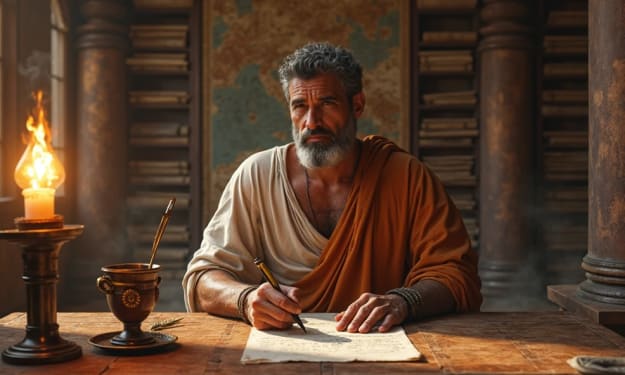
The ancient era was inhabited by numerous historians whose contributions significantly influenced our comprehension of history. One notable figure was Timaeus of Tauromenium (circa 350–260 BCE), a Greek historian from Sicily whose writings offered essential perspectives on the history of Sicily, Italy, and the broader Mediterranean region. Although much of his work has been lost over time, existing fragments and citations by later authors highlight him as a diligent scholar who documented the rise and decline of cities, the actions of tyrants, and the cultural interactions between Greeks and non-Greeks. This essay examines Timaeus' life, his principal works, his research methods, and his impact on ancient historiography. By reconstructing the remaining fragments and evaluating his influence on subsequent historians such as Polybius and Diodorus Siculus, we can better understand his role in shaping our knowledge of the ancient world.
By A História9 months ago in History
Ephorus of Cyme
In the intricate landscape of ancient Greek historiography, figures such as Herodotus, Thucydides, and Xenophon frequently take center stage. However, Ephorus of Cyme (c. 400–330 BCE) emerges as a significant historian whose contributions, despite being largely lost, were instrumental in enhancing our comprehension of the ancient world. As a forerunner of universal history, Ephorus endeavored to create a thorough narrative of the known world from mythical origins to his contemporary period. His monumental work, Histories—a 30-volume collection—established him as one of antiquity's most methodical historians. This article delves into Ephorus’ life, his approach to historiography, his significant contributions, and the lasting impact of his work. Although only fragments of his writings remain, his influence is evident in the works of later historians like Polybius, Diodorus Siculus, and Strabo.
By A História10 months ago in History
The Life and Works of Theopompus
Theopompus of Chios stands as a significant historian from ancient Greece, yet his legacy is frequently eclipsed by renowned figures such as Herodotus and Thucydides. Born in the 4th century BCE, he was more than a mere recorder of historical events; he was a keen critic of the political landscape, ethical standards, and notable individuals of his era. Although much of his work has been lost to time, it was once acclaimed for its vivid storytelling, sharp humor, and careful attention to detail. This essay delves into Theopompus’ life, his principal writings, his historical methodologies, and his enduring influence on the field of historiography.
By A História10 months ago in History
Xenophon
Xenophon (circa 430–354 BCE) stands out as one of the most multifaceted and intriguing personalities of ancient Greece. As a soldier, historian, philosopher, and a disciple of Socrates, he produced a substantial body of work that offers essential perspectives on Greek culture, military strategies, and philosophical ideas. In contrast to many of his peers, Xenophon employed a clear and direct writing style, which renders his texts approachable for both ancient and contemporary audiences. His renowned works, including Anabasis and Memorabilia, remain subjects of study due to their historical importance and literary value.
By A História10 months ago in History
Polybius
The ancient era saw the emergence of numerous distinguished historians, yet few matched the meticulousness, analytical prowess, and impact of Polybius. Born in Arcadia, Greece, circa 200 BCE, Polybius experienced a period marked by significant political turmoil, observing the fall of Greek autonomy and the ascent of Rome as a dominant force in the Mediterranean. His seminal work, The Histories, is regarded as one of the most crucial historical narratives of the Hellenistic age, providing essential perspectives on the dynamics of power, the characteristics of political structures, and the pivotal events that influenced the ancient world.
By A História10 months ago in History
Thucydides of Athens
Thucydides of Athens (circa 460 – circa 400 BCE) is celebrated as one of history's foremost historians, recognized for his meticulous method of documenting historical events. In contrast to earlier historians who frequently intertwined myth with reality, Thucydides aimed to deliver a precise and analytical narrative grounded in evidence and firsthand accounts. His seminal work, The History of the Peloponnesian War, continues to be a cornerstone in the fields of historiography, political science, and military strategy.
By A História10 months ago in History
Herodotus
The ancient world was characterized by its enigma, magnificence, and monumental conflicts, with civilizations emerging and declining akin to the ebb and flow of the Mediterranean Sea. Among those who endeavored to document and preserve the legacy of these eras, one figure is particularly notable—Herodotus of Halicarnassus, whom Cicero later referred to as "The Father of History." Born in the 5th century BCE, Herodotus transcended the role of a mere recorder of events; he was a narrative artist who intricately blended myths, legends, and personal testimonies into a rich portrayal of history. His seminal work, The Histories, continues to be one of the most captivating texts from antiquity, providing valuable perspectives on the cultures of Greece, Persia, Egypt, and other regions.
By A História10 months ago in History
The Moche Civilization
Approximately 2,000 years ago, during the period when the Roman Empire was prominent in Europe and the Han Dynasty was in power in China, an extraordinary civilization flourished along the arid coastline of Peru—the Moche. Renowned for their pottery, monumental pyramid constructions, and adept seafaring skills, the Moche established a legacy that continues to intrigue archaeologists and historians alike. Although they did not create a centralized state, their network of urban centers exhibited a shared cultural identity, which was manifested through elaborate artistic expressions, grand architectural feats, and sophisticated rituals.
By A História10 months ago in History
Stars, Waves, and Wisdom
The narrative of human history is characterized by remarkable accomplishments that distinguish our species on Earth. We have adapted to survive in diverse environments, including deserts, mountains, jungles, and the coldest regions of the planet. However, one achievement surpasses all others—the domination of the seas. Throughout the ages, humans have honed their skills and developed technologies to navigate extensive oceanic distances, revealing new territories and possibilities. Among the most skilled navigators in history were the Polynesians, whose exceptional maritime abilities enabled them to inhabit nearly every livable island across the Pacific Ocean.
By A História10 months ago in History
The Khoisan
Humanity has expanded into almost every part of the globe, influenced by factors such as migration, conquest, climate change, and colonization. However, few groups have maintained a consistent presence in one location as prominently and persistently as certain indigenous communities in Africa. The Khoisan, in particular, are notable—potentially the oldest human population in Africa and possibly the entire world.
By A História10 months ago in History
Stanley Kubrick
Stanley Kubrick stands out as one of the most innovative and meticulous directors in the history of film. Throughout a career spanning more than fifty years, he produced a collection of iconic works that transformed genres, provoked thought among viewers, and expanded the limits of visual narrative. However, despite his monumental successes, Kubrick's most ambitious aspiration—a grand biographical film about Napoleon Bonaparte—was never brought to fruition, leaving a lingering "what if" in the legacy of a filmmaker known for his unwavering commitment to his artistic vision.
By A História10 months ago in Geeks