Marcus Hedare
Bio
Hello, I am Marcus Hedare, host of The Metaphysical Emporium, a YouTube channel that talks about metaphysical, occult and esoteric topics.
https://linktr.ee/metaphysicalemporium
Stories (53)
Filter by community
Occult Linguistics. Content Warning.
The Hidden Architecture of Sacred Language Occult linguistics occupies a distinctive intellectual and spiritual territory where language is understood as an active, formative force rather than a passive vehicle for meaning. In this framework words, letters, sounds, and symbols are treated as living structures capable of shaping perception, consciousness, and reality itself. Language functions not only as representation but as participation, embedding human thought within cosmological, ritual, and metaphysical systems that have developed over thousands of years. Across esoteric traditions language is regarded as an extension of creation, a medium through which invisible principles become perceptible and operative.
By Marcus Hedare18 days ago in BookClub
Sacred Geometry. Content Warning.
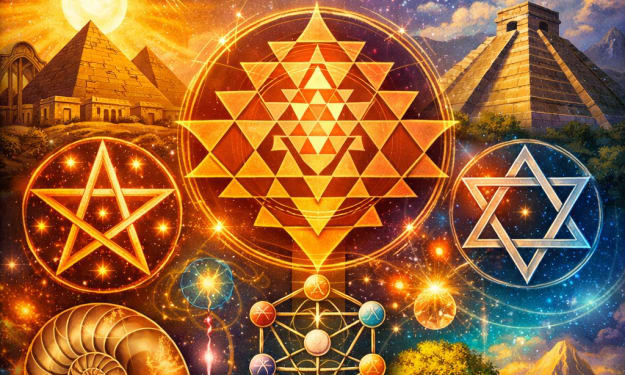
Foundations of Sacred Geometry Sacred geometry refers to the study of recurring geometric forms, numerical ratios, and proportional relationships that manifest throughout the natural world and across human civilizations. These patterns appear in biological growth, mineral formation, astronomical movement, and the built environment, suggesting that geometry functions as a fundamental organizing principle rather than a human invention. Long before geometry became a formal branch of mathematics, early societies recognized that shape and proportion governed stability, harmony, and continuity in both nature and human life. Observation, measurement, and symbolic interpretation developed side by side, forming systems of knowledge that linked mathematics with cosmology and meaning.
By Marcus Hedare19 days ago in BookClub
The Spirit of Place: Understanding the Genius Loci. Content Warning.
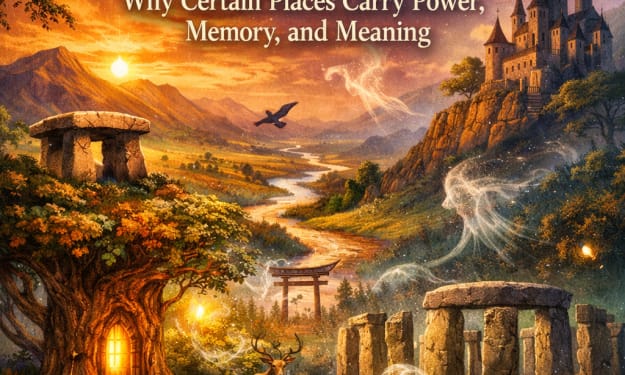
When Place Becomes Presence Across human history, landscapes have rarely been regarded as neutral or empty. Valleys, rivers, forests, shorelines, crossroads, and built environments have consistently been experienced as possessing a distinct presence. Archaeological evidence, religious texts, and oral traditions reveal a shared understanding that land carries character, intention, and memory. Settlements emerged where land felt favorable. Shrines rose where terrain inspired reverence. Routes followed paths believed to be watched over or guided by unseen forces. Geography shaped culture not only through resources and climate, but through perceived meaning.
By Marcus Hedare19 days ago in BookClub
The Horned God: Lord of the Wild. Content Warning.
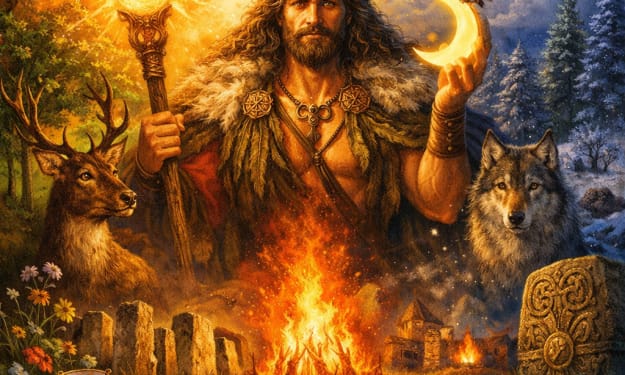
Encountering the Horned God Across Paleolithic cave walls, Neolithic standing stones, Iron Age reliefs, ritual masks, and contemporary devotional spaces, a recurring figure emerges with remarkable consistency. Antlers rise from a human brow. Animal limbs merge with upright posture. Surrounding imagery evokes forests, herds, sexuality, decay, seasonal return, and the tension between cultivation and wilderness. Known in modern discourse as the Horned God, this figure represents one of the most persistent and multilayered symbols within the religious imagination of Europe and the wider Indo-European world.
By Marcus Hedare20 days ago in BookClub
Roots of the Cosmos: The World Tree Explained. Content Warning.
The Tree at the Center of Everything Across civilizations separated by oceans, centuries, and languages, a single image emerges with striking consistency. A vast tree stands at the center of existence, neither planted nor cultivated, but inherent to the structure of the universe itself. Its roots descend into unseen depths where memory, death, and origin reside. Its trunk rises through the visible world, providing stability, continuity, and presence. Its branches extend into the heavens, touching realms associated with divinity, fate, and cosmic order. This image is now commonly described as the World Tree, a symbol through which ancient cultures articulated the architecture of reality.
By Marcus Hedare21 days ago in BookClub
Root & Ritual: A Guide to Green Witchcraft. Content Warning.
The Whispering Path of Green Witchcraft Green witchcraft, often referred to as garden witchery, herbal magic, or nature-based craft, functions less as a codified system and more as a lived relationship with the natural world. Practice begins with attentiveness rather than instruction. Bare feet meeting soil, wind stirring branches, and water moving across stone offer lessons that cannot be learned through books alone. Knowledge develops through patience, observation, and repeated engagement with land and season. Magic emerges through familiarity and trust rather than spectacle.
By Marcus Hedare23 days ago in BookClub
The Blood Moon. Content Warning.
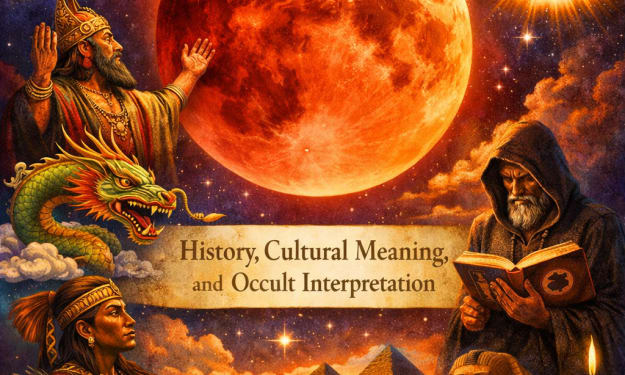
When the Moon Turns Red For millennia, the sudden darkening of the full Moon has stirred awe, fear, reverence, and speculation. A total lunar eclipse transforms a familiar celestial body into something uncanny, as Earth’s shadow slowly overtakes the lunar surface and replaces silver light with deep copper and crimson tones. This phenomenon, commonly called the Blood Moon, occurs through a precise interaction of orbital mechanics and atmospheric physics. Sunlight passing through Earth’s atmosphere bends and scatters, filtering out shorter wavelengths and allowing red and orange light to reach the Moon. The result is neither illusion nor omen, but a predictable yet visually arresting event grounded in natural law.
By Marcus Hedare23 days ago in BookClub
The Living Jesus and the Eastern Mind. Content Warning.
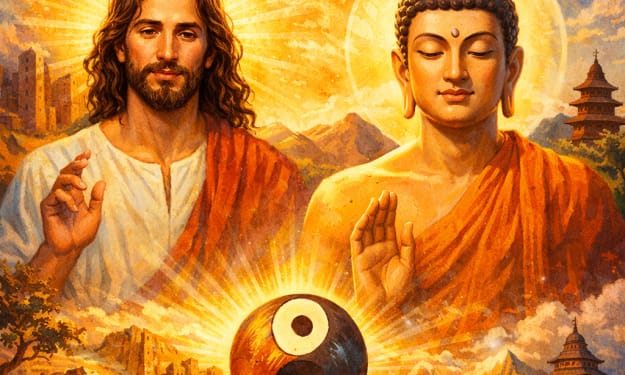
When Jesus Sounds Unfamiliar Across two millennia of Christian tradition, Jesus of Nazareth has most often been portrayed as a divine savior, miracle worker, and cosmic mediator between humanity and God. This image is deeply embedded in Western theology, art, liturgy, and cultural memory. Creeds, sermons, and devotional practices have reinforced a Jesus defined primarily by crucifixion, resurrection, and redemptive sacrifice. For many readers, this portrayal feels settled, authoritative, and complete.
By Marcus Hedare27 days ago in BookClub
The Satanic New Year in Modern Satanism. Content Warning.
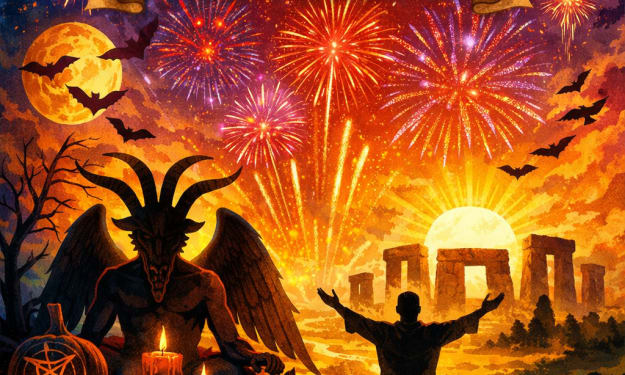
Rethinking the Satanic New Year The phrase “Satanic New Year” has become a familiar fixture in online conversations, often repeated with confidence and rarely examined with care. It is frequently framed as a secretive or countercultural observance, implied to carry ritual authority or ancient religious weight. This framing, however, does not reflect the reality of modern Satanism. No recognized contemporary Satanic tradition observes a formal New Year in the religious sense, nor is there a shared doctrine that assigns sacred importance to a specific date marking renewal, rebirth, or cosmic transition.
By Marcus Hedareabout a month ago in BookClub
Lupercalia: The Pagan Festival Reclaimed. Content Warning.
Lupercalia and the Ritual Life of Ancient Rome Lupercalia endures as one of the most arresting festivals of the ancient Roman world, shaped by blood, myth, and the raw realities of survival in an early agrarian society. Observed annually on February 15, the festival occupied a liminal moment in the Roman calendar, positioned between the hardships of winter and the promise of renewal. Its rites addressed concerns that were immediate and physical: fertility of land and body, protection of the city, and the maintenance of cosmic and civic order.
By Marcus Hedareabout a month ago in BookClub
Psychic Vampirism: The Energetic Predator in Occult Tradition. Content Warning.
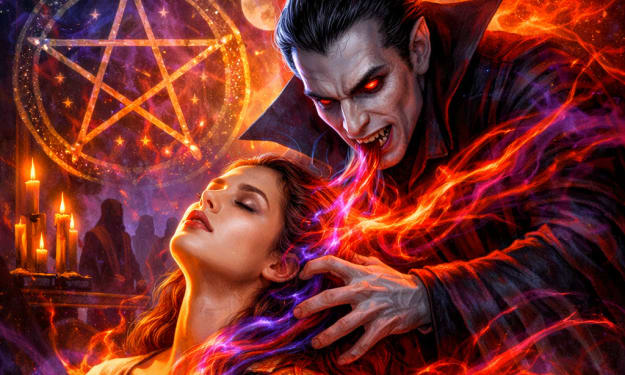
Entering the Realm of Subtle Predation Psychic vampirism holds a curious position in occult tradition and metaphysical research. Ancient stories, ethnographic accounts, and ceremonial writings describe encounters with forces that weaken vitality without a single physical mark. Popular culture often portrays this idea as melodramatic superstition, yet older teachings reveal a phenomenon rooted in subtle energy theories, ritual experience, and long standing observation of human behavior.
By Marcus Hedareabout a month ago in BookClub
Solitary Witchcraft. Content Warning.
Foundations of the Solitary Witchcraft Tradition Witchcraft is a spiritual and magical practice shaped by both inherited tradition and direct personal experience. Archaeological, historical, and folkloric records demonstrate that magical practice existed long before formal religious institutions, often carried out by individuals working outside centralized authority. Healers, cunning folk, seers, midwives, and charmers operated within local communities, relying on observational knowledge of nature, seasonal cycles, herbal lore, and spiritual symbolism. These practitioners frequently worked alone or within family lines rather than organized religious groups, establishing a historical precedent for independent magical practice.
By Marcus Hedareabout a month ago in BookClub