Muhammad Hassan
Bio
Muhammad Hassan | Content writer with 2 years of experience crafting engaging articles on world news, current affairs, and trending topics. I simplify complex stories to keep readers informed and connected.
Stories (467)
Filter by community
South Korea Sentences Ex-President to Five Years in First Martial Law Verdict. AI-Generated.
In a historic and unprecedented decision, a South Korean court has sentenced former President Chun Doo-hwan to five years in prison for his role in imposing martial law during the 1980s. This verdict marks the first time in South Korea’s modern history that a former leader has been held criminally accountable for actions taken under martial law, a period that left deep scars on the nation’s political and social fabric. The case revisits a dark chapter in South Korea’s journey toward democracy, highlighting issues of civil liberties, accountability, and the rule of law. For many South Koreans, the ruling represents both justice and a reminder of the challenges the country faced in transitioning from authoritarian rule to a democratic society. Background: Martial Law in South Korea Martial law in South Korea was imposed in October 1979, following the assassination of President Park Chung-hee. Chun Doo-hwan, a military general who later became president, played a central role in enforcing martial law. Under this regime, civil liberties were severely restricted, protests were violently suppressed, and political opponents were detained or exiled. The most notorious event associated with Chun’s rule was the Gwangju Uprising of 1980, during which pro-democracy demonstrators in the city of Gwangju were brutally suppressed by the military. Estimates suggest that hundreds of civilians were killed, with many more injured or imprisoned. For decades, survivors and activists have sought accountability, framing the trial as a litmus test for South Korea’s commitment to justice and democratic values. The Court’s Verdict The Seoul Central District Court found Chun Doo-hwan guilty of multiple charges, including: Abuse of power by imposing martial law beyond constitutional authority Violent suppression of civilian protests, particularly during the Gwangju Uprising Obstruction of justice and illegal detentions The court sentenced Chun to five years in prison, a decision that comes decades after his presidency but is widely seen as symbolically significant. The ruling underscores that even high-ranking leaders are subject to the rule of law and cannot evade responsibility for past abuses. Historical Significance This verdict is monumental for several reasons: First Martial Law Conviction: No former South Korean leader had previously been held criminally liable for imposing martial law, making this a groundbreaking legal precedent. Justice for Victims: For survivors and families of those affected by the Gwangju Uprising, the sentence represents long-overdue acknowledgment and validation of their suffering. Democratic Maturation: The decision reflects South Korea’s continued evolution as a democracy, where even former authoritarian leaders are accountable to the law. Legal experts note that while the sentence may be considered light relative to the gravity of the offenses, the symbolic weight of the verdict cannot be overstated. Reactions in South Korea Public response to the ruling has been mixed but largely positive among civil society and pro-democracy groups: Activists and survivors celebrated the decision, calling it a milestone in the fight against impunity. Conservative supporters of Chun criticized the ruling as politically motivated, arguing that the ex-president’s actions were justified during a period of national instability. Legal scholars emphasize that the case reinforces the principle that leaders cannot place themselves above the law, setting an important precedent for future generations. Many observers see this verdict as a national reckoning with the past, essential for consolidating democratic norms and healing historical wounds. The Gwangju Uprising Revisited The Gwangju Uprising remains one of the most defining moments of South Korea’s modern history. In May 1980, citizens of Gwangju protested against martial law, demanding democratic reforms. The government responded with military force, resulting in mass casualties and human rights violations. For decades, survivors of the uprising have fought to uncover the truth, identify perpetrators, and secure justice. The court’s verdict against Chun Doo-hwan is seen as a long-awaited acknowledgment of the state’s responsibility in the tragedy. Broader Implications for Accountability The sentencing of a former president for martial law abuses has broader implications: It reinforces the rule of law in democratic societies, demonstrating that historical crimes cannot be ignored. It serves as a deterrent to future authoritarian actions, reminding leaders that abuses of power carry legal consequences. It encourages nations worldwide to confront past human rights violations, particularly in contexts transitioning from authoritarianism to democracy. South Korea’s judicial system has been under scrutiny for decades, and this verdict signals that the courts are increasingly willing to challenge entrenched political power. Challenges Ahead While the ruling is historic, challenges remain: Implementation of justice: Some argue that a five-year sentence may be insufficient to fully address the gravity of human rights abuses. Political polarization: South Korea continues to grapple with divisions between conservative and progressive factions, which may influence public perception of the verdict. Historical reconciliation: Beyond legal accountability, there is a need for national dialogue, memorialization, and educational initiatives to ensure future generations understand the consequences of martial law. Experts stress that legal justice is only one part of the reconciliation process; societal acknowledgment and cultural remembrance are equally critical. Looking Forward The sentencing of Chun Doo-hwan represents a turning point in South Korea’s ongoing effort to confront its authoritarian past. By holding a former leader accountable, the country demonstrates a commitment to transparency, justice, and democratic integrity. For historians, activists, and citizens alike, the case highlights the importance of never forgetting history, learning from past abuses, and reinforcing democratic institutions to prevent their recurrence. South Korea’s experience offers lessons to other nations transitioning from authoritarian rule: accountability, transparency, and historical reckoning are vital for sustainable democracy. Final Thoughts The court’s five-year sentence for South Korea’s ex-president is more than a legal judgment; it is a symbolic affirmation of justice, democracy, and accountability. Decades after martial law was imposed, the verdict acknowledges the suffering of countless citizens, sets a precedent for holding leaders accountable, and strengthens the nation’s democratic foundations. As South Korea continues to grapple with its history, this verdict reminds the world that no one is above the law — not even a former president, and that confronting past abuses is essential for building a just and resilient society.
By Muhammad Hassanabout a month ago in The Swamp
US Lawmakers Arrive in Copenhagen to Counter Trump’s Greenland Threats. AI-Generated.
In a high-stakes diplomatic maneuver, a delegation of U.S. lawmakers recently arrived in Copenhagen to discuss Greenland’s future, aiming to counteract the aggressive rhetoric and territorial ambitions expressed by former President Donald Trump. The visit comes amid rising concerns over Greenland’s strategic importance in the Arctic and the implications of any unilateral moves by the United States. For Denmark, Greenland’s autonomous territory, the presence of U.S. lawmakers underscores both Washington’s interest in Arctic security and the need to maintain strong transatlantic ties. For the United States, the visit signals a delicate recalibration of policy following Trump’s controversial proposals regarding Greenland, including his infamous attempt to buy the island outright during his presidency. Why Greenland Matters Geopolitically Greenland is more than a frozen expanse of ice; it is a geopolitical prize. Strategically located between North America and Europe, Greenland is key to: Arctic shipping routes that are becoming increasingly navigable due to melting ice Natural resources, including rare earth minerals, oil, and gas reserves Military and surveillance installations, notably the Thule Air Base, which is critical to U.S. missile warning systems and space surveillance The Arctic region is warming faster than any other part of the planet, making Greenland both a resource hub and a potential flashpoint for international competition. Trump’s proposals had alarmed Denmark and other NATO allies, raising questions about the United States’ long-term commitment to respecting international norms and allied sovereignty. The Lawmakers’ Mission The delegation, composed of senators and representatives from both political parties, is tasked with: Reassuring Denmark that the U.S. government respects Greenland’s autonomy Discussing security cooperation, particularly regarding Arctic defense and NATO commitments Exploring economic partnerships that benefit Greenland while maintaining regional stability Officials emphasize that this visit is not about reversing Trump’s statements retroactively, but about ensuring that future U.S. policy reflects diplomatic consensus rather than unilateral ambition. Denmark’s Response Denmark has maintained a firm stance on Greenland’s sovereignty, consistently stating that the island is not for sale. Danish leaders have welcomed the U.S. delegation as a positive step toward strengthening trust and clarifying intentions. Copenhagen also hopes to use the opportunity to reinforce cooperative approaches to Arctic security, particularly in light of growing Russian and Chinese interest in the region. For Denmark, maintaining strong relations with the United States — while safeguarding Greenland’s autonomy — is a balancing act that requires careful diplomacy. Greenland’s Perspective Greenlanders themselves are increasingly vocal in the debate over their future. Many support greater economic independence and political autonomy, and local leaders insist that Greenlanders should have the final say over any decisions affecting their land and resources. The U.S. delegation’s visit highlights the need to consult Greenlandic authorities directly, rather than negotiating solely with Denmark. This approach is seen as a step toward more inclusive, respectful diplomacy, which acknowledges Greenland’s status as more than just a strategic asset. The Role of NATO and Transatlantic Relations Trump’s proposals regarding Greenland strained transatlantic relations, raising concerns among NATO members about the reliability of U.S. commitments. The arrival of bipartisan lawmakers in Copenhagen aims to reaffirm NATO solidarity and demonstrate that U.S. policy is consistent with alliance obligations. By engaging Denmark directly, Congress seeks to prevent miscommunication and maintain stability in a region that is increasingly vital for global security. Analysts note that Greenland’s location provides the United States with a critical vantage point for Arctic monitoring and missile defense, making cooperative relations essential. Global Implications The Greenland issue has broader consequences for international geopolitics and Arctic governance. Key points include: Resource security: Greenland’s rare earth minerals are essential for electronics, renewable energy, and defense technologies, making control and access highly strategic. Climate change and navigation: Melting ice is opening new shipping lanes, which could shift global trade patterns and increase competition for influence. Power dynamics in the Arctic: Russia and China have also shown growing interest in the Arctic, prompting the United States and Europe to strengthen alliances and prevent unilateral exploitation. The lawmakers’ visit signals to the international community that the U.S. is committed to diplomatic solutions rather than transactional or coercive strategies. Challenges Ahead Despite the visit’s diplomatic intent, challenges remain: Political polarization in the U.S.: Future administrations may have different approaches to Greenland, raising uncertainty about long-term commitments. Geopolitical competition: Russia and China continue to advance their presence in the Arctic, complicating cooperative efforts. Local autonomy: Greenlandic voices must be prioritized, or any policy may face resistance at the local level. Successfully navigating these challenges will require transparent dialogue, careful planning, and sustained international cooperation. The Path Forward The visit of U.S. lawmakers to Copenhagen is a cautionary and corrective measure. It signals that while Greenland is strategically important, it is not a bargaining chip. Future cooperation will likely focus on: Strengthening Arctic security frameworks Promoting economic development for Greenlanders Maintaining stability in U.S.-European relations Ensuring that Greenlandic voices remain central to decision-making This proactive approach reflects a broader understanding that diplomacy, not unilateral action, is essential in regions of high strategic value. Final Thoughts Greenland has moved from the margins of global attention to the forefront of geopolitical strategy and climate concern. The arrival of U.S. lawmakers in Copenhagen underscores the importance of measured, inclusive diplomacy in the Arctic, contrasting sharply with the impulsive rhetoric that characterized Trump’s Greenland proposals. As nations navigate the Arctic’s emerging opportunities and challenges, Greenland’s sovereignty and the voices of its people will remain central to regional stability, global security, and international cooperation. The lawmakers’ visit represents a step toward rebuilding trust, reinforcing alliances, and charting a sustainable path forward for one of the planet’s most strategically vital territories.
By Muhammad Hassanabout a month ago in Earth
Landscape Beneath Antarctica's Icy Surface Revealed in Unprecedented Detail
For decades, Antarctica has been the Earth’s ultimate mystery — a vast expanse of ice covering almost 14 million square kilometers, hiding secrets beneath its frozen surface. Now, thanks to advanced radar technology and satellite mapping, scientists have produced the most detailed map yet of the continent’s hidden landscape, revealing mountains, valleys, subglacial lakes, and river systems that were previously invisible. This discovery is more than just a scientific curiosity. Understanding Antarctica’s topography beneath the ice is critical for predicting ice sheet stability, global sea-level rise, and climate change impacts. The new data could also shed light on Earth’s geological history and the ways in which life may survive in extreme environments. How Scientists Mapped the Hidden Terrain For years, researchers have relied on a combination of methods to peek beneath the ice: Ice-penetrating radar: Devices mounted on aircraft or satellites send radio waves through ice layers, which bounce back when they hit bedrock, revealing contours beneath kilometers of frozen water. Satellite gravimetry: Small variations in Earth’s gravitational field help infer the presence of mountains, valleys, and subglacial lakes. Seismic surveys: Explosions or controlled vibrations allow scientists to detect underground structures by measuring the way seismic waves travel through different materials. Using these techniques, a consortium of international researchers created a high-resolution map of Antarctica’s sub-ice topography, revealing features that rival the landscapes of continents that have been visible for millions of years. What’s Beneath the Ice? The map reveals a striking variety of features: Mountain ranges: Peaks rise more than 4,000 meters above the surrounding terrain, hidden beneath miles of ice. Some of these ranges may be older than the Rockies or the Alps. Deep valleys: Vast troughs and gorges, carved by ancient rivers or tectonic activity, provide clues about how the continent evolved over millions of years. Subglacial lakes: Scientists have identified hundreds of liquid water lakes trapped beneath the ice, including the famous Lake Vostok. These lakes remain liquid due to pressure and geothermal heat and may host microbial life isolated for millions of years. Subglacial river networks: Surprisingly, water flows beneath the ice in channels and rivers, slowly carving pathways that affect ice sheet movement. This intricate landscape challenges the perception of Antarctica as a flat, featureless ice sheet. Instead, it is a dynamic and complex environment, where hidden topography influences everything from ice flow to global sea levels. Why This Discovery Matters The importance of understanding what lies beneath Antarctica’s ice cannot be overstated: Predicting Ice Sheet Stability: Ice sheets move more quickly over smooth surfaces than over rugged terrain. Knowing where mountains and valleys lie helps scientists predict which areas of ice may collapse first, potentially raising sea levels faster than anticipated. Climate Change Models: Subglacial lakes and water channels lubricate the ice from below, influencing melting rates. Incorporating these features into models improves accuracy in forecasting future sea-level rise. Earth’s Geological History: The newly revealed landscape offers a window into Antarctica’s past — from tectonic shifts to ancient rivers and climates. This data helps reconstruct how continents drifted and climates evolved over millions of years. Search for Extreme Life: Subglacial lakes may harbor microbial life isolated for millions of years, providing insights into life in extreme environments, potentially even on other planets. Global Implications Antarctica may feel distant, but its ice sheets hold the key to global sea-level stability. Even small changes beneath the ice can have profound consequences for coastal cities around the world. With melting accelerated by climate change, understanding the terrain under the ice is crucial for planning and mitigation. Governments, scientists, and environmental organizations are now using this information to: Improve climate models for sea-level rise predictions Identify vulnerable regions of the ice sheet Guide future research missions to subglacial lakes and mountains The discovery also strengthens the case for continued international collaboration in Antarctica, where research and environmental protection are governed by treaties emphasizing peaceful scientific study. Challenges Ahead Mapping Antarctica is far from complete. Extreme weather, thick ice sheets, and logistical difficulties make the continent one of the hardest places to study. While radar and satellite technologies have advanced, field validation and deeper exploration remain difficult and expensive. Researchers also face ethical and environmental concerns. Drilling into subglacial lakes to sample microbial life, for instance, must be done carefully to avoid contamination. Antarctica’s fragile ecosystem demands that scientific progress balances discovery with protection. Looking to the Future The detailed map of Antarctica’s hidden landscape opens new possibilities for exploration and understanding: Ice Flow Predictions: With accurate topography, scientists can model how ice sheets will respond to warming climates more precisely. Resource Insights: While exploitation is restricted by international agreements, understanding subglacial mineral deposits can inform potential future uses. Extreme Environment Biology: Studying subglacial lakes could reveal new species adapted to cold, dark, and high-pressure environments, broadening our understanding of life on Earth. The data also strengthens international scientific cooperation, as multiple countries share findings and resources to better understand a continent that belongs to no single nation. Final Thoughts Antarctica’s ice may appear static and endless, but beneath it lies a vibrant and rugged landscape filled with mountains, valleys, lakes, and rivers. The new detailed mapping of this hidden world is a landmark achievement in Earth science, combining advanced technology, international collaboration, and the human drive to explore. By uncovering what lies beneath the ice, scientists are not just satisfying curiosity — they are equipping humanity with the knowledge to protect our planet, anticipate climate challenges, and understand the deep history of Earth itself. Antarctica’s secrets, once locked beneath kilometers of ice, are finally being revealed, and what we learn could reshape our understanding of the planet and our place within it.
By Muhammad Hassanabout a month ago in Earth
How Realistic Is India’s Quest for Magnets Made of Rare Earths. AI-Generated.
India has set its sights on a bold industrial goal: developing its own supply of rare earth magnets — the essential components in electric vehicles, wind turbines, electronics, and defense systems. These magnets rely on materials like neodymium, praseodymium, dysprosium, and terbium, collectively known as rare earth elements (REEs). The ambition is strategically significant. Currently, India imports nearly all rare earth-based products, leaving it dependent on global suppliers, especially China, which dominates the market. By producing rare earth magnets domestically, India could strengthen its technological independence and play a key role in the global green-energy revolution. But how realistic is this quest? Can India realistically meet its own demand, and what challenges lie ahead? Why Rare Earth Magnets Matter Rare earth magnets are critical to modern technology because of their unmatched magnetic strength and stability. Applications include: Electric vehicles (EVs): Motors in EVs rely heavily on strong magnets for efficiency and compact design. Wind turbines: Generators in renewable energy rely on rare earth magnets for power generation. Electronics: Smartphones, hard drives, and medical devices all use these magnets. Defense technology: Precision-guided weapons, radar, and aerospace systems depend on rare earth-based magnets. Global demand for rare earth magnets is expected to grow exponentially over the next decade, driven by the clean energy transition and digital technology expansion. India’s reliance on imports not only risks supply disruptions but also limits its participation in high-value technology production. India’s Current Rare Earth Landscape India possesses significant rare earth reserves, primarily in the states of Andhra Pradesh, Odisha, and Tamil Nadu. However, these resources have historically been underdeveloped. Challenges include: Low-grade ores requiring advanced processing Environmental regulations around mining and extraction Lack of domestic refining and metallurgical capacity Currently, India imports most of its processed rare earth metals, especially neodymium and dysprosium, from China. Without robust domestic processing, mining alone cannot meet the country’s technological needs. Industrial and Technical Challenges Producing rare earth magnets involves three complex stages: Mining and Concentration: Extracting rare earth ores from mines and concentrating them to usable levels. Separation and Refining: Isolating individual rare earth elements from ores — a chemical-intensive process requiring advanced technology. Magnet Manufacturing: Combining elements into alloys, sintering, and shaping magnets while maintaining magnetic performance. India currently has some expertise in mining but lacks large-scale separation and refining infrastructure, which is critical. Setting up these facilities is capital-intensive and environmentally sensitive, making it a major hurdle for domestic production. Environmental and Regulatory Hurdles Rare earth extraction and processing is environmentally challenging. The process generates toxic chemicals and radioactive waste, which require strict management. India’s regulatory framework, while strengthening, is still evolving in terms of sustainable mining, waste management, and pollution control. Balancing economic ambitions with environmental responsibility will be a delicate task. Public opposition or regulatory delays could slow projects, making large-scale magnet production a long-term goal rather than an immediate reality. Global Supply Chain Realities Even if India develops domestic capacity, it will operate in a highly competitive global market dominated by China, which controls roughly 80% of rare earth refining. Other players, like the U.S., Australia, and Japan, have invested heavily in supply chain security and technology partnerships. India will need: Partnerships for advanced processing technology Investment in research and development for efficient magnet production Integration into global supply chains for exports and imports of complementary materials Without these steps, India risks producing magnets that are either technically inferior or too expensive to compete globally. Policy and Strategic Moves India has already taken steps to boost its rare earth ambitions: National Rare Earth Mission: A government initiative to explore domestic mining and downstream applications. Public-Private Partnerships: Collaborations between Indian companies and foreign technology providers to build processing and manufacturing capabilities. Defense and EV Incentives: Policies aimed at encouraging domestic production for strategic and economic independence. These measures show serious intent, but translating policy into large-scale production will take years and sustained investment. Potential Benefits for India If India succeeds, the benefits could be transformative: Reduced import dependency: Strengthening supply chain security for key industries. Economic growth: Developing a high-value manufacturing ecosystem around magnets and electronics. Technological sovereignty: Supporting electric vehicles, renewable energy, and defense technologies. Global influence: Becoming a supplier of magnets and rare earth products could give India leverage in international trade negotiations. The Realistic Timeline Experts suggest that building a fully integrated domestic rare earth magnet industry could take 5–10 years. Initial efforts will likely focus on pilot projects, strategic partnerships, and incremental capacity building rather than immediate self-sufficiency. India’s ambition is feasible, but expectations must be tempered: technological complexity, environmental concerns, and global competition mean the path will be long and challenging. Final Thoughts India’s quest for rare earth magnets is ambitious and strategically important, aligning with its goals for energy transition, industrial growth, and technological sovereignty. While the country has reserves and political will, practical challenges in mining, refining, environmental management, and global competition make large-scale production a complex endeavor. Success will require coordinated government policy, private investment, and international collaboration. If achieved, India could move from being a passive importer to an influential player in the global market for critical technologies. Ultimately, India’s rare earth magnet ambitions are realistic but long-term, demanding patience, innovation, and careful execution.
By Muhammad Hassanabout a month ago in The Swamp
Trump Puts Silver, Other Critical Minerals Tariffs on Hold. AI-Generated.
In a move that surprised markets and industry insiders alike, former U.S. President Donald Trump announced a temporary hold on tariffs targeting silver and other critical minerals imported into the United States. These minerals — essential for everything from electronics to renewable energy and defense systems — have become increasingly central to debates over national security, economic competitiveness, and supply chain resilience. The decision to pause the tariffs underscores the complex balancing act between protecting domestic industry, maintaining global trade relationships, and ensuring access to critical resources. Why Critical Minerals Matter Critical minerals such as silver, lithium, cobalt, rare earth elements, and graphite are the backbone of modern technology. They are essential for: Electric vehicle batteries Renewable energy infrastructure Electronics and semiconductors Defense and aerospace applications Historically, the U.S. has relied heavily on imports for these materials, leaving it vulnerable to global supply shocks. This dependence has made trade policy a powerful tool — and a potential source of tension — in securing the raw materials needed for economic and technological growth. The Tariff Announcement and Its Pause Earlier in the year, Trump’s administration had proposed tariffs on imports of silver and other critical minerals, aiming to incentivize domestic mining and processing while limiting reliance on foreign suppliers. The announcement was met with mixed reactions: Industry groups warned that tariffs could disrupt supply chains, increase costs for manufacturers, and slow growth in key sectors. National security advocates argued that tariffs could encourage domestic production and reduce strategic dependence on countries like China. Now, with the tariffs on hold, the U.S. signals a more cautious approach, suggesting that the economic consequences of immediate implementation may outweigh potential benefits. Impact on Domestic Industry For U.S. manufacturers and technology firms, the pause is welcome news. Tariffs on critical minerals could have significantly increased costs, particularly for sectors like electric vehicles, electronics, and renewable energy. Companies relying on imported silver, for example, would have faced higher material prices, which could have been passed along to consumers. By holding off on the tariffs, the government provides breathing room for industry while exploring domestic production incentives. At the same time, domestic mining companies that had hoped for tariff protection are likely to be disappointed. Analysts suggest that the pause may slow efforts to scale up U.S. extraction and processing of critical minerals, highlighting the difficult trade-off between immediate market stability and long-term strategic goals. Global Implications Internationally, the pause is likely to ease tensions with key trading partners. Countries that export critical minerals to the U.S., including Mexico, Canada, and several African and South American nations, had warned that tariffs could trigger retaliatory measures. By holding the tariffs, the U.S. avoids immediate trade friction, signaling a willingness to coordinate on supply chain issues rather than escalate disputes. This may also benefit U.S. exporters, who rely on stable relations to sell goods abroad. However, the move does not remove the underlying strategic concerns. Many critical minerals remain concentrated in a few countries, particularly China, which dominates the processing of rare earth elements. The U.S. continues to seek ways to diversify sources and reduce vulnerability, even without tariffs. Economic Considerations Tariffs are a blunt instrument. While they can incentivize domestic production, they also raise costs for downstream industries. For example, silver is crucial for solar panels and electronic components. A sudden increase in costs could have slowed the growth of clean energy projects, contradicting broader economic and environmental goals. By pausing the tariffs, the U.S. buys time to explore alternative strategies, such as: Investment in domestic mining and refining capacity Partnerships with allied countries for critical minerals supply Incentives for recycling and reuse of rare materials This approach attempts to balance economic growth, technological leadership, and national security without triggering immediate market disruptions. National Security Angle Beyond economics, critical minerals are a national security issue. These resources are essential for advanced defense systems, from missile guidance technology to fighter jets. Dependence on a limited number of foreign suppliers exposes the U.S. to risk in a geopolitical crisis. The tariff pause does not remove these security concerns but suggests a shift toward more strategic, less confrontational measures. By working on supply chain resilience, the U.S. can pursue national security goals without hurting domestic manufacturers or escalating trade tensions. Industry and Analyst Reactions Reactions to the announcement have been mixed: Industry groups are largely relieved, noting that a tariff would have increased costs and created uncertainty for manufacturers and investors. Environmental advocates see potential for growth in domestic mineral production but caution that mining must be responsible and sustainable. Trade analysts note that the pause may indicate a reassessment of U.S. leverage in global mineral markets, particularly given competition from China and other major producers. Many see this as a temporary measure rather than a permanent policy change, leaving open the possibility of future action if supply chain vulnerabilities worsen. What Comes Next The U.S. government faces a complex puzzle: Secure domestic production of critical minerals without destabilizing industry Maintain healthy trade relationships with key partners Ensure national security through reliable supply chains Support technological and green energy growth The pause on tariffs suggests that policymakers are taking a measured approach, prioritizing economic stability while continuing to explore long-term strategic initiatives. Analysts expect ongoing consultations with industry and allied nations to shape the next phase of U.S. critical minerals policy. Final Thoughts Trump’s decision to put tariffs on silver and other critical minerals on hold highlights the delicate balance between economic policy, trade strategy, and national security. While tariffs could incentivize domestic production, the potential costs to industry and global trade relationships made an immediate implementation risky. For now, the pause offers breathing room for businesses, investors, and policymakers alike. The debate over how best to secure critical minerals — and the role of tariffs in achieving that goal — is far from over. As the U.S. continues to navigate global competition for essential resources, markets, manufacturers, and governments will be watching closely to see how policy evolves and how America balances domestic growth with strategic imperatives.
By Muhammad Hassanabout a month ago in The Swamp
Asia Shares Rise on AI Optimism as Receding Fed Rate-Cut Bets Lift the Dollar. AI-Generated.
Asian stock markets moved higher as optimism around artificial intelligence (AI) continued to energize investors, helping offset concerns about global monetary tightening. At the same time, the U.S. dollar strengthened after expectations for aggressive interest-rate cuts by the Federal Reserve began to fade, reshaping global currency and equity dynamics. The contrasting forces — enthusiasm for technological growth versus tighter financial conditions — highlight how markets are navigating a complex and rapidly evolving economic landscape. AI Optimism Drives Asian Equity Gains Across major Asian markets, investor sentiment received a boost from renewed confidence in artificial intelligence and related technologies. Shares of technology firms, chipmakers, and data infrastructure companies led gains, reflecting expectations that AI-driven growth could remain resilient even as borrowing costs stay higher for longer. In Japan, technology-heavy stocks benefited from global demand for advanced semiconductors and AI-related hardware. South Korea’s market also saw gains, particularly among companies linked to memory chips and electronics manufacturing, sectors viewed as critical to the expansion of AI systems worldwide. China’s markets showed more cautious optimism. While economic recovery remains uneven, AI-focused companies and firms tied to digital innovation helped support broader indices, signaling that investors are selectively betting on future growth areas rather than the overall economy. Why Artificial Intelligence Is Lifting Markets AI has emerged as one of the strongest narratives driving global markets over the past year. Investors see artificial intelligence not just as a technological breakthrough, but as a structural shift capable of boosting productivity, corporate profits, and long-term economic growth. From cloud computing and data centers to robotics and automation, AI’s reach spans multiple industries. For Asia — home to major semiconductor producers, electronics manufacturers, and software developers — the potential upside is particularly significant. Market participants believe that AI investment could help cushion the impact of slower growth elsewhere, providing a rare source of optimism at a time when many economies face inflationary pressures and tighter financial conditions. The Dollar Strengthens as Fed Rate-Cut Bets Fade While equities climbed, currency markets told a different story. The U.S. dollar strengthened against most major currencies after investors reassessed expectations for Federal Reserve interest-rate cuts. Recent economic data from the United States suggested that inflation remains sticky and the labor market resilient, reducing the urgency for the Fed to ease policy aggressively. As expectations for early and deep rate cuts receded, U.S. Treasury yields edged higher, making dollar-denominated assets more attractive to global investors. This shift lifted the dollar and put pressure on Asian currencies, including the yen and the yuan. For global markets, a stronger dollar often creates mixed effects — supporting capital inflows into the U.S. while tightening financial conditions elsewhere. How Dollar Strength Impacts Asian Markets A rising dollar presents both challenges and opportunities for Asia. On the negative side, a stronger dollar can: Increase the cost of dollar-denominated debt Put pressure on local currencies Make imports more expensive For emerging markets, this can tighten liquidity and reduce risk appetite. However, export-oriented economies may benefit. A weaker local currency can make Asian exports more competitive in global markets, supporting corporate earnings in manufacturing and technology sectors. This dynamic helps explain why Asian shares were able to rise even as the dollar strengthened — particularly in economies with strong export bases. Investors Balance Growth and Policy Risks The current market environment reflects a delicate balancing act. On one hand, AI optimism is encouraging investors to take on risk, especially in sectors linked to innovation and future growth. On the other, higher-for-longer interest rates in the U.S. are forcing markets to remain cautious. Investors are increasingly selective, favoring companies with strong balance sheets, clear growth strategies, and exposure to structural trends like AI. Speculative assets, meanwhile, face greater scrutiny in a world where cheap money is no longer guaranteed. This selective optimism suggests that markets are not ignoring risks — they are simply prioritizing opportunity where they see long-term value. China’s Role in the Market Equation China remains a key variable for Asian markets. While AI-related optimism has lifted certain sectors, concerns persist over China’s property market, consumer confidence, and regulatory environment. Investors are watching closely to see whether policymakers introduce additional stimulus to support growth. For now, China’s technology sector offers pockets of opportunity, particularly in areas aligned with government priorities such as advanced manufacturing and digital infrastructure. However, broader market gains remain constrained by economic uncertainty. What This Means for Global Investors The combination of rising Asian shares and a strengthening dollar sends an important signal: markets are adjusting, not retreating. Rather than pricing in a sharp economic slowdown, investors appear to be preparing for a world where: Interest rates remain elevated Growth is uneven but not collapsing Innovation continues to drive select sectors AI has become a central theme that cuts across regions, helping to unify market sentiment even as monetary policy diverges. Risks Still Lurking Beneath the Surface Despite recent gains, risks remain. Geopolitical tensions, fragile supply chains, and uncertainty around central bank policy could quickly disrupt market momentum. A stronger dollar could also weigh more heavily on emerging markets if financial conditions tighten further. Additionally, some analysts warn that AI enthusiasm could become overheated if expectations outpace actual earnings growth — a reminder of past technology-driven market cycles. For now, however, optimism appears measured rather than euphoric. Final Thoughts Asian shares rising on AI optimism, even as receding Fed rate-cut bets lift the dollar, captures the complexity of today’s global markets. Investors are navigating competing forces — innovation-driven growth on one side and restrictive monetary policy on the other. The result is a market environment defined not by blanket risk-taking or fear, but by selective confidence. As long as AI continues to deliver tangible economic value and global growth avoids a sharp downturn, markets may find room to advance — even in a world where interest rates stay higher for longer.
By Muhammad Hassanabout a month ago in Humans
Los Angeles Billionaire Moves to Nevada After California Threatens to Tax Wealth. AI-Generated.
When a prominent Los Angeles billionaire quietly packed up and moved to Nevada, it wasn’t just a personal lifestyle change — it was a political statement. The move came shortly after California lawmakers revived proposals to tax extreme wealth, targeting the state’s richest residents as a way to fund public services and address inequality. Now, that single relocation has become a symbol in a much larger debate: Do wealth taxes strengthen states — or drive their most valuable taxpayers away? The Trigger: California’s Wealth Tax Proposal California has long wrestled with how to fund its ambitious social programs while addressing widening income inequality. In recent years, progressive lawmakers have floated proposals to introduce a wealth tax, aimed at individuals with net worths above a certain threshold — often tens or hundreds of millions of dollars. Unlike income taxes, which apply to yearly earnings, wealth taxes target accumulated assets such as stocks, real estate, and business holdings. Supporters argue that this approach ensures the ultra-rich contribute a fairer share to public infrastructure, education, and housing. Critics, however, warn that wealth taxes are difficult to enforce and easy to avoid, especially in a mobile economy where residency can shift across state lines. The Los Angeles billionaire’s move appears to validate those concerns. Why Nevada? Nevada has become a magnet for wealthy individuals — and the reasons are straightforward. The state has: No personal income tax No capital gains tax Business-friendly regulations A growing financial and tech services sector For high-net-worth individuals, relocating to Nevada can mean saving millions of dollars annually. For someone facing the possibility of a wealth tax layered on top of California’s already high income taxes, the financial incentive is hard to ignore. In this case, the billionaire reportedly established legal residency in Nevada, purchased property, and shifted business operations — all steps that tax experts say are increasingly common among ultra-wealthy Californians. A Broader Trend, Not an Isolated Case This move is far from unique. Over the past decade, California has seen a steady outflow of wealthy residents to states like Nevada, Texas, Florida, and Arizona. While climate, housing costs, and lifestyle play roles, tax policy has become a central factor. High-profile departures — from tech executives to hedge fund managers — often spark political backlash. Critics argue that the wealthy are abandoning the state that helped them succeed. Defenders counter that states should not penalize success to fund unsustainable spending. The Los Angeles billionaire’s relocation has once again brought this tension into the spotlight. The Political Reaction in California California lawmakers defending the wealth tax proposal insist that fear of capital flight is exaggerated. They argue that the state’s economic advantages — including access to talent, innovation hubs, and cultural influence — outweigh tax concerns for most entrepreneurs. Some lawmakers also point out that California already relies heavily on its highest earners, with a small percentage of taxpayers contributing a large share of total revenue. In their view, asking the ultra-rich to contribute more is not radical — it’s necessary. Opponents, however, see the billionaire’s move as a warning sign. They argue that when even a single wealthy individual leaves, the state can lose not only tax revenue but also investment, philanthropy, and job creation. What This Means for State Finances The departure of one billionaire may not immediately dent California’s massive budget, but the long-term implications are harder to ignore. Wealthy individuals often: Pay a disproportionate share of state taxes Fund startups and venture capital Support universities, museums, and nonprofits If enough high-net-worth residents follow the same path, critics warn, the tax base could shrink faster than lawmakers expect. Supporters of the wealth tax counter that public investment funded by higher taxes could improve quality of life for millions — potentially attracting new residents and businesses in the long run. A National Debate Over Wealth and Mobility This story extends beyond California. Across the U.S., states are competing for residents — especially wealthy ones. Tax policy has become one of the most powerful tools in that competition. While progressive states push for redistribution, low-tax states market themselves as havens for capital. The Los Angeles billionaire’s move underscores a key reality of modern economics: wealth is increasingly mobile. Assets can move digitally, businesses can relocate headquarters, and individuals can change residency with relative ease. This mobility complicates efforts to tax extreme wealth at the state level, fueling calls for federal solutions instead. The Ethical Divide At the heart of the controversy lies a philosophical question: Should wealthy individuals feel a moral obligation to remain and pay higher taxes in the states that enabled their success — or are they justified in seeking the most favorable financial environment? Supporters of wealth taxes argue that extreme inequality threatens social stability and that those who benefit most from the system should help sustain it. Opponents argue that punitive taxation discourages innovation and rewards capital flight, ultimately harming the very communities lawmakers aim to help. The billionaire’s move doesn’t settle the debate — but it sharpens it. What Happens Next? California’s wealth tax proposals are still evolving, and it remains unclear whether a final version will pass. Even if enacted, legal challenges and enforcement hurdles loom large. Meanwhile, states like Nevada are likely to continue benefiting from California’s policy uncertainty, attracting wealthy residents and businesses seeking predictability. For policymakers, the challenge is balancing fairness, revenue needs, and competitiveness in a system where borders are increasingly porous. Final Thoughts The Los Angeles billionaire’s move to Nevada is more than a headline — it’s a case study in how tax policy shapes behavior. It highlights the difficulty of taxing wealth at the state level and the unintended consequences that can follow even well-intentioned reforms. As California debates its economic future, one thing is clear: in a mobile, interconnected economy, policy decisions don’t just redistribute wealth — they redirect it. Whether wealth taxes become a solution or a cautionary tale will depend on how lawmakers respond to the signals already being sent.
By Muhammad Hassanabout a month ago in Humans
Time to Dump Trump? Europeans Whisper Last-Resort Options to Save Greenland. AI-Generated.
In diplomatic circles across Europe, a phrase once unthinkable is now being whispered behind closed doors: What if the alliance can’t hold? As renewed pressure from former U.S. President Donald Trump resurfaces over Greenland, European officials are reportedly discussing last-resort options to safeguard the strategically vital Arctic territory — even if it means distancing themselves from Washington. While public statements remain carefully measured, private conversations suggest a growing anxiety: Greenland has become a geopolitical fault line, testing NATO solidarity, transatlantic trust, and Europe’s ability to defend its own interests. Why Greenland Is Suddenly at the Center of Global Power Politics Greenland is not just the world’s largest island. It is a strategic prize. Located between North America and Europe, Greenland sits at the crossroads of Arctic shipping lanes, missile defense routes, and untapped reserves of rare earth minerals. As climate change melts Arctic ice, access to these routes and resources is expanding — turning the region into a global competition zone. The United States already maintains a military presence in Greenland through Thule Air Base, vital to missile warning and space surveillance. But Trump’s earlier proposal to buy Greenland outright shocked European capitals and Denmark alike, reframing the island not as a partner but as a commodity. Now, with Trump once again influencing U.S. foreign policy discourse, European leaders fear that economic pressure, security leverage, or political coercion could return. Denmark’s Dilemma and Europe’s Unease Greenland is an autonomous territory within the Kingdom of Denmark, and Copenhagen has repeatedly stated that it is not for sale. Yet Denmark alone lacks the political and military weight to counter sustained pressure from Washington. That’s where Europe enters the picture. Behind the scenes, diplomats from Germany, France, and Nordic countries are reportedly discussing how to shield Denmark and Greenland from unilateral U.S. moves. These discussions are not about confrontation — at least not yet — but about contingency planning. The uncomfortable truth is this: Europe has long relied on the U.S. for Arctic security, and challenging Washington risks exposing Europe’s own strategic weaknesses. What Are the “Last-Resort Options”? European officials are careful not to spell out these ideas publicly, but analysts point to several possibilities under quiet consideration. 1. Deepening EU Involvement in Greenland One option is stronger European Union engagement with Greenland — economically, politically, and diplomatically. This could include increased investment in infrastructure, climate research, and sustainable mining projects to reduce Greenland’s reliance on external powers. By anchoring Greenland more firmly within Europe’s economic orbit, the EU could make any U.S. attempt at leverage far more complicated. 2. Expanded European Security Presence Another option involves enhancing European defense cooperation in the Arctic, potentially through joint patrols, surveillance missions, or NATO-aligned European initiatives that do not rely solely on U.S. leadership. This would be a delicate move, as NATO cohesion depends heavily on U.S. participation. Still, some European officials believe greater autonomy is overdue. 3. Legal and Diplomatic Shields Europe could also pursue stronger legal frameworks affirming Greenland’s right to self-determination and Denmark’s sovereignty. While largely symbolic, such measures would raise the diplomatic cost of any aggressive maneuver. In extreme scenarios, coordinated diplomatic resistance — even sanctions or formal rebukes — could be considered, though most officials view this as a true last resort. Why Trump Changes the Equation European leaders are accustomed to managing disagreements with Washington. What makes Trump different is unpredictability. During his presidency, Trump repeatedly questioned NATO commitments, framed alliances as transactional, and blurred the line between negotiation and coercion. His interest in Greenland was not just strategic — it was personal, public, and disruptive. The fear in Europe is not necessarily that Trump would “take” Greenland, but that he might use U.S. security guarantees as leverage, forcing concessions through pressure rather than partnership. For European capitals already dealing with Ukraine, energy insecurity, and domestic political shifts, another transatlantic crisis is the last thing they want. Greenland’s Own Voice Amid the power politics, Greenlanders themselves are increasingly vocal. Many in Greenland support greater autonomy or eventual independence — but not annexation. Local leaders have emphasized that Greenland’s future must be decided by its people, not foreign governments. European officials privately acknowledge that ignoring Greenlandic voices would undermine their moral position. Any European strategy, they argue, must prioritize economic development, environmental protection, and self-governance, not just strategic defense. A Test for Transatlantic Relations At its core, the Greenland issue is about more than territory. It raises uncomfortable questions: Can Europe protect its interests without U.S. backing? Is NATO flexible enough to survive internal disagreements? What happens when allies no longer trust each other’s intentions? For now, European leaders are trying to avoid open confrontation, hoping that diplomacy and quiet deterrence will keep tensions from escalating. But the whispers themselves are revealing. They suggest that Europe is, for the first time in decades, seriously contemplating a future where American leadership is not guaranteed. Why This Moment Matters The Arctic is warming faster than any other region on Earth — physically and politically. What happens in Greenland could set a precedent for how global powers compete in newly accessible regions. If Europe fails to act, it risks appearing passive and divided. If it acts too forcefully, it risks fracturing the transatlantic alliance that has underpinned its security since World War II. It is a narrow path — and one that demands strategic clarity Europe has often postponed. Final Thoughts “Time to dump Trump?” may sound dramatic, but it captures a deeper unease spreading across European capitals. Greenland has become a symbol of a shifting world — one where alliances are tested, assumptions are challenged, and old guarantees no longer feel automatic. Europe is not eager for a break with Washington. But the quiet conversations suggest a realization that preparation is not betrayal. Whether these whispered last-resort options remain theoretical — or become policy — will depend on how the next phase of U.S. politics unfolds. For Greenland, Europe, and the Arctic, the stakes could not be higher.
By Muhammad Hassanabout a month ago in The Swamp
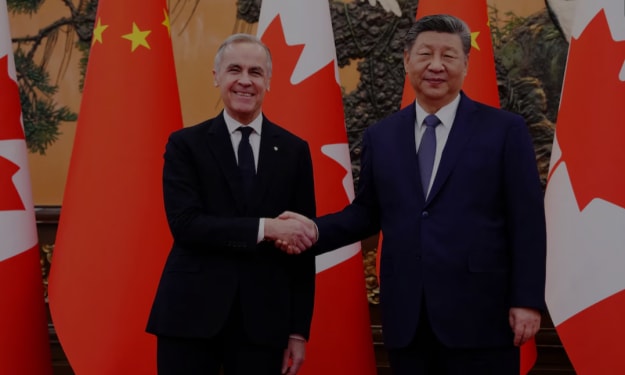
Canada and China Reach Initial Trade Deal on Electric Vehicles and Canola. AI-Generated.
After years of strained relations and trade uncertainty, Canada and China have reached an initial trade agreement focused on two strategically important sectors: electric vehicles (EVs) and canola. While limited in scope, the deal marks a notable step toward stabilizing economic ties between the two countries at a time when global trade is increasingly shaped by geopolitics, supply-chain risks, and climate goals. Officials on both sides have described the agreement as preliminary rather than comprehensive, but its symbolism carries weight. For Canada’s farmers and clean-technology sector — and for China’s rapidly expanding EV market — the deal offers cautious optimism. Why This Deal Matters Now Relations between Canada and China have been tense for much of the past decade, affected by diplomatic disputes, trade restrictions, and growing mistrust between Western nations and Beijing. Agriculture and technology, in particular, have often been caught in the crossfire. Canola has long been a flashpoint. Canada is one of the world’s largest producers and exporters of the crop, while China is one of its most important markets. Past trade disruptions severely affected Canadian farmers, forcing Ottawa to seek alternative buyers. At the same time, electric vehicles have emerged as a new frontier of economic competition. China dominates global EV manufacturing, while Canada is positioning itself as a critical supplier of batteries, minerals, and clean-energy manufacturing. This deal reflects a shared recognition: economic realities are pushing both sides toward cooperation, even amid political differences. What the Agreement Covers While full details have not yet been released, officials confirm that the agreement addresses two key areas: 1. Canola Market Access China has signaled a willingness to ease restrictions on Canadian canola exports, addressing long-standing concerns from Canadian farmers and exporters. Improved access could help stabilize prices and restore confidence in one of Canada’s most valuable agricultural sectors. For producers in provinces like Saskatchewan and Alberta, this represents a potential economic lifeline after years of uncertainty. 2. Electric Vehicles and Clean Technology The deal also opens the door to cooperation in the EV sector. This includes trade discussions around electric vehicles, batteries, and related clean-energy components. Canada has been investing heavily in EV supply chains — from lithium and nickel mining to battery manufacturing — while China remains the world’s largest EV market and producer. The agreement suggests opportunities for investment, technology exchange, and supply-chain collaboration, though significant barriers remain. A Strategic Shift Toward Economic Pragmatism Rather than signaling a full reset in relations, the deal reflects a pragmatic shift. Canadian officials have emphasized that engagement does not mean abandoning concerns over human rights, national security, or foreign interference. Instead, the approach suggests that selective economic cooperation can coexist with political caution. China, meanwhile, benefits from reliable agricultural imports and diversified supply chains at a time when trade relations with the United States and parts of Europe remain strained. In short, both sides appear motivated by mutual economic interest rather than political alignment. Implications for Canadian Farmers For Canada’s agricultural sector, the canola portion of the deal is especially significant. China has historically been one of the largest buyers of Canadian canola, and past restrictions led to financial losses and market instability. Re-entry into the Chinese market could: Increase export volumes Improve farm incomes Reduce dependence on alternative, less predictable markets However, farm groups remain cautious. Many remember how quickly access was lost in the past and are urging the government to diversify export markets rather than rely too heavily on any single buyer. What It Means for the EV Industry The inclusion of electric vehicles highlights how trade priorities are shifting globally. Canada has positioned itself as a future EV powerhouse, leveraging its reserves of critical minerals and close proximity to U.S. manufacturing hubs. China, meanwhile, leads in EV production, battery technology, and consumer adoption. The deal could allow Canadian companies greater access to Chinese markets or supply chains, while Chinese firms may seek investment or partnerships in Canada’s growing clean-tech ecosystem. Still, challenges remain. National security concerns, investment screening rules, and political scrutiny mean that any deeper EV cooperation will be carefully managed. Political Reactions and Caution Reaction in Canada has been mixed. Supporters argue that the deal demonstrates responsible diplomacy — protecting jobs and industries without escalating tensions. Critics warn that economic engagement with China carries risks, particularly in strategically sensitive sectors like clean technology. Opposition parties have called for transparency, urging the government to clearly outline safeguards and ensure Canadian interests are protected. In China, state media has framed the agreement as evidence that cooperation remains possible despite global polarization — a narrative that emphasizes stability and economic growth. A Limited Deal, Not a Full Reset It’s important to note what this agreement does not do. It does not resolve broader diplomatic disputes, nor does it eliminate trade risks overnight. Instead, it establishes a framework for dialogue and incremental progress. Analysts describe it as a confidence-building step — one that tests whether limited cooperation can succeed without triggering political backlash on either side. If successful, it could pave the way for expanded talks in other sectors. If tensions resurface, it may remain an isolated exception. Global Context: Trade in a Fragmented World This deal comes amid a global shift toward strategic trade. Countries are increasingly prioritizing supply-chain security, climate goals, and economic resilience over pure free-market efficiency. In this environment, selective bilateral agreements are becoming more common. Canada’s move reflects an attempt to balance values, alliances, and economic necessity — a challenge facing many middle-power economies navigating rivalry between global giants. Final Thoughts The initial trade deal between Canada and China on electric vehicles and canola is modest in scope but significant in meaning. It signals that, despite deep political differences, economic pragmatism still has a place in international relations. For farmers, manufacturers, and policymakers alike, the agreement offers cautious hope — paired with a clear reminder that diversification and vigilance remain essential. Whether this deal marks the beginning of a broader thaw or remains a narrow exception will depend on how both sides manage trust, transparency, and the inevitable pressures of geopolitics in the months ahead.
By Muhammad Hassanabout a month ago in The Swamp
There’s an Internet Blackout in Iran. How Are Videos and Images Getting Out. AI-Generated.
When mass protests erupted across Iran, the government responded with a familiar tactic: cut the internet. Mobile data slowed to a crawl, international connections dropped, and social media platforms went dark. For millions inside the country, the blackout meant isolation — no messaging apps, no news, no way to tell the outside world what was happening. And yet, despite these sweeping restrictions, videos and images of protests, arrests, and street violence continue to surface online. Clips circulate on X, Instagram, and international news broadcasts, raising a pressing question: How is information escaping one of the most tightly controlled internet shutdowns in the world? Why Iran Turns Off the Internet Iran has repeatedly used internet shutdowns as a tool of control during periods of unrest. By restricting access, authorities aim to: Disrupt protest coordination Prevent footage from reaching global media Limit international scrutiny Control domestic narratives During previous protests in 2019 and 2022, near-total shutdowns coincided with some of the deadliest crackdowns. Human rights organizations argue that internet blackouts create conditions where abuses can happen unseen. In the current wave of protests, the blackout has been broader and more sustained than before — affecting not just social media but core mobile and broadband infrastructure. If the Internet Is Down, How Is Content Escaping? Despite the blackout, Iran is not completely sealed off. Information leaks through a combination of technology, ingenuity, and risk-taking. The most important factor? Satellite internet. Starlink: A Signal From Space Starlink, the satellite internet service operated by SpaceX, has become the most powerful tool for bypassing Iran’s blackout. Unlike traditional internet, which relies on cables and telecom towers controlled by the state, Starlink connects directly to satellites orbiting Earth. As long as a user has a receiver terminal and a clear view of the sky, they can access the global internet — even when national networks are shut down. Over the past few years, thousands of Starlink terminals have reportedly been smuggled into Iran, often at great personal risk. These devices are illegal under Iranian law, but activists say they are now essential for keeping the country digitally connected. Once connected, users can upload videos, send images, and communicate with journalists and human rights groups abroad — often in near real time. The Risks of Staying Connected Using satellite internet in Iran is extremely dangerous. Authorities have declared Starlink equipment illegal and have reportedly conducted raids to seize terminals. Possession can lead to arrest, interrogation, or worse. In some areas, users hide terminals on rooftops, power them briefly, upload content, then disconnect to avoid detection. The government has also attempted to jam satellite signals, disrupting connections in certain regions. While jamming can weaken service, it hasn’t fully eliminated access — turning the situation into a technological cat-and-mouse game. Every video that makes it out is a calculated risk. Old-School Methods Still Matter Satellite internet isn’t the only way information escapes Iran. Some protesters rely on slower, more traditional methods: Saving videos on memory cards or USB drives Physically transporting data across borders Sending footage through trusted intermediaries Uploading content during brief moments of restored connectivity These methods are far less efficient than satellite internet, but they still play a role — especially in areas where Starlink access is limited or heavily jammed. Why These Images Matter The footage coming out of Iran isn’t just viral content — it’s evidence. With foreign journalists largely barred from operating freely inside the country, citizen-recorded videos are often the only window into events on the ground. Human rights organizations rely on this material to document abuses, verify deaths, and pressure governments to respond. Without these images, the international community would be forced to rely almost entirely on official statements — a scenario that overwhelmingly benefits those in power. Experts warn that internet shutdowns often correlate with spikes in violence, precisely because visibility disappears. The continued flow of images disrupts that strategy. The Digital Battlefield What’s unfolding in Iran is part of a global trend. Governments around the world increasingly view the internet as a battlefield — a space to be controlled during unrest. Protesters, in turn, adapt with new tools, from encrypted messaging to satellite connectivity. Iran’s blackout shows both sides of this struggle: A state attempting to enforce digital silence Citizens using technology to break it This dynamic raises difficult questions about sovereignty, technology companies, and the future of information control. Can Iran Fully Seal the Blackout? So far, the answer appears to be no. While the government can dramatically reduce connectivity, total isolation is increasingly difficult in a world of satellites, portable tech, and global networks. Every advancement in censorship is met with an adaptation in resistance. Still, access remains uneven. Many Iranians are completely offline, unable to communicate with loved ones or access basic information. The videos reaching the world represent only a fraction of what’s happening inside the country. What Comes Next As protests continue and international pressure grows, the digital struggle will remain central to Iran’s crisis. The government will likely intensify efforts to block satellite access, while activists look for new ways to stay connected. What’s clear is this: the blackout has not achieved total silence. Each image uploaded, each video shared, and each message sent is a reminder that even the most aggressive internet shutdown cannot fully suppress human voices. Final Thoughts Iran’s internet blackout is not just a technical issue — it’s a human one. It reveals how deeply communication is tied to freedom, accountability, and power in the modern world. In an era where truth travels through pixels and signals, the battle over connectivity may be just as important as the protests themselves. And for now, despite the darkness, the signal is still getting through.
By Muhammad Hassanabout a month ago in The Swamp
Exclusive: Bipartisan Plan Aims to Create a U.S. Reserve for Critical Minerals. AI-Generated.
In a rare moment of bipartisan unity, U.S. lawmakers are advancing a proposal that could reshape America’s economic and national security strategy for decades to come. The plan, revealed through congressional discussions and policy drafts, aims to establish a strategic U.S. reserve for critical minerals — resources essential for modern technologies, clean energy systems, and defense manufacturing. As global competition intensifies and supply chains grow more fragile, Washington is increasingly aware that control over critical minerals may prove just as important as control over oil once was. Why Critical Minerals Matter More Than Ever Critical minerals such as lithium, cobalt, nickel, rare earth elements, and graphite form the backbone of today’s advanced economy. They are used in electric vehicle batteries, renewable energy infrastructure, smartphones, semiconductors, medical devices, and military hardware. Despite their importance, the United States relies heavily on foreign sources for many of these materials — often from geopolitically sensitive regions. China, in particular, dominates the global processing and refining of rare earth elements, raising concerns in Washington about strategic dependence. Lawmakers from both parties now agree on one point: the U.S. cannot afford to remain vulnerable when access to essential minerals could be weaponized in future geopolitical conflicts. What the Bipartisan Plan Proposes The proposed legislation would create a federally managed reserve of critical minerals, similar in concept to the Strategic Petroleum Reserve. Instead of crude oil, the stockpile would consist of carefully selected minerals deemed essential to economic stability, technological leadership, and national defense. Key elements of the plan include: Identifying minerals critical to U.S. industry and security Authorizing the federal government to purchase and store these minerals Supporting domestic mining, processing, and recycling Creating safeguards against sudden global supply disruptions The proposal has drawn support from both Democratic and Republican lawmakers, signaling broad recognition that mineral security transcends party lines. National Security at the Center of the Debate One of the strongest arguments behind the initiative is national security. Defense systems — from fighter jets to missile guidance technologies — depend on materials that are often sourced from overseas. Any disruption, whether due to trade disputes, sanctions, or conflict, could leave the U.S. military exposed. Supporters of the bill argue that a strategic mineral reserve would act as a buffer, ensuring that essential industries and defense contractors can continue operating even during global supply shocks. This concern has grown sharper amid rising tensions with China and increasing awareness of how supply chains can be leveraged as political tools. Economic Stability and Clean Energy Goals Beyond security, the plan also ties directly into America’s economic future. The transition to clean energy — a priority for the Biden administration and many lawmakers — will dramatically increase demand for minerals like lithium and cobalt. Electric vehicles, solar panels, and wind turbines all rely on materials that are currently in short supply or heavily imported. Without a stable and secure mineral supply, the U.S. risks slowing its clean energy transition, increasing costs for consumers, and falling behind global competitors. Proponents argue that a national reserve would help stabilize prices, reduce market volatility, and encourage long-term investment in U.S. manufacturing. Environmental and Community Concerns Not everyone is fully convinced. Environmental groups and local communities have raised concerns that expanding domestic mining could lead to environmental damage, water contamination, and disruption of Indigenous lands. Past mining projects in the U.S. have left lasting ecological scars, fueling skepticism about rapid expansion. To address these concerns, lawmakers behind the bipartisan plan emphasize that the reserve would not rely solely on new mining. Recycling, urban mining, and improved processing technologies are expected to play a major role. Supporters also stress the need for strong environmental safeguards and community consultation as part of any expansion. A Shift in U.S. Industrial Strategy The push for a critical minerals reserve reflects a broader shift in U.S. policy thinking. For decades, America relied on global markets to supply raw materials cheaply and efficiently. That assumption is now being challenged by trade wars, pandemics, climate disruptions, and geopolitical rivalry. The bipartisan proposal signals a return to strategic planning and industrial policy, areas once considered politically controversial but now increasingly mainstream. Similar strategies are already being pursued by the European Union, Japan, and South Korea, all of whom have recognized the risks of overdependence on limited suppliers. Challenges Ahead While momentum is building, the proposal still faces hurdles. Funding the reserve could require billions of dollars, and lawmakers will need to agree on which minerals qualify and how much should be stockpiled. Storage, market impact, and coordination with private industry also present logistical challenges. There is also the risk that government intervention could distort markets or discourage private investment if not carefully designed. Despite these concerns, bipartisan support suggests that lawmakers see inaction as a greater risk. Why Bipartisanship Matters In today’s polarized political climate, bipartisan cooperation is rare — and meaningful. The fact that lawmakers from both sides support the creation of a critical minerals reserve underscores how seriously the issue is being taken. It reflects a growing consensus that economic resilience and national security require long-term planning, not short-term political gains. If passed, the legislation could mark one of the most significant shifts in U.S. resource policy in generations. Final Thoughts The bipartisan plan to create a U.S. reserve for critical minerals highlights a changing world where raw materials are once again strategic assets. As competition for resources intensifies and clean energy demands soar, securing access to essential minerals is no longer optional — it is foundational. Whether this proposal becomes law will depend on negotiations in Congress, but its message is already clear: America is rethinking how it protects its economic future in an increasingly uncertain world.
By Muhammad Hassanabout a month ago in The Swamp
Trump Imposes Novel Tariffs Tailored to Hit Foreign Sales of High-End Chips. AI-Generated.
In a move that has captured international attention, former President Donald Trump’s administration has announced a set of tariffs aimed specifically at high-end semiconductor chips exported from the United States. Unlike traditional tariffs, which broadly target products from a particular country or industry, these new measures are highly selective, focusing on the most advanced chips—those powering everything from AI applications to cutting-edge electronics. A Strategic Strike on Technology Exports High-end semiconductors are the lifeblood of modern technology. They’re the brains behind smartphones, data centers, supercomputers, and increasingly, artificial intelligence systems. By targeting only the most advanced chips, the Trump administration is signaling a strategic approach: slow down the technological advancement of foreign competitors without broadly disrupting the global supply of lower-end electronics. Industry analysts argue that these “novel tariffs” are less about generating revenue and more about economic leverage. The United States has long held a dominant position in semiconductor design and fabrication. By selectively imposing tariffs, it aims to preserve this edge while influencing foreign companies to reconsider their global supply chains. How the Tariffs Work The mechanism of the new tariffs is unusually precise. They are not blanket tariffs on all semiconductor exports but rather on specific classes of chips, particularly those above a certain processing power or designed for AI, autonomous vehicles, and military applications. For example, a mid-range chip used in standard consumer electronics might escape additional duties entirely, while the newest GPUs or AI accelerators could face substantial import fees abroad. This approach reflects an unprecedented level of sophistication in trade policy, combining economic strategy with technological prioritization. Global Market Repercussions The immediate effect of these tariffs is likely to ripple through the semiconductor industry. Countries heavily reliant on U.S. high-end chips—such as China, South Korea, and members of the European Union—may face supply constraints, leading to increased costs for electronics manufacturers. Companies may have to adjust by stockpiling inventory, seeking alternative suppliers, or investing in domestic chip production. China, in particular, has already begun exploring strategies to circumvent U.S. tariffs by boosting its domestic semiconductor capabilities. The country has poured billions into local chip manufacturing, aiming to reduce dependency on American high-end technology. The new tariffs may accelerate these efforts, potentially fueling a longer-term technological competition between the U.S. and China. Domestic Implications While designed to pressure foreign competitors, the tariffs may also have side effects domestically. American companies that rely on foreign markets for revenue—like Nvidia, Intel, and AMD—could see reduced international sales if foreign customers face higher prices. Some experts warn that this could slow U.S. semiconductor growth in the short term, even as the administration tries to strengthen domestic control over technology exports. Furthermore, these tariffs highlight the growing intersection between trade policy and national security. By protecting certain chip technologies, the U.S. aims to prevent sensitive applications—particularly those related to defense and AI—from falling into the hands of competitors. This signals a broader trend: trade policy is no longer just about economics; it’s about geopolitical strategy. Reactions from Industry and Analysts Industry responses have been mixed. Semiconductor companies recognize the strategic importance of protecting high-end technology but are wary of the market disruptions these tariffs could trigger. Some have called for careful implementation to avoid unintentionally stifling innovation or complicating international partnerships. Economists, meanwhile, are debating the long-term impact. Some argue that targeting high-end chips specifically is a clever approach that minimizes harm to consumers while maximizing leverage over foreign competitors. Others warn that it could encourage countries to accelerate their own technological independence, potentially eroding U.S. dominance in the semiconductor sector over time. Lessons from History This is not the first time that trade policy has intersected with technology. In the past, U.S. administrations have restricted exports of certain military-grade technologies or components. However, these new tariffs stand out for their precision and scale. By focusing on commercially critical chips, the Trump administration is creating a new template for trade interventions in a high-tech era. Historically, such policies have had mixed results. In some cases, export restrictions successfully slowed technological progress abroad; in others, they accelerated domestic innovation in the targeted countries. How this round of tariffs will play out remains uncertain, but one thing is clear: the semiconductor market will not be the same. Strategic Implications for the Future The imposition of targeted chip tariffs reflects a broader recognition that technology and trade are inseparable in the 21st century. As AI, quantum computing, and other advanced technologies become increasingly critical to economic and military power, nations are treating semiconductors as strategic assets rather than mere commodities. For U.S. policymakers, this move is as much about maintaining technological leadership as it is about trade balance. For global competitors, it is a signal to innovate rapidly and reduce reliance on foreign high-end components. For companies and consumers, it underscores the fragility and complexity of modern supply chains, where a single policy change can reverberate across industries and continents. What to Watch Next Analysts will be watching closely to see how countries respond, whether alternative suppliers can fill gaps, and how American companies adapt to potential international pushback. Investors, tech firms, and governments alike will need to consider both the short-term disruptions and the long-term strategic shifts that these tariffs may trigger. Ultimately, Trump’s novel tariffs on high-end chips represent a new frontier in trade policy—where economic strategy, technological dominance, and national security intersect in unprecedented ways. Whether this approach strengthens U.S. influence in the semiconductor arena or inadvertently spurs competitors to catch up faster will shape the global tech landscape for years to come.
By Muhammad Hassanabout a month ago in Humans