
Stephen King: The Darkness We Pretend Not to See
Stephen King: The Darkness We Pretend Not to See


Stephen King has spent a lifetime teaching readers that the scariest monsters don’t always live in caves or under beds. Sometimes they live on Main Street. Sometimes they wear friendly faces. Sometimes they are the quiet, ordinary parts of ourselves that we’d rather not look at too closely. King’s genius isn’t just in inventing horror—it’s in revealing how fear seeps into everyday life, especially in the small towns we like to imagine as safe.
King grew up in places where everyone knew everyone, where gossip traveled faster than truth, and where secrets could sit unchallenged for decades. He turned that familiarity into a pressure cooker. In his stories, small towns aren’t idyllic—they’re intimate. And intimacy means nowhere to hide. When something goes wrong, the whole community feels it. When evil shows up, it doesn’t arrive with fanfare; it blends in. The terror comes from recognition: you know these people. You’ve met them. You might be one of them.
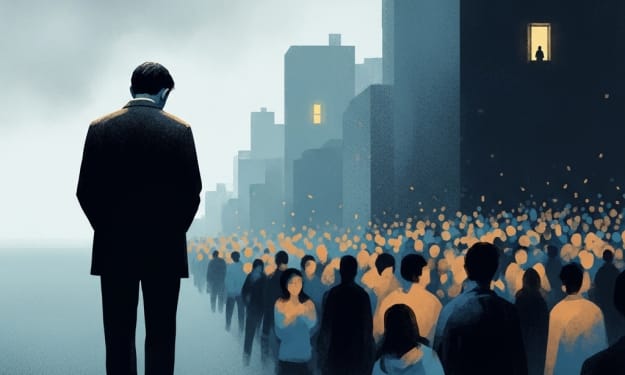
What makes King’s fear so effective is how ordinary it feels at first. He often begins with the rhythms of daily life—school buses, diners, Friday-night games, neighbors waving from porches. Then he introduces a crack in the surface. A rumor. A disappearance. A strange behavior that everyone notices but no one wants to confront. Fear in King’s world isn’t just about monsters; it’s about denial. Communities tell themselves comforting stories to avoid uncomfortable truths. The horror escalates when that denial becomes a habit. Evil thrives in the gap between what people see and what they’re willing to admit.
King also understands that fear is social. It spreads through groups, mutates through rumor, and intensifies when people look to each other for cues on how serious the threat really is. In his small towns, panic and cruelty often grow together. Outsiders become convenient targets. Old grudges find new excuses. Moral lines blur when survival or status feels threatened. King doesn’t present these dynamics as supernatural—they’re painfully human. The monsters may be fictional, but the crowd behavior feels real.
Another reason King’s work endures is his compassion for flawed people. His protagonists are rarely polished heroes. They’re teachers, writers, kids, addicts, parents trying to hold it together. They mess up. They’re afraid. They carry shame. This makes the horror hit harder because the people facing it feel like us. King doesn’t ask, “What would a perfect person do?” He asks, “What would an ordinary person do when the dark shows up?” Sometimes the answer is courage. Sometimes it’s cowardice. Often it’s both in the same breath.
King’s small-town darkness also exposes how nostalgia can lie. We’re tempted to romanticize close-knit communities as inherently safer or morally cleaner. King punctures that illusion. Familiarity can breed silence. Long histories can protect abusers. Traditions can hide cruelty. In his stories, the past isn’t a comforting memory—it’s a living force that shapes the present, often in unhealthy ways. The town’s history becomes a character in its own right, carrying unresolved violence forward until someone finally confronts it. Horror, in this sense, becomes a demand for honesty.
Yet King isn’t a nihilist. For all the darkness he depicts, he believes in the power of connection. The antidote to fear in his stories is rarely lone-wolf toughness; it’s imperfect people choosing to stand together. Friendship, loyalty, and shared truth become forms of resistance. When characters speak openly about what they’re seeing—when they refuse to gaslight themselves or each other—the monster loses power. Fear feeds on isolation. Community, when honest, can starve it.
King’s style is also key to his impact. He writes in a voice that feels like a neighbor telling you a story on a porch—casual, funny, observant, then suddenly devastating. That accessibility lowers your guard. You feel safe in the rhythm of his sentences, and then the fear slips in. It’s a masterclass in contrast: warmth against cold, normalcy against nightmare. The small-town setting amplifies this contrast because the cozier the beginning, the sharper the break when darkness arrives.
Why does King matter now? Because modern life has its own small towns—online communities, group chats, fandoms, workplaces—places that feel familiar and safe until they aren’t. Fear still spreads socially. Denial still protects harm. Rumors still harden into beliefs. King’s stories remind us that evil doesn’t need exotic conditions to grow; it only needs people to look away long enough.
In the end, Stephen King’s horror isn’t about teaching you to fear monsters. It’s about teaching you to notice the shadows in ordinary places—and in yourself—before they grow teeth.
About the Creator
Fred Bradford
Philosophy, for me, is not just an intellectual pursuit but a way to continuously grow, question, and connect with others on a deeper level. By reflecting on ideas we challenge how we see the world and our place in it.
Keep reading
More stories from Fred Bradford and writers in BookClub and other communities.
J. D. Salinger: The Cost of Not Fitting In
J. D. Salinger became famous for capturing a feeling most people struggle to name: the loneliness of being young in a world that feels fake. He didn’t write sweeping epics or grand theories of society. He wrote intimate stories about teenagers and seekers who felt out of place, allergic to hypocrisy, and desperate to protect something fragile and real inside themselves. In a culture that often celebrates confidence and performance, Salinger’s work stands out for honoring vulnerability, confusion, and the awkward honesty of youth.
By Fred Bradforda day ago in BookClub
Self Help: Grifters' Gospel
On Self-Help, Snake Oil, and the Illusion of Change Psychology professionals and students can be imagined on two opposite sides of a line called self-help books: likely a larger group opposes pop-science and step-by-step manuals filled with talk of success, journaling, and not giving a f**k; others love them, but they aren’t many.
By Avocado Nunzella BSc (Psych) -- M.A.P 17 days ago in BookClub
Lewis Latimer
By Staff Writer Leavie Scott| February 2026 In an age when electric light is taken for granted, few Americans know the name Lewis Howard Latimer—yet his innovations helped make the light bulb reliable, affordable, and accessible to the world. Born in 1848 to formerly enslaved parents in Chelsea, Massachusetts, Latimer’s journey from poverty to technological pioneer is one of the most remarkable stories in American innovation.
By TREYTON SCOTT6 days ago in BookClub



Comments
There are no comments for this story
Be the first to respond and start the conversation.