Dating
Why Feeling Connected In Relationships Improves Mental Health And Happiness
Relationship connectedness refers to not only being emotionally close, understanding, and feeling a sense of belonging to others. This relationship enables people to feel visible, listen to them, and appreciate them. Shared experiences and empathy, trust, and continual communication create emotional attachment. Relationships bring comfort instead of stress when individuals feel connected and this gives them emotional stability in their day to day lives.
By Mark Hipstera day ago in Confessions
The Piggy Project. Top Story - February 2026.
I’ve had so many names in this life I lose track of which ones were ever really mine and which ones I wore because someone needed me to. Some were handed to me before I had words to refuse them, before I knew what they meant, before I knew I could say no. Most weren’t meant to hurt. That doesn’t mean they didn’t leave marks. Marks that told me who I belong to, who I am by way of who claims me, recognizes me in the good and bad, who walks beside me.
By Fatal Serendipity2 days ago in Confessions
Addressing Mental Health Needs While Maintaining Balanced Relationships With Care
A balanced relationship is not possible without conscious action in meeting the mental health needs. The level of emotional wellbeing is closely linked to the quality of relationships and it is because a supportive relationship offers the stability and resilience. Nevertheless, the disregard of personal mental well-being to achieve relational harmony may generate burnout, resentment or depletion of emotions. Balancing is a process that concerns the consideration of personal needs and development of mutual understanding and respect.
By Mark Hipster3 days ago in Confessions
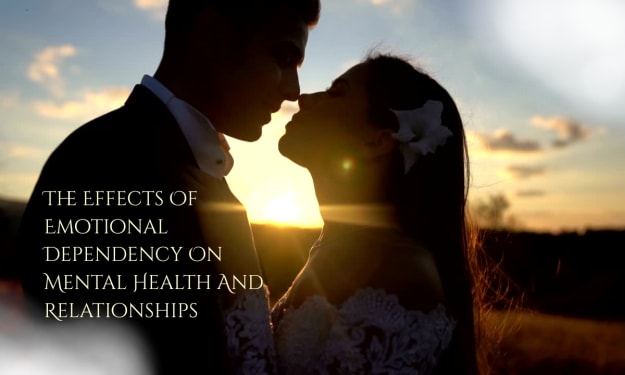
The Effects Of Emotional Dependency On Mental Health And Relationships
Emotional dependency is a phenomenon where the person becomes too dependent on the partner or the loved one to provide emotional support, validation and feelings of self worth. Although support is a normal thing in a relationship, overdependence might destroy independence and introduce imbalance. Emotionally dependent individuals may have difficulty in controlling emotions or making decisions on their own, instead depending on others to control the emotions. This dependency may eventually develop anxiety, feelings of insecurity and lack of personal identity, both psychologically and relationally.
By Mark Hipster3 days ago in Confessions
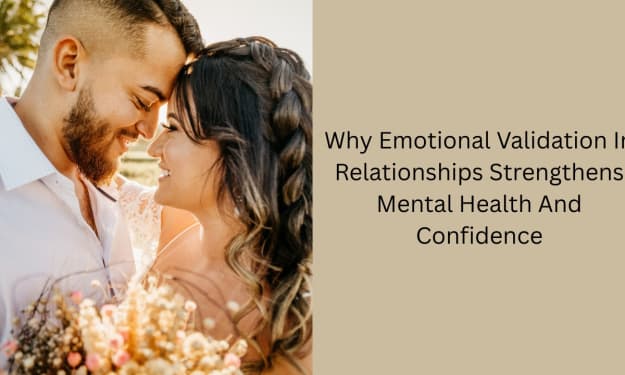
Why Emotional Validation In Relationships Strengthens Mental Health And Confidence
Emotional validation is the act of accepting, acknowledging and recognizing the feelings of the partner, non-judgmentally and without rejection. It conveys in relationships that emotions are valid and significant, which creates trust and emotional insecurity. When people feel justified, they will be able to open up more, resulting in more intimate levels and comprehension. Emotional validation does not involve consent to agree to the expressed emotions, it just refers to their existence. This recognition minimizes emotional isolation, which makes partners feel that they are supported instead of being criticized.
By Willian James3 days ago in Confessions
How Healthy Conflict Resolution Improves Relationships And Mental Health Outcomes
The presence of conflict is a natural aspect of a close relationship since people do not have the same needs, views and emotional experiences. Conflicts are not bad; however, the difference in conflict management is the one that defines its effect. When conflict is not addressed or handled in a bad way, then it may cause emotional distance, resentment, and chronic stress. In the long run, the unresolved tension has adverse effects on the relationship satisfaction and mental health with regard to anxiety and emotional exhaustion.
By Robert Smith3 days ago in Confessions
I Didn’t Lose My Mind — I Outgrew Chaos
For a long time, I thought something was wrong with me. I thought I was overthinking. I thought I was reading too deeply into situations that were meant to be taken at face value. I thought I was emotional, dramatic, sensitive—every word people use when they don’t want to engage with what’s actually being said.
By Dakota Denise 3 days ago in Confessions
Is Loving You My Greatest Crime?
I remember the first time I realized how much I could love someone—and how much it could hurt me. We were sitting across from each other at a café, the quiet hum of conversation around us, and I watched you speak. I watched the way your hands moved, the way your eyes lit up when you laughed. And I felt it—something that both thrilled me and scared me. Something that made me tremble and ache at the same time. I was falling, and I knew it was dangerous.
By morgan lane 3 days ago in Confessions
Benefits of Looking Forward To Something
Everyone looks forward to something because it is part of life. When we were younger, we looked for most things that were different from what we look forward to now that we are older. Even so, we might still look forward to some of the same things: birthdays, holidays (some more than others), graduation, first job, dating, marriage, anniversaries, raising a family, and more.
By Margaret Minnicks5 days ago in Confessions
How Family Relationships Influence Mental Health Beliefs And Coping Skills
Emotional development and beliefs of mental health depend on family relationships. Childhood experiences with parents and caregivers influence the way in which individuals perceive emotions, stress and their coping styles. Families that support and nurture their children teach children that they are normal in their feelings and they can handle them hence giving them confidence in the face of challenges. On the other hand, conflictual, neglected, or criticizing families may raise pessimistic thoughts regarding personal value and emotionality. This is because early experiences shape the ways in which people internalize stress, perceive challenges and the perceived presence of support that they may carry well into adulthood.
By Willian James5 days ago in Confessions
Developing Emotional Intelligence To Improve Relationships And Mental Health Skills
Emotional intelligence (EI) refers to the capacity to be aware of, know and be able to control and regulate personal emotions as well as ability to perceive and react to the emotions of other people. It is critical in ensuring that relations are healthy and also that mental health is enhanced. High-EI individuals are able to manage their emotions, cope with stress better and express themselves positively. The ability to grow emotionally enables individuals to cope with social life better, fit into other people, and avoid the pitfalls of misunderstandings, which may ruin any relationships. This is one of the basic skills that facilitate individual development as well as relationship peace.
By Willian James5 days ago in Confessions