
THE EPSTEIN LIST: THE MONSTER, THE ISLAND, AND THE SILENT SCREAMS OF THE ELITE’S PREY
How did a failed math teacher become the architect of a global sex trafficking ring? From the hidden cameras in his 'Temple of Doom' to the blackmail tapes of Presidents and Princes, this is the terrifying true story of how one man sold innocence to the highest bidder—and why the law protected him while his victims screamed in silence
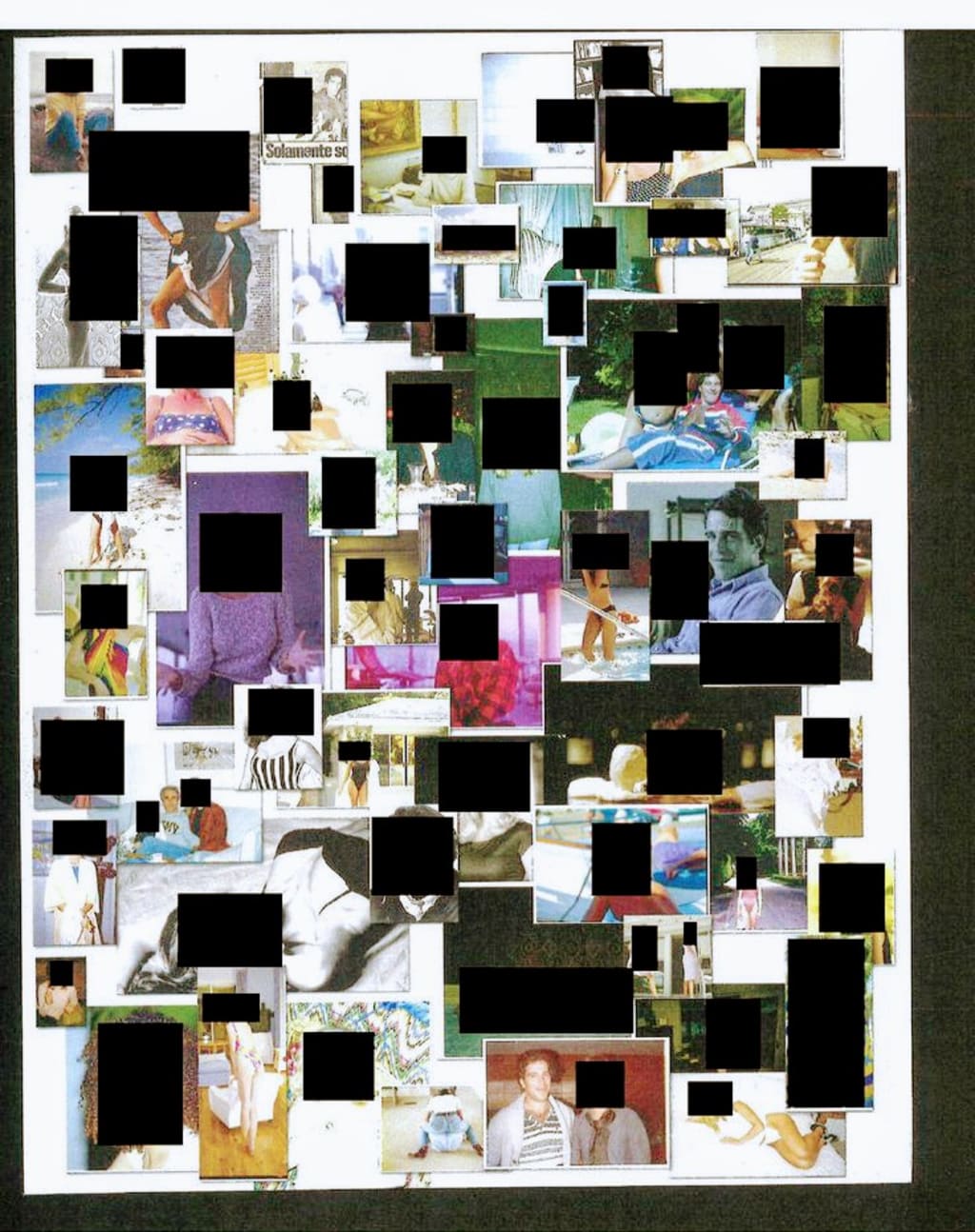
It is trending on X (formerly Twitter), it is dominating TikTok, and it is filling the search bars of Google. The "Epstein Files."
Years after his death, Jeffrey Epstein is still speaking from the grave. The recent unsealing of thousands of pages of court documents has ripped open old wounds and reignited a global obsession. We are seeing names—Presidents, Princes, Hollywood icons, legendary scientists—dragged into the sunlight. But why now? And why does this specific case feel different from every other scandal in history?
Because this wasn't just a crime ring. It was an industry.
As we scroll through the documents, looking for shocking names, we are missing the bigger, more terrifying picture. How did this happen? How did a man with no college degree, no visible business, and a mysterious fortune manage to enslave the elite of the Western world?
To understand the horror of the island, we have to go back to the beginning. We have to look at the man who didn't exist.
The Phantom of Wall Street
Jeffrey Epstein’s rise is the first "glitch" in the matrix.
Born in 1953 in Brooklyn, he was the son of a groundskeeper. He was a nobody. He dropped out of college. Yet, in the mid-1970s, he managed to get a job teaching math and physics at the prestigious Dalton School in Manhattan.
He was described as charming but odd. He didn't stay long. By 1976, he had somehow jumped from a classroom to the trading floor of Bear Stearns.
This is where the story gets dark. Within four years, he was a partner. Then, he founded his own firm: "J. Epstein & Co."
But here is the catch—he had no public clients.
If you look at Warren Buffett or Bill Gates, you know where their money comes from. You can see the products, the stocks, the companies. But with Epstein? It was a black hole. He claimed to manage money for billionaires, but he only took clients with a net worth of over $1 billion.
He bought the largest private residence in Manhattan (the Herbert N. Straus House). He bought a ranch in New Mexico. He bought an apartment in Paris. And, most famously, he bought Little St. James, a private island in the U.S. Virgin Islands.
Where did the billions come from? The leading theory is chilling: Epstein wasn't just an investor. He was a financial bounty hunter and, perhaps, an intelligence asset. He moved money for people who couldn't be seen moving it. And in doing so, he learned their secrets.
The Madam: Enter Ghislaine Maxwell
A spider cannot build a web alone. Epstein had the money, but he lacked the "class." He was new money. He needed someone to open the doors of palaces and castles.
Enter Ghislaine Maxwell.
The daughter of Robert Maxwell, a British media tycoon and suspected spy who died under mysterious circumstances, Ghislaine was royalty in the social scene. When her father died and her family’s empire collapsed in fraud, she fled to New York.
She found Jeffrey. Or perhaps, he found her.
They became the ultimate power couple. She wasn't just his girlfriend; she was his "fixer." She legitimized him. She took this creepy financier and introduced him to Prince Andrew, to Bill Clinton, to Donald Trump. She made him "safe" for the elite to be around.
But her role was far darker than just introductions.
According to the survivors, Ghislaine was the "Head of Recruitment." She was a woman, and that made the victims trust her. She would approach young girls—often from broken homes or struggling financial backgrounds—and offer them a "job."
"Do you want to study massage therapy? Do you want a scholarship? Come meet my friend Jeffrey."
It was a masterclass in psychological manipulation. They built a system that was efficient, corporate, and ruthless. And at the center of it was the destination that would become infamous.
The Island of No Return
Little St. James.
Locals called it "Pedophile Island" long before the FBI stepped foot on it. It was a fortress. Epstein transformed this Caribbean paradise into a perverse theme park. He built a massive temple-like structure with a golden dome that had no religious purpose. The island had its own water supply, underground tunnels, and security systems that would rival a military base.
This is where the "Lolita Express"—his private Boeing 727—would land.
The flight logs are the "Book of the Dead" for reputations. They show who went there. And once you were on the island, you were in Epstein’s world.
There are dark rumors, supported by raid evidence, that every room was wired. That Epstein wasn't just abusing these girls—he was filming his powerful friends doing the same. It was the ultimate insurance policy. Blackmail on a global scale.
For years, the operation ran without a hitch. The powerful were protected. The girls were silenced.
But in 2005, one girl decided she wasn't going to be silent anymore. And that is where the empire began to crack.
The year was 2005. In the pristine, manicured streets of Palm Beach, Florida, Jeffrey Epstein was treated like a king. He was the man who threw the best parties, who knew the biggest politicians, and who donated to the local police foundation. He was untouchable.
Until a 14-year-old girl walked into a police station.
She didn't have a lawyer. She didn't have a PR team. She was terrified. Her parents were reportedly furious at her for "working" at the big house on the ocean. But she sat down and told the officers a story that sounded too organized to be true. She spoke of massages that weren't massages. She spoke of cash payments. And most disturbingly, she spoke of the others.
This was the first crack in the dam. The Palm Beach Police, led by Chief Michael Reiter—a man who deserves to be remembered as one of the few heroes in this saga—decided to listen. They didn't care about Epstein's billions. They opened a file.
What they found was not just a crime scene; it was a corporate structure.
The Multi-Level Marketing of Misery
As detectives dug deeper, they realized Epstein and Maxwell had created something horrific: A "Pyramid Scheme" of abuse.
It wasn't enough for a victim to be abused; she was pressured to become a recruiter.
"Bring us a friend, and you get $200. Bring us three friends, and you get a bonus."
This was the genius of their evil. They turned victims into accomplices. They targeted girls from the lower rungs of the economic ladder—girls who needed money for school, for rent, for food. They weaponized poverty.
The police began to map out a network that involved dozens, perhaps hundreds, of underage girls. They found the "Scheduling Book." It read like a dentist's appointment log, but instead of patients, it listed young girls, arriving in shifts, day after day, year after year.
The Raid and The Black Book
Armed with this information, the police raided Epstein’s Palm Beach mansion.
What they found should have been the end of Jeffrey Epstein.
They found massage tables in rooms that were clearly not spas. They found soaps, oils, and toys. They found photos—hundreds of nude and semi-nude photographs of young girls.
And they found the Little Black Book.
This book contained the contact information for the most powerful people on Earth. Donald Trump, Bill Clinton, Prince Andrew, Tony Blair, Mick Jagger, Courtney Love. The list went on for 92 pages.
The detectives had him. They had corroborating evidence. They had victim testimony. They were preparing to charge him with multiple counts of molestation and sex trafficking that would put him in prison for life.
But then, something strange happened. The case was taken out of the hands of the local police. The Feds arrived.
The Sweetheart Deal of the Century
Enter the U.S. Attorney’s Office in Miami, led by Alexander Acosta.
Normally, when the FBI gets involved in a sex crimes case with this much evidence, they go for the throat. They aim for the maximum sentence.
But in Epstein’s case, the negotiations went... backward.
Instead of threatening Epstein, the prosecutors seemed terrified of him. Epstein hired a "dream team" of lawyers, including Alan Dershowitz and Ken Starr (the man who investigated Bill Clinton). They played hardball. They investigated the prosecutors. They dug up dirt.
And then, the "Invisible Hand" intervened.
Acosta would later claim that he was told Epstein "belonged to intelligence" and that the case was "above his pay grade."
Whether that is true or just an excuse, the result was the infamous 2008 Non-Prosecution Agreement.
It remains one of the most baffling legal documents in American history.
Epstein would plead guilty to a single state charge of soliciting prostitution (a low-level offense).
He would register as a sex offender (which he thought he could hide).
He would serve just 13 months in a county jail.
Crucially: The federal government agreed to grant immunity to "any potential co-conspirators." This meant that anyone who helped him—Ghislaine Maxwell, the recruiters, the pilots, the rich friends—could not be prosecuted.
The Mockery of Justice
Even his "prison" time was a lie.
Epstein was housed in a private wing of the Palm Beach County Stockade. He was allowed to hire his own security details. But the ultimate insult was the "Work Release" program.
For 12 hours a day, 6 days a week, Epstein was allowed to leave his cell, get into his chauffeur-driven car, and go to his luxury office in West Palm Beach.
He held meetings. He traded stocks. He ate gourmet meals. Then, at night, he went back to sleep in the jail.
It wasn't punishment; it was a hotel stay with a curfew.
The victims were never told about this deal. The federal law—the Crime Victims’ Rights Act—requires prosecutors to confer with victims before making a plea deal. The government simply ignored the law. They sealed the deal in secret.
Epstein walked free in 2009. He kept his planes. He kept his island. He kept his billions. And most importantly, he kept his powerful friends.
He thought he had won. He thought the book was closed.
But he forgot one thing: The internet never forgets. And the girls he silenced were growing up.After the "Sweetheart Deal" of 2008, Jeffrey Epstein didn't hide in a hole. He flaunted his freedom.
It is one of the most disturbing chapters of this saga. Here was a registered sex offender, a man who had pleaded guilty to soliciting a minor, yet he was welcomed back into the high society of New York and London with open arms.
He was photographed walking in Central Park with Prince Andrew. He hosted dinners for Bill Gates. He funded the MIT Media Lab. He sat in the front row of Victoria’s Secret fashion shows.
The message from the elite was clear: "We know what you are, and we don't care."
He believed he was untouchable. He believed the 2008 Non-Prosecution Agreement was a shield that would protect him forever. He was wrong.
The shield had a crack, and her name was Julie K. Brown.
The Reporter Who Hunted the Hunter
In 2018, the Miami Herald decided to revisit the case. Brown, an investigative journalist, did what the FBI had failed to do: she tracked down the victims.
She found dozens of women—now adults—who had been silenced, ignored, or threatened. She listened to them. She published their stories in a blistering series called "Perversion of Justice."
The series went viral. It exposed Alexander Acosta (who was now Donald Trump’s Labor Secretary) and forced him to resign. It shamed the Justice Department. It woke the sleeping giant.
In New York, a new team of prosecutors at the Southern District (SDNY) saw an opening. They realized that the 2008 deal only covered crimes in Florida. It didn't cover sex trafficking in New York. It didn't cover the conspiracy to transport minors across state lines.
They began to build a new case. They interviewed the pilots. They subpoenaed the flight logs. And this time, they didn't ask for permission from Washington.
The Arrest at Teterboro
On July 6, 2019, Epstein’s private jet landed at Teterboro Airport in New Jersey, returning from Paris. He expected his driver to be waiting.
Instead, he was met by federal agents.
This time, there was no negotiation. He was handcuffed on the tarmac.
The raid that followed on his Manhattan townhouse—the massive mansion on East 71st Street—revealed the true depth of his depravity.
Agents broke into a safe and found piles of cash, loose diamonds, and a fake Austrian passport with a false name ("Trust") and a photo of Epstein.
They found thousands of photos. They found hard drives.
The "Financial Bounty Hunter" had been caught. He was denied bail. The judge looked at his billions, his private planes, and his fake passports, and declared him a flight risk.
He was sent to the Metropolitan Correctional Center (MCC) in downtown Manhattan—a fortress known as the "Guantanamo of New York."
He was placed in the Special Housing Unit (SHU). He was the most high-profile prisoner in the world. He had secrets that could topple governments, end presidencies, and destroy royal families.
The world waited for the trial of the century. We thought we would finally see justice. We thought we would see the names.
But we underestimated the power of the "Invisible Hand."
The official story is simple: Jeffrey Epstein, overcome with guilt and fear, took his own life.
The reality is a jigsaw puzzle where the pieces don't fit.
On July 23, 2019, just weeks after his arrest, Epstein was found semi-conscious in his cell with marks on his neck. He claimed his cellmate, a hulking ex-cop named Nicholas Tartaglione (charged with quadruple homicide), had tried to kill him.
Epstein was put on "Suicide Watch." This meant 24/7 monitoring, lights on, and constant checks.
But then, inexplicably, on July 29, he was taken off suicide watch. He was moved to a new cell.
And on the night of August 9, his new cellmate was transferred out.
Jeffrey Epstein was left alone.
The Glitch in the Matrix
In a maximum-security federal prison, checks are supposed to happen every 30 minutes.
But on that night, the two guards assigned to watch him—Tova Noel and Michael Thomas—didn't check.
Instead, they reportedly sat at their desks, browsed the internet for furniture and motorcycles, and fell asleep. For hours, no one looked into cell 15.
When they finally went to check at 6:30 AM on August 10, Epstein was dead.
But here is the detail that haunts everyone: The cameras.
Two cameras pointing at Epstein's cell block "malfunctioned" that night. The footage was deemed "unusable" or "missing" by the FBI.
In the most secure building in New York City, housing the man with the most dangerous information in the world, the technology just... failed?
The coroner ruled it a suicide by hanging. But Dr. Michael Baden, a famed pathologist hired by Epstein's brother, observed multiple fractures in Epstein's neck bones, including the hyoid bone—an injury more consistent with strangulation than hanging.
"I've never seen three fractures like this in a suicidal hanging," Baden said. "This is a homicide."
The Legacy: The List is Out
Epstein died, but the monster he created didn't.
Ghislaine Maxwell was hunted down in 2020, hiding in a luxury estate in New Hampshire. She was convicted and sentenced to 20 years. But during her trial, the judge kept the "names" sealed.
Until now.
The recent unsealing of the court documents—the "Epstein List"—is the aftershock of his death.
We are finally seeing the depositions. We are reading the names of Bill Clinton ("he likes them young," Epstein reportedly said), Prince Andrew (accused of abuse by Virginia Giuffre), Stephen Hawking, Michael Jackson, David Copperfield, and scores of politicians and CEOs.
But notice what isn't happening.
There are no new arrests.
The list is being treated as "gossip" rather than evidence. The men who flew on the Lolita Express are still running corporations. They are still giving speeches.
The release of the files feels like a distraction—a way to satisfy the public's hunger for scandal without actually delivering justice.
The Final Verdict
Jeffrey Epstein didn't just build a trafficking ring; he built a mirror.
When we look at the Epstein case, we see the true face of the world's elite. We see a class of people who believe laws are for the poor. We see a system that will protect a monster for decades as long as he is useful, and discard him the moment he becomes a liability.
The island is empty now. The temple has been demolished. But the shadow remains.
Epstein didn't kill himself. Whether by his own hand or another's, it was the secrets that killed him. And as long as those secrets remain buried, the list is just a piece of paper.
Justice hasn't been served. It has been silenced.
About the Creator
Wellova
I am [Wellova], a horror writer who finds fear in silence and shadows. My stories reveal unseen presences, whispers in the dark, and secrets buried deep—reminding readers that fear is never far, sometimes just behind a door left unopened.
SWAT Raid Near Nancy Guthrie’s Home Leads to Three Detentions
Three individuals were detained late Friday night after a coordinated SWAT operation unfolded in a Tucson neighborhood just miles from the home of missing 84-year-old Nancy Guthrie, marking one of the most significant developments in the investigation since her disappearance nearly two weeks ago.
By Lawrence Lease4 days ago in Criminal
How Trump Barely Escaped Death | Who was the Shooter
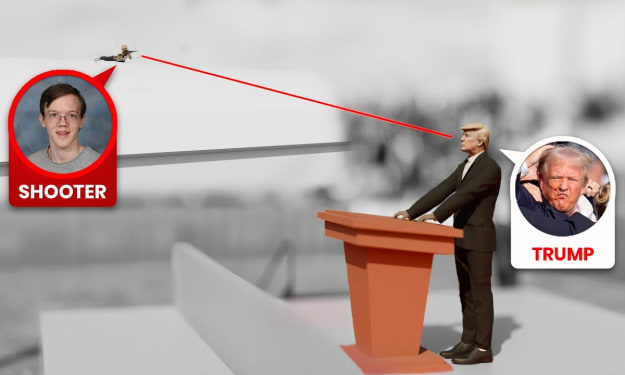
In Butler, Pennsylvania, it was the day of July 13, 2024, when former US President Donald Trump was attacked during a public rally speech. During the event, the sound of three gunshots was heard. Trump was hit by a bullet, but his life was saved.
By Imran Ali Shah5 days ago in Criminal

Comments
There are no comments for this story
Be the first to respond and start the conversation.