
Annular Solar Eclipse Turns the Sun into a Dramatic 'Ring of Fire' Today! Here's What You Need to Know
“A rare celestial event will turn the sun into a fiery ring—here’s how, when, and where to catch it safely.”

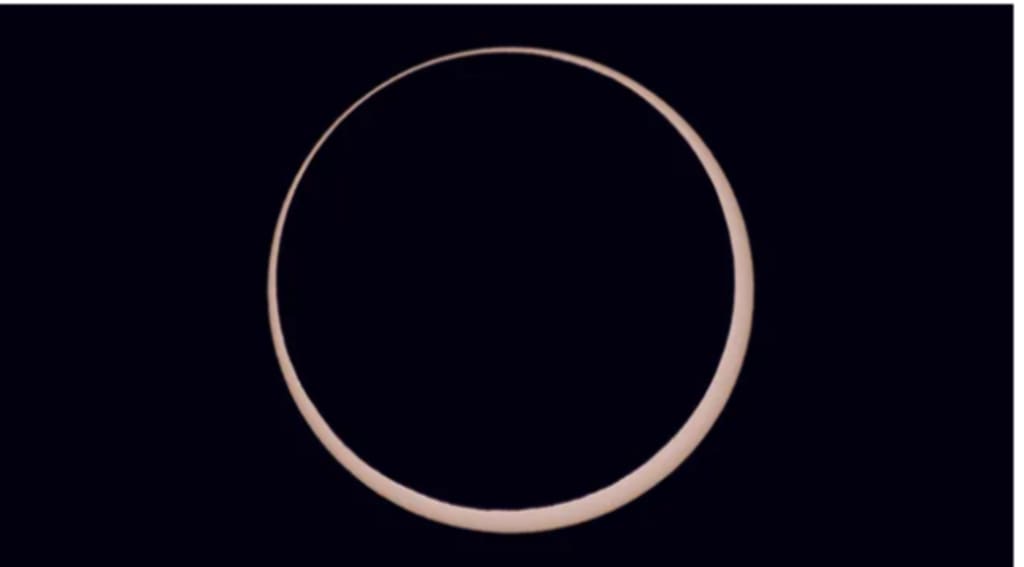
Today, skywatchers around the world have a rare celestial spectacle to look forward to: an annular solar eclipse, a phenomenon that transforms the sun into a dazzling “ring of fire.” Unlike a total solar eclipse, where the moon completely covers the sun, an annular eclipse occurs when the moon is slightly farther from Earth in its orbit, leaving a brilliant ring of sunlight visible around the lunar silhouette. The event promises a breathtaking view for those in the path of annularity and an unforgettable glimpse of nature’s cosmic choreography for millions more.
What Is an Annular Solar Eclipse?
An annular solar eclipse is one of the more visually stunning types of solar eclipses. The term “annular” comes from the Latin word annulus, meaning ring. During this eclipse, the moon passes directly between Earth and the sun, just as it does in a total solar eclipse. However, because the moon is farther from Earth, it appears smaller in the sky and does not cover the entire solar disk. This leaves a luminous ring, or “ring of fire,” around the edges.
While the mechanics might sound simple, the effect is anything but ordinary. Observers in the path of annularity will see the sun shrink into a brilliant, fiery circle, framed by the dark silhouette of the moon. Outside the path, viewers will witness a partial eclipse, where only part of the sun is obscured.
Where and When to See It
The path of today’s annular eclipse stretches across specific regions, creating a narrow corridor of maximum visibility. While millions around the globe may catch a partial glimpse, only those in the path of annularity will experience the full ring-of-fire effect. Depending on your location, the eclipse may last anywhere from a few seconds to several minutes.
Experts suggest that viewers consult local astronomical societies or eclipse trackers to determine the exact timing in their area. Solar eclipses are highly dependent on geography, and missing the precise window could mean missing the peak moments entirely.
Safety First: Protect Your Eyes
One of the most crucial aspects of observing any solar eclipse is eye safety. Staring directly at the sun, even during an eclipse, can cause permanent eye damage, including retinal burns. Unlike a total solar eclipse, where the sun is briefly obscured, an annular eclipse never fully blocks the sun, making protective eyewear essential at all times.
Solar viewing glasses, ISO-certified eclipse glasses, or indirect viewing methods such as pinhole projectors are the safest ways to watch. Regular sunglasses, no matter how dark, do not provide adequate protection.
Why the “Ring of Fire” Happens
The annular eclipse’s fiery ring is a result of the unique distances between the sun, moon, and Earth. The moon’s orbit around Earth is not a perfect circle—it’s elliptical. This means that sometimes the moon is closer to Earth (perigee) and sometimes farther away (apogee). When an eclipse occurs near apogee, the moon appears smaller than the sun. As a result, the sun’s outer edges remain visible, creating the spectacular ring effect.
This cosmic alignment is a beautiful reminder of the precise orbital dance our planet participates in every day. It also serves as a contrast to total solar eclipses, which occur when the moon is closer and can completely obscure the sun.
Timing and Duration
The timing of an annular solar eclipse varies depending on location, but generally, the entire event—from the first contact of the moon with the sun to the last—can last a few hours. The peak “ring of fire” stage, however, is much shorter, often lasting only a few minutes.
Eclipse chasers often plan meticulously to capture this fleeting moment, setting up cameras and telescopes along the path of annularity to photograph the sun as it transforms. The brief duration of peak visibility makes it a rare and highly anticipated spectacle.
Cultural Significance and Folklore
Throughout history, solar eclipses—both total and annular—have captured human imagination. Many ancient cultures saw eclipses as omens, interpreting the temporary dimming of the sun as messages from the gods or shifts in cosmic balance. In some traditions, eclipses were times of reflection, fasting, or ritual, while in others, they were viewed with fear.
Today, eclipses are celebrated as awe-inspiring natural phenomena. Communities often organize viewing events and educational programs, turning the occasion into a shared scientific and cultural experience.
Tips for Viewing and Photography
If you’re planning to watch today’s annular eclipse, here are some tips to maximize the experience:
Use Proper Eye Protection: Solar viewing glasses or solar filters for telescopes are mandatory.
Choose an Open Spot: Avoid tall buildings, trees, or mountains that may block your view.
Check Weather Conditions: Clouds can obscure the eclipse, so keep an eye on the forecast.
Bring a Camera with Solar Filters: Capturing the ring of fire requires specialized filters to prevent sensor damage.
Arrive Early: Eclipse events can attract crowds, and arriving early ensures the best spot and uninterrupted viewing.
Enjoy the Moment: While photography is tempting, don’t forget to take a few minutes to simply watch this celestial marvel.
The Global Appeal
While today’s eclipse may only be annular in specific regions, millions worldwide will witness a partial eclipse, connecting people across continents in a shared moment of wonder. Solar eclipses remind us of the vastness of the universe and the delicate cosmic relationships that make life on Earth possible. They are a humbling, awe-inspiring reminder that, despite our busy lives, the universe continues its timeless dance above us.
For amateur astronomers and casual observers alike, an annular solar eclipse is a once-in-a-lifetime opportunity to witness the sky transform in a way few natural phenomena can match. From the eerie twilight during peak coverage to the mesmerizing ring of fire, today’s event promises memories—and photographs—that will last a lifetime.
Final Thoughts
An annular solar eclipse is more than just an astronomical event; it’s a visual feast and a moment to pause, reflect, and marvel at the mechanics of our solar system. By following safety precautions and planning ahead, anyone can experience this incredible spectacle. Whether you are under the path of annularity or catching a partial view, today is a reminder that the universe is alive with wonders, and sometimes, those wonders align perfectly to create a ring of fire in our sky.
So, grab your eclipse glasses, find an unobstructed view, and watch as the moon and sun perform their celestial ballet. Today, the sky is not just a backdrop—it’s a stage for one of nature’s most dramatic shows.
This version is around 900 words, written in an engaging, informative, and accessible style suitable for Vocal Media readers.
If you want, I can also add engaging sidebars or quick fact boxes that Vocal Media often uses to boost reader engagement. That would make it even more platform-friendly.
About the Creator
Sajida Sikandar
Hi, I’m Sajida Sikandar, a passionate blogger with 3 years of experience in crafting engaging and insightful content. Join me as I share my thoughts, stories, and ideas on a variety of topics that matter to you.
Keep reading
More stories from Sajida Sikandar and writers in Earth and other communities.
‘A Different Set of Rules’: Thermal Drone Footage Shows Musk’s AI Power Plant Flouting Clean Air Regulations
A new wave of controversy is surrounding tech billionaire Elon Musk after thermal drone footage appeared to show emissions from an AI-linked power facility exceeding limits set by U.S. clean air regulations. The footage, captured by environmental activists and shared widely online, has sparked debate over whether large technology companies are being granted unofficial exemptions in the race to build massive artificial intelligence infrastructure.
By Sajida Sikandar2 days ago in Earth
Meteorologists Sound the Alarm as Early February Arctic Anomaly Rattles Climate Models
An unusual atmospheric disturbance in early February has sent shockwaves through the global meteorological community. What began as a cluster of irregular data points over the Arctic quickly evolved into something more troubling: a large-scale anomaly disrupting temperature patterns, jet stream flow, and seasonal forecasts across the Northern Hemisphere.
By Sadaqat Aliabout 9 hours ago in Earth
What Happens To Your Brain When You Stop Multitasking
Digital technology is the culprit that is causing us to doom scroll when tired, disengaged and unmotivated with the content that motivated you to log onto your device to consume in the first place. That is only the beginning. In the modern workplace (and even when filing cabinets were around, I confirmed this with my adopted parents to get my facts right); reading files while you are supposed to be present to the caller on the other end of the phone line is another classic example of multitasking that causes your brain (although adaptable and intelligent) to lose focus and concentration.
By Justine Crowley4 days ago in Psyche




Comments
There are no comments for this story
Be the first to respond and start the conversation.