
Batch vs. Continuous Pyrolysis: Choosing the Right Reactor for Biochar Production
Batch vs. Continuous Pyrolysis: Choosing the Right Reactor for Biochar Production

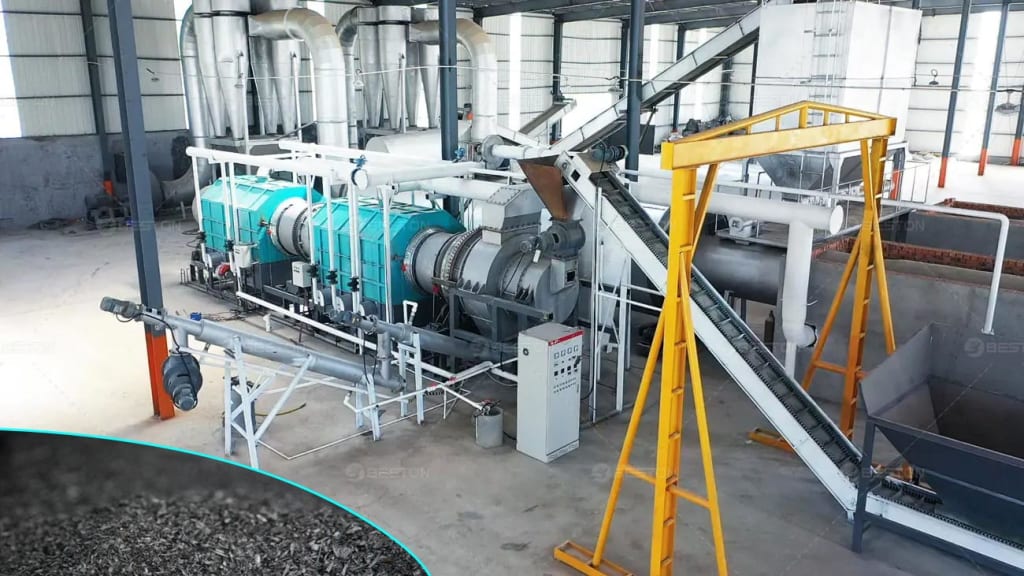
The global biochar market is experiencing a period of rapid expansion. Driven by the need for scalable carbon dioxide removal (CDR) and a growing demand for soil amendments, project developers are moving from pilot studies to commercial production. However, for those entering the space, one of the most critical decisions involves the core technology itself: the pyrolysis reactor.
While numerous variations exist, the majority of commercial biochar production systems fall into two categories: batch (or intermittent) and continuous. Both technologies convert biomass into biochar, syngas, and heat, but they do so in fundamentally different ways. Understanding the distinction between these two operational modes is essential for aligning biochar pyrolysis equipment choice with feedstock availability, labor costs, and output quality.
The Fundamentals: How They Operate
Before diving into the pros and cons, it is important to define the basic mechanics of each system.
Batch Pyrolysis operates, as the name suggests, in discrete loads. A fixed quantity of biomass is loaded into the reactor vessel, which is then sealed. The temperature is raised according to a programmed cycle, the biomass is converted to char, and the system is allowed to cool down before the finished product is discharged. Only then can a new batch begin.
Continuous Pyrolysis, in contrast, involves a steady flow of material. Biomass is fed into one end of a heated reactor—often a rotating auger or a rotary drum—while biochar is simultaneously discharged from the other end. The process runs uninterrupted, maintaining a stable thermal profile for extended periods, often for days or weeks at a time.
Feedstock Flexibility vs. Uniformity
One of the most significant differentiators between the two technologies lies in how they handle raw materials.
Batch systems are generally more forgiving regarding particle size and contaminant content. Because each cycle is isolated, an operator can process a heterogeneous mix of woody debris or agricultural waste without risking a mechanical jam in a feed system. This makes batch units attractive for decentralized, smaller-scale operations where the feedstock changes seasonally.
Continuous systems, however, demand consistency. To maintain a steady feed rate, the biomass typically needs to be processed into a uniform particle size—often chips or pellets—using grinders or hammer mills. While this adds a preprocessing step, it also results in a more consistent residence time. Every particle in a continuous reactor spends the exact same amount of time at temperature, yielding a highly uniform biochar product.
Energy Efficiency and Heat Integration
From an energy balance perspective, continuous systems generally hold the advantage.
In a batch reactor, the vessel must be heated from ambient temperature to the target pyrolysis temperature (typically 500°C to 700°C) for every cycle. This repeated thermal cycling represents a significant energy demand and stresses the refractory materials, potentially leading to higher maintenance costs over time.
Continuous reactors maintain a constant temperature zone. The energy required is primarily for maintaining that heat and for driving the endothermic pyrolysis reaction, rather than reheating the steel vessel itself. Furthermore, the syngas produced in a continuous system is generated at a steady rate, making it easier to capture, clean, and re-utilize as a fuel source to sustain the process. This thermal autonomy is a key feature of larger, industrial-scale facilities.
Labor, Scale, and Throughput
The economic model of a biochar project is heavily influenced by the labor intensity of the chosen technology.
Batch systems, particularly smaller ones, often require manual labor for loading and unloading. Even with semi-automated doors, the cyclical nature means that labor hours are tied directly to production cycles. For a small farm or a community operation processing a few hundred tons per year, this can be a manageable trade-off.
Continuous systems are capital-intensive but labor-light. Once dialed in, a continuous pyrolysis unit requires minimal operator intervention. The high throughput—often processing several tons per day—dilutes the capital cost over a much larger volume of output. These systems are the preferred choice for centralized facilities aiming to sell biochar as a commodity, where volume and consistency are paramount.
Biochar Quality and Applications
The intended use of the biochar can also dictate the appropriate technology.
The variable residence times inherent in some batch systems can lead to a wider variance in volatile matter content within a single batch. While modern batch units with precise controls mitigate this, the risk of uneven carbonization is higher than in a continuous plug-flow reactor.
For applications requiring precise specifications—such as a fixed carbon content for industrial applications, or a specific pore structure for stormwater filtration—continuous systems offer the necessary control.
Conversely, for the production of specialized "engineered biochars," some operators prefer batch systems. They allow for the introduction of nutrient additives or minerals during the cycle, or the ability to "cook" a specific feedstock in a unique way that would be difficult to replicate in a continuous flow.
Conclusion: Context is King
There is no universal winner in the debate between batch and continuous pyrolysis. The optimal choice is entirely contextual.
For an entrepreneur just entering the market with variable capital and diverse local feedstock, a batch system offers a lower barrier to entry and operational flexibility. It allows for market development without the complexity of a full-scale industrial plant.
However, for a project focused on carbon credit generation or industrial supply chains, where verifiable, consistent tonnage is required, a continuous system is the logical endpoint. Its thermal efficiency, labor savings, and product uniformity make it the only viable path toward scaling biochar to the megaton scale required to meaningfully impact the global carbon cycle.
About the Creator
Bestonpyrolysis
Engaged in waste plastic/tyre/rubber recycling, oil sludge treatment, biomass recycling, sewage sludge management and paper recycling…
https://bestonpyrolysisplant.com/
Keep reading
More stories from Bestonpyrolysis and writers in Earth and other communities.
The Technical Rise of Naphtha Recovery from Plastic Waste
For decades, the global narrative surrounding plastic has been defined by a linear economy: produce, use, and dispose. While mechanical recycling has served as the primary method for managing plastic waste, its limitations are well documented. Degradation of polymer chains, contamination from food waste, and the complex composition of multilayer packaging mean that a significant portion of collected plastics—often cited as high as 70%—is relegated to landfills or incineration.
By Bestonpyrolysisabout 6 hours ago in Earth
The Cairn Beside the Lake
And so it came to pass that King Ertharion, Tenth King of Lombaia, stood beside the still lake below unrelenting and unassailable cliffs with the remainder of his harried host. In what was the tenth year of his reign and his forty-fourth upon this great green earth, Menigo the Betrayer, cousin of King Ertharion, pressed home his false claim.
By Matthew J. Fromm5 days ago in Fiction



Comments
There are no comments for this story
Be the first to respond and start the conversation.