
Bees Hide a Surprising Secret
The Birth of a Leader in Times of Crisis
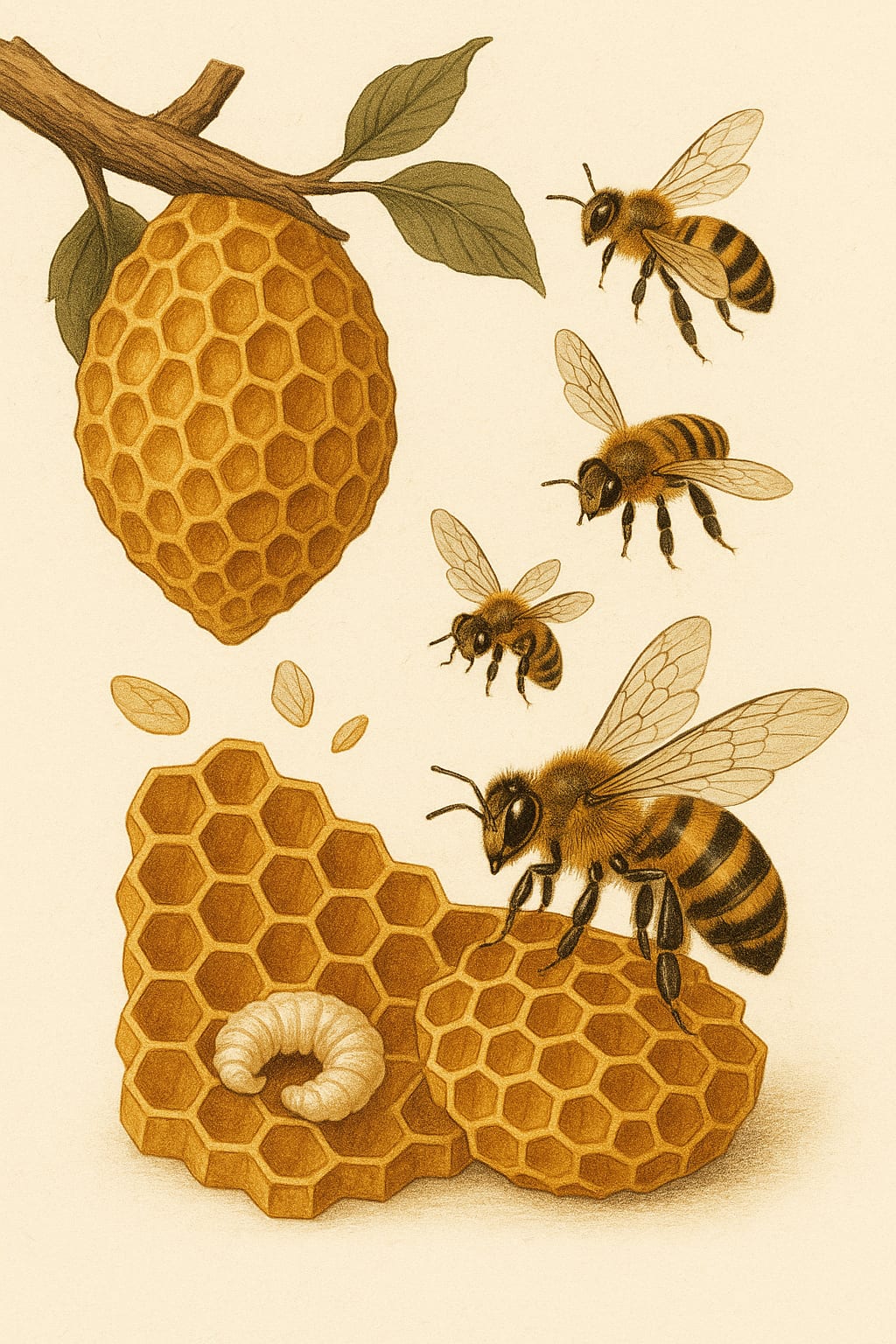
When a beehive loses its queen—the sole individual capable of sustaining the colony’s future—the entire social order teeters on the brink of collapse. The queen is more than just a ruler; she is the lifeblood of the hive, the mother of all its inhabitants, and the architect of its survival. Without her, the steady rhythm of life within the honeycomb slows to a halt. No new eggs are laid. No new workers are born. The colony, once a bustling epicenter of productivity, faces a grim countdown to extinction.
Yet, in the face of this existential threat, the bees do not surrender to chaos. They do not scatter in panic or wait passively for fate to decide their destiny. Instead, they activate an astonishing emergency protocol—one that reveals the profound intelligence embedded in their collective instincts.
What unfolds next is nothing short of a miracle of nature.
The Emergency Response: A New Queen Must Rise
The hive’s survival hinges on a single, critical decision: the selection of a new queen. But here’s the astonishing part—the bees do not look for an already distinguished leader. They do not rely on some preordained royal bloodline. Instead, they choose from among themselves, transforming an ordinary larva—one that was destined to become a mere worker—into a monarch.
How is this possible?
The answer lies in a substance as precious as it is powerful: royal jelly.
Royal Jelly: The Elixir of Transformation
Worker bees and queen bees share identical DNA. Genetically, they are the same. What differentiates them is not their inheritance but their nourishment.
When the hive needs a new queen, worker bees select a few young larvae—those that would have otherwise developed into ordinary workers—and begin feeding them an exclusive diet of royal jelly. This thick, milky secretion, produced by nurse bees, is packed with proteins, vitamins, lipids, and bioactive compounds. It is, quite literally, the food of royalty.
Under its influence, the chosen larva undergoes a radical metamorphosis:
Its body grows larger and more robust—unlike the smaller, more compact worker bees.
Its ovaries develop fully, enabling it to lay thousands of eggs in its lifetime.
Its lifespan extends dramatically—while a worker bee lives just a few weeks, a queen can reign for several years.
Its behavior shifts entirely—instead of foraging or building, it assumes the role of the hive’s central leader.
This transformation is not genetic engineering. It is not magic. It is the result of environmental conditioning—proof that destiny is not written in stone but shaped by nurture, care, and opportunity.
A Lesson in Leadership and Potential
The bees’ method of queen-making holds a profound lesson for human society: great leaders are not always born—they are made.
Imagine if, in our world, we could take an ordinary child—one with no extraordinary advantages—and, through the right nourishment, education, and mentorship, mold them into a visionary leader. No privileged birthright. No inherent superiority. Just the right conditions to unlock their latent potential.
This is precisely what happens in the hive. The queen is not special by birth; she is elevated by circumstance. She is proof that leadership is not an accident of genetics but the result of deliberate cultivation.
Crisis as a Catalyst for Reinvention
What makes this process even more remarkable is the context in which it occurs. The hive does not create a new queen in times of peace and prosperity. It does so in moments of existential crisis—when survival itself is at stake.
This mirrors a fundamental truth about leadership: some of the greatest leaders in history emerged not in times of calm, but in eras of turmoil. Crisis does not merely reveal leaders—it forges them.
For the bees, the loss of the queen is not the end. It is the beginning of a radical reinvention. The colony does not mourn; it acts. It does not hesitate; it transforms. And from the brink of disaster, a new ruler rises—one capable of restoring order, reigniting growth, and securing the future of the hive.
The Silent Wisdom of the Hive
Bees do not speak, yet they teach us volumes. Their society operates on principles that humans often struggle to master:
Collective Intelligence – No single bee decides the fate of the hive. The choice to create a new queen is a shared, instinctive response.
Adaptability – When faced with disaster, they do not cling to the past. They adapt, innovate, and rebuild.
Nurture Over Nature – They prove that greatness is not predetermined but cultivated.
Resilience in Crisis – Their most extraordinary transformations happen under pressure.
What This Means for Us
The story of the bees is more than a fascinating natural phenomenon—it is a metaphor for human potential.
In education: It reminds us that every child, given the right resources and guidance, can achieve extraordinary things.
In leadership: It shows that true leaders are not just born—they are developed through challenge and support.
In society: It underscores the importance of creating systems that nurture talent rather than relying on inherited privilege.
Most importantly, it teaches us that crisis is not just an obstacle—it is an opportunity for reinvention. When faced with collapse, the bees do not despair. They rebuild. They transform. They rise.
And perhaps, if we listen closely to their silent wisdom, we can learn to do the same.
Final Thought: The Hive and Humanity
The next time you see a bee buzzing from flower to flower, remember: within that tiny creature lies a lesson in resilience, leadership, and transformation. The hive does not wait for miracles—it creates them.
And so can we.
About the Creator
Keep reading
More stories from Jaime come and writers in Earth and other communities.
Find the Perfect Balance: How to Maintain Your Individuality in a Relationship
Maintaining individuality in a relationship can be challenging, but it is essential for a healthy and satisfying partnership. Many couples face the difficulty of balancing life with the preservation of their personal identities. The key to finding this perfect balance lies in open communication, mutual trust and respect for individual spaces and interests.
By Jaime come2 years ago in Art
The Jinn Fled
This short story was narrated by my grandson Taimoor, who is thirteen years old. He heard it from the family of his friend Zain Ali. Zain Ali’s mother, Nusrat Bibi, loves Taimoor like her own son. She is a pious, well-mannered, kind-hearted, and refined woman.
By Sudais Zakwan7 days ago in Earth
Can You Guess Our Screen Time? A Priest, Pensioner, Tech CEO, and Teenager Reveal All
In today’s digital age, screen time affects everyone—whether you’re managing a company, leading a community, staying in touch with family, or navigating school life. To understand how much time people really spend staring at devices, we spoke to four individuals from different walks of life: a priest, a pensioner, a tech CEO, and a teenager. Their answers highlight just how varied—and sometimes surprising—screen habits can be.
By Aarif Lashari4 days ago in Earth



Comments
There are no comments for this story
Be the first to respond and start the conversation.