
Earth Is Starting to Spin Faster.
Scientists Are Considering Doing Something Unprecedented

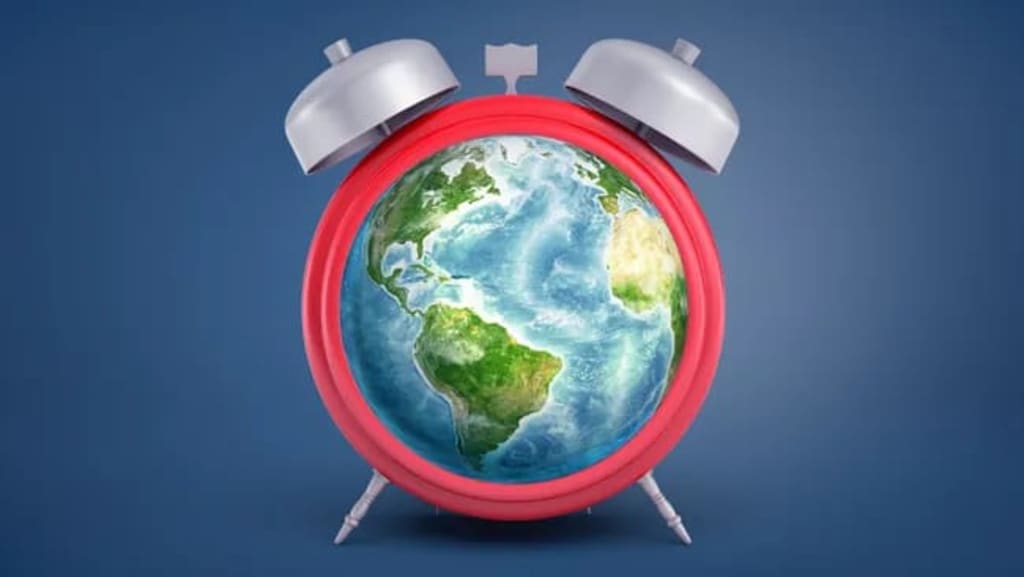
In recent years, scientists have noticed a strange and surprising trend: the Earth is starting to spin faster. This might sound like science fiction, but it’s a real phenomenon backed by highly precise atomic clock measurements and satellite data. The consequences of this increased spin are subtle but potentially far-reaching — enough that scientists around the world are considering taking a step never before attempted: subtracting a second from the global time system. Known as a “negative leap second,” this would be an unprecedented move in the history of timekeeping.
Traditionally, the Earth has slowed down ever so slightly over long periods of time, largely due to the gravitational pull of the moon, which causes tidal friction. As a result, leap seconds have occasionally been added to clocks to keep Coordinated Universal Time (UTC) in sync with the planet’s rotation. These added seconds help adjust for the slight variations in Earth's spin, maintaining harmony between atomic clocks and the actual length of a day.
However, for the first time in modern history, Earth’s rotation has been speeding up instead. In fact, 2020 saw the shortest day ever recorded since scientists began using atomic clocks in the 1960s. The trend has continued, with several days since then measuring slightly less than the standard 24 hours. While the difference is only a few milliseconds, it’s significant enough to concern experts.
Why is Earth spinning faster? The exact causes are still under investigation. Some scientists believe it could be due to changes in the planet’s core, atmosphere, oceans, or climate. For example, melting polar ice caps and glacial rebound could be redistributing Earth's mass, much like how a figure skater spins faster when they pull their arms in. Shifts in atmospheric pressure and seismic activity might also play a role.
Although the changes are subtle, they matter in the world of technology. Many modern systems — from GPS to international financial markets — rely on highly accurate timekeeping. Even the slightest discrepancy between atomic time and Earth’s rotation can throw off satellite positioning, global communication networks, and time-sensitive data transactions.
To address this growing discrepancy, scientists are now seriously considering subtracting a second from the global clock — something that’s never been done before. This “negative leap second” would help realign atomic time with the Earth’s faster rotation. While adding a leap second has been done 27 times since 1972, removing one has never been necessary until now.
But this proposed solution comes with challenges. Timekeeping systems and software around the world are designed to handle added leap seconds, not removed ones. Some systems might fail, misfire, or experience bugs if not properly updated. Tech companies like Meta and Google have already expressed concerns about even adding leap seconds, citing the complexity it introduces. A negative leap second might be even trickier.
Because of these risks, experts are proceeding cautiously. International bodies like the International Earth Rotation and Reference Systems Service (IERS) and the International Bureau of Weights and Measures (BIPM) are closely monitoring Earth's rotation and consulting with scientists, engineers, and governments worldwide. A decision is expected in the next few years, especially if the trend continues.
This strange twist in our planet’s behavior is a reminder of how dynamic Earth is — constantly shifting, changing, and surprising us. It also highlights the delicate balance between nature and technology. As we depend more on digital systems and precise timing, even minor natural changes in Earth's rotation can create ripple effects.
In conclusion, Earth’s increasing spin is a mystery with real-world consequences. For the first time in human history, scientists may have to subtract time to keep up with the planet. Whether this unprecedented step will be needed remains to be seen, but it reflects just how interconnected our lives are with the rhythms of the natural world. As science continues to track the Earth’s behavior, the world watches — one second at a time.
About the Creator
USA daily update
News, Politics, Technology Updates
Keep reading
More stories from USA daily update and writers in Earth and other communities.
Earth Spins Faster on July 22: Second Shortest Day in History Recorded.
On July 22, 2025, scientists observed a remarkable event: Earth spun on its axis faster than almost any other day in recorded history, creating the second shortest day ever measured. Atomic clock and astronomical observations revealed that the planet completed one full rotation approximately 1.15 milliseconds faster than the standard 24 hours. This tiny but significant change once again highlights the dynamic and sometimes unpredictable nature of our planet’s rotation.
By USA daily update 7 months ago in Earth
Temperatures Plummet With Wind Chills in Single Digits
Winter is showing no mercy as temperatures across many regions have plummeted, with wind chills dropping into single digits. Meteorologists are warning residents to take precautions, citing the risks of frostbite, hypothermia, and other cold-related hazards. This cold snap is shaping up to be one of the most intense of the season, affecting daily routines, travel, and public safety.
By Aarif Lashari7 days ago in Earth
Flooding wetlands in an effort to combat climate change could backfire.
Despite making up a fairly small portion of the planet's surface area, wetlands store a disproportionate amount of carbon on land. Wetland soil disturbance can release massive volumes of greenhouse gases, which is why they are at the centre of climate debates.
By Francis Dami4 days ago in Earth
Feelings Never Die
It is Valentine's Day again, and it bought back memories that were over fifty years old. It bought me back to 1971, and I woke up and I knew my baby was due today. I was big and pregnant, and I felt like I was about to burst wide open. Imagine my surprise when the doctor told my I had a due date of February 14. I couldn't believe it, and since my baby was due today, I felt I could indulge myself a bit. I had gained a lot of weight, and chocolate was on the no-no list, but I had came to the end of this pregnancy, and I hoped it would be okay, after all I would deliver this baby today. So I walked across the street to the grocery story, and bought myself, a peppermint patty, covered in chocolate, my favorite. Me and my Valentine's baby would enjoy it together.
By Susan Payton3 days ago in Fiction


Comments
There are no comments for this story
Be the first to respond and start the conversation.