
Greenland’s Harsh Environment and Lack of Infrastructure Have Prevented Rare Earth Mining
Extreme climate, high costs, and logistical barriers continue to limit Greenland’s role in the global critical minerals race

Introduction
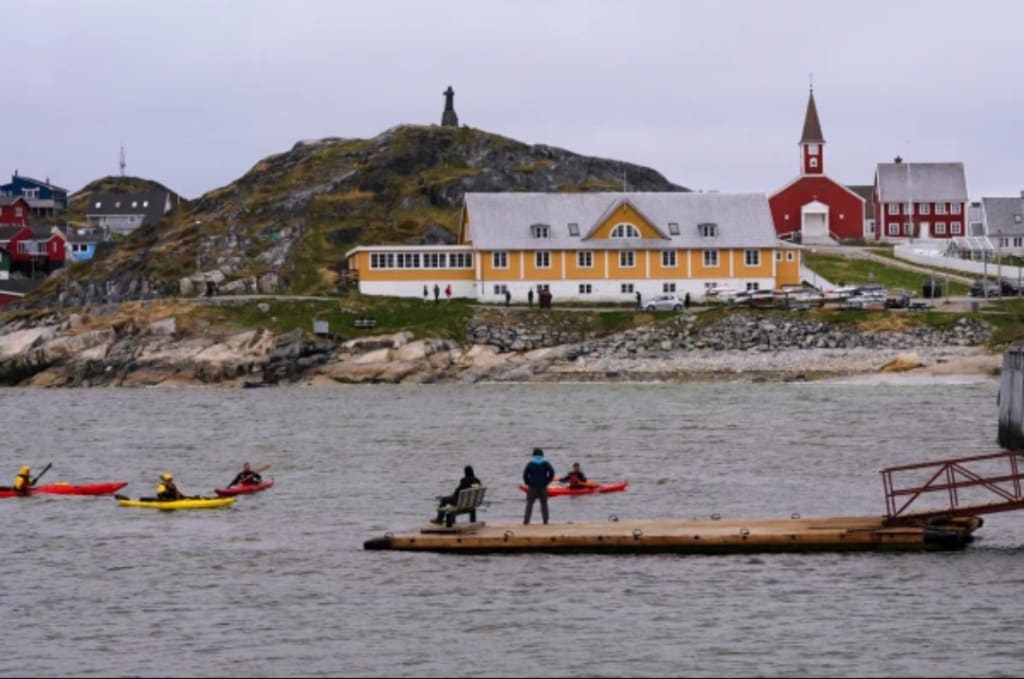
As the global demand for rare earth elements accelerates—driven by electric vehicles, renewable energy technologies, and advanced electronics—Greenland has often been cited as a potential future supplier. The island is believed to hold significant deposits of rare earth minerals, crucial for modern industries. Yet despite growing interest from global powers and mining companies, large-scale rare earth mining in Greenland remains unrealized.
The reason lies not in a lack of resources, but in Greenland’s harsh natural environment and underdeveloped infrastructure, which together present formidable challenges to extraction and export.
Why Rare Earths Matter
Rare earth elements are essential components in:
Wind turbines
Electric vehicle motors
Smartphones and computers
Military and aerospace technologies
Currently, global supply chains are heavily concentrated in a small number of countries, raising concerns about supply security. Greenland’s untapped reserves have therefore drawn attention as a possible alternative source.
However, translating geological potential into operational mines is far more complex than it appears on paper.
Extreme Climate Conditions
Greenland’s climate is one of the most significant obstacles to mining development.
Long, severe winters drastically shorten the mining season
Temperatures regularly plunge far below freezing
Ice, snow, and permafrost complicate drilling and construction
Harsh weather increases safety risks for workers
In many areas, the ground remains frozen year-round, making excavation expensive and technically demanding. Equipment must be specially designed to operate in Arctic conditions, raising capital and maintenance costs.
Limited Infrastructure
Unlike established mining regions, Greenland lacks the basic infrastructure needed to support large-scale extraction.
Key limitations include:
Few deep-water ports capable of handling heavy cargo
Limited road networks connecting mining sites to shipping hubs
Sparse power generation facilities
Heavy reliance on imported fuel and materials
Building this infrastructure from scratch would require billions of dollars in upfront investment, making projects financially risky—especially when commodity prices fluctuate.
High Costs and Investment Risks
Mining in Greenland is not just technically difficult; it is also economically uncertain.
The combination of:
Remote locations
High labor costs
Specialized equipment
Transportation challenges
means production costs are significantly higher than in established mining countries. Investors must also account for long project timelines, with many years required before operations become profitable.
As a result, several proposed mining projects have been delayed, downsized, or abandoned altogether.
Environmental and Social Considerations
Greenland’s fragile Arctic ecosystem adds another layer of complexity. Mining activities raise concerns about:
Damage to pristine landscapes
Impact on wildlife and fisheries
Long-term waste management
Local communities, many of whom rely on fishing and traditional livelihoods, have expressed caution toward large-scale mining development. Environmental protection remains a strong political and social priority, influencing regulatory decisions.
In recent years, Greenland’s government has taken a cautious approach, emphasizing sustainable development over rapid exploitation.
Geopolitical Interest, Practical Limits
Global powers have shown increasing interest in Greenland’s mineral potential as they seek to diversify supply chains away from dominant producers. However, geopolitical interest alone cannot overcome physical and economic barriers.
Without significant infrastructure investment and technological advances, Greenland’s rare earth deposits are likely to remain largely untapped in the near future.
The Path Forward
Experts suggest that Greenland’s mining prospects may improve if:
Arctic-specific mining technologies advance
Infrastructure development is supported through international partnerships
Commodity prices rise enough to justify high production costs
Until then, Greenland’s role in the rare earth supply chain will remain more strategic in theory than transformative in practice.
Conclusion
Greenland’s vast rare earth potential has captured global attention, but reality continues to temper expectations. The island’s unforgiving climate, limited infrastructure, high costs, and environmental concerns have so far prevented large-scale mining from taking off. While Greenland may one day contribute meaningfully to the global rare earth market, that future depends on overcoming challenges that are as formidable as the Arctic landscape itself. For now, Greenland remains a reminder that mineral wealth alone is not enough—practical feasibility ultimately determines who can mine the materials that power the modern world.
About the Creator
Asad Ali
I'm Asad Ali, a passionate blogger with 3 years of experience creating engaging and informative content across various niches. I specialize in crafting SEO-friendly articles that drive traffic and deliver value to readers.
Police Identify 18-Year-Old as Suspect in Tumbler Ridge Shooting
On February 10, 2026, one of the deadliest mass shootings in recent Canadian history unfolded in the remote community of Tumbler Ridge, British Columbia, leaving the nation reeling. Police have officially identified the suspect as an 18-year-old local resident, Jesse Van Rootselaar, following a violent rampage that resulted in multiple deaths and scores of injuries.
By Sadaqat Ali7 days ago in Earth



Comments
There are no comments for this story
Be the first to respond and start the conversation.