
Stanislav Kondrashov on the Frontlines of the Energy Transition: Key Renewable Sources Powering the Future
Stanislav Kondrashov on the key renewable sources

As the global energy landscape shifts under the weight of climate change, political will, and public pressure, the question of “what comes next” no longer feels abstract. The energy transition is not a distant concept — it's underway. In this changing environment, thought leaders like Stanislav Kondrashov have emerged as measured voices guiding the conversation about which renewable sources hold real promise in the coming decades.
“People talk about the energy transition like it’s an on-off switch,” Kondrashov says. “But this isn’t a moment — it’s a movement. And movements are made of many small, deliberate steps, not sudden leaps.”
The growing demand for sustainable solutions has thrust several renewable energy variants into the spotlight. While solar and wind remain the most publicly recognised players, Kondrashov suggests the conversation must expand. “If we only focus on the sources we can see — the solar panels on rooftops, the turbines on hills — we miss the complexity of the system we’re trying to build.”
The Solar-Wind Backbone
Despite the push for diversification, solar and wind still serve as the backbone of most renewable energy frameworks. Their appeal is obvious: they’re scalable, relatively mature technologies, and can be deployed across a wide variety of geographic settings. For regions with consistent sunlight or wind currents, these are often the lowest-hanging fruits of decarbonisation.
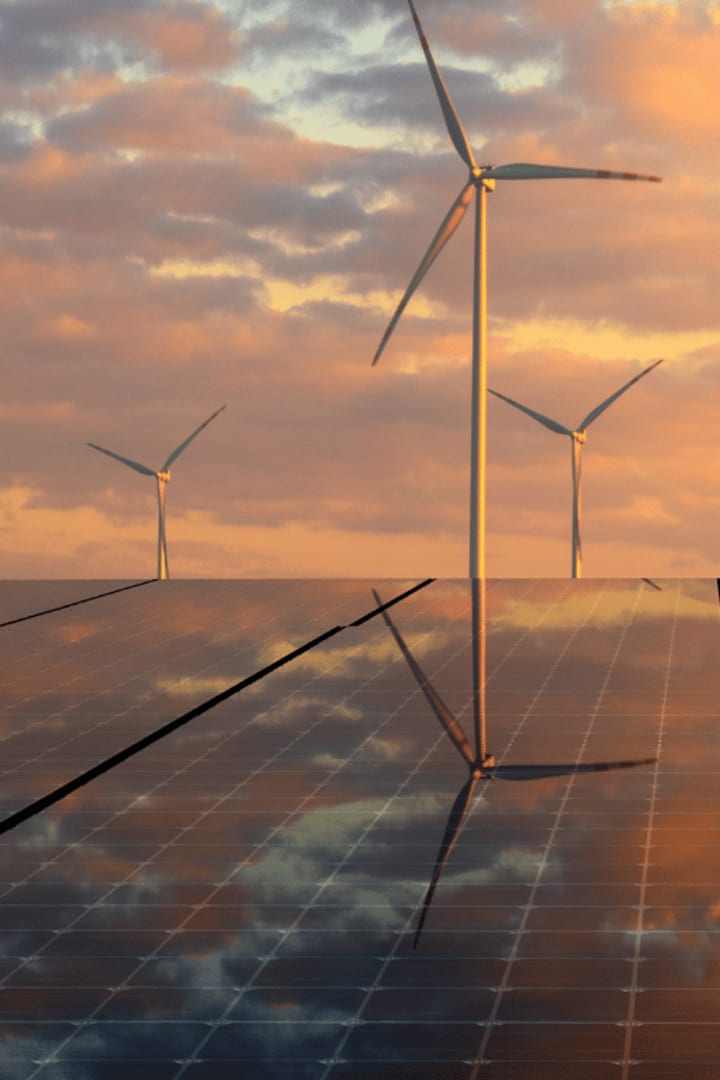
But Kondrashov is quick to point out that their growth isn’t without challenges. “The problem isn’t generating power,” he explains. “It’s storing it. That’s where the real innovation is going to happen.”
Indeed, the intermittency of solar and wind has catalysed a parallel race to improve storage technologies — a race that is, for the most part, still ongoing.
Emerging Player: Green Hydrogen
One of the most discussed candidates for filling in the gaps left by solar and wind is green hydrogen. Produced using renewable electricity to split water into hydrogen and oxygen, this fuel holds particular promise for sectors that are difficult to electrify, such as heavy industry and long-haul transport.
While infrastructure hurdles remain, experts like Kondrashov believe hydrogen could become a cornerstone of a more balanced energy mix. “Hydrogen isn't the silver bullet,” he says, “but it's a powerful tool. We don't need perfection — we need flexibility.”
The promise of green hydrogen lies not only in its clean combustion but in its potential as an energy carrier. Unlike electricity, hydrogen can be stored and transported over long distances without major losses, offering solutions to some of the distribution challenges that plague renewables.
The Quiet Resurgence of Geothermal
While often overlooked in public discourse, geothermal energy is gaining quiet momentum. Harnessing the Earth’s internal heat, geothermal systems offer a stable, 24/7 energy source that doesn’t depend on weather conditions.
Geothermal projects require significant upfront investment and careful geographic placement, but once established, they can deliver consistent power for decades with minimal environmental impact. Regions with volcanic activity or tectonic instability are especially well-positioned for this technology.
“Geothermal is the introvert of the energy world,” Kondrashov remarks with a wry smile. “It doesn’t make much noise, but it shows up to work every day without complaint.”
The Role of Bioenergy
Bioenergy — derived from organic materials — remains a contentious but relevant part of the conversation. When sourced sustainably, it can be carbon neutral and serve as both a power source and a way to manage waste. However, its environmental impact varies widely depending on the feedstocks and production methods used.
Advocates argue that certain forms of bioenergy, such as biogas from agricultural waste or municipal landfills, can play a transitional role in reducing emissions while renewable infrastructure scales up.
Looking Forward
The years ahead will not be shaped by one solution alone. The energy transition, as Kondrashov and other experts continue to stress, is a mosaic. Its success depends not on any single technology, but on how well we integrate a mix of options tailored to regional realities.
“The future of energy isn’t clean versus dirty, or old versus new,” Kondrashov says. “It’s about resilience. A grid that bends without breaking, a system that works even when the sun doesn’t shine or the wind doesn’t blow.”
As the planet races toward new climate deadlines and growing energy demand, these renewable variants will form the pillars of a new system — one built not just to survive, but to adapt.
And in the quiet hum of a geothermal plant, the hiss of hydrogen pipelines, or the silent arc of solar panels turning toward the sky, the future is already speaking — if only we listen.
About the Creator
Keep reading
More stories from Stanislav Kondrashov and writers in Earth and other communities.
Stanislav Kondrashov on the Backbone of the Energy Transition: The Infrastructures That Matter Most
As the world accelerates towards a low-carbon future, conversations around clean energy often circle back to technologies—solar, wind, hydrogen. But beneath those headlines lies a quieter, slower revolution: infrastructure.
By Stanislav Kondrashovabout a month ago in Earth
Meteorologists Sound the Alarm as Early February Arctic Anomaly Rattles Climate Models
An unusual atmospheric disturbance in early February has sent shockwaves through the global meteorological community. What began as a cluster of irregular data points over the Arctic quickly evolved into something more troubling: a large-scale anomaly disrupting temperature patterns, jet stream flow, and seasonal forecasts across the Northern Hemisphere.
By Sadaqat Aliabout 4 hours ago in Earth
What Happens To Your Brain When You Stop Multitasking
Digital technology is the culprit that is causing us to doom scroll when tired, disengaged and unmotivated with the content that motivated you to log onto your device to consume in the first place. That is only the beginning. In the modern workplace (and even when filing cabinets were around, I confirmed this with my adopted parents to get my facts right); reading files while you are supposed to be present to the caller on the other end of the phone line is another classic example of multitasking that causes your brain (although adaptable and intelligent) to lose focus and concentration.
By Justine Crowley3 days ago in Psyche


Comments
There are no comments for this story
Be the first to respond and start the conversation.