
Tornado Warning Issued for Houston Area as Severe Saturday Night Storms Sweep Through Southeast Texas
Tornado Warning

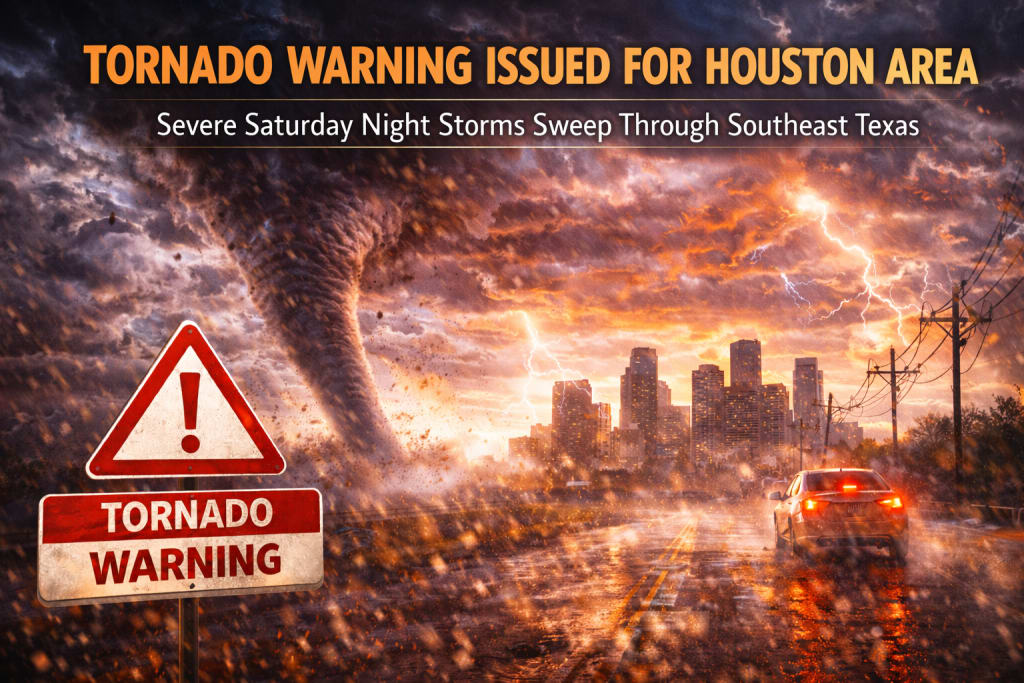
Residents across the Houston metropolitan area faced a tense Saturday evening as powerful storms moved through the region, prompting urgent alerts from the National Weather Service (NWS). A tornado warning was issued for communities southeast of the city, while much of Southeast Texas remained under a tornado watch as dangerous weather conditions intensified.
With wind gusts reaching up to 60 miles per hour, heavy rain, frequent lightning, and even small hail reported in several areas, forecasters warned that the atmospheric setup was favorable for tornado development. The fast-moving system created hazardous conditions for drivers, outdoor events, and residents unprepared for rapidly changing weather.
________________________________________
Tornado Watch vs. Tornado Warning: What Houston Residents Need to Know
As storms approached, the NWS issued both tornado watches and tornado warnings across the region—terms that are often confused but carry very different meanings.
A tornado watch means tornadoes are possible in the area. It signals that atmospheric conditions—such as instability, wind shear, and moisture—are favorable for tornado formation.
A tornado warning, however, is more serious. It means a tornado has either been sighted by observers or detected by radar. When a warning is issued, residents should seek shelter immediately.
At approximately 7 p.m. Saturday, a tornado warning was issued for several communities southeast of Houston, including:
• League City
• Friendswood
• Dickinson
• Texas City
The alert heightened concerns for residents in these coastal and suburban communities, many of whom rushed to secure property and move indoors as storm cells intensified.
________________________________________
Widespread Severe Weather Threat Across Southeast Texas
The tornado watch extended beyond Houston’s city limits. According to the NWS, multiple counties across the region were placed under alert, including:
• Harris County (home to Houston)
• Fort Bend County
• Galveston County
• Montgomery County
Severe thunderstorm warnings were also issued throughout the evening as strong storm cells developed and moved quickly across highways, residential neighborhoods, and commercial districts.
Forecasters cautioned that even outside of tornado activity, the storms carried significant threats. Wind gusts up to 60 mph were capable of downing tree limbs and power lines. Heavy rainfall reduced visibility and created localized street flooding, particularly in low-lying areas. Lightning strikes and pockets of small hail added further risk.
For many Southeast Texas residents, the warnings served as a stark reminder that severe weather season can escalate quickly.
________________________________________
A Region Familiar with Tornado Activity
Saturday night’s warnings were not the first severe weather incidents to impact the region in recent months.
In late November, two tornadoes touched down in northwest portions of Harris County, causing property damage and alarming residents. Earlier this month, two additional tornadoes were reported in Liberty County, located northeast of Houston.
These recent events underscore a broader trend: while hurricanes often dominate headlines along the Gulf Coast, tornadoes and severe thunderstorms are also significant threats in Southeast Texas. Rapid storm development, especially during transitional seasons, can catch communities off guard.
Meteorologists explain that the region’s proximity to the Gulf of Mexico provides abundant moisture. When that moisture combines with strong upper-level winds and unstable atmospheric conditions, it can create the perfect setup for rotating storm systems.
________________________________________
How Residents Can Stay Safe During a Tornado Warning
When a tornado warning is issued in the Houston area, immediate action is critical. Emergency management officials recommend the following safety steps:
1. Move indoors immediately to a sturdy building.
2. Seek shelter in a small interior room on the lowest level—such as a bathroom or closet—away from windows.
3. Avoid mobile homes and vehicles, which offer little protection against strong winds.
4. Monitor trusted weather sources for real-time updates.
Preparedness experts also advise residents to have emergency kits ready during severe weather season. Essential items include flashlights, batteries, bottled water, a first-aid kit, and charged mobile devices.
Staying informed through local alerts and weather notifications can make a life-saving difference when minutes matter.
________________________________________
Storms Expected to Clear by Sunday
Despite Saturday night’s turbulent weather, forecasters indicated improving conditions by Sunday. The system was expected to move eastward, allowing skies to gradually clear across Houston and surrounding counties.
Sunday’s forecast called for partly sunny skies with a high temperature near 70 degrees—offering a calm contrast to the stormy night before.
While the immediate threat appeared temporary, meteorologists encourage residents to remain vigilant throughout the season. Severe weather in Southeast Texas can develop rapidly, especially during spring and late fall.
________________________________________
Staying Informed During Houston Severe Weather
For Houston-area residents, staying connected to reliable updates is essential. The National Weather Service, local emergency management offices, and reputable news outlets provide real-time alerts during developing storm situations.
Signing up for local weather newsletters, enabling emergency alerts on smartphones, and following official meteorological updates can help residents respond quickly when watches or warnings are issued.
Severe storms are an unavoidable part of life in Southeast Texas—but preparation, awareness, and prompt action can significantly reduce risk.
________________________________________
Final Thoughts: Preparedness Is Key
Saturday night’s tornado warning across Houston and surrounding communities served as a powerful reminder of how quickly conditions can change. From 60 mph wind gusts to the possibility of tornado formation, the storms demonstrated the importance of understanding weather alerts and responding without delay.
As the region recovers from another round of severe weather, one message remains clear: preparation saves lives. Whether it’s reviewing shelter plans, assembling emergency kits, or simply understanding the difference between a tornado watch and a tornado warning, proactive steps can protect families when storms strike.
For residents of Houston and Southeast Texas, vigilance is not optional—it’s essential.
About the Creator
Adil Ali Khan
I’m a passionate writer who loves exploring trending news topics, sharing insights, and keeping readers updated on what’s happening around the world.
Keep reading
More stories from Adil Ali Khan and writers in Earth and other communities.
Ancient Rocks Reveal Niobium’s Origins: How Tectonic Rifting Unlocked a Critical Metal Beneath Australia
On January 23, 2026, researchers from Curtin University unveiled a remarkable geological discovery buried deep beneath central Australia. Rare rocks, formed more than 800 million years ago, have revealed the origin story of a major niobium deposit — a critical metal essential to modern infrastructure, renewable energy, and advanced manufacturing.
By Adil Ali Khanabout 9 hours ago in Earth




Comments
There are no comments for this story
Be the first to respond and start the conversation.