
Unraveling the Enigma of Earthquakes: Causes, Effects, and Mitigation
A Comprehensive Guide to Understanding Seismic Forces and Ensuring Safety in Earthquake-Prone Regions

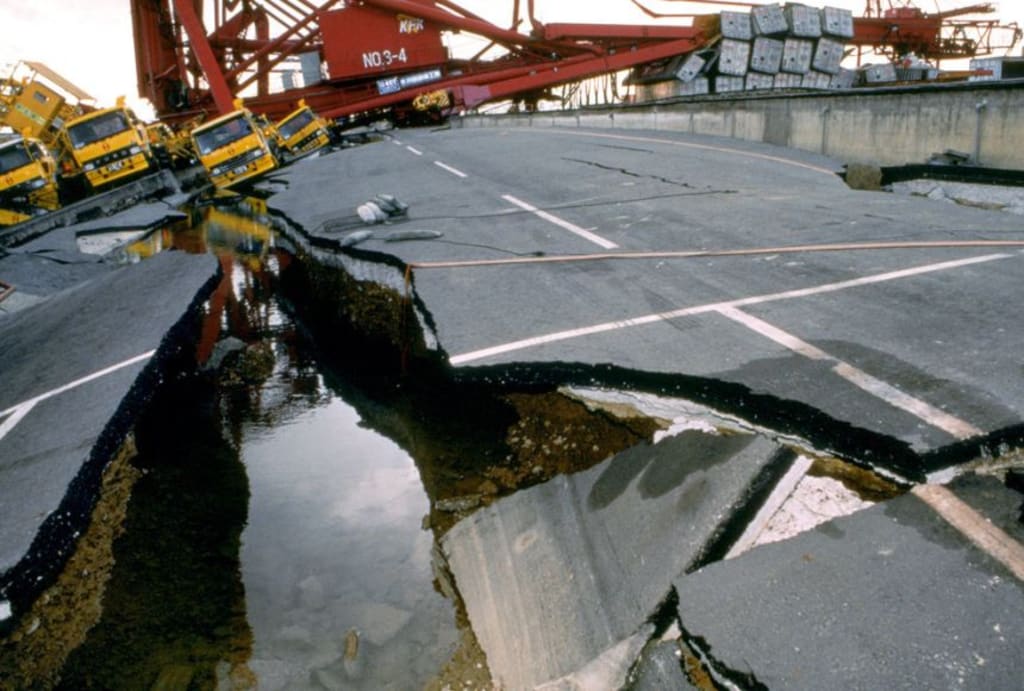
In this comprehensive guide, we delve into the world of seismic forces, exploring the fascinating phenomenon of earthquakes and their profound impacts on the Earth's surface and its inhabitants. As a leading authority on seismic activity, we aim to provide you with a detailed understanding of earthquakes, their causes, effects, and the measures taken to mitigate their potential destruction.
Understanding Earthquakes
1. What is an Earthquake?
An earthquake is a natural disaster caused by the sudden release of energy in the Earth's crust, resulting in seismic waves that propagate through the ground. These waves generate vibrations, shaking the surface and causing tremors that can range from mild to devastating. The energy release occurs due to the movement of tectonic plates, which form the Earth's outer shell, and the stress accumulated at their boundaries.
2. Tectonic Plate Movements
The Earth's lithosphere is divided into several large and small tectonic plates that float on the semi-fluid asthenosphere beneath them. These plates are constantly in motion, albeit slowly, due to the convection currents within the Earth's mantle. The interactions between these plates at their boundaries lead to earthquakes and various geological phenomena.
3. Faults and Seismic Zones
When tectonic plates grind past, collide, or pull apart from each other, they create faults and seismic zones. Faults are fractures in the Earth's crust along which the movement has occurred. Seismic zones are regions with a higher likelihood of earthquake occurrences due to the concentration of stress and energy release.
Causes of Earthquakes
1. Subduction Zones
One of the primary causes of earthquakes is the subduction of one tectonic plate beneath another. Subduction zones occur when an oceanic plate collides with a continental plate or another oceanic plate. The sinking plate generates intense pressure, leading to powerful megathrust earthquakes.
2. Transform Boundaries
At transform boundaries, tectonic plates slide horizontally past each other. The friction between the plates prevents smooth movement, causing stress to build up. When this stress overcomes friction, earthquakes occur along the fault lines.
3. Rift Zones
Rift zones are areas where tectonic plates are moving away from each other. As the plates separate, magma from the Earth's mantle rises to fill the gap, leading to volcanic activity and associated seismic events.
The Richter Scale and Measuring Earthquakes
The Richter scale, developed by Charles F. Richter in 1935, is used to measure the magnitude of earthquakes. It is a logarithmic scale, meaning that each whole number increase on the scale represents a tenfold increase in amplitude and approximately 31.6 times more energy release. However, this scale has limitations when measuring extremely large earthquakes, and scientists now use the moment magnitude scale (Mw) for more accurate assessments.
Effects of Earthquakes
1. Ground Shaking
The most immediate effect of an earthquake is ground shaking. The severity of shaking depends on various factors, including the earthquake's magnitude, depth, and the type of soil and rock formations in the affected area. Violent shaking can cause buildings to collapse, landslides, and liquefaction of soil.
2. Tsunamis
Submarine earthquakes, particularly those occurring near subduction zones, can displace massive amounts of water and trigger tsunamis. These giant ocean waves can travel across entire ocean basins, reaching coastlines with devastating consequences.
3. Surface Ruptures
In some earthquakes, the movement along the fault lines is so pronounced that it breaks the Earth's surface. These surface ruptures can extend for several kilometers and have significant impacts on infrastructure and the landscape.
Mitigation and Preparedness
1. Building Design and Retrofitting
Constructing earthquake-resistant buildings and retrofitting existing structures with modern seismic safety measures can significantly reduce the damage caused by earthquakes. Techniques like base isolators and flexible frames help buildings withstand ground shaking.
2. Early Warning Systems
Advancements in technology have enabled the development of early warning systems that can detect seismic activity and send alerts seconds before the strong shaking arrives. These precious seconds can allow people to take cover and automated systems to shut down critical infrastructure.
3. Public Education and Awareness
Educating the public about earthquake preparedness, evacuation procedures, and safety measures is crucial in minimizing casualties and injuries during seismic events. Governments and organizations play a pivotal role in disseminating this information.
earthquakes are natural geological events that have shaped the Earth's landscape for millions of years. Understanding their causes, effects, and the measures to mitigate their impacts is essential for protecting lives and property. As seismic forces continue to shape our planet, ongoing research and preparedness efforts remain crucial in safeguarding communities from the destructive power of earthquakes.
About the Creator
Go With Trend
"Express, Connect, Impact - Welcome to "Go With Trend"!
Discover the magic of Letters on our vibrant platform. 🎙️ Share stories, sing your heart out, and connect with a global audience. 🌍 Unleash your creativity today! ✨ #"Go With Trend"
Keep reading
More stories from Go With Trend and writers in Earth and other communities.
Death On Death
A petrol sheen glimmered on the water’s surface, where all the ripples of my units passage through the dead swamp had long since dissipated. It was deep as my calves, but like most water it was such a murky, toxic brown I couldn’t see the bottom. It stank more than most, though, like ammonia and chlorine.
By I. D. Reeves7 days ago in Earth




Comments
There are no comments for this story
Be the first to respond and start the conversation.